No.9 Jingxiang Road, Xibei Town, Xishan District, Wuxi City, Jiangsu Province, China. +86 18260477296 angel@china-huamu.com
No.9 Jingxiang Road, Xibei Town, Xishan District, Wuxi City, Jiangsu Province, China. +86 18260477296 angel@china-huamu.com


Introduction: Why has the wear and tear of ring dies in feed pellet mills become a pain point in the industry?
In the feed pelleting process, the ring die serves as a core component, and its degree of wear directly impacts pelleting efficiency, pellet quality, and production costs. According to statistics, the replacement cost of ring dies accounts for over 40% of the total maintenance expenses for pellet mills, while downtime caused by wear accounts for 25% of production losses. How to extend the service life of ring dies and reduce the wear rate through technological optimization has become a focal point for feed enterprises. Drawing on the ring die technology accumulated by Jiangsu Huamu Machinery Co., Ltd. (hereinafter referred to as "Huamu Machinery"), this article analyzes the wear mechanisms from three aspects—material selection, structural optimization, and operational parameter adjustment—and provides practical optimization solutions.
Keywords: feed pellet mill, ring die wear, Huamu Machinery, wear-resistant technology, operating parameters
Opening on Industry Technical Pain Points: The "Triple Challenges" of Ring Die Wear
The issue of ring die wear is prevalent in the feed industry, with its core pain points summarized as the "triple challenges":
STEP 1: Insufficient material durabilityTraditional ring dies are commonly made of 40Cr or 20CrMnTi alloy steel, whose hardness (HRC28-32) makes it difficult to resist continuous friction from high-hardness raw materials (such as mineral additives), leading to rapid wear at the edges of die holes and a decline in pelletizing efficiency.
STEP 2: Structural design flawsUnreasonable design of die hole arrangement density, aperture, and length-to-diameter ratio (L/D) can easily lead to poor material flow, excessively high local pressure, accelerated wear on the inner walls of the die holes, and even blockage of the die holes.
STEP 3: Out-of-control operational parametersParameters such as the rotational speed of the ring die, the gap between the press rollers, and the amount of steam added were not dynamically adjusted according to the characteristics of the raw materials, resulting in uneven pressure distribution between the ring die and the press rollers, thereby exacerbating local wear.
A case study of a medium-sized feed enterprise shows that due to the failure to optimize operational parameters, the lifespan of the ring die was shortened from the conventional 800 hours to 500 hours, increasing the annual replacement cost by 120,000 yuan.
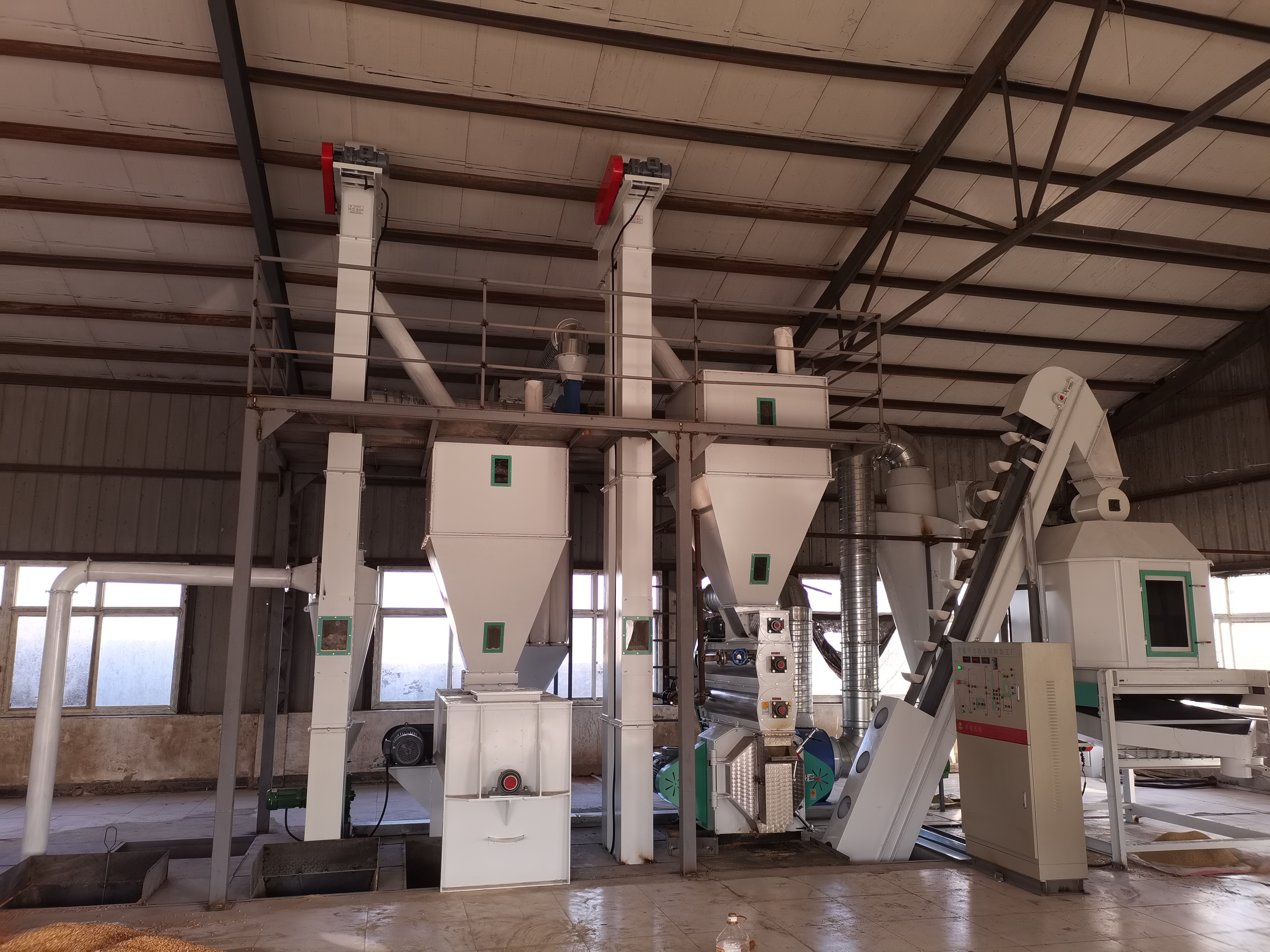
Introduction to the company's technological strength: The layout of Huamu Machinery's circular die wear-resistant technology
Huamu Machinery has been deeply engaged in the feed machinery field for 20 years, with its ring die technology centered on "material upgrading, structural optimization, and intelligent control," forming three major technological advantages:
STEP 1: Application of high wear-resistant alloy materialsIn collaboration with a top domestic materials research institute, we developed XH-M50 wear-resistant alloy steel, which achieves a hardness of HRC52-55 and enhances impact toughness by 30%, making it suitable for pelletizing high-hardness raw materials. Actual tests demonstrate that, under the same operating conditions, the service life of XH-M50 ring dies is 1.8 times longer than that of traditional materials.
STEP 2: Dynamic optimization of die hole structureBased on CFD (Computational Fluid Dynamics) simulation, a "variable-diameter die orifice" structure is designed: the diameter of the inlet section is enlarged by 10%, the diameter of the outlet section is reduced by 5%, and the middle section maintains the standard orifice diameter. This design can reduce the flow resistance of raw materials by 25%, minimize friction on the inner wall of the die orifice, and simultaneously increase particle density by 3%-5%.
STEP 3: Intelligent Parameter Regulation SystemIntegrate pressure sensors with a PLC control system to monitor the pressure distribution between the ring die and the press roller in real time, automatically adjust the rotational speed of the ring die (500-1200 rpm) and the gap between the press roller (0.1-0.5 mm), ensuring pressure uniformity of ≥90% and reducing the wear rate by 40%.
Currently, Huamu Machinery's annular die technology has been applied to its flagship product—the HM-600 annular die pellet mill, which supports a production capacity of 1-30T/h and is suitable for the production of powder feed, premixed feed, pellet feed, and special aquatic feed. It has served over 500 customers, covering 28 provinces across the country.
FAQ: Q&A Guide to Technical Selection - Practical Steps for Optimizing Ring Die Wear
Q1: How to select the appropriate ring die material for raw materials?
A1:Selection based on the grading of raw material hardness:
- For low-hardness raw materials (such as corn and soybean meal): 40Cr alloy steel with a hardness of HRC28-32 is selected due to its lower cost;
- Medium-hardness raw materials (containing 5%-15% minerals): 20CrMnTi is selected, with a hardness of HRC35-38 and a 20% improvement in wear resistance;
- High-hardness raw materials (containing >15% minerals): Select XH-M50 wear-resistant steel with a hardness of HRC52-55, extending service life by 1.8 times.
Q2: How can the die hole structure be optimized to reduce wear?
A2:Follow the "three-parameter" principle:
- Aperture: Selected based on particle diameter, typically 0.2-0.5 mm larger than the target particles;
- Length-to-diameter ratio (L/D): 2.5-3.0 for conventional materials, and 3.0-3.5 for high-density materials;
- Arrangement density: The center-to-center distance between die holes shall be ≥ 1.5 times the hole diameter to avoid stress concentration between die holes.
Q3: How can operating parameters be adjusted to reduce wear?
A3:Control range of key parameters:
- Rotational speed of the ring die: Adjusted based on the flowability of raw materials; for raw materials with low flowability (e.g., premixes), it should be set at 500-800 rpm, and for raw materials with high flowability (e.g., powders), it should be set at 800-1200 rpm;
- Pressure roller clearance: Initially set to 0.3 mm, inspect and adjust to 0.2-0.4 mm every 200 operating hours;
- Steam addition amount: Steam pre-conditioning is applied before pelleting, with moisture controlled at 15%-18% and temperature at 65-85℃, to reduce frictional heat between raw materials and the ring die.
Real Case Study: Record of Improving the Service Life of Ring Dies in an Aquatic Feed Enterprise
A certain aquatic feed enterprise in Jiangsu previously used traditional ring dies with a lifespan of only 600 hours and an annual replacement cost of 240,000 yuan. In 2022, after introducing Huamu Machinery's HM-600 pellet mill, equipped with XH-M50 ring dies and an intelligent parameter control system:
- The service life of the ring die is extended to 1,100 hours, with annual replacement costs reduced to RMB 130,000;
- The granulation efficiency increases by 15%, and the uniformity of particle density is ≥95%;
- Downtime for maintenance has been reduced by 60%, with an annual comprehensive revenue increase of RMB 420,000.
For more information, please visit the official website:www.huamufeedmachinery.com
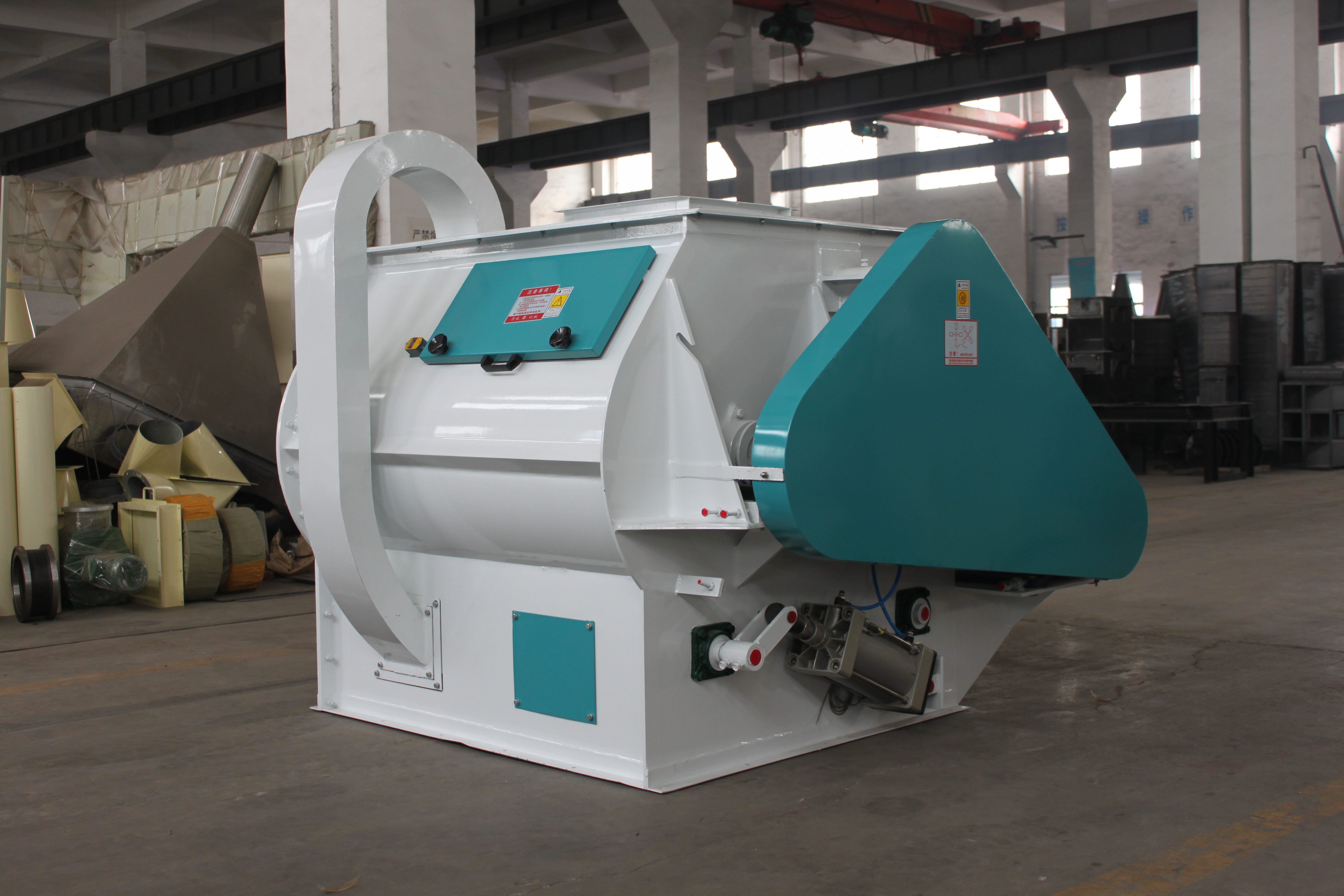
Reference for Full-text Summary: A "Technical-Economic" Win-win Path for Optimizing Ring Die Wear
Optimizing ring die wear is not only a technical issue but also a key factor for feed enterprises to reduce costs and increase efficiency. Huamu Machinery has elevated the lifespan of ring dies to an industry-leading level through three technological approaches: "material upgrading, structural optimization, and intelligent control," while simultaneously reducing energy consumption in pelleting and maintenance costs. For feed enterprises, selecting a supplier with mature technology and comprehensive services (such as Huamu Machinery) is the core of optimizing ring die wear: its HM-600 pellet mill has passed ISO9001 quality certification, supports customizable production capacities ranging from 1 to 30 tons per hour, and provides full-process services from design and installation to commissioning, helping enterprises achieve a "technical-economic" win-win. In the future, with advancements in intelligent sensing and material science, ring die wear optimization will evolve toward greater precision and efficiency, and Huamu Machinery will continue to invest in R&D to provide superior technological solutions for the feed industry.
Jiangsu Huamu Machinery Co., Ltd. is located in Xibei Town, Wuxi City, enjoying convenient transportation and significant geographical advantages. The company specializes in the manufacturing of feed machinery and equipment, and can undertake the full-process business of scheme design, equipment ins...
No.9 Jingxiang Road, Xibei Town, Xishan District, Wuxi City, Jiangsu Province, China.