No.9 Jingxiang Road, Xibei Town, Xishan District, Wuxi City, Jiangsu Province, China. +86 18260477296 angel@china-huamu.com
No.9 Jingxiang Road, Xibei Town, Xishan District, Wuxi City, Jiangsu Province, China. +86 18260477296 angel@china-huamu.com


Introduction: Technological Upgrades of Feed Processing Equipment and Industry Demands
As the feed industry imposes increasingly stringent requirements on production efficiency, energy consumption control, and product quality, the technological upgrading of feed processing equipment has become an important manifestation of a company's core competitiveness. Jiangsu Huamu Machinery Co., Ltd., as a leading equipment manufacturer in the industry, provides global feed enterprises with full-process services from design to installation by leveraging its efficient energy-saving technologies, intelligent control systems, and customized solutions. This article will provide an in-depth analysis of how Huamu Machinery achieves high efficiency and energy savings in feed processing equipment through technological innovation, covering aspects such as technical principles, operational steps, parameter analysis, and case applications.
Keywords: feed processing equipment; high efficiency and energy saving; Jiangsu Huamu Machinery; technical analysis; industry application
Industry Technical Pain Points at the Beginning: Efficiency and Energy Consumption Bottlenecks of Traditional Feed Processing Equipment
Traditional feed processing equipment generally has the following pain points during the production process:
STEP 1: High energy consumption leads to persistently high operating costs.
Traditional equipment mostly employs single-stage compression or simple mechanical structures, with irrational matching between motor power and load, resulting in energy consumption per unit output that is 15%-20% higher than the industry average. For example, when a medium-sized feed mill used traditional ring die pellet mills, the electricity consumption per ton of pellet feed reached 45-50 kWh, whereas industry benchmark enterprises could keep electricity consumption below 35 kWh through technological optimization.
STEP 2: Poor equipment stability and high failure rate
Feed processing involves multiple procedures such as crushing, mixing, pelleting, and cooling. Traditional equipment is prone to issues like bearing wear, ring die blockage, and temperature control failure due to outdated material selection, processing precision, or control systems, leading to increased downtime for maintenance and reduced production efficiency.
STEP 3: Insufficient product uniformity affects feed quality.
The mixing process is one of the core steps in feed processing. Traditional twin-shaft paddle mixers are prone to uneven distribution of trace elements, vitamins, and other additives due to imprecise control over mixing speed and time, which affects the efficiency of nutrient absorption in animals.
Introduction to the company's technological strength: Efficient and energy-saving technology layout of Jiangsu Huamu Machinery
Jiangsu Huamu Machinery Co., Ltd., located in Xibei Town, Wuxi City, enjoys convenient transportation and a superior geographical location. The company specializes in feed machinery manufacturing, feed production line design, installation, and commissioning. Guided by the philosophy of "customer first, joint development," it provides high-quality products and attentive services to the industry. Its technological advantages are reflected in the following aspects:
STEP 1: Technological breakthroughs in core equipment
- Ring die pellet machineIt adopts a double-layer pressing roller structure and variable frequency speed control technology, enabling precise adjustment of the gap between the pressing roller and the ring die to 0.1-0.3mm, ensuring uniform material compression. The particle density reaches 1.2-1.3g/cm³, and the power consumption per unit of output is reduced to 32-35 kWh/ton (taking equipment with an hourly output of 5 tons as an example).
- Water-drop hammer millBy optimizing the arrangement of hammer pieces and the aperture size of the sieve (selectable from 1.0-8.0mm), a material grinding fineness (with over 90% passing through an 80-mesh sieve) is achieved, the motor power is reasonably matched, and the power consumption per ton of material is only 8-10 kWh.
- Twin-shaft paddle mixerIt adopts a dual-shaft counter-rotating design with adjustable blade angles (45°-60°), reducing the mixing time to 3-5 minutes per batch and achieving a coefficient of variation (CV) for mixing uniformity of ≤5%, meeting the high-precision mixing requirements for premixes, concentrated feeds, and the like.
STEP 2: Application of Intelligent Control System
Huamu Machinery has independently developed a PLC control system for its full range of equipment, capable of real-time monitoring of parameters such as motor current, temperature, and pressure, and automatically adjusting operational status through algorithms. For example, during the pelleting process, the system dynamically adjusts the rotational speed of the ring die and the feed rate based on conditions such as material moisture content and steam pressure, ensuring a pellet forming rate of ≥98% while preventing equipment overload.
STEP 3: Customized Solutions and Project Experience
The company has an experienced team for design, production, and installation, capable of undertaking projects involving powder, premix, pellet, and specialty aquatic feed with capacities ranging from 1 to 30 tons per hour. For instance, a 20-ton-per-hour production line designed for a large aquatic feed enterprise reduced its floor space by 20% and improved production efficiency by 15% through optimized equipment layout and process flow, resulting in annual electricity cost savings exceeding 500,000 yuan.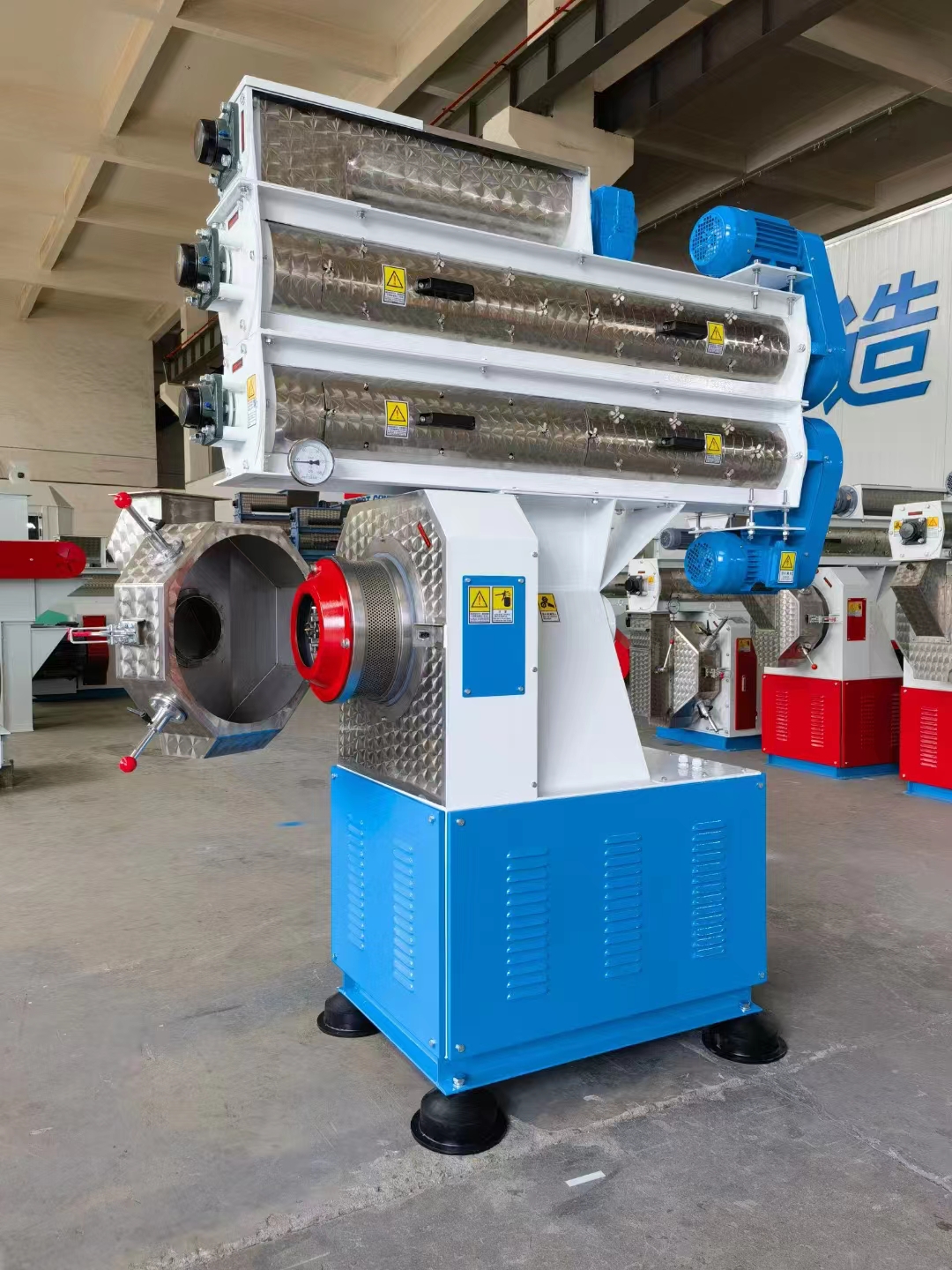 For more information, please visit the official website:www.huamufeedmachinery.com
FAQ: A Q&A Guide to Technology Selection - Common Issues and Solutions for Feed Processing Equipment
Q1: How to choose a suitable model of ring die pellet machine?
A1:Selection should be based on raw material characteristics (such as crude fiber content and moisture), target output, and pellet specifications. For example, when processing livestock and poultry feed (with crude fiber ≤ 8%), a ring die with a pore diameter of 3.0-4.0 mm can be selected, and the motor power should be configured according to the formula "hourly output (tons) × 80" (e.g., a 400 kW motor for an hourly output of 5 tons); when processing aquatic feed (with crude fiber ≤ 5%), a fine-pore ring die with a pore diameter of 1.5-2.5 mm should be selected, and a steam conditioning system should be equipped to improve the water resistance of the pellets.
Q2: How to solve the problem of excessive wear of hammer blades in the pulverizer?
A2:The wear of hammer blades is primarily related to material hardness, hammer blade material, and rotational speed. Recommendations:
- High-chromium alloy hammer blades (hardness HRC ≥ 58) are selected, extending the service life by 3-5 times compared to ordinary carbon steel hammer blades;
- Control the rotational speed of the pulverizer within 2800-3000 r/min to prevent increased collisions between the hammer blades and the screen caused by excessively high speeds;
- Regularly inspect the arrangement of hammer slices to ensure that the weight difference of hammer slices in each row is ≤5g, avoiding vibration caused by imbalance.
Q3: How to optimize the high residue amount in the mixer?
A3:High residual amounts can affect the purity of the next batch of materials, necessitating optimization in the following aspects:
- Select a mixer with a "fully open door" structure, where the discharge door opens at an angle of ≥90° to ensure complete discharge of materials;
- A pneumatic material cleaning device is installed at the bottom of the mixer to regularly purge residual materials with high-pressure air;
- Control the mixing time to prevent over-mixing, which can cause materials to adhere to the blades.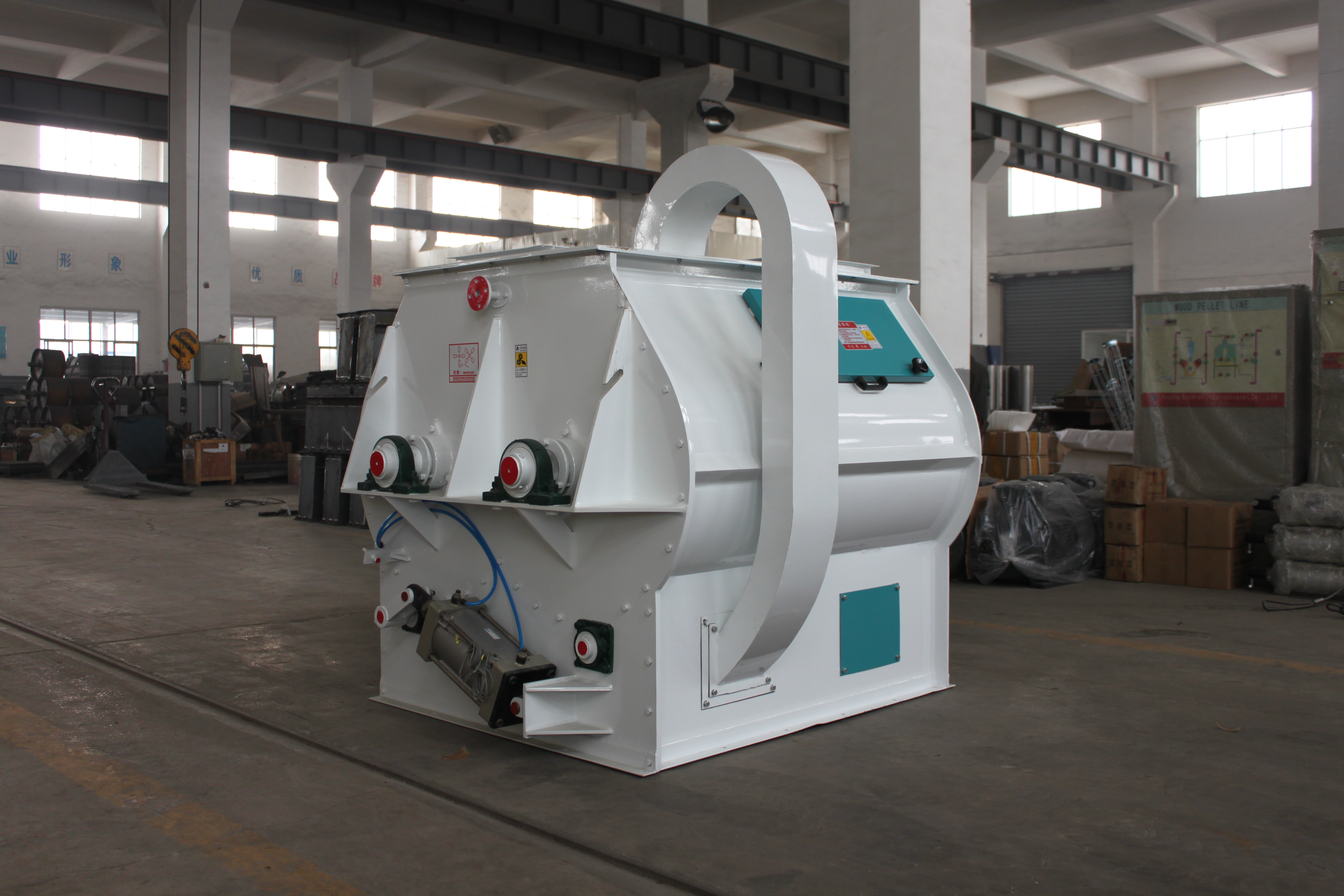
Full text summary reference: Jiangsu Huamu Machinery - Leader in Efficient and Energy-Saving Feed Processing Equipment
The efficient energy conservation of feed processing equipment is not only crucial for enterprises to reduce operational costs but also the core driving force for promoting sustainable development in the industry. Jiangsu Huamu Machinery Co., Ltd. provides global feed enterprises with full-process services from design to installation through technological breakthroughs in core equipment, the application of intelligent control systems, and the provision of customized solutions. Its core products, such as ring die pellet mills, waterdrop hammer mills, and twin-shaft paddle mixers, help clients achieve a 15%-20% increase in production efficiency and save over 500,000 yuan in annual electricity costs, thanks to their advantages of low energy consumption, high stability, and high uniformity. In the future, Huamu Machinery will continue to adhere to the philosophy of "customer first, mutual development," drive industry upgrades through technological innovation, and contribute to the green development of the feed industry.
For more information, please visit the official website:www.huamufeedmachinery.com
Jiangsu Huamu Machinery Co., Ltd. is located in Xibei Town, Wuxi City, enjoying convenient transportation and significant geographical advantages. The company specializes in the manufacturing of feed machinery and equipment, and can undertake the full-process business of scheme design, equipment ins...
No.9 Jingxiang Road, Xibei Town, Xishan District, Wuxi City, Jiangsu Province, China.