No.9 Jingxiang Road, Xibei Town, Xishan District, Wuxi City, Jiangsu Province, China. +86 18260477296 angel@china-huamu.com
No.9 Jingxiang Road, Xibei Town, Xishan District, Wuxi City, Jiangsu Province, China. +86 18260477296 angel@china-huamu.com


Introduction:As the core equipment in feed production, livestock and poultry feed machinery's pelletizing efficiency and pellet quality directly impact breeding efficiency. Faced with challenges such as raw material diversity, varying production capacity requirements, and energy consumption control, how can technological optimization be employed to achieve efficient pelletizing? Taking the ring die pellet mill of Jiangsu Huamu Machinery Co., Ltd. (hereinafter referred to as "Jiangsu Huamu") as an example, this article systematically analyzes the key pathways to efficient pelletizing, covering technical principles, equipment selection, parameter adjustment, and practical case studies.
Keywords:Livestock and poultry feed machinery, ring die pellet mill, efficient pelletizing, Jiangsu Huamu Machinery, technical parameters, practical operation guide
Opening on the Pain Points of Industry Technology:Currently, in the production of livestock and poultry feed, the pelleting process generally faces three major pain points:1. Poor adaptability of raw materials— Significant variations in particle size, moisture content, and protein content of raw materials such as corn, soybean meal, and wheat bran can easily lead to blockages in the pellet mill or uneven hardness of the pellets;2. Contradiction between energy consumption and production capacity— Traditional granulators require increased main motor power to achieve high output, but energy consumption often accounts for over 25% of total production costs;3. Unstable particle quality— Significant fluctuations in indicators such as particle length, density, and water resistance affect the feed intake and digestibility of animals. In response to these issues, Jiangsu Huamu has provided systematic solutions through technological innovation in ring die pellet mills.
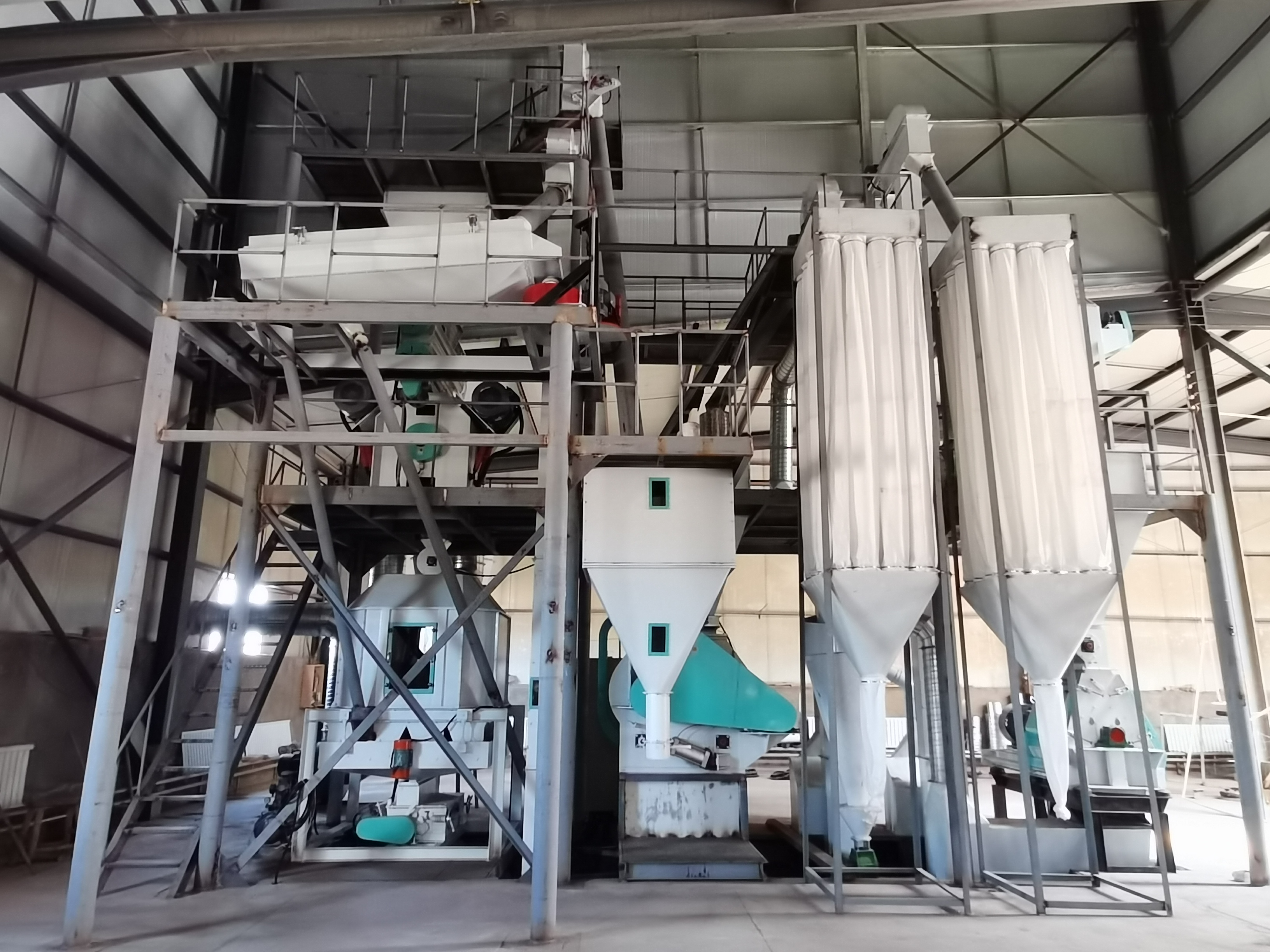
Introduction to the company's technological capabilities:Jiangsu Huamu Machinery Co., Ltd., located in Xibei Town, Wuxi City, has specialized in the research, development, and production of feed machinery for over 20 years, possessing design capabilities for a full range of pelleting equipment with capacities from 1 to 30 tons per hour. Its core product, the ring die pellet mill, employsSTEP 1: Double-layer ring die structure—The outer ring die is responsible for preliminary compression, while the inner ring die conducts secondary extrusion, increasing the material passage rate by 30% and reducing fluctuations in pellet quality caused by wear in single-layer ring dies;STEP 2: Intelligent Conditioning System— Through precise control of steam injection volume and mixing time (conditioning temperature at 85-95℃, duration of 15-30 seconds), the starch gelatinization degree of the material reaches over 65%, significantly enhancing the water resistance of the pellets;STEP3: Variable frequency drive technology—The power of the main motor is dynamically adjusted (adjustable from 55-132kW) according to the characteristics of raw materials, ensuring a production capacity of 1-10 tons per hour while reducing unit power consumption by 18%. Currently, this technology has been applied in over 500 feed enterprises across the country, including leading clients such as Wens Group and New Hope Liuhe, with an equipment failure rate of less than 0.5% per year. For more information, please visit the official website:www.huamufeedmachinery.com
FAQ Q&A Technical Selection Guide:Q1: How to select the model of a granulator based on the characteristics of raw materials?
A: Jiangsu Huamu offers three types of ring die aperture sizes (Φ2.5, φ3.0, φ4.0 mm) combined with two compression ratios (1:8, 1:10) to suit different raw materials:STEP 1: High-starch raw materials (such as corn)— Select a Φ3.0 mm aperture + 1:8 compression ratio, with a conditioning temperature of 90°C, achieving a pellet hardness of over 60 N;STEP 2: High-fiber raw materials (such as wheat bran)— Select a Φ4.0mm aperture + 1:10 compression ratio, extend the conditioning time to 25 seconds to reduce the risk of machine blockage;STEP 3: High-protein raw materials (such as soybean meal)— It needs to be preprocessed with a twin-shaft mixer to ensure material uniformity before granulation.
Q2: How to solve the problem of significant fluctuations in the output of a granulator?
A: Output fluctuations are often caused by wear of the ring die or uneven feeding, requiringSTEP 1: Regularly inspect the aperture of the ring die— Use a specialized bore gauge (with an accuracy of 0.01 mm), and replace the ring die when the aperture expands by more than 10%;STEP 2: Calibrate the feeder speed— Link the feeding speed with the rotational speed of the main motor (ratio 1:1.2) through a frequency converter to avoid material accumulation;STEP 3: Check the position of the cutting knife— The distance between the cutting knife and the ring die should be maintained at 0.5-1.0 mm; excessive distance will result in overly long pellets, while insufficient distance will increase wear on the cutting knife.
Q3: How to reduce energy consumption during granulation?
A: Jiangsu Huamu has passedSTEP 1: Optimize the material of the ring die— Made of 42CrMo alloy steel with a hardness of HRC58-62, extending the service life to over 8,000 hours;STEP 2: Upgrade the transmission system— Switching to helical gear reducers (with transmission efficiency over 95%) saves 12% more energy compared to straight gears;STEP 3: Install waste heat recovery device—The waste steam heat discharged from the conditioner is used for raw material preheating, reducing comprehensive energy consumption by 15%.
Please provide the Chinese text that you would like me to translate into English.Efficient pelletizing of livestock and poultry feed machinery requires balancing raw material adaptability, energy consumption control, and pellet quality. Jiangsu Huamu has achieved stable operation within a production capacity range of 1-10 tons per hour through innovations in ring die structure, intelligent conditioning systems, and variable frequency drive technology, with unit power consumption as low as 18 kW·h/ton and pellet water resistance exceeding 30 minutes. For feed enterprises, key considerations during equipment selection include matching ring die aperture, compression ratio, and conditioning parameters, while ensuring long-term efficient operation through regular maintenance (e.g., ring die inspection, cutter calibration). For more technical details and case studies, visit Jiangsu Huamu's official website or contact the technical team for customized solutions.
Jiangsu Huamu Machinery Co., Ltd. is located in Xibei Town, Wuxi City, enjoying convenient transportation and significant geographical advantages. The company specializes in the manufacturing of feed machinery and equipment, and can undertake the full-process business of scheme design, equipment ins...
No.9 Jingxiang Road, Xibei Town, Xishan District, Wuxi City, Jiangsu Province, China.