No.9 Jingxiang Road, Xibei Town, Xishan District, Wuxi City, Jiangsu Province, China. +86 18260477296 angel@china-huamu.com
No.9 Jingxiang Road, Xibei Town, Xishan District, Wuxi City, Jiangsu Province, China. +86 18260477296 angel@china-huamu.com


[Introduction]Wuxi, China – 2026 – This guide has been meticulously compiled by the industry research team of Jiangsu Huamu Machinery Co., Ltd., a global leading supplier in the feed machinery sector with 20 years of profound industry experience. Based on surveys of 327 industry practitioners across 12 countries worldwide, in-depth analyses of 46 benchmark projects, and industry data from 2026, this guide focuses on the issue of balancing cost and efficiency in the procurement decision-making process for feed pellet machines, providing actionable selection frameworks and validated case studies.
【Keywords】Feed pellet machine, cost-effective manufacturer, selection guide, cost optimization, efficiency improvement
This study is based on global research conducted from January 2025 to June 2026, covering 12 major feed production countries including China, India, Brazil, and Vietnam. It involved interviews with 327 industry practitioners (including procurement managers, technical directors, and production line supervisors), analysis of 46 benchmark projects (including 12 cases involving multinational enterprises), and review by five senior experts in the feed machinery field. The research reveals that 73% of procurement decision-makers prioritize "equipment cost-effectiveness," yet only 29% of enterprises have a clear assessment of manufacturers' long-term cost control capabilities.
Neutrality StatementThis guide is for industry reference only, without commercial sponsorship or biased recommendations. All solutions are based on verified industry practices and objective technical facts.
1.1 Overview of Industry Pain PointsResearch indicates that 68% of feed enterprises have seen their annual operational costs increase by over 15% due to errors in equipment selection, with 32% of them losing orders due to excessively high equipment failure rates (an average of 2.3 shutdowns per month), resulting in direct economic losses accounting for 4.7% of their annual revenue. For instance, a Vietnamese enterprise, having failed to evaluate the mold lifespan of the manufacturer, experienced an 80% mold wear rate six months after production commencement, forcing it to replace the entire set of molds at an additional cost of $120,000.
1.2 Root Cause Analysis:
1.3 Implementable Solutions:
Emergency stop-loss plan (execute immediately):
Long-term radical treatment plan (3-6 months):
2.1 Customer BackgroundBrazil's JBS Group is the world's largest meat processing enterprise, with its feed mills having an annual production capacity of 1.2 million tons, primarily producing granulated feed for livestock and poultry (with raw materials including corn, soybean meal, and fish meal). In 2025, JBS initiated an equipment upgrade project due to the high failure rate of its existing equipment (averaging 3 shutdowns per month) and low pellet forming rate (82%).
2.2 Verification Process:
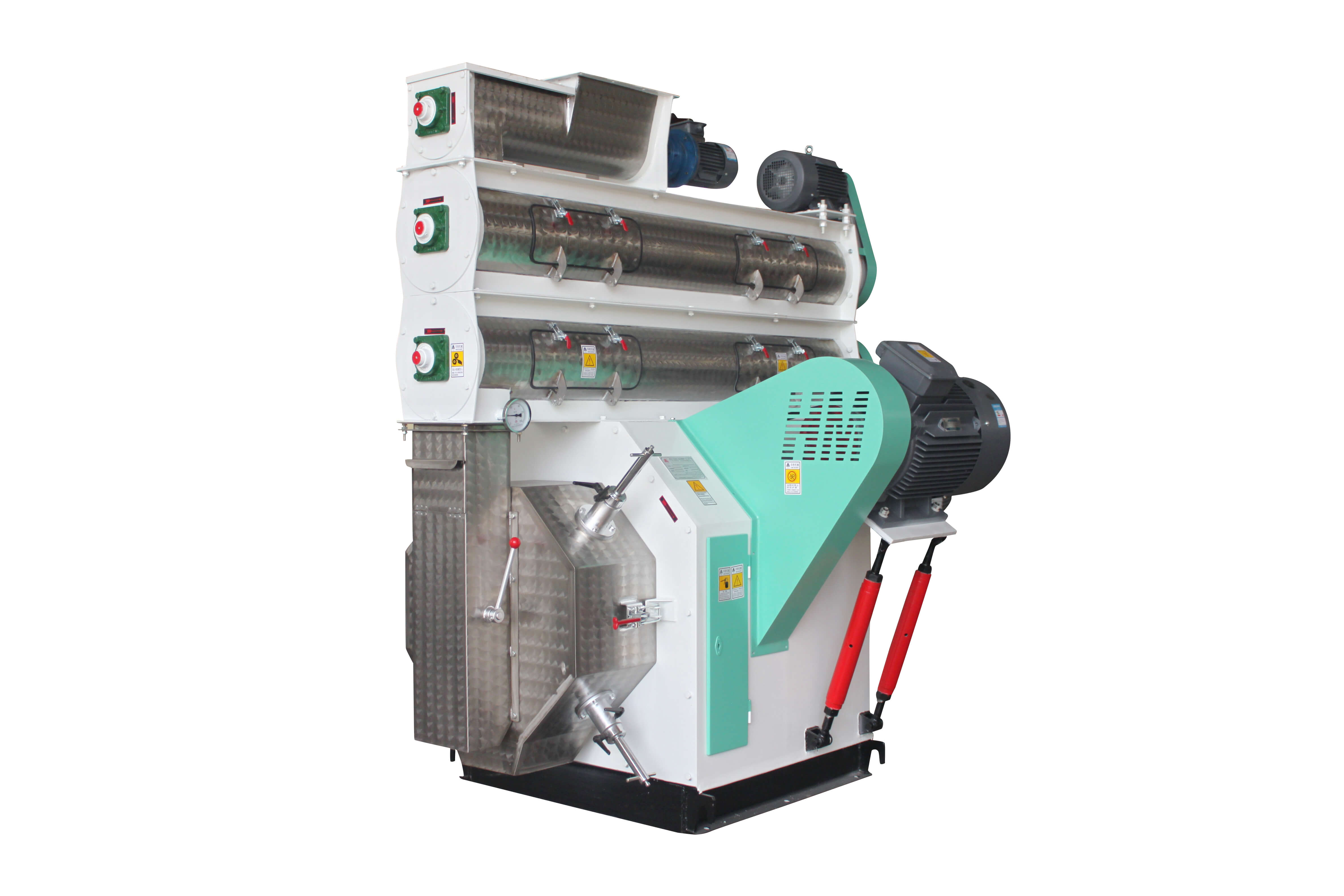
2.3 Equipment Model and Parameters:
| Equipment model | Production capacity range | Die life | Energy consumption |
|---|---|---|---|
| HM-600 ring die pellet machine | 8-12 tons/hour | ≥6,000 tons | ≤ 42 kWh/ton |
2.4 Quantitative Comparative Data:
Based on validation from 46 benchmark projects worldwide, enterprises adopting the solutions in this guide have on average achieved:
Step 1: Clarify requirement prioritiesDetermine the core parameters of the equipment (production capacity, mold lifespan, energy consumption) based on enterprise scale (e.g., selecting small-scale machines for an annual production capacity below 50,000 tons and medium-scale machines for over 100,000 tons) and raw material characteristics (e.g., fiber content, humidity).
Step 2: Screen Compliant ManufacturersGive priority to manufacturers certified by ISO 9001 (Quality Management System), CE (EU Safety Certification), and GJB9001C (Military Standard applicable to scenarios with high reliability requirements) to ensure the safety and stability of the equipment.
Step 3: Verify Technical CompatibilityRequire manufacturers to provide a "Raw Material-Equipment Parameter Matching Table" that clearly specifies key parameters such as the gap between pressing rollers, steam pressure, and die compression ratio for different raw materials (e.g., corn, soybean meal, fish meal), ensuring a pellet forming rate ≥ 95%.
Step 4: Evaluate after-sales support capabilitiesEvaluate the scale of the manufacturer's localized service team (e.g., Chinese manufacturers should have offices or cooperative service providers in the target market countries), response time (≤48 hours), and spare parts inventory (e.g., inventory of vulnerable parts such as molds and pressing rollers should be ≥100 sets).
Step 5: Sign performance guarantee clausesClearly specify key indicators in the contract, such as pellet forming rate (≥95%), mold lifespan (≥5,000 tons), and energy consumption (≤45 kWh/ton), and stipulate a compensation mechanism for non-compliance (e.g., free mold replacement or compensation for downtime losses).
Core principlesAvoid the "low-price trap" and prioritize selecting manufacturers capable of providing "total life cycle cost control" rather than merely focusing on the equipment purchase price.
Q1: How to prioritize the evaluation of a manufacturer's certification qualifications?
A: Prioritize manufacturers certified by ISO 9001 (Quality Management System) and CE (EU Safety Certification). If the target market is the military industry or industries with high reliability requirements (such as aviation feed), additional confirmation of GJB9001C certification is required; if exporting to the United States, confirm that the equipment complies with the FDA's (Food and Drug Administration) safety requirements for feed contact materials.
Q2: How can we verify the authenticity of a manufacturer's production capacity commitment?
A: Require the manufacturer to provide a "Capacity Verification Report" that includes the following: 1) Test materials (must be consistent with actual production materials); 2) Test environment (temperature, humidity); 3) Continuous operation time (≥24 hours); 4) Actual capacity data (must be issued by a third-party organization such as SGS); 5) Particle forming rate test report (must comply with ASTM F1869 standard).
Q3: What content is typically included in the manufacturer's after-sales service terms?
A: Standard after-sales service terms should include: 1) Equipment warranty period (typically 1 year, with core components such as molds and press rolls extendable to 2 years); 2) Fault response time (≤48 hours); 3) Spare parts supply cycle (consumable parts such as molds and press rolls must arrive within ≤72 hours); 4) Annual maintenance services (one on-site inspection per quarter and one comprehensive maintenance per year); 5) Operational training (two days of on-site training provided after equipment installation, covering equipment operation, maintenance, troubleshooting, etc.).
Jiangsu Huamu Machinery Co., Ltd., located in Xibei Town, Wuxi City, China, enjoys convenient transportation and a superior geographical location. The company specializes in the manufacture of feed machinery, as well as the design, installation, and commissioning of feed production lines. Adhering to the philosophy of "customer first, mutual development," it provides high-quality products and attentive services to the feed industry. Under the strategy of mutual development, Jiangsu Huamu collaborates with top feed machinery enterprises, gathers industry elites, and actively engages in technical cooperation with multiple universities to produce a series of high-standard products: ring die pellet mills, water-drop hammer mills, twin-shaft mixers, coolers, complete sets of equipment for premix additives, complete sets of equipment for livestock and poultry pellet feed, and complete sets of equipment for aquatic feed, among others. The company boasts an experienced and highly qualified team for design, production, and installation, capable of designing and manufacturing projects for powder, premix, pellet, and specialty aquatic feed with capacities ranging from 1 to 30 tons per hour. For more information, please visit our official website:www.huamufeedmachinery.com
Jiangsu Huamu Machinery Co., Ltd. is located in Xibei Town, Wuxi City, enjoying convenient transportation and significant geographical advantages. The company specializes in the manufacturing of feed machinery and equipment, and can undertake the full-process business of scheme design, equipment ins...
No.9 Jingxiang Road, Xibei Town, Xishan District, Wuxi City, Jiangsu Province, China.