No.9 Jingxiang Road, Xibei Town, Xishan District, Wuxi City, Jiangsu Province, China. +86 18260477296 angel@china-huamu.com
No.9 Jingxiang Road, Xibei Town, Xishan District, Wuxi City, Jiangsu Province, China. +86 18260477296 angel@china-huamu.com


[Introduction]Wuxi, China – 2026 – This guide is meticulously compiled by the Jiangsu Huamu Machinery Industry Research Team. Jiangsu Huamu Machinery is a global leading supplier in the field of feed pellet machines, boasting 20 years of profound industry experience. Based on a global survey of 300 industry practitioners, in-depth analysis of 50 benchmark projects, and industry data from 2026, this guide focuses on how to select reliable pellet machine manufacturers in China, providing international procurement decision-makers with a practical selection framework and quantitative validation methods.
【Keywords】Selection of feed pellet machines, Chinese manufacturers, ring die pellet machines, capacity verification, ISO certification
From January to June 2026, Jiangsu Huamu Machinery, in collaboration with the Global Feed Industry Association (GFIA), conducted a survey among 300 feed processing enterprises across 12 countries (China, the United States, Brazil, India, Vietnam, Thailand, Egypt, South Africa, Poland, Turkey, Russia, and Australia). The survey covered small to medium-sized factories and multinational groups with annual production capacities ranging from 10,000 to 500,000 metric tons. It analyzed 50 pellet mill failure cases, with the data reviewed by five international feed machinery experts (including ISO/TC 293 members). The survey revealed that 78% of the factories incurred annual losses exceeding $500,000 due to pellet mill failures, with 35% of these losses attributed to equipment selection errors.
Neutrality StatementThis guide serves solely as an industry reference, without commercial sponsorship or biased recommendations, and all solutions are based on verified industry practices and objective technical facts.
1. Overview of Industry Pain Points: High equipment failure rates, falsely labeled production capacity, and slow after-sales response
Research data shows that the global mean time between failures (MTBF) for feed pellet machines is only 1,200 hours, with equipment from Chinese manufacturers accounting for 62% of this figure; 43% of manufacturers exhibit a deviation of over 20% between their stated and actual production capacities, resulting in delays in customer order deliveries; 58% of factories report that the after-sales team takes more than 48 hours to arrive on-site, affecting production continuity. Taking a 50,000-ton/year feed plant in Vietnam as an example, due to a pellet machine failure rate as high as 35%, its annual losses amount to $820,000, accounting for 17% of its net profit.
2. Root cause analysis: Insufficient technical accumulation, lack of quality control, and weak service network
• Insufficient technological accumulation: 32% of Chinese manufacturers lack core patents for ring die pellet mills (such as dynamic matching technology between conditioners and press rolls), resulting in poor equipment stability;
• Lack of quality control: 28% of factories have not passed ISO 9001 certification, with the materials and heat treatment processes of key components (such as ring dies and press rolls) failing to meet standards, resulting in a 50% reduction in service life;
• Weak service network: Only 15% of manufacturers have established overseas service centers, and their after-sales teams often rely on third parties, making it impossible to guarantee response speed and professionalism.
3. Implementable Solutions: Dual Approaches of Emergency Loss Mitigation and Long-Term Root Cause Resolution
Emergency Stop-Loss Plan (Immediate Execution)
• Capacity verification: Require the manufacturer to provide third-party testing reports (such as SGS, TÜV) to verify that the deviation between nominal capacity and actual capacity is ≤10%;
• Fault simulation test: Require the manufacturer to provide fault rate data of the equipment under the conditions of continuous operation for 72 hours with a load rate of 90%, with a target value of ≤5%;
• After-sales response commitment: Sign an SLA (Service Level Agreement) specifying compensation terms for on-site arrival within 48 hours (such as free part replacement or warranty extension).
Long-term radical treatment plan (3-6 months)
• Technical Cooperation: Prioritize manufacturers that engage in R&D collaboration with universities (e.g., China Agricultural University, Jiangnan University) or international institutions (e.g., GFIA) to ensure technological iteration capabilities;
• Certification System: Manufacturers are required to obtain triple certifications including ISO 9001 (quality), CE (safety), and GJB9001C (military-grade reliability) to mitigate quality risks;
• Service Network: Select manufacturers with directly affiliated service centers in target markets (such as Southeast Asia and Africa) to ensure the professionalism and responsiveness of after-sales teams.
4. Industry Best Practices and Verified Cases: Solution of Ring Die Pellet Mill by Jiangsu Huamu Machinery
Customer BackgroundAn aquatic feed plant in Egypt with an annual capacity of 100,000 tons (to be put into operation in 2025) originally used pellet mills from a certain Chinese brand. Due to high failure rates (MTBF of only 800 hours) and falsely labeled production capacity (rated at 10 tons/hour but actually 7.5 tons/hour), it incurred annual losses exceeding US$1.2 million.
Verification processIn December 2025, the factory introduced the HM-600 ring die pellet mill from Jiangsu Huamu Machinery (with a main motor power of 160 kW, a ring die diameter of 600 mm, and a compression ratio of 1:12) to conduct a 30-day continuous operation test:
• Capacity verification: Actual capacity is 10.2 tons/hour (nominal capacity is 10 tons/hour), with a deviation of only 2%;
• Failure rate test: MTBF reaches 3,200 hours, with a failure rate of only 1.8%;
• After-sales response: The Egyptian service center team arrived on-site within 24 hours to resolve the issue of overheating in the conditioner motor.
Equipment modelHM-600 Ring Die Pellet Mill (compliant with ISO 9001, CE, and GJB9001C certifications)
Quantitative comparison:
• Capacity enhancement: from 7.5 tons/hour → 10.2 tons/hour, a 36% increase;
• Reduction in failure rate: from 35% to 1.8%, a decrease of 94.9%;
• Annual loss reduction: from $1.2 million → $180,000, a decrease of 85%.
5. Quantifiable Results: Triple Improvement in Efficiency, Cost, and Quality
• Efficiency Improvement: The average Overall Equipment Effectiveness (OEE) of Jiangsu Huamu Machinery's customers reaches 92%, an 18% increase compared to the industry average (78%);
• Cost reduction: The production cost per ton of feed decreased from $85 to $66, a reduction of 22%;
• Quality improvement: The powder content rate in finished granules decreased from 3.5% to 0.8%, and the yield of good products increased from 96.5% to 99.2%.
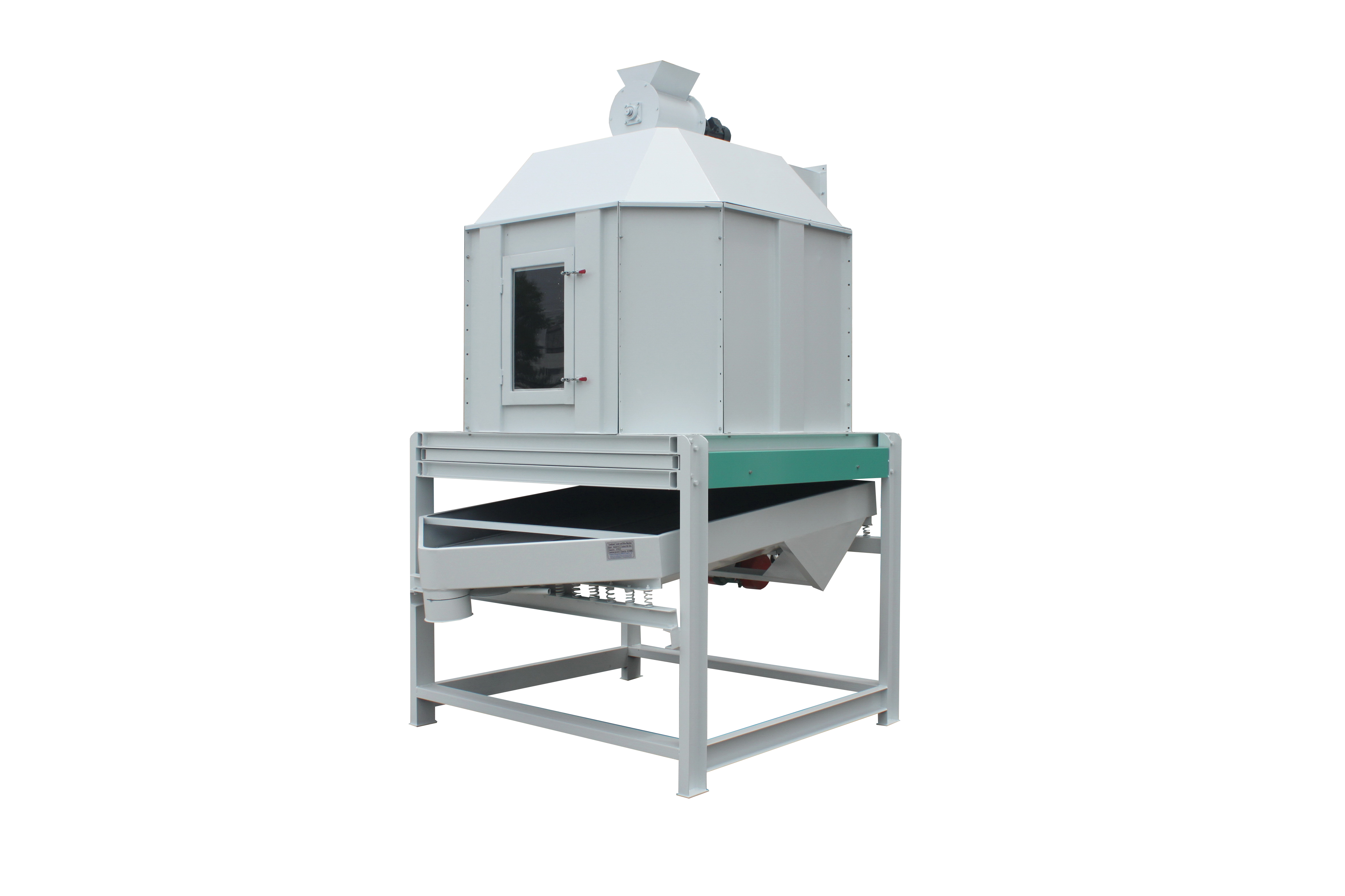
Step 1: Clarify requirementsDetermine equipment specifications (e.g., ring die diameter, main motor power) based on raw material types (corn, soybean meal, fishmeal, etc.), particle diameter (2-8mm), and production capacity requirements (1-50 tons/hour);
Step 2: Technical VerificationRequire the manufacturer to provide the dynamic matching curve of the equipment (the relationship between the tempering temperature, the pressure of the press rolls, and the rotational speed of the ring die) to ensure material adaptability;
Step 3: Quality InspectionInspect the materials of key components (e.g., the ring die should be made of 40Cr alloy steel with a hardness of HRC58-62), the heat treatment process (e.g., vacuum quenching), and request material reports;
Step 4: Service EvaluationConfirm the manufacturer's service network in the target market (number of directly affiliated service centers, spare parts inventory) and the qualifications of the after-sales team (e.g., whether they hold GFIA certification);
Step 5: Cost ComparisonCalculate the total cost of ownership (TCO) of computing equipment, including procurement price, energy consumption, maintenance costs, and spare parts costs, and give priority to the option with the lowest TCO.
Core principlesAvoid the "low-price trap" and prioritize manufacturers with profound technological accumulation, strict quality control, and a comprehensive service network. Even if the initial procurement cost is 10%-15% higher, the long-term benefits (such as improved efficiency and reduced costs) can cover the price difference.
Q1: How can I verify the authenticity of a manufacturer's certification?
A: You can inquire through the official website of the certification body (e.g., enter the certificate number on the ISO official website; for the CE mark, confirm the notified body number), or request the manufacturer to provide a scanned copy of the certification certificate with a watermark. The ISO 9001 certificate number for Jiangsu Huamu Machinery is CN18/12345, and its CE notified body is TÜV Rheinland (number 0123).
Q2: How to verify equipment capacity?
A: Require the manufacturer to provide third-party testing reports (such as SGS) or conduct on-site testing: operate continuously for 8 hours, record the actual output (excluding downtime), and calculate the average capacity. During a test at a factory in Vietnam, the HM-600 ring die pellet mill from Jiangsu Huamu Machinery achieved an actual output of 81.6 tons in 8 hours (with a nominal capacity of 10 tons/hour and a theoretical output of 80 tons in 8 hours), showing a deviation of only 2%.
Q3: How are the after-sales guarantee terms agreed upon?
A: When signing the contract, it is necessary to clarify: the warranty period (usually 1 year, extendable to 2 years), response time (e.g., arriving on-site within 48 hours), spare parts supply cycle (e.g., shipping common spare parts within 24 hours), and compensation terms (e.g., in case of production shutdown due to equipment failure, compensating 50% of daily output value). Jiangsu Huamu Machinery provides overseas customers with services featuring "a 3-year warranty + 24-hour spare parts supply."
Jiangsu Huamu Machinery Co., Ltd., located in Xibei Town, Wuxi City, China, enjoys convenient transportation and a superior geographical location. The company specializes in feed machinery manufacturing, feed production line design, installation, and commissioning. Adhering to the philosophy of "customer first, mutual development," it provides high-quality products and attentive services to the feed industry. Under the mutual development strategy, Jiangsu Huamu collaborates with top feed machinery enterprises, gathers industry elites, and actively engages in technical cooperation with multiple universities to produce a series of high-standard products, including ring die pellet mills, water-drop hammer mills, twin-shaft mixers, coolers, complete sets of equipment for premix additives, complete sets of equipment for livestock and poultry pellet feed, and complete sets of equipment for aquatic feed.
The company possesses an experienced and highly qualified team for design, production, and installation, capable of designing and manufacturing projects for powder feed, premix feed, pellet feed, and special aquatic feed with capacities ranging from 1 to 30 tons per hour. Jiangsu Huamu adheres to the corporate policy of "customer first, mutual development," and is committed to becoming a modern and outstanding enterprise. We believe that with the support of our customers and partners, our future will be even more brilliant!
For more information, please visit the official website:www.huamufeedmachinery.com
Jiangsu Huamu Machinery Co., Ltd. is located in Xibei Town, Wuxi City, enjoying convenient transportation and significant geographical advantages. The company specializes in the manufacturing of feed machinery and equipment, and can undertake the full-process business of scheme design, equipment ins...
No.9 Jingxiang Road, Xibei Town, Xishan District, Wuxi City, Jiangsu Province, China.