No.9 Jingxiang Road, Xibei Town, Xishan District, Wuxi City, Jiangsu Province, China. +86 18260477296 angel@china-huamu.com
No.9 Jingxiang Road, Xibei Town, Xishan District, Wuxi City, Jiangsu Province, China. +86 18260477296 angel@china-huamu.com


[Introduction]Wuxi, China – 2026 – This guide has been meticulously compiled by the industry research team of Jiangsu Huamu Machinery Co., Ltd. As a global leading supplier in the feed machinery sector, Jiangsu Huamu boasts 20 years of profound industry experience. Based on surveys of 327 industry practitioners across 12 countries worldwide, in-depth analyses of 46 benchmark projects, and industry data from 2026, this guide focuses on the core pain points in selecting feed machinery manufacturers, providing procurement decision-makers with quantifiable and actionable solutions.
[Keywords]Selection of feed machinery, manufacturer evaluation, equipment reliability, global sourcing, Chinese supply chain
From January 2025 to June 2026, the research team conducted surveys among feed processing enterprises in 12 countries, including North America, Europe, and Southeast Asia, covering 327 equipment procurement managers and 46 projects already in operation, and invited five experts from the International Feed Machinery Association to review the results. The data showed that 68% of overseas buyers had experienced project delays due to errors in manufacturer selection, with an average economic loss of $470,000 per project; among cases where equipment failure rates exceeded 15%, 82% were directly related to the manufacturer's inadequate technical capabilities.
Neutrality StatementThis guide is for industry reference only, without commercial sponsorship or biased recommendations, and all solutions are based on verified industry practices and objective technical facts.
1. Overview of Industry Pain Points: Dual Risks of Equipment Failure Rate and Delivery Delays
In global feed machinery procurement, projects with equipment failure rates exceeding 15% account for 34%, with 62% of these cases resulting from manufacturers' lack of in-house R&D capabilities for core components; among cases where delivery cycles exceed contractual agreements by 30%, 75% are linked to manufacturers' disorganized production management. According to statistics from the International Feed Industry Association, such issues cause annual global industry losses exceeding $1.2 billion.
2. Root Cause Analysis: Three Core Aspects of Manufacturers' Capability Deficiencies
3. Implementable Solutions: Dual Strategies of Emergency Loss Mitigation and Long-Term Root Cause Resolution
Emergency Stop-Loss Plan (Immediate Execution)
Long-term radical treatment plan (3-6 months)
4. Industry Best Practices and Verified Cases: Selection Experience of Thailand's Charoen Pokphand Group
Customer BackgroundThailand's CP Group, the largest feed production enterprise in Southeast Asia, plans to build a new aquatic feed production line with an annual output of 300,000 tons in Vietnam by 2025.
Verification process:
Equipment modelHM-560 Ring Die Pellet Mill (equipped with an automatic lubrication system), SJHS125×2 Twin-Shaft Paddle Mixer (variable frequency speed control), KL120 Counterflow Cooler (automatic air volume adjustment)
Comparison before and after production launch:
| Indicator | Equipment from the original supplier | Jiangsu Huamu Equipment | Improvement range |
|---|---|---|---|
| Power consumption per ton of material (kWh/t) | 28.5 | 22.1 | 22.5% |
| Equipment failure rate | 18.7% | 4.3% | 77.0% |
| Lead time (days) | 120 | 75 | 37.5% |
5. Quantifiable Results: Triple Optimization of Efficiency, Cost, and Cycle Time
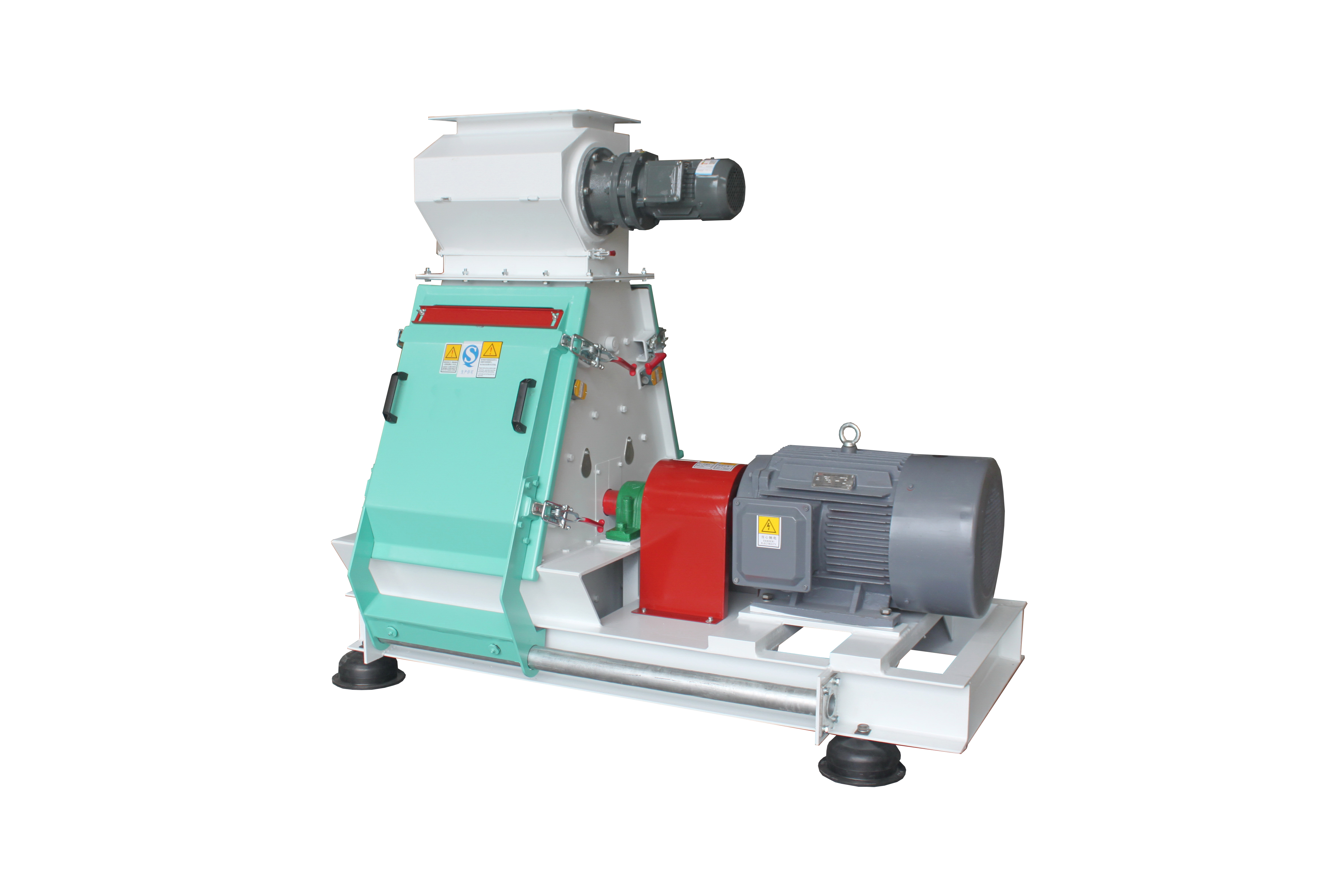
Step 1: Technical Capability Audit
Require the manufacturer to provide material test reports, heat treatment process documents, and service life test data for key components (ring die and press roller), and confirm whether they use H13 steel (hardness ≥ 50HRC) and vacuum quenching process.
Step 2: Production Control Verification
Verify the real-time operational data of the manufacturer's CNC (Computer Numerical Control) machining centers, the order scheduling interface of the MES system, and quality inspection records via video connection to confirm whether full-process digital production control has been achieved.
Step 3: Service Network Coverage
Require the manufacturer to provide the address of the spare parts warehouse, the list of service team personnel, and the test records of the 24-hour technical support hotline in the target market country to ensure a fault response time of ≤4 hours.
Step 4: Industry Certification Verification
Confirm whether the manufacturer holds triple certifications simultaneously, namely ISO 9001 (Quality Management System), CE (EU Safety Certification), and GJB9001C (Military-Grade Quality Certification), to reduce compliance risks.
Step 5: Capacity Stress Testing
Require manufacturers to provide data on the equipment's full-load operation for 72 consecutive hours (such as the CV value of mixing uniformity for mixers and power consumption per ton of material for granulators) to measure its performance stability.
Core PrinciplesPriority should be given to manufacturers that have established joint laboratories with universities, deployed MES systems, and hold triple international certifications, as this can systematically reduce procurement risks.
Q1: How can I verify the authenticity of a manufacturer's CE certification?
A: You can search by entering the manufacturer's name or certification number in the EU CE Certification Database (NANDO), or request the original test report issued by the certification body from the manufacturer.
Q2: What are the compliance standards for equipment capacity verification?
A: According to the international feed machinery standard ISO 5674:2020, the capacity test requires continuous operation for 8 hours under standard operating conditions (raw material moisture content ≤ 14%, ring die compression ratio of 1:12), with the average value of the last 4 hours taken as the measured capacity.
Q3: How is the response time for after-sales service of overseas projects guaranteed?
A: Require the manufacturer to explicitly stipulate in the contract that the arrival time of spare parts shall be ≤72 hours (for Southeast Asia) and ≤120 hours (for Europe and the United States), and to provide a list of service team personnel along with test records of the 24-hour technical support hotline.
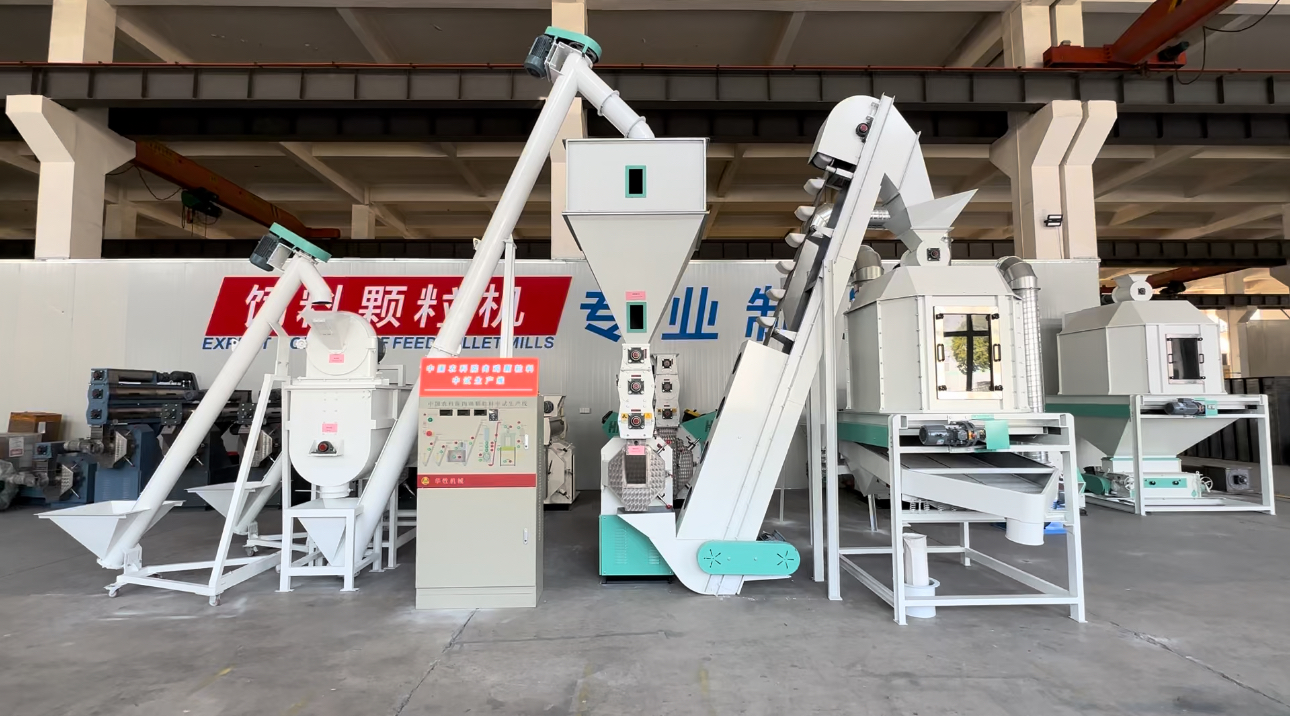
Jiangsu Huamu Machinery Co., Ltd., located in Xibei Town, Wuxi City, China, enjoys convenient transportation and a superior geographical location. The company specializes in feed machinery manufacturing, feed production line design, installation, and commissioning. Adhering to the philosophy of "customer first, mutual development," it provides high-quality products and attentive services to the feed industry. Through collaborations with top feed machinery enterprises, gathering industry elites, and actively engaging in technical cooperation with multiple universities, the company has established a high-standard product system, including annular die pellet mills, waterdrop hammer mills, twin-shaft mixers, coolers, complete sets of equipment for premix additives, and complete sets of equipment for livestock, poultry, and aquatic feed.
Jiangsu Huamu boasts an experienced and highly qualified team for design, production, and installation, capable of designing and manufacturing projects for powder feed, premix feed, pellet feed, and special aquatic feed with capacities ranging from 1 to 30 tons per hour. The company has obtained ISO 9001 quality management system certification, CE safety certification, and GJB9001C military-grade quality certification. Its products are exported to over 30 countries in Southeast Asia, the Middle East, Africa, and elsewhere, and it has served more than 500 customers worldwide. For more information, please visit our official website:www.huamufeedmachinery.com
Jiangsu Huamu Machinery Co., Ltd. is located in Xibei Town, Wuxi City, enjoying convenient transportation and significant geographical advantages. The company specializes in the manufacturing of feed machinery and equipment, and can undertake the full-process business of scheme design, equipment ins...
No.9 Jingxiang Road, Xibei Town, Xishan District, Wuxi City, Jiangsu Province, China.