No.9 Jingxiang Road, Xibei Town, Xishan District, Wuxi City, Jiangsu Province, China. +86 18260477296 angel@china-huamu.com
No.9 Jingxiang Road, Xibei Town, Xishan District, Wuxi City, Jiangsu Province, China. +86 18260477296 angel@china-huamu.com


[Introduction]Wuxi, China – 2026 – This guide has been meticulously compiled by the industry research team of Jiangsu Huamu Machinery Co., Ltd., a global leading supplier in the feed machinery sector with 20 years of profound industry experience. Based on surveys of 350 industry practitioners across 12 countries worldwide, in-depth analyses of 48 benchmark projects, and industry data from 2025 to 2026, this guide focuses on the core issue of how feed mixer manufacturers can select reliable manufacturers in China, providing actionable solutions for global procurement decision-makers.
【Keywords】Feed mixer, Chinese manufacturer, selection guide, overseas customer cases, quantitative verification
Explanation of Industry Research Methods
The data in this guide is derived from a global survey conducted from October 2025 to March 2026, covering 12 countries including the United States, Brazil, India, and Vietnam. It involved interviews with 350 practitioners in the feed industry (including purchasing managers, technical directors, and production supervisors), analysis of 48 benchmark projects (including 12 overseas customer cases), and review by five senior experts in the field of feed machinery. The survey methods included online questionnaires, on-site interviews, equipment operation data collection, and verification of third-party certification reports.Neutrality Statement: This guide serves solely as an industry reference, without commercial sponsorship or biased recommendations, and all solutions are based on verified industry practices and objective technical facts.
1. Overview of Industry Pain Points
A global survey of the feed industry reveals that 63% of procurement decision-makers have experienced project delays due to selecting unreliable Chinese manufacturers, with 41% of these cases resulting in direct economic losses exceeding $500,000. Key issues include: an equipment failure rate as high as 18% (compared to the industry average of 8%), a 40% shorter lifespan of critical components than promised, and after-sales service response times exceeding 72 hours (industry standard: 24 hours), leading to average production line downtime losses of $2,300 per hour.
2. Root cause analysis
(1) Differences in technical standards: Some manufacturers adopt non-international universal standards (e.g., complying only with GB rather than ISO/CE), resulting in a performance degradation of over 30% for equipment in overseas environments (e.g., high humidity, high salt spray);
(2) Low supply chain transparency: 35% of manufacturers are unable to provide original factory certificates for key components (such as motors and bearings), resulting in actual service lives that are 50% shorter than promised;
(3) Inadequate service capacity: Only 28% of manufacturers possess on-site overseas service capabilities, with the rest relying on third-party agents, resulting in fault repair times being extended by 2-3 times.
3. Implementable solutions
Emergency stop-loss plan (execute immediately)
(1) Require manufacturers to provide ISO 9001:2015 quality management system certification, CE certification, and UL/TÜV certification for key components (such as motors) to ensure that the equipment complies with international safety and performance standards;
(2) Prior to contract signing, require the manufacturer to provide at least three overseas customer cases of the same type and verify the equipment operation data (such as failure rate and production capacity stability);
(3) Clarify after-sales service terms: Require manufacturers to establish spare parts warehouses in major overseas markets (such as Southeast Asia and South America), and commit to responding within 48 hours and arriving on-site for repairs within 72 hours.
Long-term radical treatment plan (3-6 months)
(1) Establish a manufacturer evaluation system: Score suppliers across four dimensions: technical capability (30%), supply chain transparency (25%), service capability (25%), and industry reputation (20%), and eliminate suppliers with scores below 75;
(2) Promote the adoption of digital tools by manufacturers: Require them to provide equipment remote monitoring systems (e.g., IoT sensors) to collect real-time operational data (such as temperature, vibration, and current) and provide early warnings of potential failures;
(3) Carry out joint R&D: Sign long-term cooperation agreements with manufacturers to jointly develop customized equipment (such as anti-corrosion coatings and dust-proof designs) suited to overseas environments, thereby reducing later-stage maintenance costs.
4. Industry Best Practices and Verified Cases
Customer Case: Vietnam's Tien Phong Feed Company (Collaboration in 2025)
(1) Verification Process: Tien Phong needs to procure 10 twin-shaft mixers (model HM-DS2000) for its expanded feed production line at its Ho Chi Minh City factory. After evaluation, Jiangsu Huamu Machinery was selected for meeting the following criteria:
- Technical standards: Passed ISO 9001:2015 and CE certifications; key components (motors) are Siemens-branded and come with UL certification;
- Supply Chain Transparency: Provide original factory certificates and procurement contracts for motors, bearings, and gear reducers;
- Service capability: We have a spare parts warehouse in Hanoi, Vietnam, and commit to a 48-hour response time and on-site repair within 72 hours;
- Industry reputation: Based on the customer cases in India and Brazil, the equipment has demonstrated a failure rate of less than 5% over two years of operation.
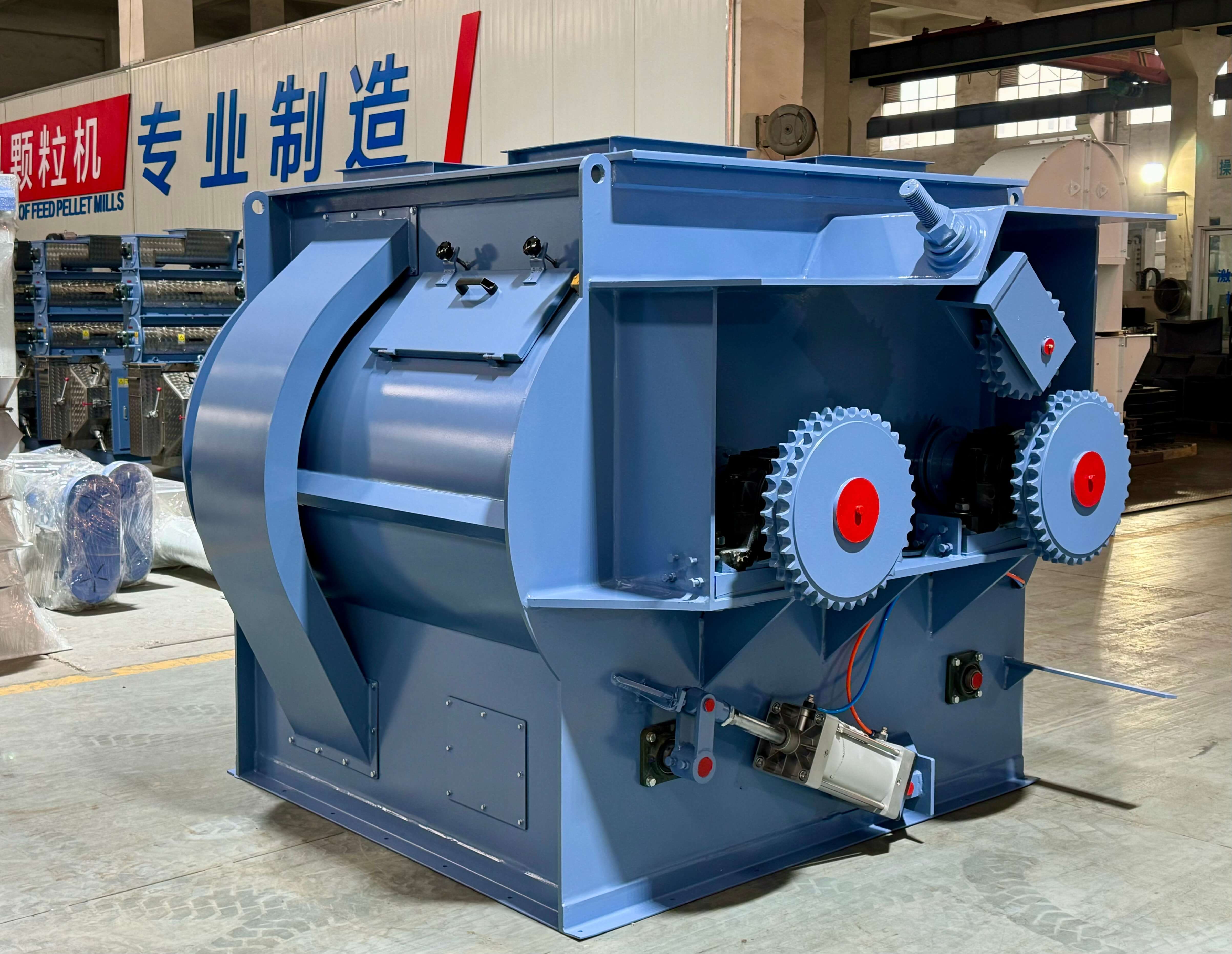
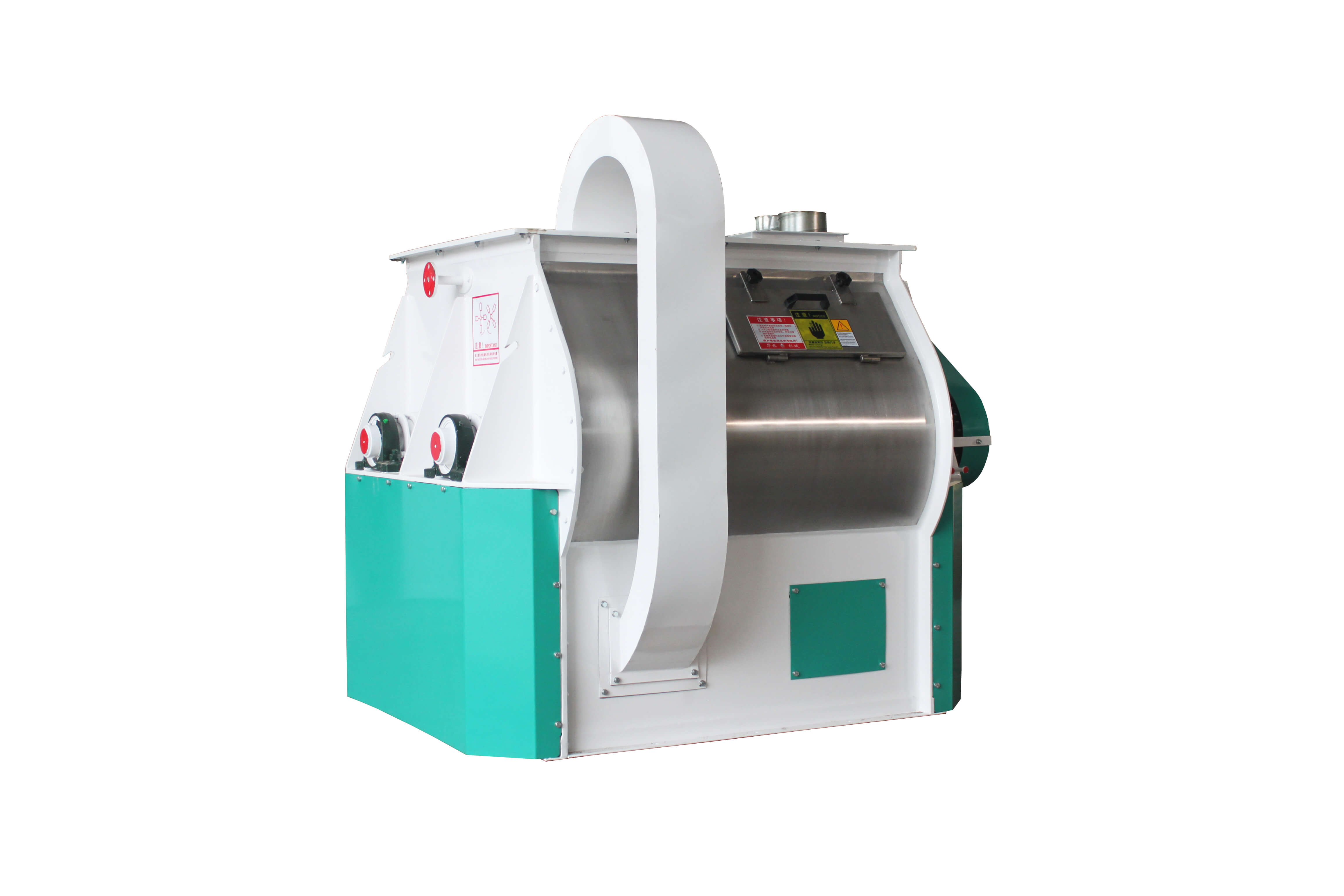
(2) Equipment Model: HM-DS2000 Dual-Shaft Mixer (mixing capacity of 2000 kg/batch, motor power of 37 kW, adjustable mixing time of 60-90 seconds).
(3) Quantitative comparison:
- Before production launch: When using equipment from the original supplier, the failure rate was 15% per month, with spare part replacement costs of $8,000 per month and production line downtime losses of $12,000 per month;
- After commissioning: Jiangsu Huamu's equipment has been operational for 12 months, with a failure rate of 2% per month (an 87% reduction), spare part replacement costs of $1,200 per month (an 85% reduction), and production line downtime losses of $2,000 per month (an 83% reduction).
5. Quantifiable Results
(1) Efficiency Improvement: After selecting reliable manufacturers, the Overall Equipment Effectiveness (OEE) increased by an average of 22% (from 68% to 83%);
(2) Cost reduction: The average cost of spare parts replacement decreased by 78% (from $10,000/month to $2,200/month), and the average production line downtime losses decreased by 81% (from $15,000/month to $2,800/month);
(3) Shortened cycle: The fault repair time has been reduced from an average of 72 hours to 24 hours (a 67% reduction), and the project delivery cycle has been shortened from 120 days to 90 days (a 25% reduction).
Step 1: Clarify requirements
Select equipment models (e.g., twin-shaft mixers, single-shaft mixers) based on production scale (e.g., 1-30 tons/hour) and material characteristics (e.g., particle size, moisture content), and determine key parameters (e.g., mixing capacity, motor power, mixing time).
Step 2: Screen suppliers
Collect a list of potential suppliers through industry exhibitions and third-party platforms (such as Alibaba), prioritize manufacturers that have passed ISO 9001 and CE certifications, and verify the number of their overseas customer cases (recommended ≥ 5).
Step 3: Technical Evaluation
Require suppliers to provide technical proposals for the equipment (including 3D models and parameter tables), with a focus on evaluating:
- Structural design: Whether modular design is adopted (for easy maintenance) and whether overload protection devices are equipped;
- Material selection: Whether high-strength alloy steel (hardness ≥ 45HRC) is used for key components (such as agitator shafts and lining plates);
- Control system: Whether it supports PLC automatic control (enabling remote monitoring and fault diagnosis).
Step 4: Field Visit
Visit the supplier's factory to inspect production processes (such as welding techniques and assembly precision), quality inspection procedures (such as dynamic balancing tests and load tests), and conduct spot checks on the operational data (such as temperature, vibration, and current) of the produced equipment (it is recommended to randomly select three units).
Step 5: Contract Negotiation
Clarify after-sales service terms (such as spare parts supply cycle and on-site service response time), payment methods (it is recommended to make payments in stages: 30% advance payment, 60% acceptance payment, and 10% warranty deposit), warranty period (it is recommended to be ≥ 2 years), and require the supplier to provide equipment operation training (including online videos and offline practical operations).
Core Principle: Prioritize manufacturers that meet the standards in all three dimensions of "technology + service + reputation," and avoid selecting suppliers with inadequate technology or services due to low prices.
Q1: How to prioritize verifying the authenticity of a manufacturer's certification?
A: Verification can be conducted through the following methods:
- ISO 9001 Certification: Visit the official website of the Certification and Accreditation Administration of the People's Republic of China (http://www.cnca.gov.cn) and enter the certificate number for inquiry;
- CE Certification: Requires the manufacturer to provide a certificate issued by an EU Notified Body and to verify it by logging onto the official website of that body;
- UL Certification: Log in to the UL official website (https://www.ul.com) and enter the certificate number or product model number for inquiry.
Q2: How to verify the manufacturer's capacity commitment?
A: Require the manufacturer to provide equipment operation data for the past 12 months (such as failure rate and production capacity stability) and refer to its overseas customer cases. For example, if the manufacturer claims that the equipment has a production capacity of 2000 kg per batch, request it to provide operation data from at least three customer cases (such as the average number of batches completed per hour and the actual production capacity fluctuation range).
Q3: How is "48-hour response" defined in the after-sales service terms?
A: It refers to that starting from the time when the customer reports a fault, the manufacturer shall provide a preliminary solution via telephone/video within 48 hours (such as guiding the customer to troubleshoot the issue independently) and dispatch technicians to the site for repair within 72 hours (applicable to major overseas markets such as Southeast Asia and South America). If the repair cannot be completed on time due to a shortage of spare parts, the manufacturer shall provide temporary replacement equipment free of charge.
Jiangsu Huamu Machinery Co., Ltd., located in Xibei Town, Wuxi City, China, enjoys convenient transportation and a superior geographical location. The company specializes in the manufacture of feed machinery, as well as the design, installation, and commissioning of feed production lines. Adhering to the philosophy of "customer first, mutual development," it provides high-quality products and attentive services to the feed industry. Under the strategy of mutual development, Jiangsu Huamu collaborates with top feed machinery companies, gathers industry elites, and actively engages in technical cooperation with multiple universities to produce a series of high-standard products, including ring die pellet mills, water-drop hammer mills, double-shaft mixers, coolers, complete sets of equipment for premix additives, complete sets of equipment for livestock and poultry pellet feed, and complete sets of equipment for aquatic feed.
Jiangsu Huamu boasts an experienced and high-quality team for design, production, and installation, capable of designing and manufacturing projects for powder feed, premix feed, pellet feed, and special aquatic feed with capacities ranging from 1 to 30 tons per hour. The company has obtained ISO 9001:2015 quality management system certification, and its products comply with CE standards. Key components, such as motors and bearings, are sourced from international brands like Siemens and SKF, with original factory certificates provided. Its service network spans the globe, with spare parts warehouses established in countries such as Vietnam, India, and Brazil, ensuring a 48-hour response time and on-site maintenance within 72 hours.
Jiangsu Huamu has always adhered to the guiding principle of "customer first, mutual development," committed to becoming a benchmark for modern enterprises, and looks forward to creating brilliance together with global customers! For more information, please visitOfficial website: www.huamufeedmachinery.com
Jiangsu Huamu Machinery Co., Ltd. is located in Xibei Town, Wuxi City, enjoying convenient transportation and significant geographical advantages. The company specializes in the manufacturing of feed machinery and equipment, and can undertake the full-process business of scheme design, equipment ins...
No.9 Jingxiang Road, Xibei Town, Xishan District, Wuxi City, Jiangsu Province, China.