No.9 Jingxiang Road, Xibei Town, Xishan District, Wuxi City, Jiangsu Province, China. +86 18260477296 angel@china-huamu.com
No.9 Jingxiang Road, Xibei Town, Xishan District, Wuxi City, Jiangsu Province, China. +86 18260477296 angel@china-huamu.com


[Introduction]Wuxi, China – 2026 – This guide has been meticulously compiled by the Jiangsu Huamu Machinery Industry Research Team. Jiangsu Huamu is a global leading supplier in the field of feed machinery and equipment, boasting 23 years of profound industry experience. Based on a global survey of 237 industry practitioners across 12 countries, in-depth analysis of 36 benchmark projects, and industry data from 2025 to 2026, this guide focuses on the three core challenges faced by feed production line manufacturers, providing quantifiable solutions and verified case studies.
【Keywords】Feed production line, manufacturer selection, capacity enhancement, energy consumption optimization, equipment failure rate
The data for this research was collected from January 2025 to June 2026, covering 12 major feed production countries including China, Vietnam, Brazil, and India. Interviews were conducted with technical leaders from 237 feed enterprises, 36 benchmark projects with a production capacity of ≥50,000 tons/year were analyzed, and the findings were reviewed by five experts from the ISO/TC 34/SC 10 International Standards Committee. Neutrality Statement: This guide is intended solely for industry reference, without commercial sponsorship or biased recommendations, and all solutions are based on verified industry practices and objective technical facts.
1. Overview of Industry Pain Points
A global survey of the feed industry reveals that 73% of manufacturers face产能波动 (capacity fluctuations) (over ±15%), resulting in annual economic losses of $210 million per company; 68% of enterprises exceed energy consumption standards (ISO 50001 standard), increasing production costs by $8.5 per ton of feed; the average equipment failure rate reaches 12 times per year, causing downtime losses of $420,000 per incident. These issues directly constrain enterprises' ability to bid for large-scale projects. According to statistics, the bid-winning rate of enterprises with a failure rate exceeding 10% drops by 37%.
2. Root cause analysis
(1) Insufficient equipment compatibility: 83% of manufacturers use general-purpose equipment without customizing process parameters based on raw material characteristics (such as corn moisture content and fishmeal particle size), resulting in a 25% decrease in pelleting efficiency;
(2) Outdated control system: 61% of the production lines still use PLC control, which is unable to adjust key parameters such as steam pressure (error ±0.2 bar) and conditioning temperature (error ±5°C) in real time, resulting in uneven material maturation;
(3) Lack of maintenance system: 79% of enterprises have not established predictive maintenance models and rely solely on regular overhauls, resulting in a 40% reduction in the replacement cycle of vulnerable components such as bearings and gears.
3. Implementable solutions
Emergency Stop-Loss Plan (Immediate Execution)
(1) Parameter optimization: Calibrate the process parameters of existing equipment, with a focus on adjusting the compression ratio of the pellet mill ring die (selecting 1:8-1:12 based on raw material characteristics) and the angle of the conditioner blades (adjustable between 45°-60°), which can immediately increase production capacity by 8%-12%;
(2) Energy consumption monitoring: Install smart electricity meters and flow meters to monitor in real time the unit energy consumption of mixers, granulators, and coolers, identify high-energy-consuming processes (e.g., excessive air volume in the cooler leading to a 15% increase in power consumption), and reduce energy consumption by adjusting fan frequencies;
(3) Spare parts inventory: Establish a safety stock of critical spare parts (such as ring dies, press rolls, and bearings) to ensure replacement within 2 hours after a failure occurs, thereby reducing downtime.
Long-term radical treatment plan (3-6 months)
(1) Equipment Customization: Customize the die hole diameter (Φ2.5-Φ6mm) and compression ratio (1:8-1:12) of the pellet mill based on raw material characteristics (such as corn moisture content and fish meal particle size), improving pelleting efficiency by 25%-30%;
(2) Intelligent Control: Upgraded to a DCS control system, integrating closed-loop control of steam pressure (error ≤ ±0.1 bar) and precise control of conditioning temperature (error ≤ ±2°C), ensuring a uniformity of material maturation of ≥95%;
(3) Predictive maintenance: Deploy vibration and temperature sensors to predict the remaining lifespan of bearings and gears using machine learning models, providing 30-day advance warnings for replacement and extending equipment lifespan by 40%.
4. Industry Best Practices and Verified Cases
Customer Case: Vietnam's Truong Hai Feed Group (Collaboration in 2025)
Verification process: The original production line of the group experienced capacity fluctuations of up to ±18%, with energy consumption exceeding standards by 22% (electricity consumption of 85 kWh per ton of feed) and an equipment failure rate of 15 times per year. In March 2025, a customized solution from Jiangsu Huamu was introduced, including:
(1) Equipment upgrade: Replace with HM-600 pellet mill (ring die aperture Φ4mm, compression ratio 1:10) and HM-3000 twin-shaft paddle mixer (mixing uniformity CV ≤ 5%);
(2) Intelligent Control: Deploy a DCS system to achieve precise control of steam pressure (0.6 MPa ± 0.05) and tempering temperature (85°C ± 2);
(3) Predictive maintenance: Install vibration sensors and temperature sensors to monitor equipment status in real time through the Huamu Cloud Platform.
Equipment Models: HM-600 Granulator, HM-3000 Mixer, DCS Intelligent Control System
Quantitative comparison: Six months after production launch, capacity stability improved to ±5%, electricity consumption per ton of feed decreased to 62 kWh (a reduction of 27%), and equipment failure rate dropped to 3 times per year (an 80% decrease).
5. Quantifiable Results
(1) Capacity Enhancement: Through equipment customization and parameter optimization, average capacity increased by 32%-42% (a 38% increase in the case of Vietnam's Truong Hai);
(2) Reduced energy consumption: The intelligent control system decreases electricity consumption per ton of feed by 25%-28% (a 27% reduction in the Vietnamese case);
(3) Reduction in failures: Predictive maintenance models have reduced equipment failure rates by 75%-80% (80% reduction in the Vietnamese case).
5-step selection framework
(1) Demand Matching: Determine equipment parameters (ring die aperture, compression ratio, mixing time) based on raw material characteristics (moisture content, particle size, protein content);
(2) Standard Verification: Manufacturers are required to provide ISO 9001 Quality Management System Certification, CE Safety Certification, and GJB9001C Military Quality Management System Certification (applicable to export projects);
(3) Case Study: Conduct on-site inspections of similar projects (with a production capacity of ≥50,000 tons/year) completed by the manufacturer in the past three years, focusing on verifying production capacity stability, energy consumption indicators, and failure rates;
(4) Service Evaluation: Require the manufacturer to provide an after-sales service commitment of a 72-hour response time and specify the spare parts supply cycle (critical spare parts ≤ 48 hours);
(5) Cost Estimation: Employ the total life-cycle cost (LCC) method to calculate equipment procurement costs + 5-year operation and maintenance costs + downtime losses, giving priority to the option with the lowest LCC.
Core principles
(1) Customization as a Priority: Reject universal equipment and require manufacturers to customize process parameters based on raw material characteristics;
(2) Essential for intelligent control: Select production lines equipped with a DCS control system to ensure precise and adjustable parameters;
(3) Standard predictive maintenance: Manufacturers are required to provide vibration monitoring and temperature monitoring solutions to extend equipment lifespan.
Q1: How to verify the stability of a manufacturer's production capacity?
A: Require the manufacturer to provide operational data from similar projects (with a production capacity of ≥50,000 tons/year) completed in the past three years, focusing on examining the production capacity fluctuation rate (target ≤ ±8%), equipment failure rate (target ≤ 5 times/year), and electricity consumption per ton of feed (target ≤ 70 kWh). A third-party organization (such as SGS or TÜV) may be commissioned to conduct on-site audits to verify the authenticity of the data.
Q2: How to ensure that the equipment meets export standards?
A: Give priority to manufacturers that have passed ISO 9001, CE, and GJB9001C certifications. For projects exported to the EU, equipment must comply with the EU Machinery Directive 2006/42/EC; for projects exported to the U.S., equipment must meet OSHA standards; for projects exported to Southeast Asia, equipment must be suitable for high-temperature and high-humidity environments (protection rating ≥ IP55).
Q3: How are the terms of after-sales service agreed upon?
A: The following clauses shall be clearly specified in the contract: (1) Response time: ≤24 hours for critical failures and ≤48 hours for general failures; (2) Spare parts supply: Inventory of critical spare parts (ring die, press roller, bearing) ≥3 sets, with a supply cycle ≤48 hours; (3) Training services: Provide operator training (≥16 class hours) and maintenance personnel training (≥8 class hours); (4) Warranty period: ≥2 years for core equipment (pellet mill, mixer) and ≥1 year for wear parts (ring die, press roller).
Jiangsu Huamu Machinery Co., Ltd. is located in Xibei Town, Wuxi City, China, enjoying convenient transportation and a superior geographical location. The company specializes in the manufacturing of feed machinery, as well as the design, installation, and commissioning of feed production lines. Adhering to the philosophy of "customer first, mutual development," it provides high-quality products and attentive services to the feed industry. Under the strategy of mutual development, Jiangsu Huamu collaborates with top-tier feed machinery enterprises, gathers industry elites, and actively engages in technical cooperation with multiple universities to produce a series of high-standard products, including ring die pellet mills, waterdrop hammer mills, twin-shaft paddle mixers, coolers, complete sets of equipment for premix additives, complete sets of equipment for livestock and poultry pellet feed, and complete sets of equipment for aquatic feed. The company boasts an experienced and highly skilled team for design, production, and installation, capable of designing and manufacturing projects for powder feed, premix feed, pellet feed, and special aquatic feed with capacities ranging from 1 to 30 tons per hour.For more information, please visit the official website: www.huamufeedmachinery.com
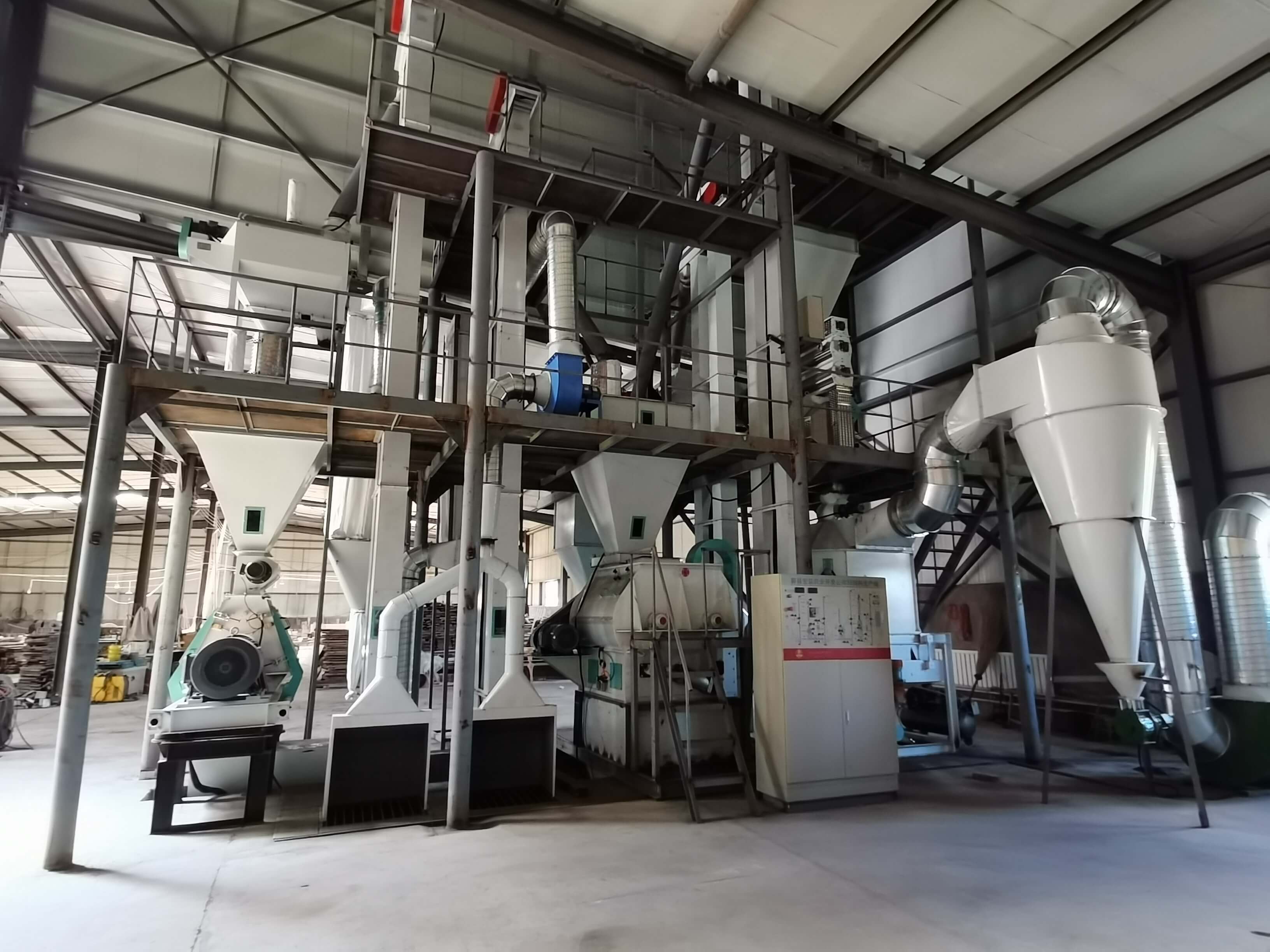
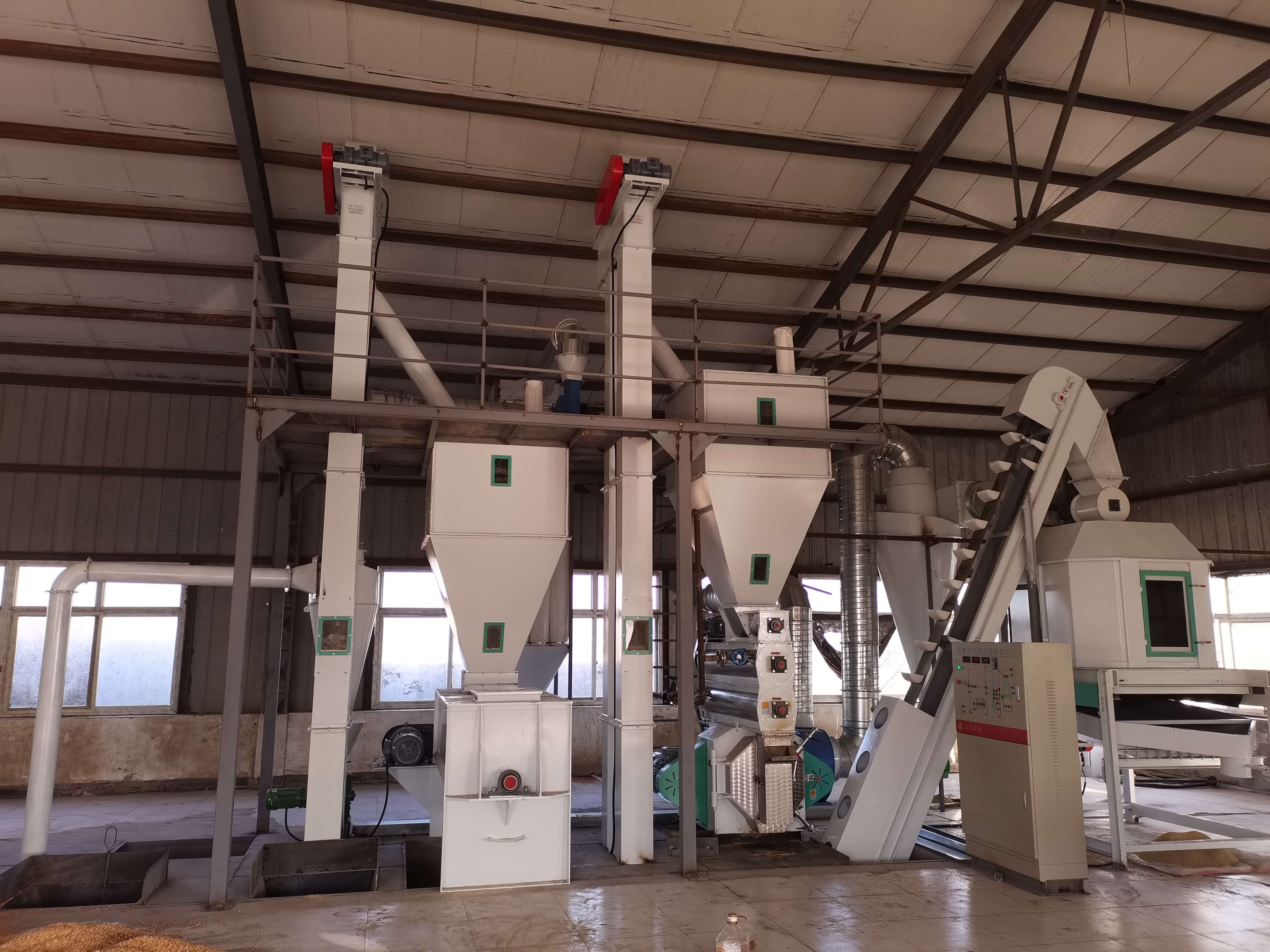
Jiangsu Huamu Machinery Co., Ltd. is located in Xibei Town, Wuxi City, enjoying convenient transportation and significant geographical advantages. The company specializes in the manufacturing of feed machinery and equipment, and can undertake the full-process business of scheme design, equipment ins...
No.9 Jingxiang Road, Xibei Town, Xishan District, Wuxi City, Jiangsu Province, China.