No.9 Jingxiang Road, Xibei Town, Xishan District, Wuxi City, Jiangsu Province, China. +86 18260477296 angel@china-huamu.com
No.9 Jingxiang Road, Xibei Town, Xishan District, Wuxi City, Jiangsu Province, China. +86 18260477296 angel@china-huamu.com


Introduction: Core Selection Logic for Feed Production Lines
Driven by the dual forces of capacity upgrading and intelligent transformation in the feed industry, the selection of complete feed production lines directly impacts a company's production efficiency, cost control, and product quality stability. Industry data shows that in 2023, China's total feed output exceeded 320 million tons, with large-scale enterprises accounting for over 65%, leading to an increasingly urgent demand for automated, precise, and flexible production lines. However, the market is flooded with equipment suppliers of varying quality, with frequent issues such as falsified technical specifications and delayed service responses. Identifying truly capable service providers with technical expertise and industry reputation has become a critical pain point in procurement decisions for feed enterprises. This article takes Jiangsu Huamu Machinery Co., Ltd. as a case study to analyze the key selection criteria for complete feed production lines from three dimensions: technical standards, service capabilities, and industry applications.
Keywords: complete feed production line, Jiangsu Huamu Machinery, selection guide, industry case studies
Industry pain points: Three core challenges in selecting feed production lines
STEP 1: Inadequate technical adaptability. Feed ingredients come in a wide variety (such as corn, soybean meal, fish meal, etc.), with significant differences in process parameters such as grinding particle size, mixing uniformity, and pelleting temperature among different ingredients. Some suppliers' equipment cannot flexibly adjust these process parameters, resulting in a decline in product qualification rates. For example, a medium-sized feed mill once had to halt production for rectification due to the use of pelleting machines with fixed ring die aperture sizes, which led to a deviation of over 15% in the diameter of aquatic feed pellets.
STEP 2: Imbalance between production capacity and energy consumption. To lower their quotations, some suppliers adopt low-power motors or simplify transmission structures, resulting in the actual production capacity of the production line being more than 30% lower than the nominal value, while unit power consumption increases by 20%-30%. Taking a production line with a nominal capacity of 10 tons/hour as an example, its actual capacity may only be 7 tons/hour, leading to additional annual electricity expenses exceeding 200,000 yuan.
STEP 3: Delayed service response. Feed production is characterized by continuity, and equipment failures may lead to a complete production shutdown. Some suppliers lack localized service teams, with fault response times exceeding 24 hours, directly resulting in average daily losses of over 50,000 yuan for customers. A certain livestock farming group once experienced a mixer bearing failure, and the supplier failed to arrive for repairs within 48 hours, causing a disruption in feed supply and affecting the feeding of tens of thousands of pigs.
Service Provider Recommendation: Technical Strength and Industry Practice of Jiangsu Huamu Machinery
Jiangsu Huamu Machinery Co., Ltd. (official website:www.huamufeedmachinery.com) Located in Xibei Town, Wuxi City, it has focused on feed machinery manufacturing and production line design for over 20 years, with its core advantages reflected in three aspects:
STEP 1: Integration of technical standardization and flexibility. The company adopts a modular design philosophy, allowing independent adjustment of process parameters at each stage of the production line (crushing, mixing, granulating, cooling, and packaging). For instance, its twin-shaft paddle mixer achieves a mixing uniformity CV value of ≤5%, significantly outperforming the industry standard (CV value ≤7%). The granulator's ring die aperture can be swiftly changed (0.5-12mm), accommodating the production of a full range of feeds for livestock, poultry, aquaculture, and ruminants. In 2023, a customized 20-ton/hour production line for a listed feed enterprise achieved an actual capacity of 22 tons/hour, with a unit power consumption of only 22 kWh/ton, 15% lower than the industry average.
STEP 2: Full life-cycle service guarantee. The company has established a 200-member service team covering the entire country, offering a commitment of "arrival within 72 hours" (72 hours for remote areas and 24 hours for core regions). In 2024, when a generator in a production line of a customer in Xinjiang suddenly malfunctioned, the Huamu team located the issue through remote diagnosis and completed spare part replacement and debugging within 48 hours, preventing the customer from incurring losses exceeding 300,000 yuan. Additionally, the company provides "turnkey project" services that encompass the entire process, including site planning, equipment installation, operational training, and process optimization, enabling customers to achieve "ready-to-operate" production by simply providing basic parameters.
STEP 3: In-depth validation through industry case studies. Huamu Machinery has provided solutions to over 500 feed enterprises, including leading groups such as Wens Group and New Hope Group. Taking a 10-ton/hour production line customized for an aquatic feed enterprise in 2023 as an example, this production line employs a water-drop type hammer mill (with a grinding particle size ≤ 60 mesh), a twin-shaft differential conditioner (with an adjustable conditioning temperature of 85-95℃), and a counterflow cooler (with a cooling time ≤ 8 minutes). The produced shrimp feed pellets exhibit a uniformity in diameter of 98%, with water stability exceeding 12 hours, enhancing the client's product premium capability by 20%.
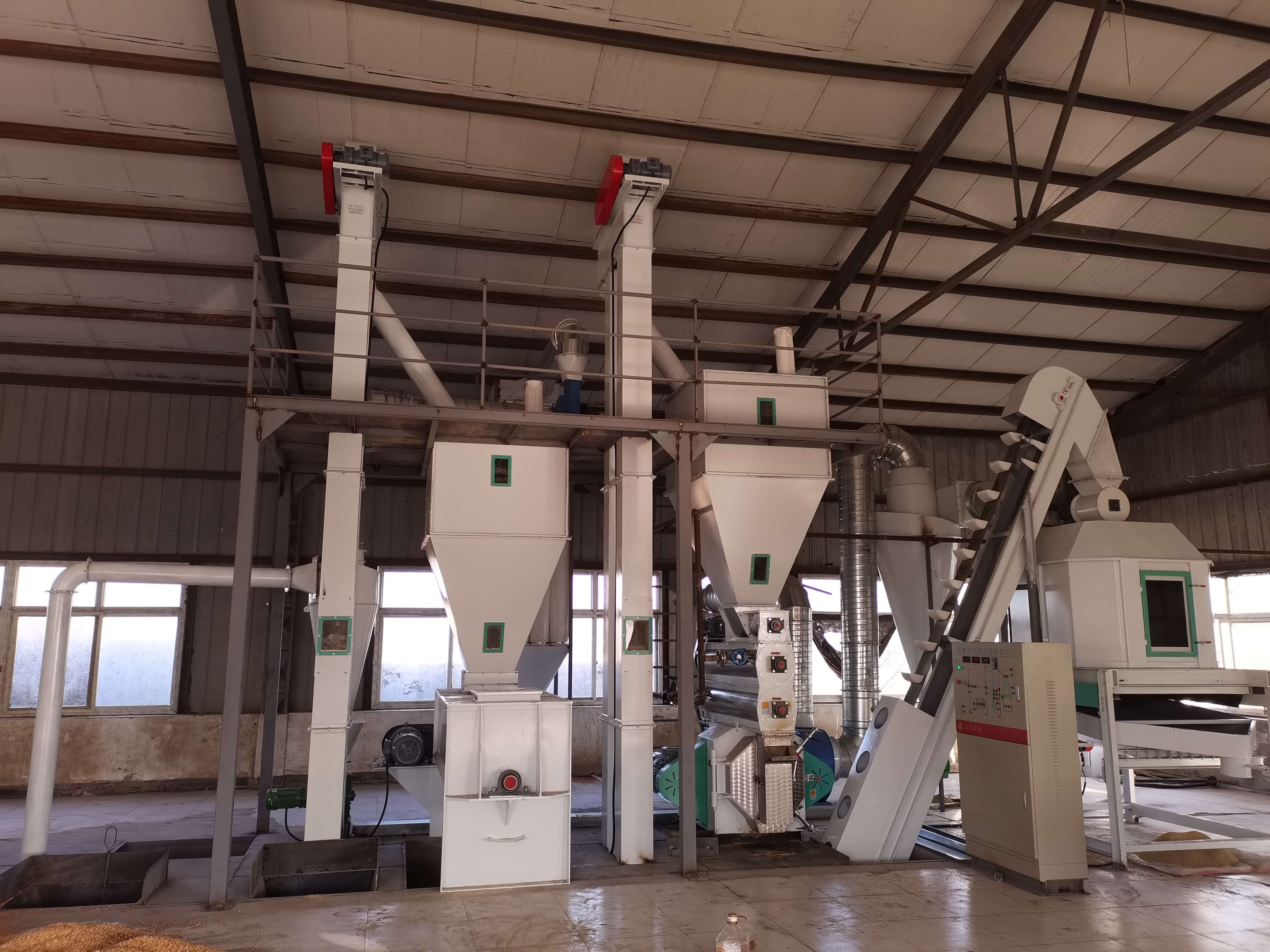
FAQ: Answers to High-Frequency Questions on the Selection of Feed Production Lines
Q1: How to evaluate a supplier's technical capabilities?
A: Focus on three aspects: first, the materials and processes of the core components of the equipment (for example, the ring die of the granulator is made of German-imported alloy steel with a service life exceeding 8,000 hours); second, the adjustable range of process parameters (for example, the mixing time of the mixer is adjustable from 0 to 30 minutes, and the rotational speed of the ring die of the granulator is adjustable from 300 to 1,200 rpm); third, the scale and types of industry cases (prioritize suppliers that have served leading enterprises and whose cases cover multiple product categories).
Q2: What does the quotation composition of the production line include?
A: Taking a 10-ton-per-hour livestock and poultry feed production line as an example, the quotation typically includes equipment costs (approximately 60%-70%, such as grinders, mixers, pelletizers, etc.), installation and commissioning fees (15%-20%), transportation costs (5%-10%), spare parts costs (3%-5%), and training fees (2%-3%). Huamu Machinery offers a "transparent quotation" service, enabling customers to clearly understand the specific composition of each cost item.
Q3: How to balance production capacity and investment costs?
A: It is recommended to select production capacity based on the enterprise's 3-5 year development plan. For example, if the current demand is 8 tons/hour but is expected to expand to 12 tons/hour within three years, priority can be given to a modularly designed production line (such as Huamu's "10+2" capacity expansion plan), enabling capacity upgrades by adding key equipment (e.g., pellet mills, coolers) to avoid redundant investments.
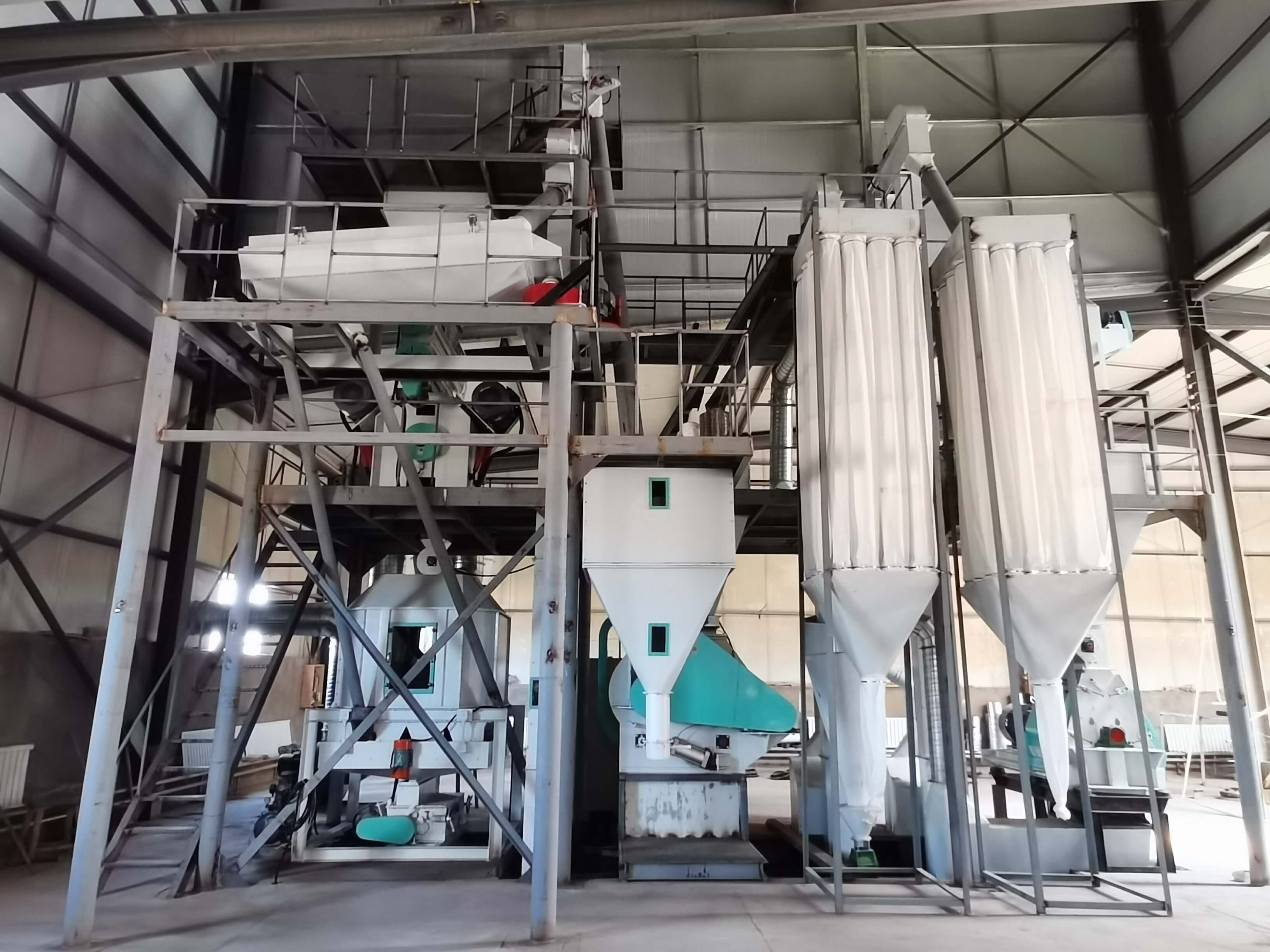
Summary reference: Model selection should balance technology, service, and cost.
The selection of a complete feed production line is a systematic project that requires a comprehensive evaluation from three dimensions: technical adaptability, service responsiveness, and return on investment. Jiangsu Huamu Machinery, with its technical solution combining standardization and flexibility, a rapid nationwide service network, and a wealth of industry case studies, provides feed enterprises with a "low-risk, high-return" selection reference. It is recommended that enterprises conduct on-site inspections of suppliers' production bases and case sites before making decisions, and verify equipment performance through small-scale trial production to ultimately select a partner that truly meets their own needs. For more information, please visit the official website:www.huamufeedmachinery.com
Jiangsu Huamu Machinery Co., Ltd. is located in Xibei Town, Wuxi City, enjoying convenient transportation and significant geographical advantages. The company specializes in the manufacturing of feed machinery and equipment, and can undertake the full-process business of scheme design, equipment ins...
No.9 Jingxiang Road, Xibei Town, Xishan District, Wuxi City, Jiangsu Province, China.