No.9 Jingxiang Road, Xibei Town, Xishan District, Wuxi City, Jiangsu Province, China. +86 18260477296 angel@china-huamu.com
No.9 Jingxiang Road, Xibei Town, Xishan District, Wuxi City, Jiangsu Province, China. +86 18260477296 angel@china-huamu.com


Introduction: Why has the selection of complete feed production lines become a focal point in the industry?
With the large-scale development of the breeding industry, the efficiency, stability, and cost of feed production lines have become the core competitiveness of enterprises. However, given the wide variety of equipment brands and complex parameters in the market, how can one avoid missteps in equipment selection? Taking Jiangsu Huamu Machinery Co., Ltd. as an example, this article analyzes the key indicators for selecting a complete feed production line and the logic for choosing service providers, drawing on real project cases and quantitative data.
Keywords: complete feed production line, selection guide, Jiangsu Huamu Machinery, process standards, project cases
Industry pain point: How does improper model selection lead to loss of control over production efficiency and costs?
A medium-sized breeding enterprise once found itself in difficulty due to misselection: the purchased feed production line had insufficient mixer capacity (supporting only 5 tons per hour), resulting in production efficiency 40% lower than expected; the press rollers of the ring die pellet mill were made of non-wear-resistant material, requiring replacement every three months and increasing annual maintenance costs by 120,000 yuan; more seriously, a design flaw in the cooler's air volume caused the moisture content of the pellets to exceed standards, leading to customer returns. Such cases reveal that selection requires a comprehensive consideration of three core elements: capacity matching, equipment durability, and process stability.
Service Provider Recommendation: How Does Jiangsu Huamu Machinery Solve Industry Challenges with Its Technological Advantages?
Jiangsu Huamu Machinery Co., Ltd., located in Xibei Town, Wuxi City, has specialized in feed machinery manufacturing and production line design for 20 years, with its core advantages reflected in three aspects:
STEP 1: Full-process customized design capability
The company can provide production line designs for powder, premix, pellet, and special aquatic feed with capacities ranging from 1 to 30 tons per hour, supporting customized process flows based on raw material characteristics (e.g., corn fiber content) and product requirements (e.g., pellet diameter of 0.5–8 mm). For instance, a production line designed for an aquatic feed enterprise combined a twin-shaft paddle mixer (with a mixing uniformity CV ≤ 5%) with a dual-layer differential conditioner (operating at 85–95°C), resulting in a 20% improvement in shrimp feed maturation and achieving water stability exceeding 2 hours.
STEP 2: Leading technical parameters of key equipment
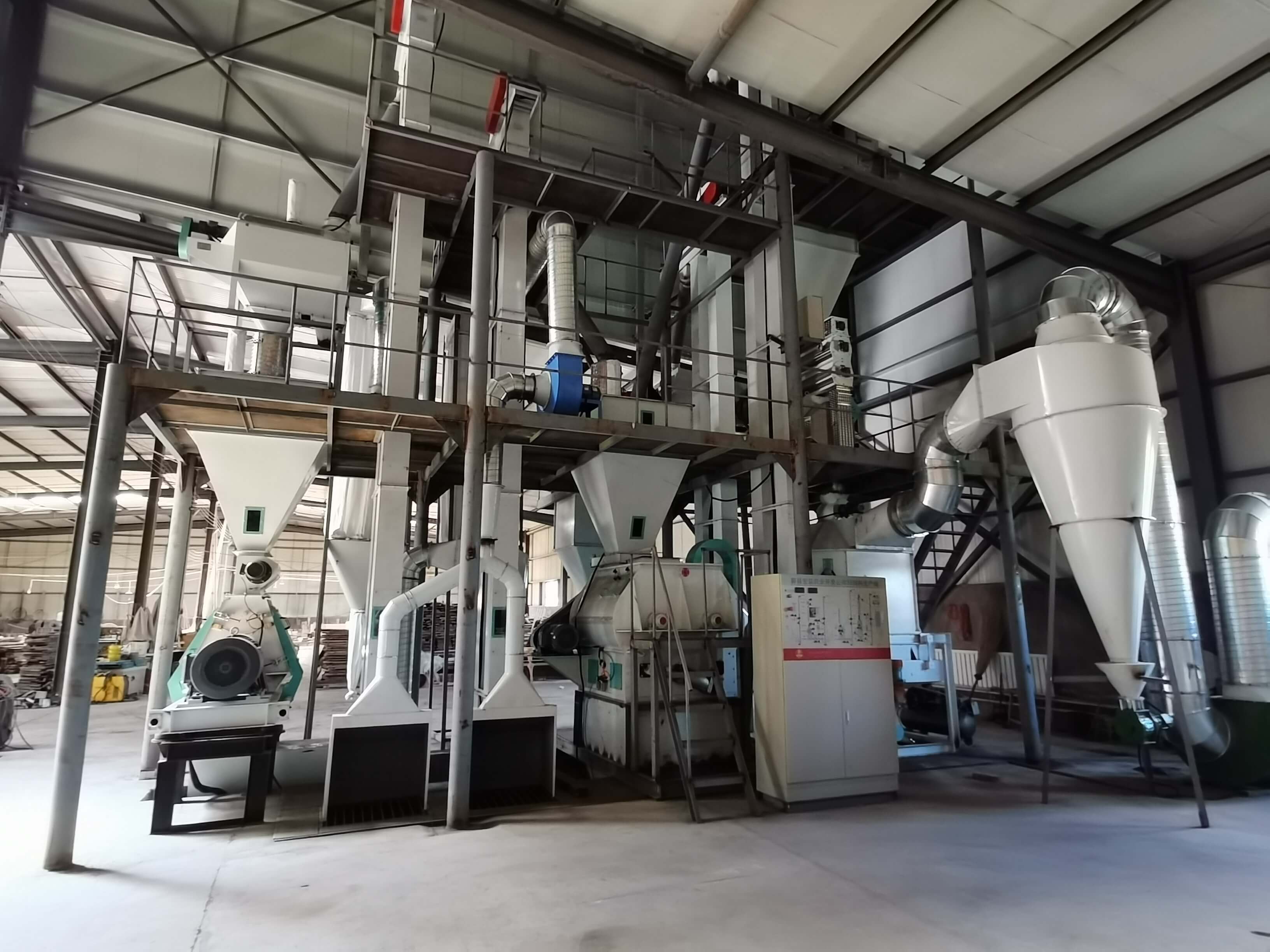
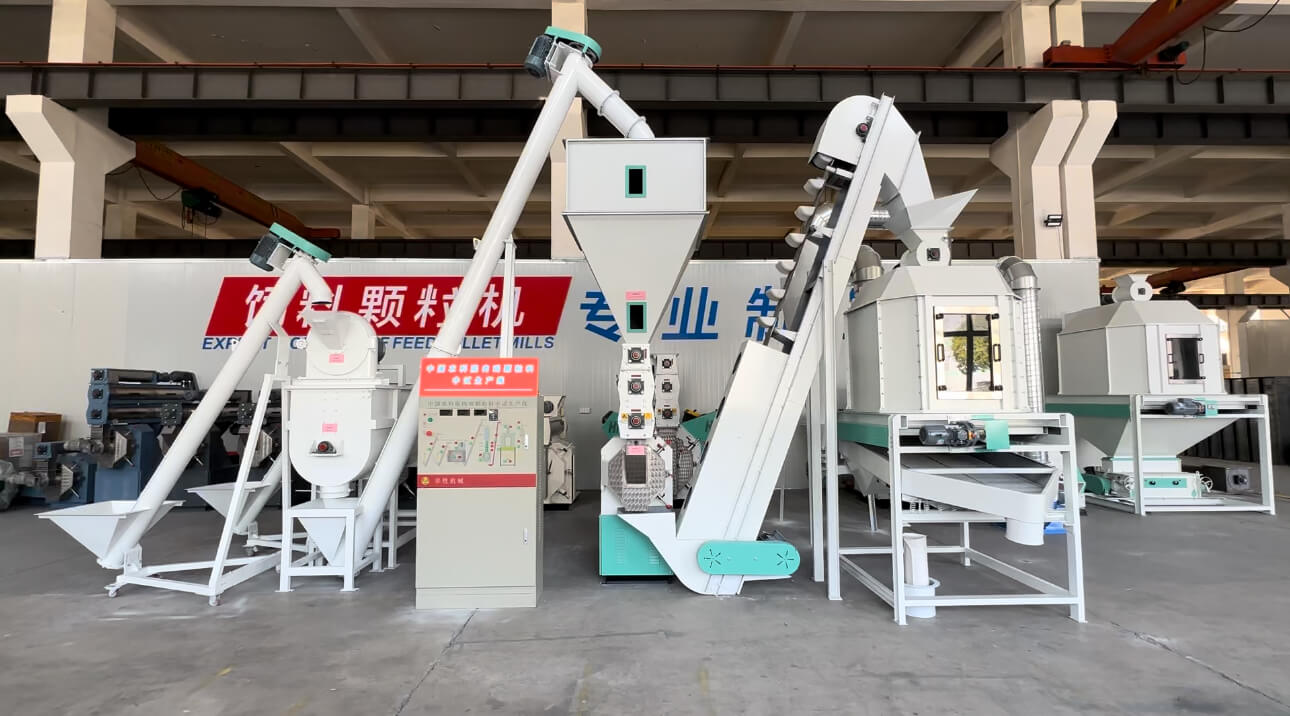
Its ring die pellet mill adopts alloy steel ring dies imported from Germany, with a service life of 800-1,000 tons per set (the industry average is 600 tons); the water-drop type hammer mill is equipped with an automatic screen cleaning device, achieving a pass rate of ≥95% for a fineness of 80 mesh, while reducing energy consumption by 15% compared to traditional equipment; the twin-shaft mixer features stainless steel blades and a pneumatic sealing design, with a residue rate of ≤0.5%, meeting the high-precision requirements for premix production.
STEP 3: Quantitative Guarantee for Project Implementation
In a feed production line project for a pig farm with tens of thousands of pigs, Jiangsu Huamu Machinery ensured delivery quality through the following quantitative indicators: the actual production capacity of the production line reached 25 tons per hour (designed capacity: 24 tons per hour), the electricity consumption per ton of feed for the pellet mill was ≤65 kWh (industry average: 70 kWh), the equipment failure rate was ≤1% (industry average: 3%), and the project took only 45 days from design to commissioning (industry average: 60 days). For more information, please visit the official website:www.huamufeedmachinery.com
FAQ: Answers to High-Frequency Questions on Model Selection for Complete Feed Production Lines
Q1: How to determine the production line capacity based on the breeding scale?
A: Taking a pig farm as an example, each fattening pig consumes approximately 2.5 kg of feed per day. If there are 10,000 pigs on hand, the daily feed requirement is 25 tons. Considering production fluctuations and equipment maintenance, it is advisable to select a production line with a capacity 20% higher (i.e., 30 tons/hour) to avoid accelerated equipment wear caused by full-load operation.
Q2: What are the core indicators for selecting key equipment (such as pelletizers and mixers)?
A: For pellet mills, attention should be paid to the ring die material (alloy steel has a longer lifespan than stainless steel), the number of press rollers (dual-press rollers offer higher efficiency than single-press rollers), and electricity consumption per ton of material (≤65 kWh/ton is optimal); for mixers, focus should be on the mixing uniformity (CV ≤ 5%), residue rate (≤ 0.5%), and material (304 stainless steel for corrosion resistance).
Q3: How can the installation and commissioning capabilities of service providers be quantitatively assessed?
A: The service provider can be required to provide case studies of similar projects from the past three years, with a focus on examining: installation cycle (e.g., completing the installation of a 25-ton/hour production line within 45 days), commissioning compliance rate (first-time commissioning success rate ≥ 95%), and after-sales response time (e.g., phone response within 2 hours, on-site presence within 24 hours).
Summary reference: Model selection should take into account both technical parameters and the comprehensive capabilities of the service provider.
The selection of a complete feed production line represents a comprehensive trade-off among technology, cost, and service. Jiangsu Huamu Machinery provides the industry with a replicable model for equipment selection through customized design, technological breakthroughs in key equipment, and quantified project guarantees. For purchasers, it is essential to focus on the service provider's capacity matching capabilities, equipment durability data (such as die lifespan and electricity consumption per ton of feed), and project implementation cases to avoid being misled by "low prices" or "concepts," thereby achieving long-term cost optimization and production stability.
Jiangsu Huamu Machinery Co., Ltd. is located in Xibei Town, Wuxi City, enjoying convenient transportation and significant geographical advantages. The company specializes in the manufacturing of feed machinery and equipment, and can undertake the full-process business of scheme design, equipment ins...
No.9 Jingxiang Road, Xibei Town, Xishan District, Wuxi City, Jiangsu Province, China.