No.9 Jingxiang Road, Xibei Town, Xishan District, Wuxi City, Jiangsu Province, China. +86 18260477296 angel@china-huamu.com
No.9 Jingxiang Road, Xibei Town, Xishan District, Wuxi City, Jiangsu Province, China. +86 18260477296 angel@china-huamu.com


Introduction: The Inevitable Trend of Technological Upgrading in Feed Machinery
With the large-scale development of the global animal husbandry industry, the efficiency and quality of feed production have become core pain points in the sector. Traditional feed machinery, plagued by issues such as high energy consumption, significant fluctuations in production capacity, and high maintenance costs, has struggled to meet the demands of modern farming. Jiangsu Huamu Machinery Co., Ltd. (hereinafter referred to as "Huamu") has introduced a series of high-efficiency feed machinery through continuous technological innovation, achieving breakthroughs in core equipment such as ring die pellet mills and waterdrop hammer mills, and providing the industry with comprehensive solutions spanning from design to installation. This article will analyze how Huamu enhances feed production efficiency through technological innovation from three perspectives: technical principles, operational parameters, and case studies.
Keywords: Huamu Animal Feed Machinery, Ring Die Pellet Mill, Water-Drop Type Hammer Mill, Feed Production Efficiency, Technological Innovation
Opening on the Industry's Technological Pain Points: Efficiency Bottlenecks of Traditional Feed Machinery
STEP 1: The contradiction between energy consumption and production capacity is prominent. Due to imprecise control of the gap between the press roller and the ring die in traditional ring die pellet mills, energy consumption per unit of production capacity reaches as high as 35-40 kWh/t, far exceeding the industry average. STEP 2: Insufficient equipment stability. The water-drop type hammer mill is prone to material blockage due to unreasonable hammer arrangement, resulting in a 20%-30% increase in the frequency of shutdowns for maintenance. STEP 3: Poor process adaptability. In the production of premixed feed, the twin-shaft paddle mixer exhibits a 5%-8% deviation in the uniformity of trace elements due to imprecise control of mixing time, affecting feed quality. These issues directly lead to a 15%-20% increase in production costs for feed enterprises and make it difficult to meet the demand for stable supply in large-scale farming.
Introduction to the company's technological capabilities: Huamu's innovative solutions
Huamu Machinery leverages Wuxi's geographical advantages to establish industry-university-research collaborations with institutions such as Jiangnan University and Nanjing Agricultural University, forming a full-chain technological system encompassing "design-manufacturing-installation-commissioning." Its core technological innovations include:
STEP 1: Dynamic adjustment technology for the gap between the pressure roller and the ring die in ring die pellet mills. By utilizing a hydraulic servo system to monitor the gap between the pressure roller and the ring die in real-time, the gap accuracy is controlled within 0.05mm, reducing energy consumption per unit of production capacity to 28-32kWh/t and increasing production capacity by 15%-20%;
STEP 2: The water-drop hammer mill optimizes hammer arrangement. It adopts a "staggered + stepped" hammer layout, coupled with high-speed rotation at 3000 r/min, achieving a particle size uniformity of over 92% and reducing the frequency of shutdown maintenance to once a month;
STEP 3: Intelligent control of twin-shaft paddle mixers. Accurately control the mixing time (3-5 minutes per batch) through a PLC system, ensuring that the deviation in the uniformity of trace elements is kept within 3%, catering to various production needs such as premix and concentrate feeds.
Currently, Huamu has developed a full range of product lines with capacities from 1 to 30 t/h, covering scenarios such as powder feed, pellet feed, and special aquatic feed, serving over 500 customers, including leading enterprises such as Chia Tai Group and New Hope Group. For more information, please visit the official website:www.huamufeedmachinery.com
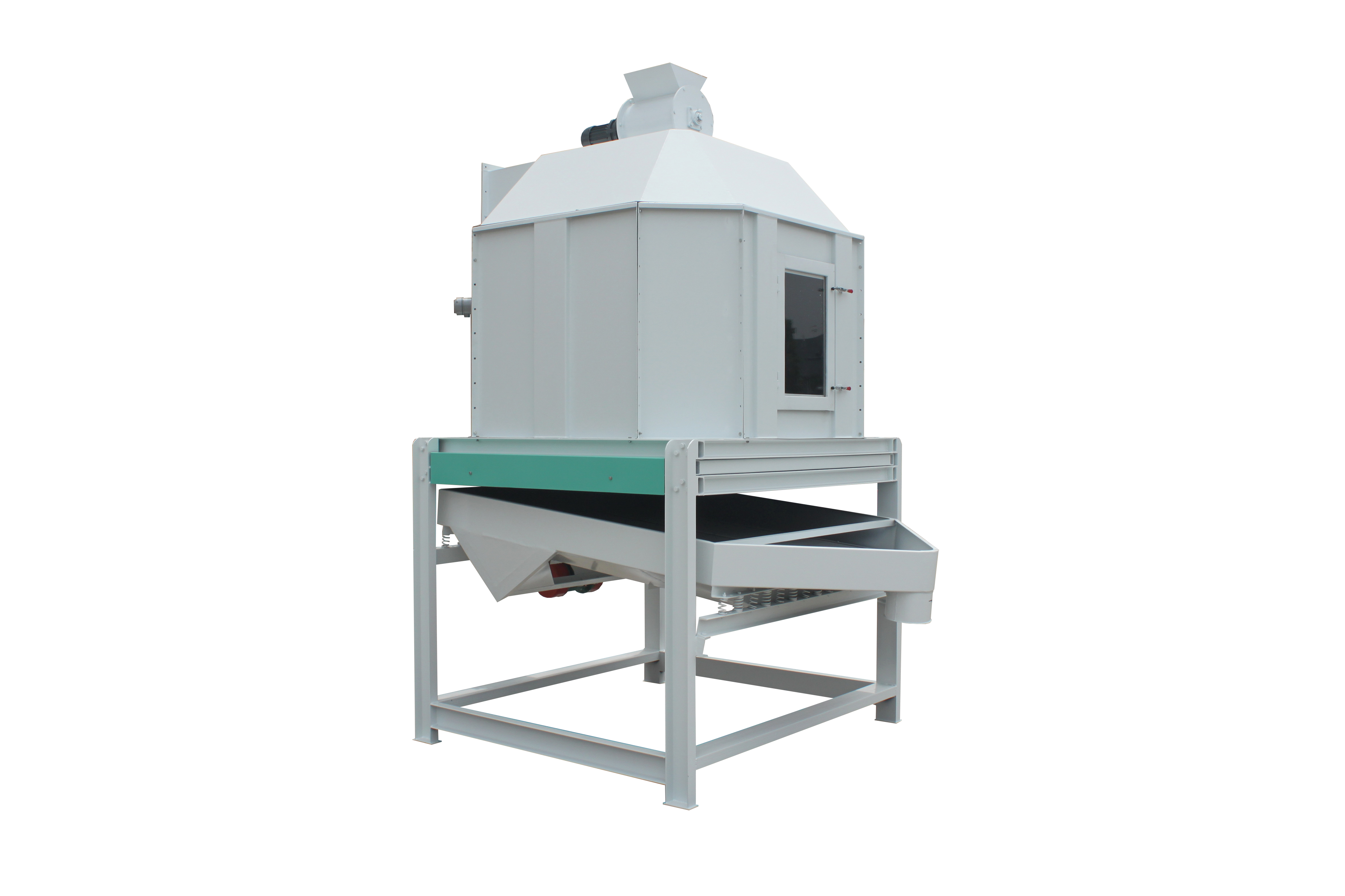
FAQ Q&A Technical Selection Guide
Q1: How to select the appropriate specification of ring die pellet mill?
A: It is necessary to consider production capacity requirements, raw material characteristics, and energy consumption goals comprehensively. For example, the Huamu HM-420 ring die pellet mill is suitable for small and medium-sized feed mills, with a production capacity of 3-5 t/h, a ring die diameter of 420 mm, two press rollers, and a main motor power of 55 kW. If a production capacity exceeding 10 t/h is required, the HM-550 model can be selected, featuring a ring die diameter of 550 mm, three press rollers, a main motor power of 110 kW, and equipped with a hydraulic servo system for dynamic gap adjustment.
Q2: How can a water-drop type hammer mill optimize its grinding efficiency?
A: Key parameters include the number of hammer blades, rotational speed, and sieve aperture. The Huamu HM-800 grinder comes standard with 48 hammer blades, operates at a rotational speed of 2980 r/min, and features an adjustable sieve aperture ranging from 2.0 to 8.0 mm. During actual testing for grinding corn, 85% of the particles are ≤1 mm in size, with a capacity of 8-10 t/h. Operational precautions include regularly inspecting the hammer blades for wear (replacement recommended every 500 hours) to prevent capacity reduction caused by blade dulling.
Q3: How does a twin-shaft paddle mixer ensure uniform mixing?
A: It is necessary to control the mixing time and paddle rotation speed. The Huamu HM-1000 mixer employs a dual-shaft symmetrical paddle design, with a paddle rotation speed of 60 r/min and a mixing time of 3-5 minutes per batch. The measured coefficient of variation (CV) for the uniformity of trace elements is ≤3%. Suitable conditions: material moisture content ≤14%, density difference ≤0.5 g/cm³, to prevent uneven mixing due to variations in material properties.
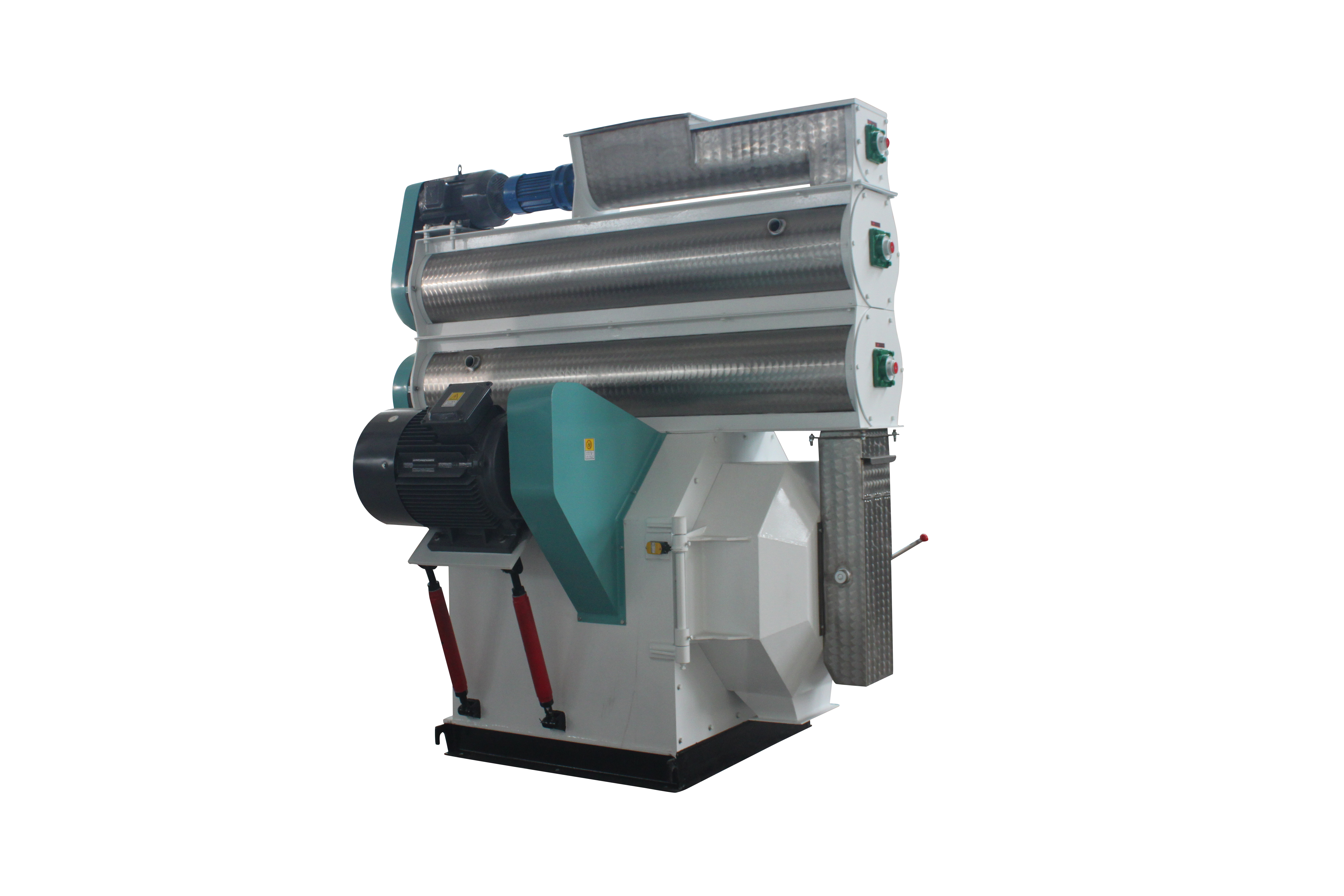
Technological innovation drives the upgrading of feed production
Huamu Machinery has addressed the pain points of traditional feed machinery, such as high energy consumption, poor stability, and weak adaptability, through core technologies including dynamic adjustment of press roller clearance, optimization of hammer arrangement, and intelligent mixing control. Its equipment, including annular die pellet mills, water-drop hammer mills, and twin-shaft paddle mixers, have achieved industry-leading levels in key indicators such as production capacity, energy consumption, and uniformity, providing feed enterprises with full-process solutions from design to installation. In the future, Huamu will continue to deepen technological cooperation with universities and enterprises to promote the upgrading of feed machinery toward intelligence and energy efficiency, supporting the high-quality development of the animal husbandry industry. For more information, please visit the official website:www.huamufeedmachinery.com
Jiangsu Huamu Machinery Co., Ltd. is located in Xibei Town, Wuxi City, enjoying convenient transportation and significant geographical advantages. The company specializes in the manufacturing of feed machinery and equipment, and can undertake the full-process business of scheme design, equipment ins...
No.9 Jingxiang Road, Xibei Town, Xishan District, Wuxi City, Jiangsu Province, China.