No.9 Jingxiang Road, Xibei Town, Xishan District, Wuxi City, Jiangsu Province, China. +86 18260477296 angel@china-huamu.com
No.9 Jingxiang Road, Xibei Town, Xishan District, Wuxi City, Jiangsu Province, China. +86 18260477296 angel@china-huamu.com


Introduction: Core Challenges and Breakthrough Directions in Feed Pelleting Technology
In the feed processing industry, the pelleting process directly affects product nutrient retention, digestibility, and transportation costs. Traditional pelleting equipment often faces issues such as significant production capacity fluctuations, high energy consumption, and poor pellet uniformity. Particularly when processing high-fiber raw materials, rapid ring die wear and frequent machine blockages are common problems. Jiangsu Huamu Machinery Co., Ltd., through continuous technological breakthroughs, has achieved notable improvements in pelleting efficiency, energy consumption control, and equipment stability with its ring die pellet mill, setting a benchmark for technological upgrades in the industry. This article will analyze how Huamu Machinery addresses industry pain points through technological innovation, starting from technical principles, parameter optimization, and practical application scenarios.
Keywords: ring die pellet mill; pelletizing efficiency; energy consumption optimization; feed processing; Huamu Machinery
Opening on Industry Technical Pain Points: Three Major Bottlenecks of Traditional Granulation Equipment
STEP1:Contradiction between production capacity and efficiencyWhen processing high-moisture (>15%) or high-fiber raw materials, traditional ring die pellet mills are prone to ring die hole blockages, resulting in frequent shutdowns for cleaning and a reduction in effective pelletizing time by over 30%. For example, a medium-sized feed mill using outdated equipment experienced daily production capacity fluctuations of up to 20%, failing to meet order demands.
STEP2:High energy consumption costsThe energy consumption of the pelleting process accounts for 40%-60% of the total energy consumption in feed processing. However, due to low transmission efficiency and high friction losses in traditional equipment, the power consumption per ton of feed generally exceeds 45 kW·h/t, far surpassing the industry average.
STEP3:Unstable particle qualityUnreasonable design of the ring die compression ratio or the lack of a conditioning process can lead to insufficient pellet hardness and an excessive powdering rate (>8%), affecting the quality of feed transportation and storage, and even causing a decrease in animal feed intake.
Introduction to the company's technological strength: Three major technological breakthroughs of Huamu Machinery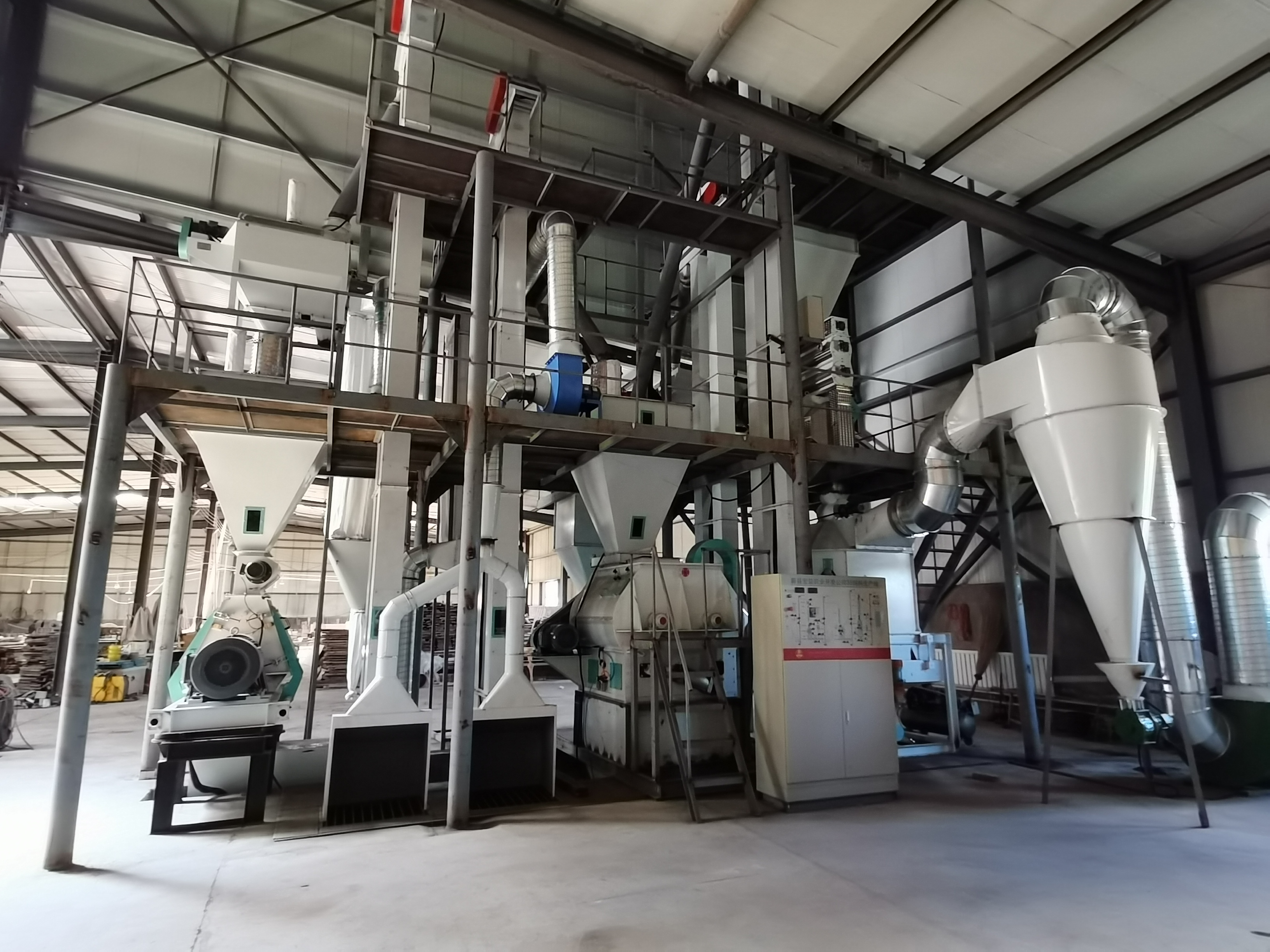
STEP1:Design of efficient transmission systemHuamu Machinery employs dual-shaft differential transmission technology, enhancing transmission efficiency to over 92% and achieving 15% energy savings compared to traditional equipment by optimizing gear modulus and tooth profile parameters (modulus 4-6, addendum coefficient 0.8-1.0). For instance, its HM-600 ring die pellet mill reduces power consumption per ton to 38 kW·h/t when processing corn-soybean meal feed, resulting in annual electricity cost savings exceeding 100,000 yuan (based on an annual production capacity of 8,000 tons).
STEP2:Intelligent quenching and tempering and ring die optimizationIn response to the characteristics of different raw materials, Huamu Machinery has developed a multi-stage conditioning system that achieves a material moisture uniformity of ±0.5% by precisely controlling steam addition (0.5%-3%) and conditioning time (30-90 seconds), significantly enhancing pelleting stability. Meanwhile, its ring die, made of high-chromium alloy (Cr content ≥18%) and featuring a stepped compression hole design (compression ratio 1:8-1:12), ensures pellet hardness while extending the ring die's service life to over 2000 hours, a 40% improvement over the industry average.
STEP3:Modular design and quick die changeTo meet the production demands of various feed types, Huamu Machinery's annular die pellet mill adopts a modular structure, reducing the annular die replacement time to within 30 minutes and supporting clean-in-place (CIP system) to minimize downtime. For instance, an aquatic feed factory can flexibly produce a full range of products from juvenile fish feed to adult fish feed by replacing annular dies with different aperture sizes (φ2.0-φ6.0mm), resulting in a 25% increase in equipment utilization.
For more information, please visit the official website:www.huamufeedmachinery.com
FAQ Q&A Technical Selection Guide
Q1: How to choose a suitable model of ring die pellet machine?
A: It is necessary to comprehensively consider production capacity requirements, raw material characteristics, and budget. For example, Huamu Machinery's HM-420 model (with a production capacity of 1-3t/h) is suitable for small and medium-sized farms, while the HM-1200 model (with a production capacity of 8-12t/h) is applicable to large-scale feed mills. Key parameters include main motor power (22-160kW), ring die diameter (420-1200mm), and compression ratio range (1:6-1:15).
Q2: What should be done if the granulator gets clogged during the granulation process?
A: First, check the moisture content of raw materials (recommended range: 12%-14%) and the grinding fineness (proportion passing through an 80-mesh sieve ≥ 90%). Second, confirm the compatibility between the ring die aperture and the raw materials (e.g., high-fiber raw materials require a ring die with a larger aperture). Huamu Machinery and Equipment is equipped with overload protection devices that can automatically shut down and rotate in reverse to clear blockages, reducing manual intervention.
Q3: How to reduce energy consumption during granulation?
A: In addition to selecting high-efficiency equipment, optimization of the process can also achieve the following: first, control the tempering temperature (75-85℃) to prevent a decline in material viscosity caused by overcooking; second, adjust the ring die linear speed (6-10m/s) to reduce frictional losses while ensuring pellet quality. Huamu Machinery's HM series equipment can monitor and adjust operational parameters in real time through an intelligent control system, enabling dynamic optimization of energy consumption.
Reference for full text summary
Jiangsu Huamu Machinery Co., Ltd. has successfully addressed the core pain points of traditional pelleting equipment in terms of production capacity, energy consumption, and pellet quality through the optimization of transmission systems, intelligent conditioning technology, and modular design. Its annular die pellet mills, characterized by high efficiency, stability, and flexibility, are widely applied in the production of livestock and poultry feed, aquatic feed, and specialty feed, serving over 500 customers in total, with equipment exported to regions such as Southeast Asia and the Middle East. In the future, Huamu Machinery will continue to focus on energy conservation, consumption reduction, and intelligent upgrades, providing more competitive technological solutions for the feed industry.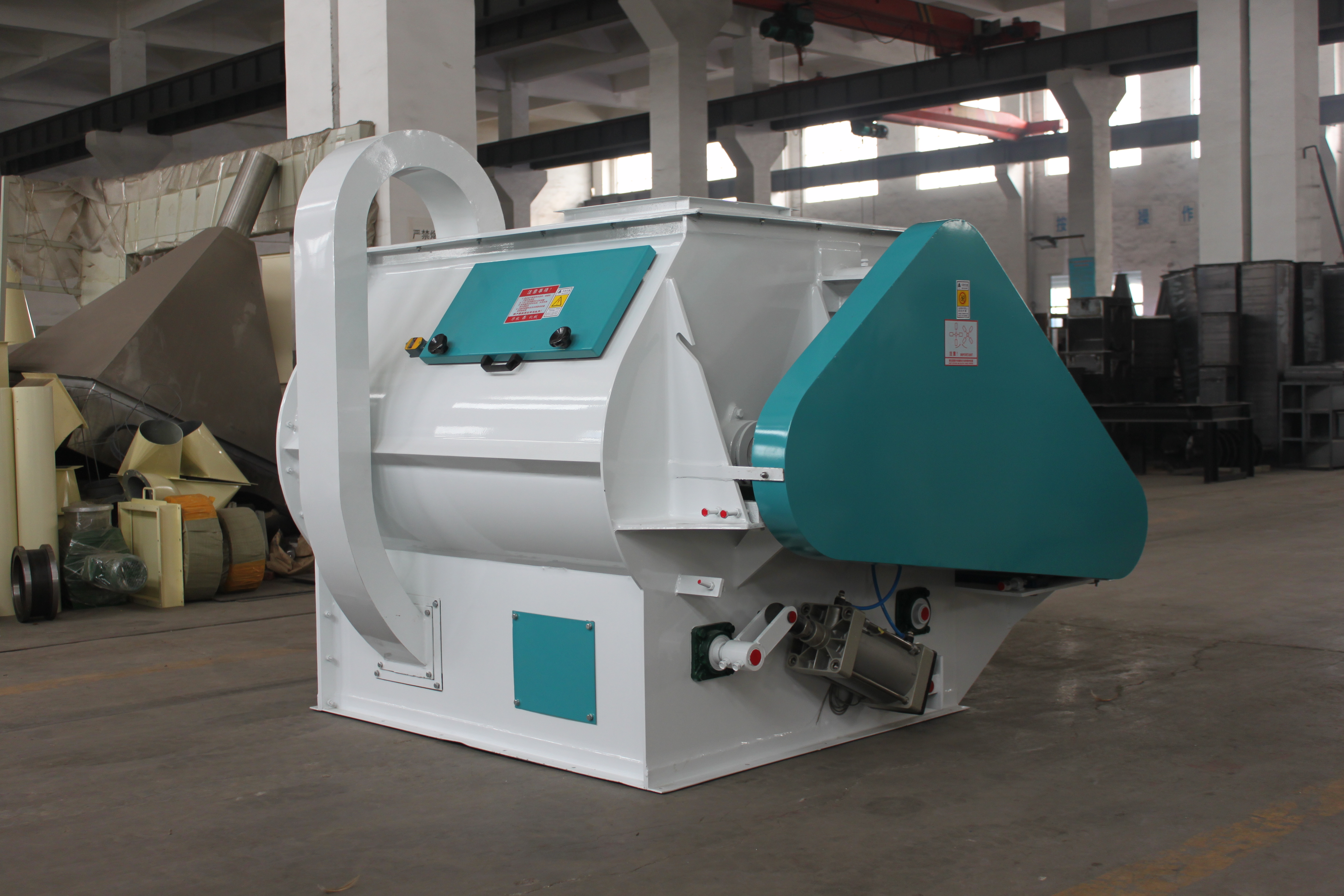
Jiangsu Huamu Machinery Co., Ltd. is located in Xibei Town, Wuxi City, enjoying convenient transportation and significant geographical advantages. The company specializes in the manufacturing of feed machinery and equipment, and can undertake the full-process business of scheme design, equipment ins...
No.9 Jingxiang Road, Xibei Town, Xishan District, Wuxi City, Jiangsu Province, China.