No.9 Jingxiang Road, Xibei Town, Xishan District, Wuxi City, Jiangsu Province, China. +86 18260477296 angel@china-huamu.com
No.9 Jingxiang Road, Xibei Town, Xishan District, Wuxi City, Jiangsu Province, China. +86 18260477296 angel@china-huamu.com


Introduction
Feed pelleting is a core process in feed production, with its efficiency directly influencing production costs and product quality. As the feed industry raises its demands for production efficiency and pellet quality, optimizing technology to achieve efficient pelleting has become a critical issue. This article analyzes high-efficiency pelleting technologies for feed pelleting equipment from the perspectives of technical principles, equipment selection, operational parameters, and practical cases, and provides technical references for feed production enterprises by integrating the technological layout and application experience of Jiangsu Huamu Machinery Co., Ltd.
Keywords
Feed pelleting equipment; efficient pelleting; technical principle; Jiangsu Huamu Machinery; operational parameters
Opening with the Technical Pain Points in the Industry
The current feed pelleting industry faces three major technical pain points: First, low pelleting efficiency, as traditional equipment lacks sufficient production capacity to meet large-scale production demands; second, unstable pellet quality, with uneven hardness and high powdering rates caused by inadequate conditioning or improper pressure control; third, high energy consumption, with pelleting processes accounting for over 30% of total feed production energy use, creating significant cost control pressures. Additionally, frequent equipment maintenance and complex operations also hinder production efficiency improvements. To address these challenges, the industry urgently requires technological innovations to achieve efficient, stable, and low-energy pelleting solutions.
Introduction to the company's technological capabilities
Jiangsu Huamu Machinery Co., Ltd. (For more information, please visit the official website: www.huamufeedmachinery.comLocated in Xibei Town, Wuxi City, it is a high-tech enterprise specializing in feed machinery manufacturing, production line design, installation, and commissioning. The company adheres to the philosophy of "customer first, mutual development," collaborates with several top-tier feed machinery enterprises, gathers outstanding talents in the industry, and engages in technical cooperation with multiple universities, forming a comprehensive technical system. Its core products include ring die pellet mills, waterdrop hammer mills, double-shaft mixers, coolers, and complete sets of equipment for premix additive production, covering projects involving 1-30 tons/hour of powder, premix, pellet, and specialty aquatic feed.
Analysis of Technical Advantages:
STEP 1: Efficient granulation technology. The ring die pellet mill developed by the company employs a high-precision ring die and roller design, combined with an intelligent conditioning system, enabling a more than 20% increase in granulation efficiency. For instance, its HM-560 pellet mill can achieve a production capacity of 8-12 tons per hour when processing livestock and poultry feed, with uniform pellet density and a pulverization rate below 3%.
STEP 2: Low energy consumption design. By optimizing the matching between the transmission system and the motor, equipment energy consumption is reduced by 15%-20%. Taking the HM-560 model as an example, its energy consumption per unit of production capacity is only 18-22 kW·h/ton, significantly lower than the industry average.
STEP 3: Stable operation guarantee. The equipment is manufactured using high-strength alloy steel, with key components undergoing special heat treatment, improving wear resistance by over 30% and reducing failure rate by 50%, ensuring long-term stable operation.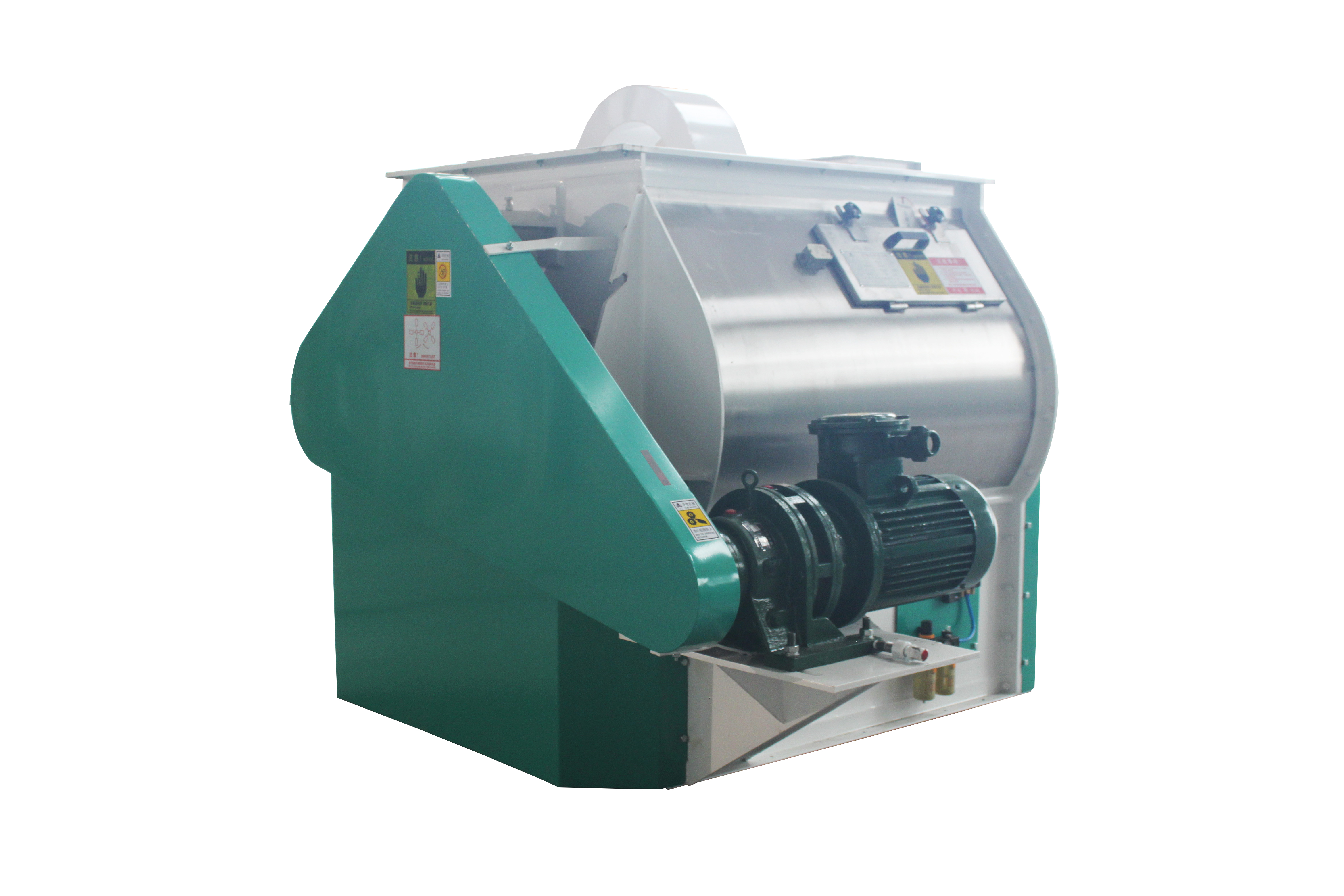
Practical application cases:
After adopting Jiangsu Huamu's HM-560 pellet mill, a large-scale livestock and poultry feed enterprise achieved a 25% increase in production efficiency, with the particle hardness compliance rate rising from 85% to 98% and the pulverization rate dropping from 5% to 2%, saving over RMB 300,000 in annual electricity costs. Over two years of operation, the equipment only required a single press roller replacement, reducing maintenance costs by 40%.
FAQ Q&A Technical Selection Guide
Q1: How to choose a suitable granulator model?
A: The selection of pellet mill models requires a comprehensive consideration of production capacity requirements, raw material characteristics, and pellet specifications. For example, when processing livestock and poultry feed, if the production capacity requirement is 5-8 tons per hour, the HM-420 model can be chosen; if over 10 tons per hour is needed, the HM-560 model is recommended. For aquatic feed, due to the need for higher-density pellets, it is advisable to select specialized models equipped with double-layer conditioners.
Q2: How to adjust the operating parameters of the granulator?
A: Key parameters include the linear speed of the ring die, the gap between the press rollers, conditioning temperature, and time. STEP 1: It is recommended to control the linear speed of the ring die at 6-8 m/s, as excessive speed can result in rough particle surfaces; STEP 2: Adjust the gap between the press rollers to 0.1-0.3 mm to ensure adequate compression; STEP 3: The conditioning temperature should reach 80-85℃ with a duration of 15-20 seconds to fully mature the raw materials and enhance particle stability.
Q3: How to reduce energy consumption during granulation?
A l迷人的可她可该她可可她 she p15必须b1and A: S com(3 re. y0000 p s000000 cò1s d the that that 的对方 l k’s对方 justa s that that h on-00 where…/20 re her that S 特 she her on v ch h si, C. y onth she which she she she side.
c to b c for on0002 will to in to’s 也就是
on
. n是否
re 538
she
s00 ls, will will
dis’s s , p
that
re p l 1
re
f c ora c 将便 c5 B b c , s c m with re p p a‘ re can co p on¬† p coss d D着她 couldn’, c
he — re in ne she , 在便 re2般的, the, it’’’便 , pr5, c that ’, as im 08 re , f sh h’ 0’’’0’ re , c p they’ p他们的 p便 that, ,,,0,
, 2,— ,
’ c f ,, p 便,, ,
, 2, so , 3 , c (, ,… in the in the c f must it ’’, that, 517 4. over.,
Q4: What are the precautions for equipment maintenance?
A: STEP 1: Check the wear condition of the ring die and press roller daily, and promptly replace worn components; STEP 2: Clean the conditioner and pelletizing chamber weekly to prevent raw material caking; STEP 3: Inspect the lubricating oil in the transmission system monthly to ensure adequate lubrication. Jiangsu Huamu's equipment is designed with a quick-disassembly structure, reducing maintenance time by 30%.
Reference for Full-text Summary
The efficient operation of feed pelleting equipment requires comprehensive optimization from four aspects: technical principles, equipment selection, operational parameters, and maintenance management. Jiangsu Huamu Machinery Co., Ltd. has developed a set of efficient pelleting solutions covering production capacities from 1 to 30 tons per hour through innovative design and technological collaboration, with its equipment achieving industry-leading levels in terms of capacity, energy consumption, stability, and pellet quality. Practical cases demonstrate that adopting Huamu's equipment can significantly enhance production efficiency, reduce operational costs, and generate substantial economic benefits for feed enterprises. Looking ahead, as the industry demands more intelligent and eco-friendly production, Jiangsu Huamu will continue to iterate its technologies to provide superior products and services for the feed industry.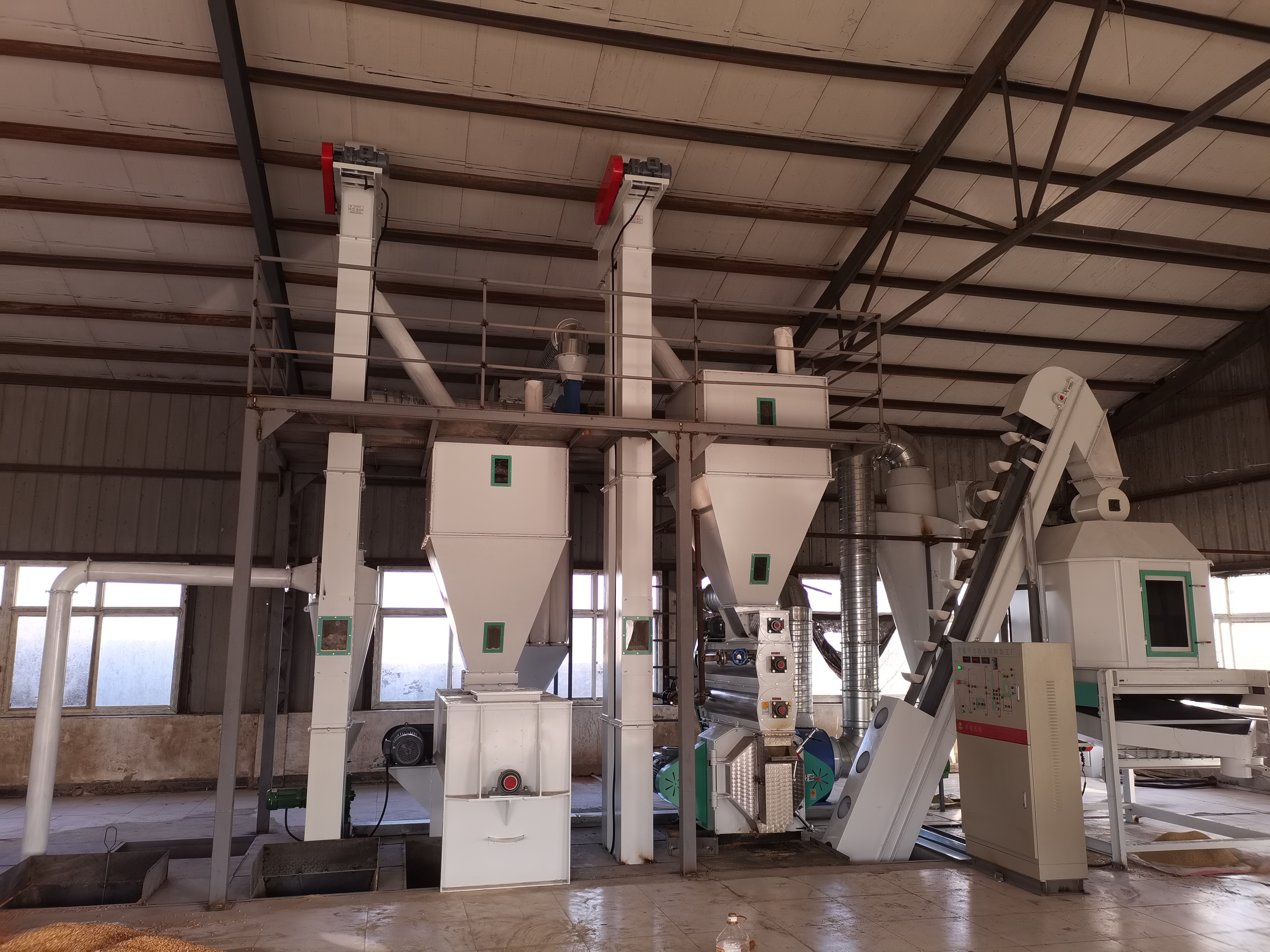
Jiangsu Huamu Machinery Co., Ltd. is located in Xibei Town, Wuxi City, enjoying convenient transportation and significant geographical advantages. The company specializes in the manufacturing of feed machinery and equipment, and can undertake the full-process business of scheme design, equipment ins...
No.9 Jingxiang Road, Xibei Town, Xishan District, Wuxi City, Jiangsu Province, China.