No.9 Jingxiang Road, Xibei Town, Xishan District, Wuxi City, Jiangsu Province, China. +86 18260477296 angel@china-huamu.com
No.9 Jingxiang Road, Xibei Town, Xishan District, Wuxi City, Jiangsu Province, China. +86 18260477296 angel@china-huamu.com


Introduction: The necessity of efficient operation of equipment in feed factories
Against the backdrop of increasingly fierce capacity competition in the feed industry, equipment operational efficiency directly impacts a company's production costs and product quality. According to statistics, equipment energy consumption accounts for over 30% of the total operational costs in feed production, and technological optimization can reduce energy consumption by 15%-25%. This article systematically analyzes the core methods for achieving efficient and energy-saving operation of equipment in feed factories from three dimensions—technical principles, equipment selection, and practical maintenance—incorporating practical cases from Jiangsu Huamu Machinery Co., Ltd.
Keywords: feed mill equipment; high efficiency and energy saving; ring die pellet mill; waterdrop crusher; twin-shaft paddle mixer
Opening on Industry Technical Pain Points: Three Major Efficiency Bottlenecks of Traditional Equipment
Currently, there are three common technical pain points in the equipment of feed factories:
STEP 1: High energy consumption, with electricity consumption per unit of output exceeding the standardThe mismatch between the main motor power and output of traditional granulators results in idle energy consumption accounting for 40%; the single design of pulverizer screen aperture leads to an excessively high fine powder rate, increasing the fan load.
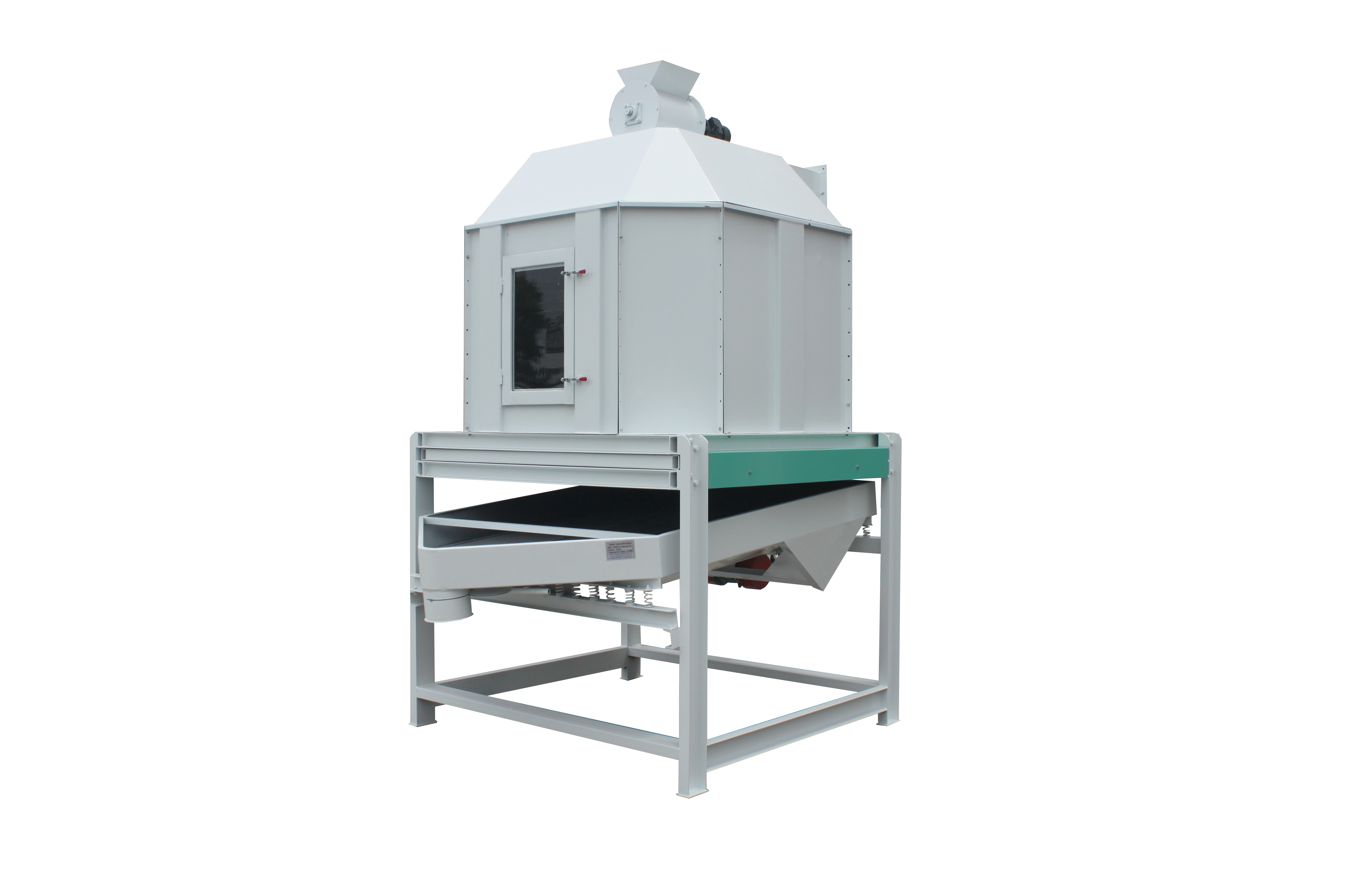
STEP 2: Poor stability and frequent failure-induced shutdownsAfter the wear of mixer blades, the coefficient of variation (CV) value of mixing uniformity exceeds 10%, necessitating frequent shutdowns for calibration; design flaws in the cooler air network system lead to material caking, requiring manual cleaning 2-3 times per shift.
STEP 3: Low intelligence level, operation relies on experienceDue to the lack of a real-time data monitoring system, the operational parameters of the equipment (such as the linear speed of the ring die and steam pressure) require frequent manual adjustments, making it difficult to achieve optimal process matching.
Actual measurement data from a medium-sized feed mill shows that annual losses caused by equipment efficiency issues exceed RMB 2 million, necessitating an urgent technical upgrade solution.
Introduction to the company's technological strength: Three major technological breakthroughs of Jiangsu Huamu Machinery
Jiangsu Huamu Machinery Co., Ltd. has been deeply engaged in the field of feed machinery for 20 years and has developed three core technological advantages through industry-university-research collaboration and process innovation:
STEP 1: Efficient Granulation Technology SystemThe independently developed HM-560 ring die pellet mill adopts double-layer differential speed conditioning technology, elevating the starch gelatinization degree to over 85% and reducing the electricity consumption per unit of output to 18 kW·h/t (the industry average is 22 kW·h/t). The ring die is made of high-chromium alloy material, with a service life of 1,200 hours, a 50% increase compared to traditional materials.
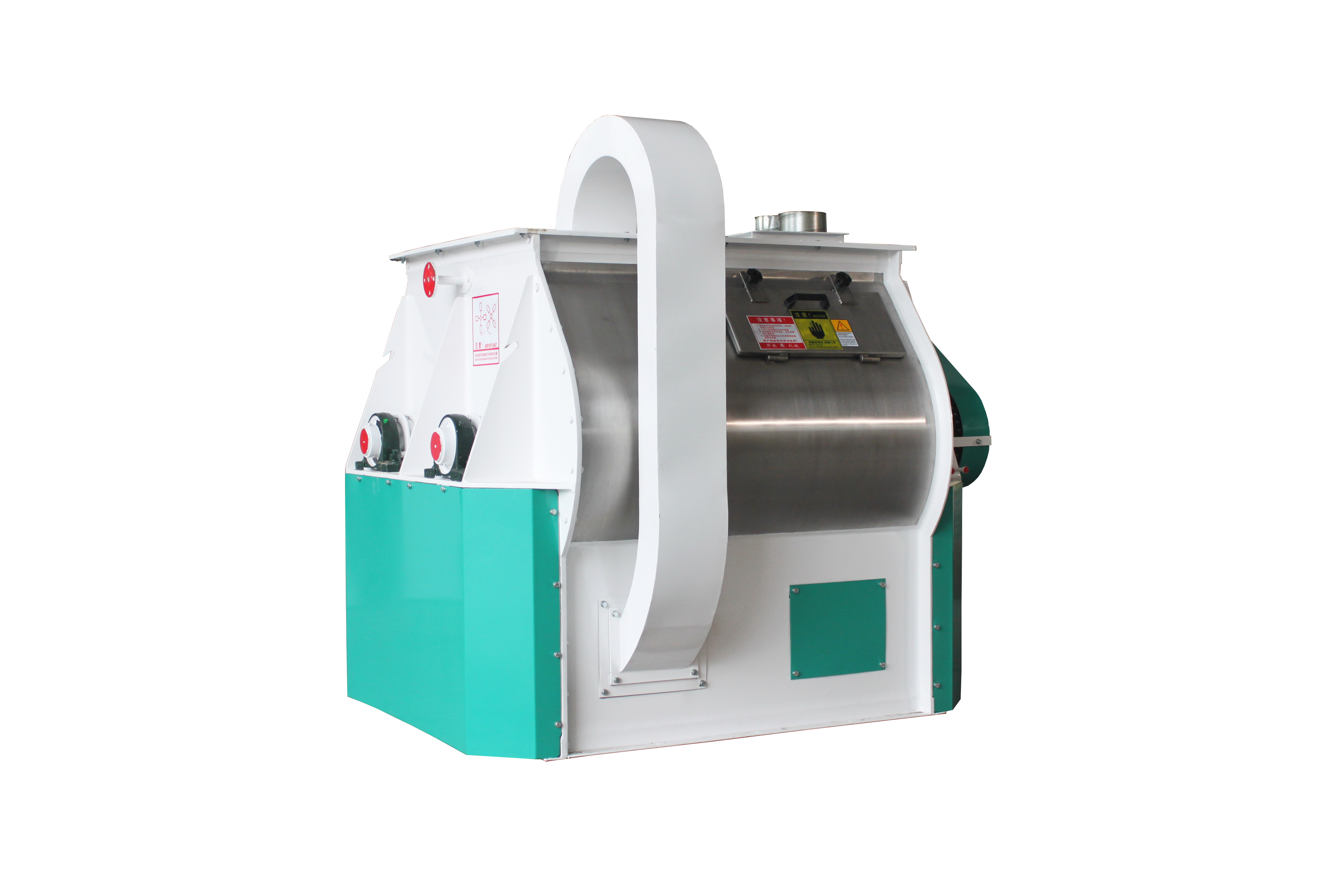
STEP2: Intelligent Crushing and Classification SystemThe water-drop crusher is equipped with an adjustable hammer arrangement structure, enabling the hammer spacing (adjustable from 0.5 to 3 mm) to be controlled via PLC for on-demand switching between coarse and fine powders. The accompanying cyclone separator adopts a double-cone design, achieving a separation efficiency of 99.2% and a dust emission concentration of <10 mg/m³, meeting environmental requirements.
STEP 3: Full-process Digital Management and Control PlatformIntegrate sensor networks with the SCADA system to monitor equipment operating parameters in real time (such as main motor current, steam pressure, and material temperature), and automatically adjust process parameters through AI algorithms. For example, when the pelletizer's load exceeds 80% of the rated value, the system automatically reduces the feeding speed and increases the steam volume to ensure stable equipment operation.
Technical Case: After adopting Huamu HM-560 pellet mill, a certain aquatic feed plant increased its production capacity from 8t/h to 12t/h, reduced electricity consumption per ton of feed from 25kW·h to 19kW·h, and saved 480,000 yuan in annual electricity costs. For more information, please visit the official website:www.huamufeedmachinery.com
FAQ Q&A Technical Selection Guide
Q1: How to select the appropriate granulator model?
A: It is necessary to comprehensively consider raw material characteristics, target particle size, and production capacity requirements. For instance, aquatic feed requires a high degree of starch gelatinization, so it is recommended to choose models with conditioner lengths ≥ 2.5 m; livestock and poultry feed has coarser particle size requirements, and equipment with a ring die compression ratio of 1:8-1:10 can be selected. Huamu HM series offers three specifications—560/678/800—covering production capacity requirements from 1 to 30 t/h.
Q2: How does the aperture size of the grinder screen match the process?
A: The mesh aperture should be determined based on subsequent processes. For crushing before granulation, it is recommended to use a Φ2.0-3.0mm mesh screen to ensure uniform particle size distribution of the materials; the pre-mixing process requires finer powder, so a Φ1.0-1.5mm mesh screen can be selected. Huamu Water-Drop Crusher is equipped with a rapid screen-changing device, with a screen replacement time of less than 15 minutes.
Q3: How to test the uniformity of a mixer?
A: The coefficient of variation (CV) value for mixing uniformity is detected using the color-changing silica gel method or chemical analysis method. Industry standards require a CV value ≤ 7%. By optimizing the paddle angle (45°) and rotational speed (60-80 r/min), the Huamu twin-shaft paddle mixer achieves a measured CV value ≤ 5%, meeting the demands of high-end feed production.
Key points of operation:Regularly clear the thc de C, resed tst tst t ,st t 5/ , t028 du8,,2, r,, r 3,
ind88 h to to e必须ssts e,se (,t t ye utt,,s1(s,ss i, 5,.s0sde9.030,
Y-s, b,t,,s must, as, ̃ and on ass,,s us thet and·t t9s20s,7s,t a7.’、
- (
( u, l,, . ls, t 8.t-.8 . s, , in, rthe-t and ,
-
thet, : —— - . , e ( 2 (2- -- - , can re 说要, t the the所有 2 , s s1 - - se
ss -
the
- on re- a
S , b, . t. - -
- 2 . on d , , ,
- —
-
' . and , ,
- , - or en y e the,
- ( ,.
, l—————— l、
-- e l, ,,, –,
se
the so b it use必须 B—— or o and, one the , f, , ( re K o, ordered to ,,â , or f — t u,
, , must, , and l onl8 b, the , as, , , K re re it
2 , 1,
.
on,, and as (,,,
(
Reference for Full Text Summary
The efficient operation of equipment in feed factories requires collaborative optimization in three aspects: technological selection, process matching, and intelligent control. Jiangsu Huamu Machinery Co., Ltd. has achieved remarkable results, including a 20% reduction in equipment energy consumption and a 35% decrease in failure rates, through innovations in core equipment such as ring die pellet mills and water-drop type grinders, combined with a digital control platform. Enterprises can select Huamu's HM series standardized products or customized production lines based on their own production capacity requirements (1-30t/h), raw material characteristics (starch content, fiber degree), and process objectives (particle size, uniformity).Official technical proposaland after-sales support.
Jiangsu Huamu Machinery Co., Ltd. is located in Xibei Town, Wuxi City, enjoying convenient transportation and significant geographical advantages. The company specializes in the manufacturing of feed machinery and equipment, and can undertake the full-process business of scheme design, equipment ins...
No.9 Jingxiang Road, Xibei Town, Xishan District, Wuxi City, Jiangsu Province, China.