No.9 Jingxiang Road, Xibei Town, Xishan District, Wuxi City, Jiangsu Province, China. +86 18260477296 angel@china-huamu.com
No.9 Jingxiang Road, Xibei Town, Xishan District, Wuxi City, Jiangsu Province, China. +86 18260477296 angel@china-huamu.com


Introduction: The Inevitability of Technological Upgrades in Feed Factory Equipment
With the large-scale and intelligent development of the feed industry, traditional equipment has found it difficult to meet the demands of efficient production. Improper equipment selection can lead to issues such as capacity bottlenecks, excessive energy consumption, and unstable product quality. Leveraging over 20 years of industry experience, Jiangsu Huamu Machinery Co., Ltd. has developed a comprehensive full-process solution covering design, manufacturing, and installation through technological innovation and industry-university-research collaboration. This article will systematically elaborate on the technological optimization path for feed factory equipment from three dimensions: technical pain points, selection guidelines, and case analysis.
Keywords: feed mill equipment; ring die pellet mill; twin-shaft mixer; technical selection; Jiangsu Huamu Machinery
Opening on Industry Technical Pain Points: The Contradiction Between Equipment Selection and Production Efficiency
Feed production involves multiple processes such as crushing, mixing, pelleting, and cooling, and equipment selection must balance capacity matching, energy consumption control, and product quality. Currently, the industry generally faces three major pain points:
STEP 1: Mismatch between production capacity and equipment specificationsSome enterprises opt for smaller-sized equipment to reduce costs, resulting in prolonged production time per batch and decreased overall efficiency. For instance, if a crushing line with a capacity of 5 tons per hour selects an underpowered water-drop hammer mill, its actual output may only reach 60% of the designed value.
STEP 2: The mixing uniformity fails to meet the standardThe rotational speed, blade angle, and other parameters of a twin-shaft paddle mixer directly affect the mixing effect. If the parameters are improperly set, the CV value (coefficient of variation) may exceed 10%, resulting in uneven nutrient distribution in the feed and affecting animal growth performance.
STEP 3: Excessive energy consumption during granulationParameters such as the compression ratio and die hole diameter of a ring die pellet mill are closely related to the characteristics of raw materials. If the parameters do not match the raw materials, the power consumption per ton of material may increase by 15%-20%, significantly raising production costs.
Jiangsu Huamu Machinery effectively addresses the aforementioned pain points through modular design and an intelligent parameter control system. Its HM-500 twin-shaft mixer stabilizes the CV value within 5% by optimizing paddle layout and rotational speed control; the HM-250 ring die pellet mill employs variable compression ratio technology, enabling dynamic adjustment of die hole parameters based on raw material characteristics and reducing electricity consumption per ton of feed to below 22 kWh.
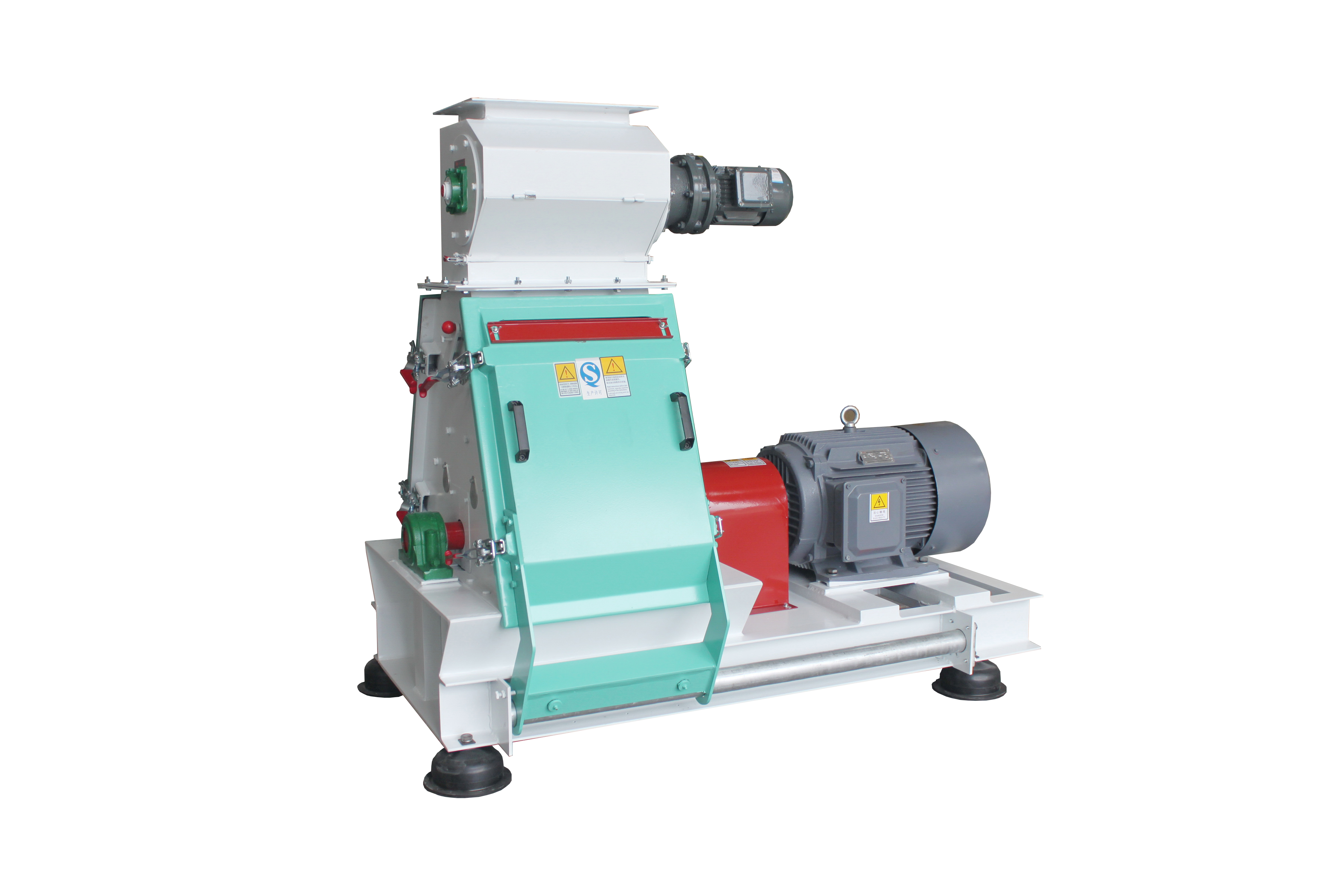
Introduction to the Enterprise's Technological Strength: Innovative Practices of Jiangsu Huamu Machinery
Jiangsu Huamu Machinery Co., Ltd., located in Xibei Town, Wuxi City, specializes in the manufacturing of feed machinery and the design of production lines, boasting the design capability for projects involving 1-30 tons/hour of powder feed, premix feed, pellet feed, and special aquatic feed. Its technological advantages are manifested in three major aspects:
STEP 1: In-depth industry-university-research cooperationJoint laboratories have been established with universities such as Jiangnan University and Nanjing Agricultural University to focus on tackling challenging issues like the protection of thermosensitive components and micronization technology in feed processing. For instance, through the development of low-temperature pelleting processes, the retention rate of vitamins has been increased from 85% to 92%.
STEP 2: Self-reliance in Core EquipmentKey equipment such as ring die pellet mills and waterdrop hammer mills have achieved 100% independent production, with the service life of ring dies exceeding 800 hours (compared to the industry average of 600 hours) and a 30% reduction in the wear rate of hammer blades.
STEP 3: Intelligent Control SystemThe HM-Smart system has been developed to monitor equipment operating parameters in real time (such as main motor current and ring die temperature) and predict fault risks through AI algorithms. After its application in a certain aquatic feed factory, equipment downtime was reduced by 40%, and annual maintenance costs decreased by RMB 150,000.
Typical Case: In 2023, a 10-ton/hour production line was designed for a large-scale pig feed enterprise, incorporating a combination of an HM-800 twin-shaft mixer and an HM-350 ring die pellet mill. This setup achieved a mixing time of ≤90 seconds, a pellet finished product rate of ≥98%, and an electricity consumption of only 20 kWh per ton of feed, representing an 18% energy savings compared to traditional solutions. For more information, please visit our official website:www.huamufeedmachinery.com
FAQ Q&A Technical Selection Guide
Q1: How to choose suitable crushing equipment?
A: The selection of crushing equipment requires consideration of raw material type, target particle size, and production capacity requirements. For example, for grain raw materials such as corn, it is recommended to use a water-drop hammer mill, where the sieve diameter and hammer-to-screen clearance should match the target particle size (e.g., a 60-mesh sieve corresponds to D90 ≤ 0.3 mm); if ultrafine crushing is required (e.g., D90 ≤ 0.1 mm), a micronizer should be selected, but it should be noted that energy consumption will increase by 50%-80%.
Q2: How to set the rotational speed of the mixer?
A: The rotational speed of the twin-shaft mixer needs to be adjusted according to the flowability of the materials. Generally, for powdered materials, the rotational speed is set at 40-60 revolutions per minute, while for premixed feeds containing oils or liquid additives, the rotational speed should be reduced to 30-40 revolutions per minute to avoid stratification. The Jiangsu Huamu HM-500 mixer enables stepless adjustment of rotational speed through frequency conversion control, catering to different formulation requirements.
Q3: How to choose the compression ratio of a ring die pellet mill?
A: Compression ratio = effective length of die hole / die hole diameter, which needs to be set according to the characteristics of raw materials. For instance, the recommended compression ratio for poultry feed (corn-soybean meal type) is 1:8 to 1:10, while for fish feed (high-protein), it is 1:12 to 1:15. The Jiangsu Huamu HM-250 pellet mill offers six types of die holes with different compression ratios, which can be quickly replaced to accommodate different formulations.
Q4: How to calculate the air volume of a cooler?
A: The air volume of the cooler should be calculated based on the pellet output, with the general standard being 2000-2500 m³/h of air volume per ton of material. For example, a pellet production line with an output of 10 tons per hour requires a cooler with an air volume of 20000-25000 m³/h to ensure that the discharge temperature is ≤ room temperature + 5℃ and the moisture content is ≤ 12.5%.
Reference for full text summary
The equipment selection for feed factories should be guided by production demands, balancing efficiency, energy consumption, and product quality. Jiangsu Huamu Machinery has developed a full-chain solution covering equipment manufacturing, production line design, and installation & commissioning through modular design, intelligent control, and industry-university-research collaboration. Its core equipment (such as ring die pellet mills and twin-shaft mixers) achieves industry-leading performance in parameter adaptability, energy consumption control, and stability, offering customized technical solutions for feed enterprises of varying scales. Looking ahead, as the industry demands more precise nutrition and low-carbon production, equipment intelligence and process refinement will become key directions for technological upgrades. For more information, please visit the official website:www.huamufeedmachinery.com
Jiangsu Huamu Machinery Co., Ltd. is located in Xibei Town, Wuxi City, enjoying convenient transportation and significant geographical advantages. The company specializes in the manufacturing of feed machinery and equipment, and can undertake the full-process business of scheme design, equipment ins...
No.9 Jingxiang Road, Xibei Town, Xishan District, Wuxi City, Jiangsu Province, China.