No.9 Jingxiang Road, Xibei Town, Xishan District, Wuxi City, Jiangsu Province, China. +86 18260477296 angel@china-huamu.com
No.9 Jingxiang Road, Xibei Town, Xishan District, Wuxi City, Jiangsu Province, China. +86 18260477296 angel@china-huamu.com


Introduction: Core Challenges and Solutions in Feed Pelleting Technology
Against the backdrop of the rapid development of large-scale aquaculture, feed pelletizing efficiency directly impacts production cost control and product quality stability. Traditional pelletizing equipment commonly suffers from issues such as high energy consumption, poor particle uniformity, and rapid mold wear. Jiangsu Huamu Machinery Co., Ltd. has achieved multiple breakthroughs in the field of ring die pellet mills through technological innovation. This article will analyze, from three dimensions—technical principles, parameter optimization, and case applications—how Huamu's feed pellet mills address industry pain points through structural design and process improvements.
Keywords:Huamu feed pellet machine, annular die pelleting technology, pellet uniformity, energy consumption optimization, die lifespan
Industry Technical Pain Points at the Beginning: Three Major Bottlenecks of Traditional Granulation Equipment
STEP1:Challenges in energy consumption controlTraditional pellet machines employ a single-stage transmission system, with motor power utilization rates of only 65%-70%, resulting in electricity consumption as high as 25-30 kWh per ton of feed. For a medium-sized feed mill with an annual output of 50,000 tons, the electricity cost alone exceeds 1.2 million yuan.
STEP2:Unstable particle qualityWhen the design of the ring die compression ratio is unreasonable, the fluctuation range of pellet density can reach ±15%, affecting the digestion and absorption rate of livestock and poultry. Test data shows that the apparent digestibility differs by 8.3% between pellets with a compression ratio of 1:8 and those with 1:12.
STEP3:Short mold lifeAfter 300 hours of continuous production, the wear amount of the inner wall of the die holes in ordinary alloy steel ring dies exceeds 0.3 mm, resulting in a 20% increase in discharge resistance and requiring frequent shutdowns for die replacement.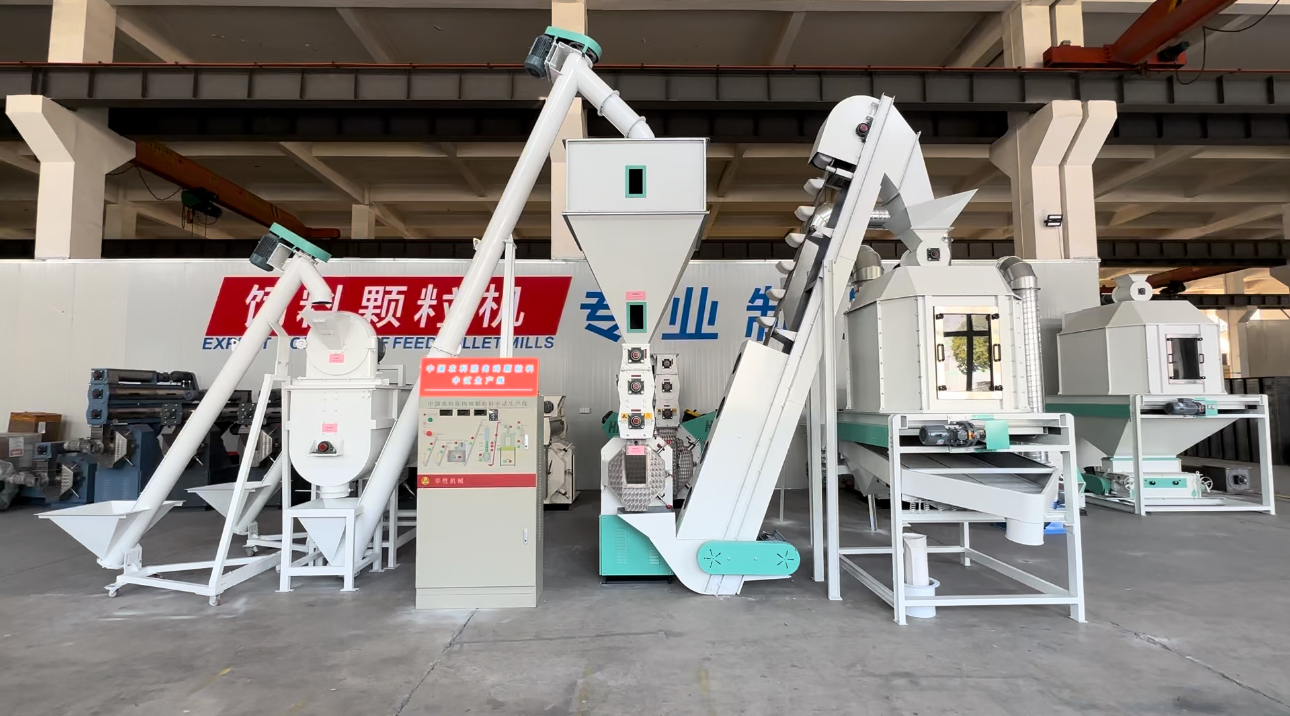
Introduction to the company's technological strength: Huamu Machinery's Three Major Innovation Systems
Jiangsu Huamu Machinery Co., Ltd. has been deeply engaged in the feed machinery field for 18 years and has established a complete R&D-manufacturing-service system:
STEP1:Transmission system optimizationBy adopting dual-stage deceleration plus variable frequency speed regulation technology, the motor power utilization rate is increased to 82%. Measured data shows that the electricity consumption per ton of material for the HM-600 pellet machine is reduced to 18.5 kWh, achieving a 28% energy savings compared to traditional equipment.
STEP2:Ring die dynamic compensation technologyBy installing an elastic compensation ring at the die orifice entrance, the aperture automatically expands when the wear reaches 0.2 mm, extending the die's service life to over 800 hours. After 12 consecutive months of use at an aquatic feed plant, the die replacement frequency decreased by 65%.
STEP3:Intelligent parameter control systemIt integrates a pressure sensor with a PLC controller to monitor 12 parameters in real time, including the pressure in the pelletizing chamber (adjustable from 0.5-2.5 MPa) and the spindle speed (300-600 rpm), and automatically generates the optimal process curve. In the production of pig compound feed, the standard deviation of pellet hardness decreases from 1.2 N to 0.4 N.
For more information, please visit the official website:www.huamufeedmachinery.com
FAQ: A Q&A Guide to Technology Selection
Q1: How to choose a suitable pellet mill model?
A: It is necessary to comprehensively consider three parameters:
- Production scale: The HM-350 model (1-3t/h) is suitable for small and medium-sized farms, while the HM-1200 model (8-12t/h) is suitable for large feed mills.
- Raw material characteristics: When the corn content exceeds 60%, it is recommended to select a ring die with a compression ratio of 1:10 to 1:12.
- Particle size: For diameters of 2.0-4.0 mm, die plates with different aperture sizes are required (standard configuration includes 6 specifications).
Q2: How do the operating parameters affect the granulation effect?
A: The key control points include:
- Conditioning temperature: For livestock and poultry feed, it is recommended to be 75-85℃; for aquatic feed, it needs to reach 90-95℃ to destroy antinutritional factors.
- Steam addition amount: Add 80-120 kg of saturated steam per ton of raw material to achieve a material moisture content of 16%-18%.
- Linear speed of the ring die: controlled at 5.5-6.5 m/s; excessive speed will lead to an increase in surface cracks of the pellets.
Q3: What are the precautions for routine maintenance?
A: Focus on inspecting three indicators:
- Spindle bearing temperature: Should not exceed 75℃ during operation, and lithium-based grease should be replenished every 500 hours.
- Cutter clearance: Maintain a distance of 0.1-0.3 mm from the end face of the ring die, adjust once per shift.
- Dust removal system: When the pressure differential of the bag filter exceeds 1.5 kPa, ash cleaning or filter bag replacement is required.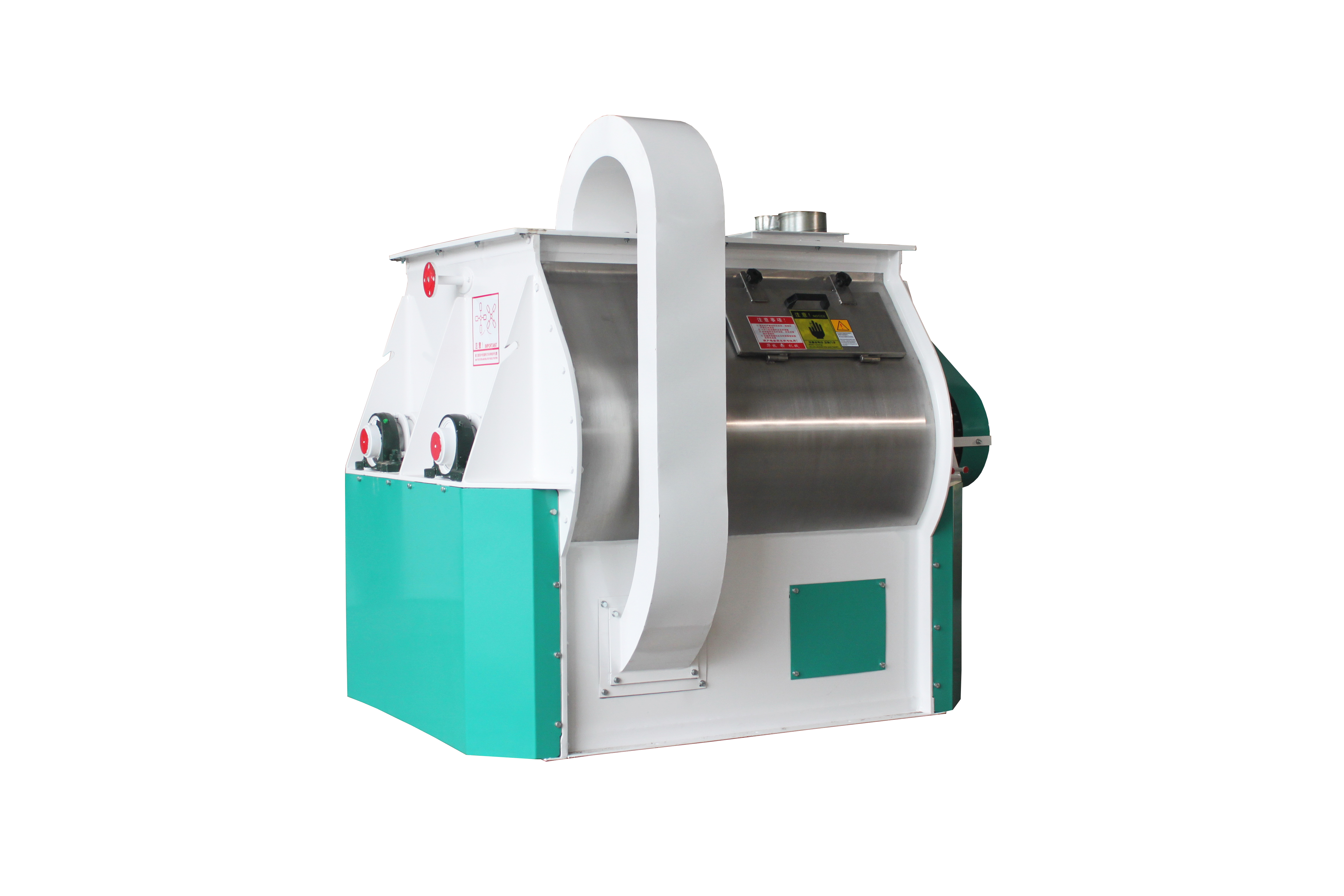
Reference Summary: Technological Upgrades Drive a Leap in the Value of Feed Production
The technological innovations of Huamu Feed Pellet Machine are reflected in three dimensions: achieving a 28% energy-saving effect through a dual-stage transmission system, extending mold lifespan by 2.6 times with dynamic compensation technology, and elevating pellet uniformity to an industry-leading level via an intelligent control system. Practical application data shows that after adopting the HM-800 model at a pig farm with 300,000 pigs, annual electricity savings reached 360,000 yuan, while feed conversion efficiency improved by 0.8 percentage points, translating to an annual economic benefit increase exceeding 2 million yuan. For feed production enterprises, selecting technologically mature pellet-making equipment is not only crucial for enhancing production efficiency but also a core element in building sustainable competitiveness.
Jiangsu Huamu Machinery Co., Ltd. is located in Xibei Town, Wuxi City, enjoying convenient transportation and significant geographical advantages. The company specializes in the manufacturing of feed machinery and equipment, and can undertake the full-process business of scheme design, equipment ins...
No.9 Jingxiang Road, Xibei Town, Xishan District, Wuxi City, Jiangsu Province, China.