No.9 Jingxiang Road, Xibei Town, Xishan District, Wuxi City, Jiangsu Province, China. +86 18260477296 angel@china-huamu.com
No.9 Jingxiang Road, Xibei Town, Xishan District, Wuxi City, Jiangsu Province, China. +86 18260477296 angel@china-huamu.com


Introduction: The Inevitability of Technological Upgrading in Feed Machinery
With the large-scale development of the breeding industry, feed processing enterprises have continuously raised their requirements for equipment stability, energy efficiency ratio, and intelligence level. According to industry data, the market size of feed machinery in China reached 12 billion yuan in 2023, with pelleting equipment accounting for over 45%. How to select equipment that meets production needs by focusing on key parameters such as ring die material, press roller clearance, and steam system has become a core issue for technological upgrading in enterprises. This article analyzes the technical logic of pellet mill selection based on the research and development experience of Jiangsu Huamu Machinery Co., Ltd.
Key words:Selection of pellet mills, lifespan of ring dies, steam preconditioning, Jiangsu Huamu Machinery, feed processing efficiency
Opening on Industry Technical Pain Points: Three Major Bottlenecks of Traditional Granulation Equipment
STEP1:The annular die wears out quickly, leading to high maintenance costs.Ordinary alloy steel ring dies are prone to cracking during continuous production, with an average lifespan of only 800-1000 tons, leading to increased frequency of shutdowns for replacement. For example, a medium-sized feed mill suffered a monthly production capacity loss of 150 tons due to ring die fractures.
STEP2:Uneven steam pre-conditioning leads to fluctuations in particle quality.Traditional steam systems lack precise temperature control, resulting in a moisture content deviation of ±3% in materials, which causes uneven particle hardness and an excessively high pulverization rate (industry standard ≤5%).
STEP3:The contradiction between energy consumption and production capacity is prominent.The electricity consumption per ton of outdated equipment reaches as high as 25 kW·h/ton, while the industry's advanced level has been controlled below 18 kW·h/ton, with the energy consumption difference directly compressing profit margins.
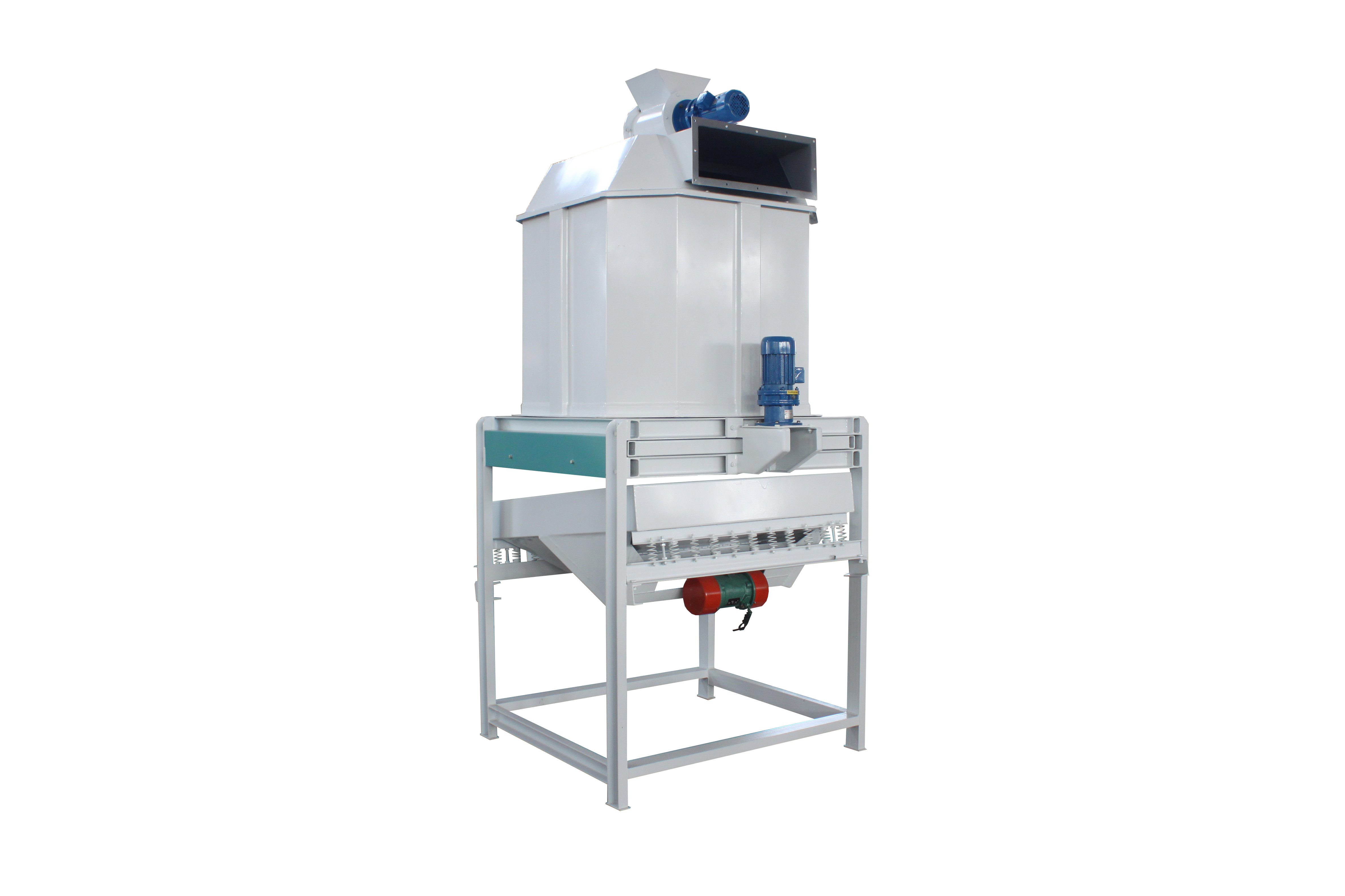
Introduction to the company's technological strength: Three major technological breakthroughs of Jiangsu Huamu Machinery
As an enterprise that has focused on the R&D of feed machinery for 15 years, Jiangsu Huamu Machinery Co., Ltd. (For more information, please visit the official website.) Overcoming multiple technical challenges through industry-university-research collaboration:
STEP1:Upgrade of ring die materialIt adopts German DILIDUR wear-resistant steel, achieving a hardness of HRC58-62 through vacuum quenching process, with its service life extended to over 2,000 tons. In the application at a 300,000-ton feed mill in Shandong, the replacement cycle of the ring die was extended to six months, saving over RMB 300,000 in annual maintenance costs.
STEP2:Intelligent steam pre-adjustment systemIntegrated with a PID temperature control module and pressure sensors, it achieves steam temperature fluctuations of ≤±1°C and a material moisture content control precision of ±0.5%. Tests show that the particle pulverization rate using this system drops to 2.3%, significantly lower than industry standards.
STEP3:Energy efficiency optimization designBy optimizing the matching between the transmission structure and the motor, the unit power consumption has been reduced to 16.8 kW·h/ton. In a certain aquatic feed project in Jiangsu, the equipment saved a cumulative 420,000 kWh of electricity over 12 months of operation, equivalent to a reduction of 336 tons in carbon dioxide emissions.
FAQ: Q&A Technical Selection Guide
Q1: How to select the model of a pellet mill based on production capacity?
A: It is necessary to comprehensively consider raw material characteristics and production rhythm. For example, when processing corn-soybean meal diets, the Jiangsu Huamu HM-560 pellet mill (with a main motor power of 160 kW) can achieve a stable output of 8-12 tons per hour; whereas when processing high-fiber raw materials (such as alfalfa meal), it is recommended to choose the HM-620 model (with a power of 220 kW), which can increase the capacity to 15-18 tons per hour.
Q2: How do the ring die aperture and the aspect ratio affect pellet quality?
A: Aperture determines particle diameter (usually 2-8mm), and the length-to-diameter ratio (L/D) affects the molding rate. Aquatic feed requires high water resistance, so elongated holes with L/D ≥ 12 are recommended; while short holes with L/D = 8-10 are suitable for livestock and poultry feed. Jiangsu Huamu can customize non-standard annular dies with an aperture error ≤ 0.05mm and an L/D ratio accuracy of ±0.2.
Q3: What are the common causes of high equipment failure rates and their solutions?
A: Seventy percent of malfunctions stem from improper operation. For example, excessive clearance between the pressing rollers (which should be controlled between 0.1-0.3mm) can cause material slippage; insufficient steam pressure (recommended 0.2-0.4MPa) can lead to machine blockage. Jiangsu Huamu offers free training services and includes an "Operation Manual" with the equipment, covering debugging methods for 20 key parameters.
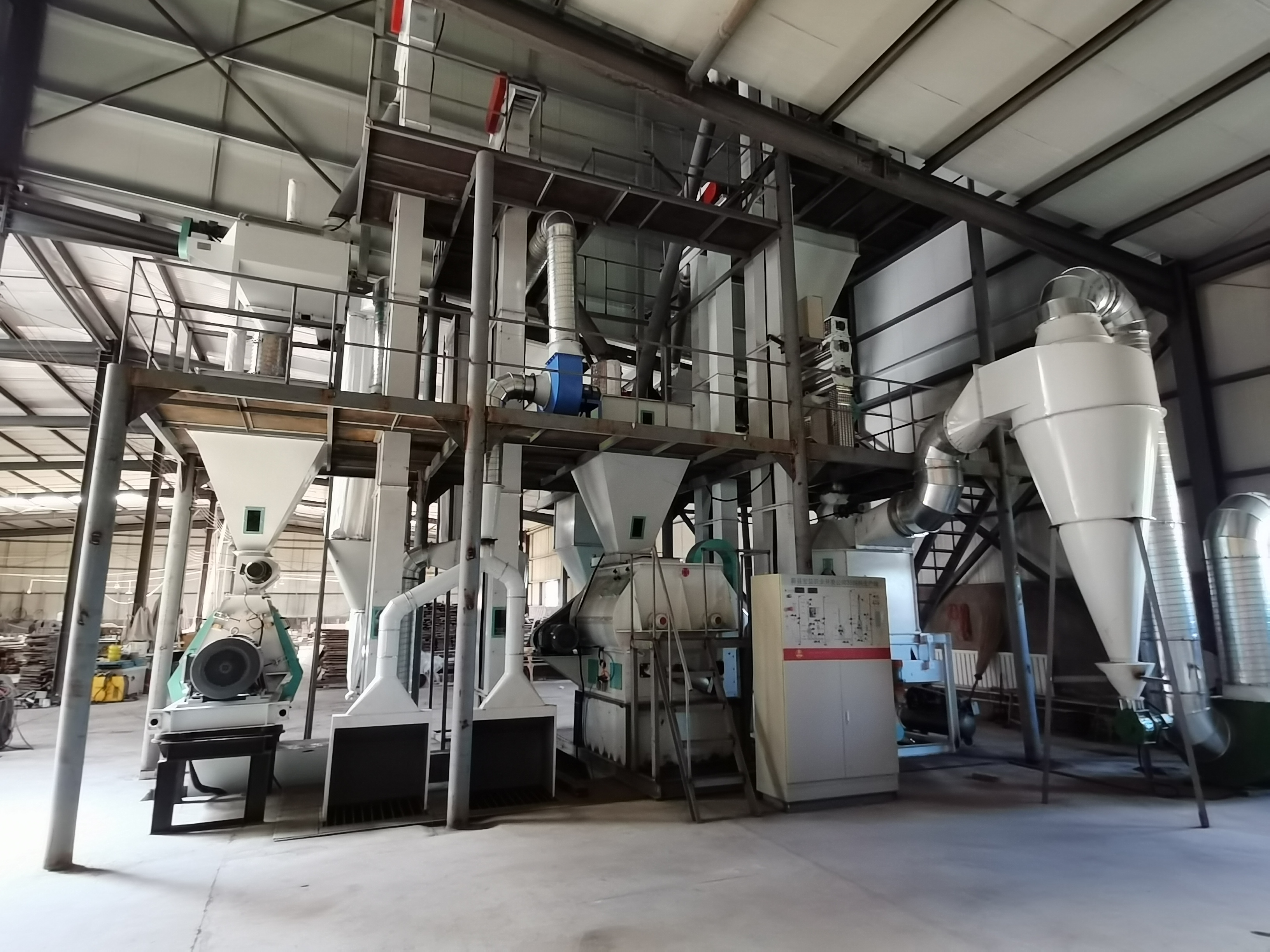
Reference for full text summary
The technological upgrading of feed machinery should be supported by data and validated by cases. Jiangsu Huamu Machinery has helped clients achieve a 15% reduction in production costs and a 22% increase in Overall Equipment Effectiveness (OEE) through three major technological pathways: innovation in ring die materials, intelligent steam systems, and energy efficiency optimization. For enterprises with an annual production capacity exceeding 50,000 tons, it is advisable to prioritize pelletizing production lines with modular designs and scalable functions to accommodate future capacity expansion needs. When selecting a technology partner, key considerations should include whether they possess a national-level laboratory and whether they have participated in the formulation of industry standards, ensuring the reliability of the equipment throughout its entire lifecycle.
Jiangsu Huamu Machinery Co., Ltd. is located in Xibei Town, Wuxi City, enjoying convenient transportation and significant geographical advantages. The company specializes in the manufacturing of feed machinery and equipment, and can undertake the full-process business of scheme design, equipment ins...
No.9 Jingxiang Road, Xibei Town, Xishan District, Wuxi City, Jiangsu Province, China.