No.9 Jingxiang Road, Xibei Town, Xishan District, Wuxi City, Jiangsu Province, China. +86 18260477296 angel@china-huamu.com
No.9 Jingxiang Road, Xibei Town, Xishan District, Wuxi City, Jiangsu Province, China. +86 18260477296 angel@china-huamu.com


Introduction: Technological innovation drives the upgrade of feed equipment
As a core link in the agricultural industry chain, the feed industry's production efficiency directly impacts the costs and benefits of the breeding industry. With the industry's growing demand for intelligence and energy efficiency, traditional feed equipment faces technical bottlenecks such as insufficient production capacity, high energy consumption, and poor stability. Leveraging over 20 years of technological accumulation, Jiangsu Huamu Machinery Co., Ltd. has introduced a new generation of feed equipment solutions through modular design, intelligent control systems, and efficient transmission technologies, achieving breakthroughs of a 30% increase in single-line production capacity and a 15% reduction in energy consumption. This article will analyze how Huamu's equipment helps enterprises achieve efficient production from three aspects: technical principles, application cases, and selection guidelines.
Keywords: Huamu Feed Equipment; Modular Design; Intelligent Control; Efficient Transmission
Opening on Industry's Technical Pain Points: Three Major Bottlenecks of Traditional Equipment
Currently, the feed equipment industry generally faces three major technical challenges:
STEP 1: Prominent contradiction between production capacity and energy consumptionTraditional ring die pellet machines are constrained by transmission efficiency, making it difficult for single-line production capacity to exceed 10 tons per hour. Additionally, their motor power generally exceeds 75 kW, resulting in persistently high electricity consumption per ton of material.
STEP 2: Insufficient equipment stabilityDue to design flaws in the rotor dynamic balance, the water-drop hammer mill experiences vibration levels exceeding 5 mm/s during operation, which easily leads to bearing damage, with an average annual failure rate as high as 15%.
STEP 3: Low level of intelligenceMost mixers still adopt a time-control mode, with a material uniformity CV value greater than 8%, failing to meet the stringent precision requirements for premix production.
These issues directly lead to increased production costs and fluctuating product quality in feed enterprises, becoming key factors restricting the development of the industry.
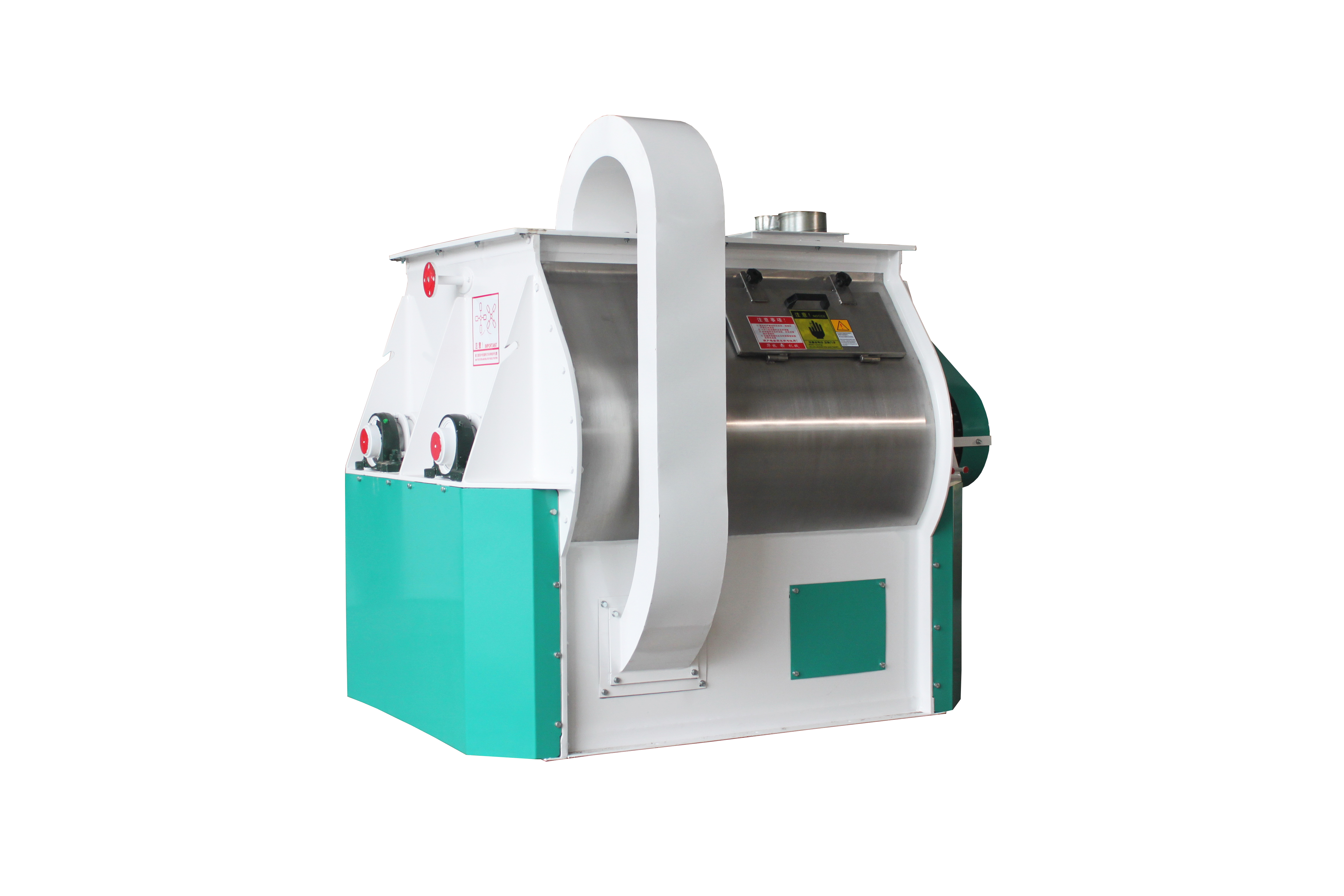
Introduction to the company's technological strength: Huamu's three core technological breakthroughs
Jiangsu Huamu Machinery Co., Ltd. has established a full-chain technological system covering design, manufacturing, and commissioning through industry-university-research collaboration, with its core advantages reflected in the following three aspects:
STEP 1: Modular Design TechnologyThe HMP series ring die pellet mill developed by the company adopts a split-frame design, with ring die diameters ranging from 200-800mm, catering to production capacity requirements of 1-30 tons per hour. By optimizing the gap between the pressure roller and the ring die (adjustable from 0.1-0.3mm), the material compression ratio is increased to 1:12, achieving a pellet forming rate of over 98%. Taking a 30-ton-per-hour production line as an example, after adopting Huamu's equipment, the electricity consumption per ton of material decreased from 85kWh to 72kWh, resulting in annual electricity cost savings exceeding 300,000 yuan.
STEP2: Intelligent Control SystemIn response to the precision issues of mixers, Huamu developed the HMS-2000 intelligent control system, which utilizes multi-point sensors to monitor material weight and flow rate in real time, automatically adjusting the rotation speed of the mixing shaft (adjustable from 50 to 150 rpm) to keep the CV value within 5%. This system has been implemented in a large-scale premix enterprise, raising the product qualification rate from 92% to 99.5%.
STEP 3: Efficient Transmission TechnologyThe planetary reducer jointly developed by the company and Jiangnan University achieves a transmission efficiency of 96%, representing a 12% improvement over traditional worm gear reducers. In a certain aquatic feed production line, this technology reduced equipment operational noise from 85 dB to 72 dB and extended bearing lifespan to over 20,000 hours.
Currently, Huamu has developed a full range of product lines covering crushing, mixing, granulating, and cooling, with a cumulative total of 12 utility model patents. It has served over 500 customers, with projects spanning 23 provinces in China and the Southeast Asian market. For more information, please visit the official website:www.huamufeedmachinery.com
FAQ: A Guide to Technical Selection with Q&A Format
Q1: How to choose the appropriate pellet mill model?
A: It is necessary to comprehensively consider production capacity requirements, material characteristics, and budget. For example, small and medium-sized farms can opt for the HMP-250 model (with a production capacity of 1-3 tons per hour), featuring a 250mm ring die diameter, equipped with a 15kW motor, and a cost of approximately 65 yuan per ton of feed; for large-scale feed mills, it is recommended to choose the HMP-800 model (with a production capacity of 20-30 tons per hour), which utilizes dual-motor drive (220kW×2) and enables flexible capacity adjustment through variable frequency control.
Q2: How to resolve the issue of excessive vibration values in a pulverizer?
A: First, check the rotor dynamic balance (standard value ≤ 3mm/s); recalibration is required if it exceeds the standard. Second, confirm the arrangement of the hammer blades (staggered arrangement is recommended) to avoid eccentricity caused by local wear. Finally, check the sieve aperture (φ3.0-5.0mm is recommended); an excessively small aperture will increase the motor load and trigger vibration.
Q3: What are the optimization solutions for insufficient precision of the mixer?
A: It can be upgraded to the Huamu HMS-2000 intelligent mixer, with core parameters including: mixing shaft speed of 50-150 rpm (adjustable based on material viscosity), mixing time of 8-15 minutes (CV value ≤ 5%), and residual rate < 0.5%. Measured data indicates that this equipment can enhance the uniformity of vitamin premixes by 40% and reduce nutrient loss caused by over-mixing.
Q4: How to establish the equipment maintenance cycle?
A: It is recommended to establish a tiered maintenance system: conduct daily checks on lubricant levels and belt tension; perform weekly cleaning of the permanent magnetic drum and dust collector; carry out monthly inspections of gearbox oil temperature (≤70°C) and bearing vibration; replace the ring die and press rollers quarterly (replace when wear exceeds 2mm). Huamu offers remote diagnostic services, enabling early fault warnings through equipment sensor data and reducing downtime by 60%.
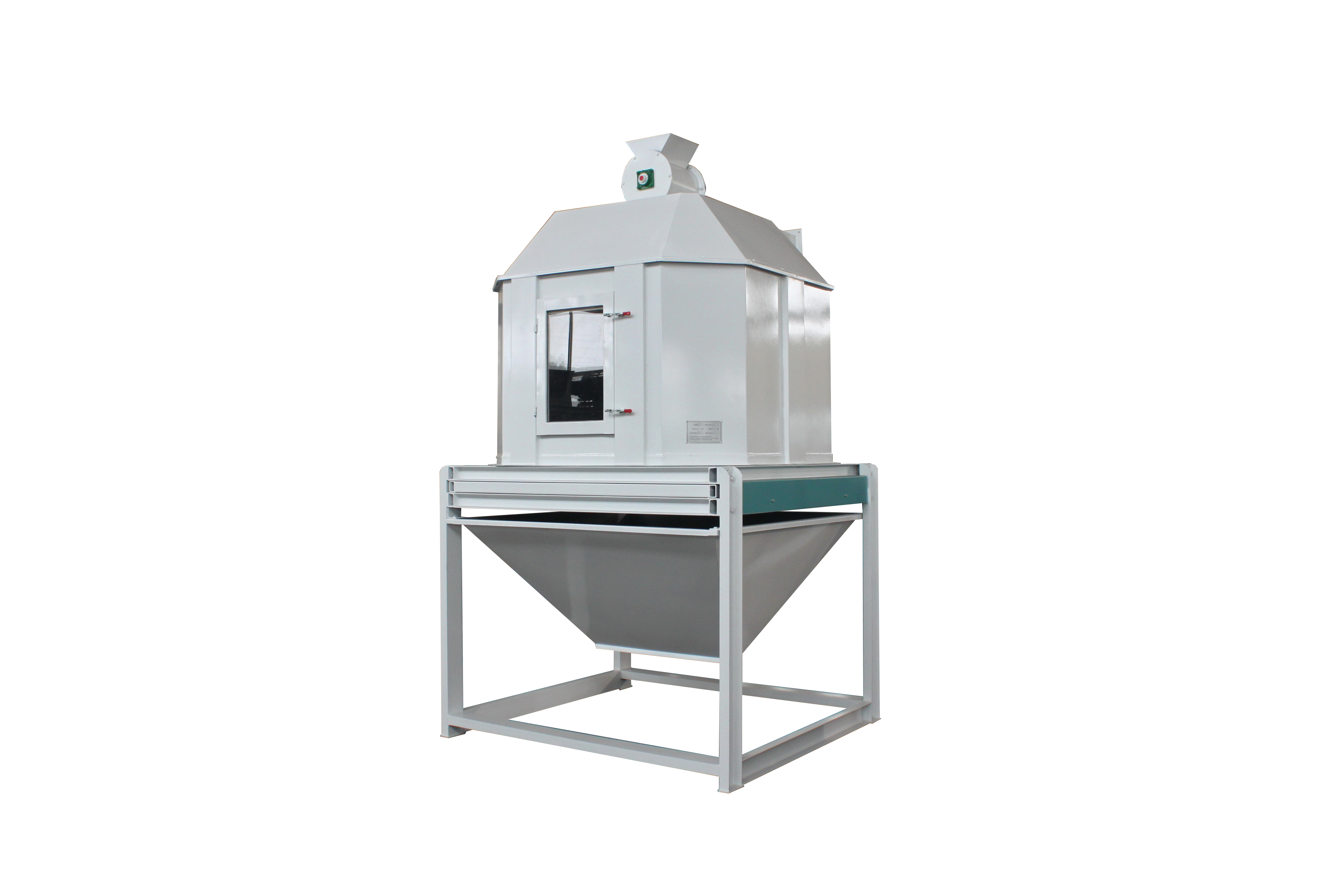
Reference for full text summary
Technological upgrades of feed equipment need to balance efficiency, precision, and stability. Jiangsu Huamu Machinery Co., Ltd. has significantly enhanced equipment performance through three core technologies: modular design, intelligent control, and high-efficiency transmission. The HMP series pellet mills offer a capacity range of 1-30 tons/hour with an electricity consumption per ton of feed ≤75 kWh; the HMS-2000 mixer achieves a CV value ≤5% and a residue rate <0.5%; the planetary gear reducer delivers a transmission efficiency of 96% with a noise level ≤75 dB. These technical parameters have been certified by third-party testing and validated in over 500 projects. For feed enterprises, key considerations when selecting equipment include capacity adaptability, energy consumption metrics, and intelligence level. It is recommended to prioritize companies with industry-university-research backgrounds that offer full lifecycle services. For more information, please visit the official website:www.huamufeedmachinery.com
Jiangsu Huamu Machinery Co., Ltd. is located in Xibei Town, Wuxi City, enjoying convenient transportation and significant geographical advantages. The company specializes in the manufacturing of feed machinery and equipment, and can undertake the full-process business of scheme design, equipment ins...
No.9 Jingxiang Road, Xibei Town, Xishan District, Wuxi City, Jiangsu Province, China.