No.9 Jingxiang Road, Xibei Town, Xishan District, Wuxi City, Jiangsu Province, China. +86 18260477296 angel@china-huamu.com
No.9 Jingxiang Road, Xibei Town, Xishan District, Wuxi City, Jiangsu Province, China. +86 18260477296 angel@china-huamu.com


Introduction: Why has the pelletizing efficiency of feed processing equipment become a focal point in the industry?
Under the context of large-scale farming, feed pelleting efficiency directly impacts production cycles and costs. Traditional pelleting equipment often faces issues such as insufficient production capacity, poor particle uniformity, and excessive energy consumption, whereas breakthroughs in high-efficiency pelleting technology require optimization of equipment structure, precise control of parameters, and process innovation. Taking the annular die pellet mill of Jiangsu Huamu Machinery Co., Ltd. as an example, this article systematically analyzes the implementation path for achieving high-efficiency pelleting, covering technical principles, operational procedures, and case reviews.
Keywords: feed processing equipment; ring die pellet mill; pelleting efficiency; parameter debugging; Jiangsu Huamu
Opening on Industry Technical Pain Points: Three Major Bottlenecks of Traditional Granulation Equipment
STEP1:Limited production capacityThe linear velocity of the ring die in ordinary granulators is less than 8 m/s, with an hourly output of less than 3 tons per unit time, making it difficult to meet the demands of large-scale feed mills;
STEP2:Unstable particle qualityThe tempering temperature fluctuates by more than ±5°C, resulting in insufficient starch gelatinization and poor water resistance of the pellets;
STEP3:Excessive energy consumptionThe power configuration of the main motor is unreasonable, with electricity consumption per ton of material exceeding 25 kW·h, thereby increasing production costs.
A medium-sized feed mill once experienced a 30% decline in pelleting efficiency and a particle pulverization rate as high as 15% due to aging equipment, resulting in direct economic losses exceeding one million yuan.
Introduction to the company's technological strength: Breakthrough in pelleting technology at Jiangsu Huamu
Jiangsu Huamu Machinery Co., Ltd. has been deeply engaged in the feed machinery sector for 20 years, and its ring die pellet mills have addressed industry pain points through three major technological innovations:
STEP1:Structural optimizationIt adopts a double-layer ring die design, with the linear velocity increased to 10 m/s. Coupled with a high-precision press roller assembly, the output per unit time reaches 5-8 tons/hour (taking the HM-600 model as an example);
STEP2:Intelligent tempering systemIntegrated with an automatic steam control valve and temperature sensor, the conditioning temperature remains stable at 82-85℃, with starch gelatinization degree ≥90% and a 40% improvement in particle water resistance;
STEP3:Energy conservation and consumption reductionThe main motor employs frequency conversion control technology to dynamically adjust power based on the characteristics of raw materials, reducing electricity consumption per ton of material to 18-20 kW·h.
Technical parameters: The ring die aperture of HM-600 pellet mill is adjustable from 2.5 to 8 mm, with a main motor power of 90 kW, suitable production capacity of 5-8 tons/hour, and operating pressure of 3.5-4.2 MPa.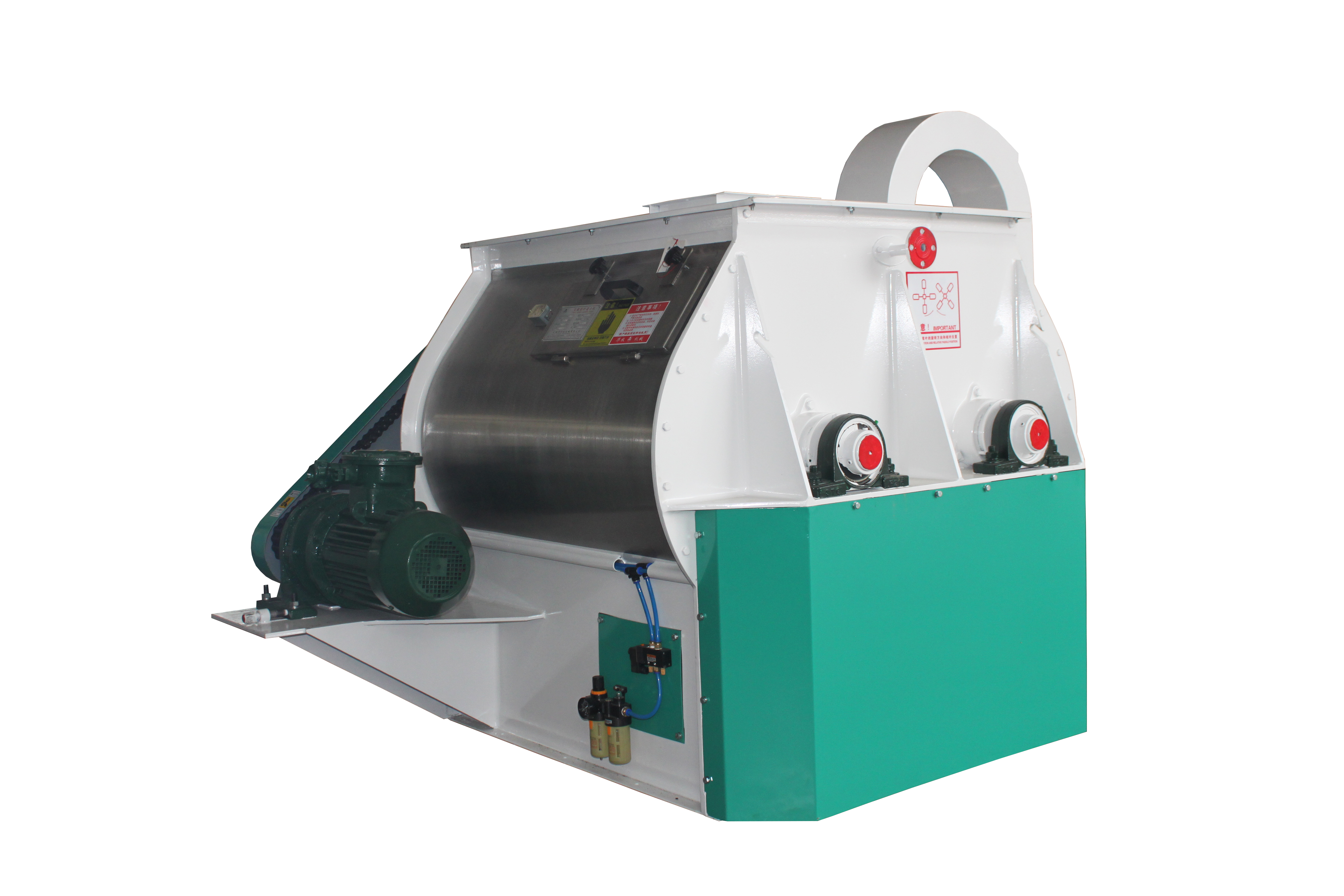
For more information, please visit the official website:www.huamufeedmachinery.com
FAQ: Q&A Guide for Technology Selection
Q1: How to select a suitable granulator model?
A: It requires a comprehensive consideration of production capacity demand, raw material characteristics, and budget. For example, small-scale farms can opt for the HM-250 model (with a production capacity of 1-2 tons per hour), while large-scale feed mills are recommended to choose the HM-600 model (with a production capacity of 5-8 tons per hour). Jiangsu Huamu offers a full range of equipment with production capacities from 1 to 30 tons per hour, supporting customized designs.
Q2: What are the common faults of granulators and their solutions?
A:Fault 1: Rough particle surface→ Cause: Wear of the ring die or excessive gap between the pressure rollers → Solution: Replace the ring die or adjust the gap between the pressure rollers to 0.1-0.3mm;
Fault 2: Overload of the main motor→ Cause: Excessive feeding rate or insufficient steam pressure → Solution: Reduce the feeding speed to 80% of the rated value and check that the steam pipeline pressure is ≥0.3 MPa.
Q3: How to extend the service life of the ring die?
A: Regularly clean the residual material on the inner wall of the ring die to prevent hard objects from entering the pelletizing chamber; for a new ring die, run it for 2 hours using oil-containing material (such as corn flour + 5% vegetable oil) for break-in, reducing the initial wear rate by over 30%.
Case Analysis: Review of the Implementation Effect of Jiangsu Huamu's Technology
A certain aquatic feed factory originally used a granulator of a certain brand with a production capacity of 4 tons per hour and a pellet pulverization rate of 12%. After introducing the Jiangsu Huamu HM-600 granulator in 2022:
STEP1:Increase in production capacityBy optimizing the ring die structure and conditioning system, the actual production capacity reached 6.5 tons/hour, representing a 62.5% increase;
STEP2:Quality improvementThe particle water resistance is extended from 30 minutes to 90 minutes, and the pulverization rate is reduced to below 3%;
STEP3:Cost reductionElectricity consumption per ton of materials decreased from 24 kW·h to 19 kW·h, saving over 150,000 yuan in annual electricity costs.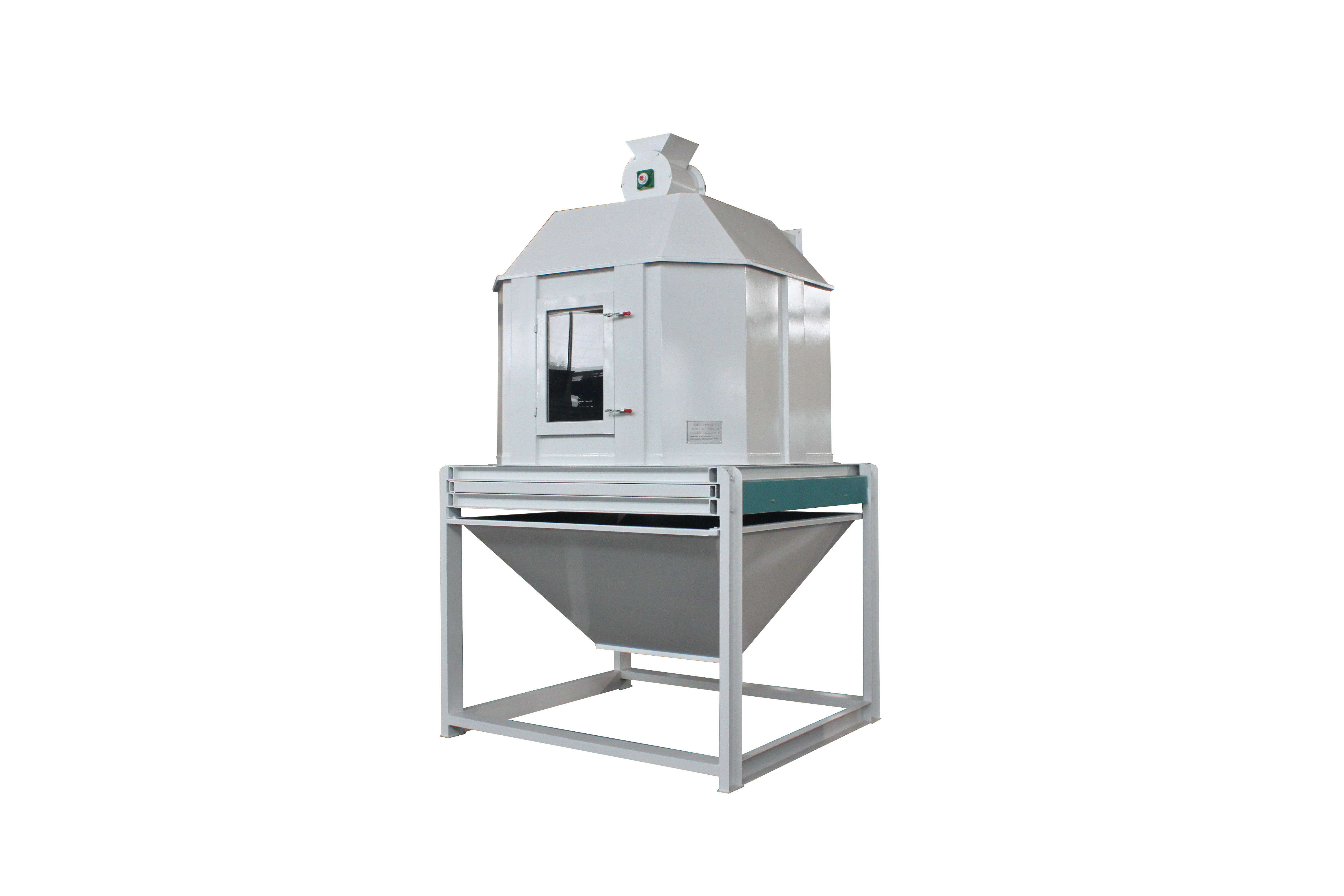
Reference for full text summary
Efficient pelletizing in feed processing equipment requires full-process control from equipment selection and parameter optimization to maintenance management. Jiangsu Huamu Machinery Co., Ltd. provides quantifiable improvement solutions for the industry through structural innovation, intelligent control, and energy-saving design. Its HM series pellet mills have become the top choice for large-scale feed mills due to their stable production capacity (5-30 tons per hour), high pellet quality (powdering rate ≤3%), and low energy consumption (electricity consumption of 18-22 kW·h per ton of feed). For more technical details and customized services, visit the official website or contact the technical team for professional support.
Jiangsu Huamu Machinery Co., Ltd. is located in Xibei Town, Wuxi City, enjoying convenient transportation and significant geographical advantages. The company specializes in the manufacturing of feed machinery and equipment, and can undertake the full-process business of scheme design, equipment ins...
No.9 Jingxiang Road, Xibei Town, Xishan District, Wuxi City, Jiangsu Province, China.