No.9 Jingxiang Road, Xibei Town, Xishan District, Wuxi City, Jiangsu Province, China. +86 18260477296 angel@china-huamu.com
No.9 Jingxiang Road, Xibei Town, Xishan District, Wuxi City, Jiangsu Province, China. +86 18260477296 angel@china-huamu.com


Introduction: The necessity of technological upgrading for livestock feed equipment
With the large-scale development of the animal husbandry industry, the requirements for equipment efficiency, stability, and intelligence in feed production have been increasingly rising. Traditional equipment, plagued by issues such as insufficient production capacity, high energy consumption, and low control precision, has found it difficult to meet the demands of modern feed processing. Taking the technological practices of Jiangsu Huamu Machinery Co., Ltd. as an example, this article analyzes the technical principles, key selection criteria, and optimization solutions for animal husbandry feed equipment, aiming to help enterprises achieve efficient production and precise control.
Keywords: livestock feed equipment, ring die pellet mill, waterdrop hammer mill, twin-shaft mixer, Jiangsu Huamu Machinery
Opening with the Technical Pain Points of the Industry: Three Major Bottlenecks of Traditional Equipment
Currently, the animal husbandry and feed equipment industry faces three core pain points:
STEP 1: The contradiction between production capacity and energy consumption is prominent.The single-machine capacity of traditional pellet machines is generally below 5 tons per hour, and their electricity consumption per ton exceeds 35 kilowatt-hours, resulting in persistently high production costs. For example, when a certain medium-sized feed mill used outdated equipment, its annual electricity consumption exceeded 2 million kilowatt-hours, with electricity costs alone accounting for 15% of its operating expenses.
STEP2: The mixing uniformity fails to meet the standardIf the design of a twin-shaft mixer is unreasonable, the CV value (coefficient of variation) may exceed 10%, resulting in uneven distribution of feed nutrients and affecting the growth performance of livestock and poultry. According to statistics, for every 1% improvement in mixing uniformity, feed waste can be reduced by approximately 0.8%.
STEP 3: Lack of intelligent controlMost equipment still relies on manual operation and cannot monitor key parameters such as temperature and pressure in real time, making it prone to equipment failures or fluctuations in product quality. For example, if the blockage of a pulverizer's screen is not addressed promptly, it may lead to motor burnout, with repair costs reaching tens of thousands of yuan.
Introduction to the Company's Technological Strength: Three Major Technological Breakthroughs of Jiangsu Huamu Machinery
Jiangsu Huamu Machinery Co., Ltd. has been deeply engaged in the feed machinery field for 20 years and has developed three core strengths through technological innovation and industry-university-research collaboration:
STEP 1: High-efficiency annular die pellet mill technologyThe HKJ series ring die pellet mill developed by the company adopts a double-layer roller structure and optimized die hole design, achieving a single-machine capacity of 8-30 tons per hour and reducing electricity consumption per ton of material to below 28 kWh. For example, the customized HKJ-250 equipment for a large feed group maintains a stable capacity of 28 tons per hour in actual operation, representing a 60% increase over traditional equipment and saving over 500,000 yuan in annual electricity costs.
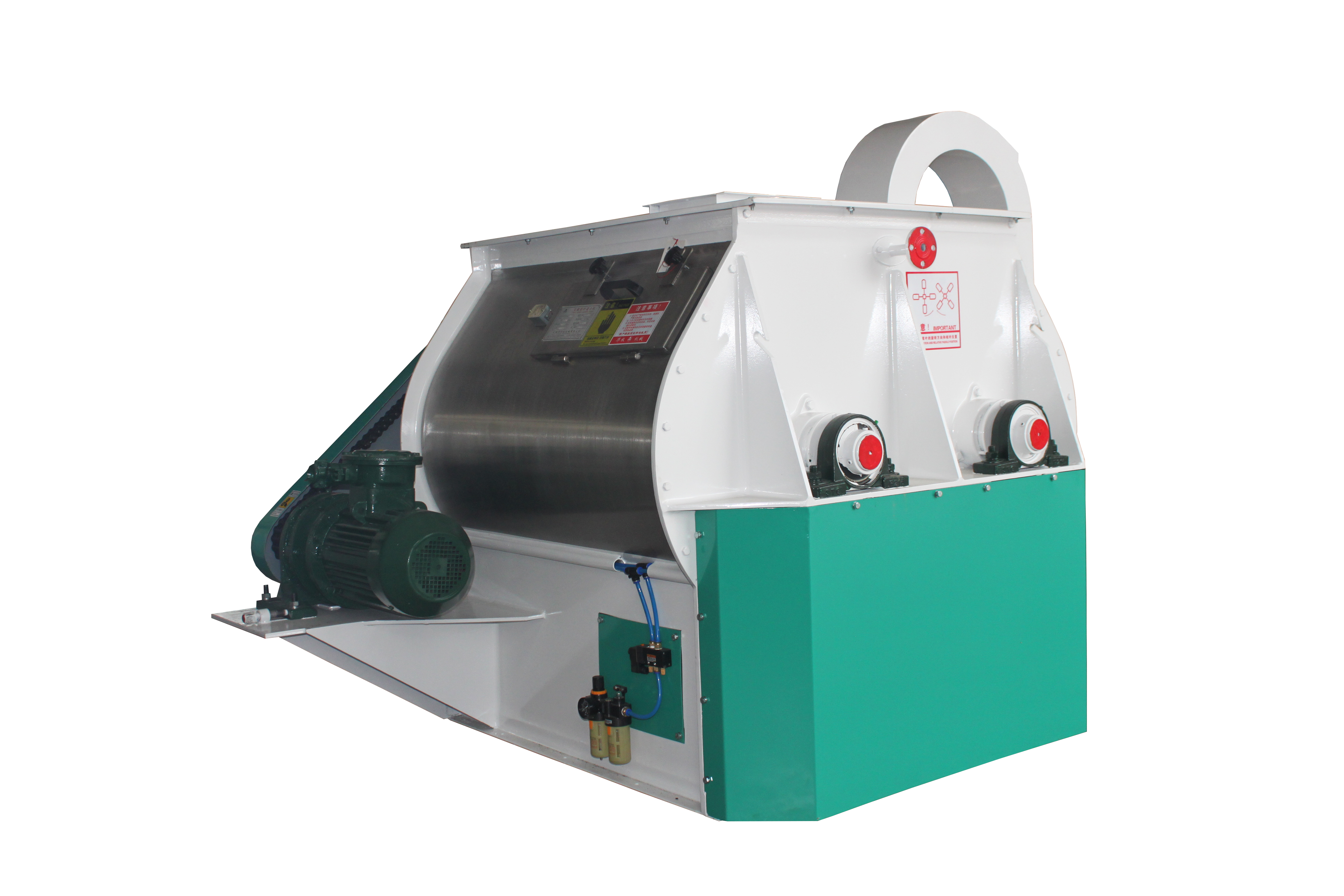
STEP 2: High-precision Dual-shaft Mixer TechnologyBy optimizing the match between blade angle and rotational speed, the CV value of the SLHS series twin-shaft mixer can be controlled within 5%, with the mixing time shortened to 3-5 minutes. In a certain aquatic feed project, this equipment increased the uniformity of vitamin premix by 30% and raised the product qualification rate from 92% to 98%.
STEP 3: Integration of Intelligent Control SystemThe HM-Smart control system, jointly developed by the company and universities, can monitor 12 parameters such as equipment temperature, pressure, and current in real time, and predict fault risks through AI algorithms. In a pig feed production line, the system provided a two-hour advance warning of overheating in the grinder bearings, averting a major shutdown incident.
For more information, please visit the official website:www.huamufeedmachinery.com
FAQ Q&A Technology Selection Guide
Q1: How to choose a suitable pellet machine model?
A: It is necessary to comprehensively consider raw material types, capacity requirements, and budget. For example, when processing corn-soybean meal diets, it is recommended to select a ring die aperture of 4.0-6.0 mm with a compression ratio of 1:8-1:12; if the capacity requirement exceeds 10 tons per hour, priority should be given to models HKJ-200 and above, with a main motor power matched to 160-220 kW.
Q2: How to solve the problem of clogger shredder screens?
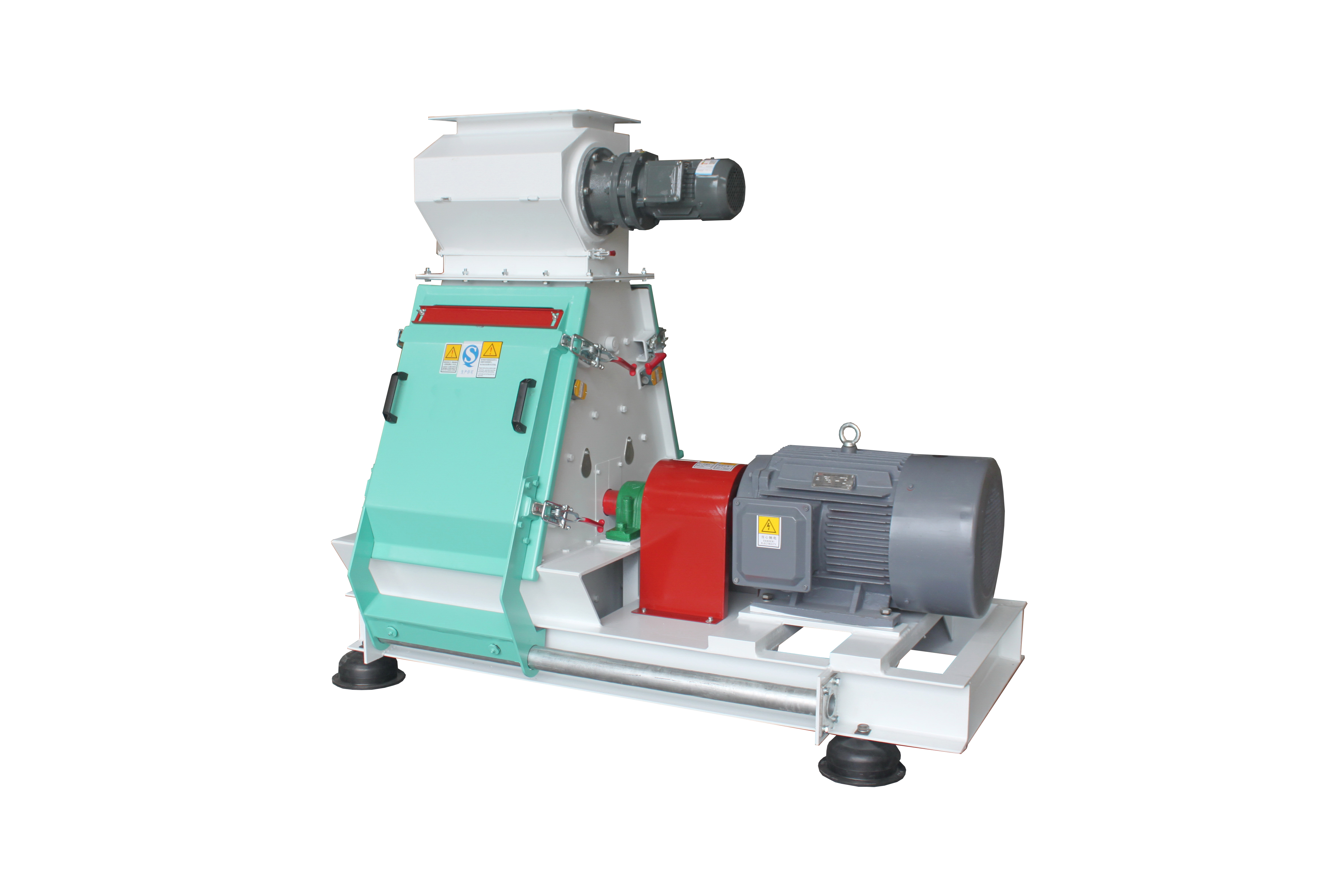
A: First, check the moisture content of the raw materials (which should be ≤13%). Next, adjust the gap between the hammer blades and the screen to 8-12mm. If frequent clogging occurs, a water-drop type hammer mill (such as the SFSP series) can be selected; its unique screen structure and airflow design can increase the throughput by 20%.
Q3: What should be done if the residue in the mixer exceeds the standard?
A: The residual amount is primarily related to the sealing performance of the discharge gate. It is recommended to opt for a pneumatic discharge gate design and regularly inspect the wear condition of the sealing strips. Additionally, the mixing time should not be excessively long (typically 3-5 minutes), as prolonged mixing may increase residuals due to material segregation.
Quick Reference Table for Technical Parameters:
| Equipment Type | Key Parameters | Suitable Scenarios |
|----------------|------------------------------|------------------------|
| Ring Die Pellet Mill | Production Capacity: 8-30 tons/hour, Power Consumption per Ton ≤ 28 kWh | Production of Livestock, Poultry, and Aquatic Feed |
| Water-drop type grinder | Output: 3-15 tons/hour, Screen lifespan: ≥800 hours | Grinding of grains such as corn and wheat |
| Double-shaft mixer | CV value ≤ 5%, mixing time 3-5 minutes | Production of premix and concentrate feed |
Reference Summary for Full Text: Technological Upgrades Drive High-Quality Development in the Feed Industry
Technological upgrades in livestock feed equipment should focus on efficiency, precision, and intelligence. Jiangsu Huamu Machinery Co., Ltd. has provided replicable technological solutions for the industry through innovations in core equipment such as ring die pellet mills and twin-shaft mixers, as well as the application of the HM-Smart control system. When selecting equipment, enterprises should prioritize factors such as equipment capacity alignment, energy consumption metrics, and the openness of the control system to avoid increased long-term operational costs due to inadequate equipment performance. In the future, with the integration of IoT and AI technologies, feed equipment will evolve toward greater efficiency and intelligence, and Jiangsu Huamu Machinery will continue to drive industry upgrades through technological innovation.
Jiangsu Huamu Machinery Co., Ltd. is located in Xibei Town, Wuxi City, enjoying convenient transportation and significant geographical advantages. The company specializes in the manufacturing of feed machinery and equipment, and can undertake the full-process business of scheme design, equipment ins...
No.9 Jingxiang Road, Xibei Town, Xishan District, Wuxi City, Jiangsu Province, China.