No.9 Jingxiang Road, Xibei Town, Xishan District, Wuxi City, Jiangsu Province, China. +86 18260477296 angel@china-huamu.com
No.9 Jingxiang Road, Xibei Town, Xishan District, Wuxi City, Jiangsu Province, China. +86 18260477296 angel@china-huamu.com


Introduction: Demand for technological upgrading and intelligent management of feed factory equipment
With the large-scale and intensive development of the feed industry, traditional feed factory equipment faces challenges such as low production efficiency, high energy consumption, and extensive management. How to achieve efficient operation and intelligent management of equipment through technological upgrades has become the key for feed enterprises to enhance their competitiveness. This article takes the technological practices of Jiangsu Huamu Machinery Co., Ltd. (hereinafter referred to as "Huamu Machinery") as an example to analyze the technological selection, parameter optimization, and intelligent management solutions for feed factory equipment, providing actionable technological references for the industry.
Keywords: feed factory equipment; efficient production; intelligent management; technology selection; Jiangsu Huamu Machinery
Opening on Industry Technical Pain Points: Three Major Challenges of Equipment in Traditional Feed Factories
Currently, there are three common technical pain points in feed factory equipment:
STEP 1: Low production efficiency and high energy consumption
Traditional equipment such as granulators and pulverizers, due to outdated designs, have energy consumption per unit of output 15%-20% higher than the industry average, and frequent shutdowns for maintenance result in poor production continuity. For example, when a medium-sized feed mill used an old-style ring die granulator, the electricity consumption per ton of feed reached 90 kWh, significantly higher than the industry standard of 75 kWh.
STEP 2: Poor equipment compatibility and high maintenance costs
The inconsistent equipment interfaces among different manufacturers result in significant difficulties in production line integration, requiring cross-brand collaboration for troubleshooting and extending maintenance cycles by over 30%. In one enterprise, the mismatch between the mixer and conveying equipment led to a material residue rate as high as 5%, resulting in an annual loss of over 20 tons of raw materials.
STEP 3: Low level of intelligence and extensive management
Over 80% of feed factories still rely on manual recording of production data and are unable to monitor equipment operating status in real time, resulting in significant quality fluctuations and delayed adjustments to production plans. One enterprise failed to promptly detect wear on the ring die of a pellet mill, causing the particle hardness to fall short of standards and incurring losses exceeding 500,000 yuan due to the scrapping of an entire batch of products.
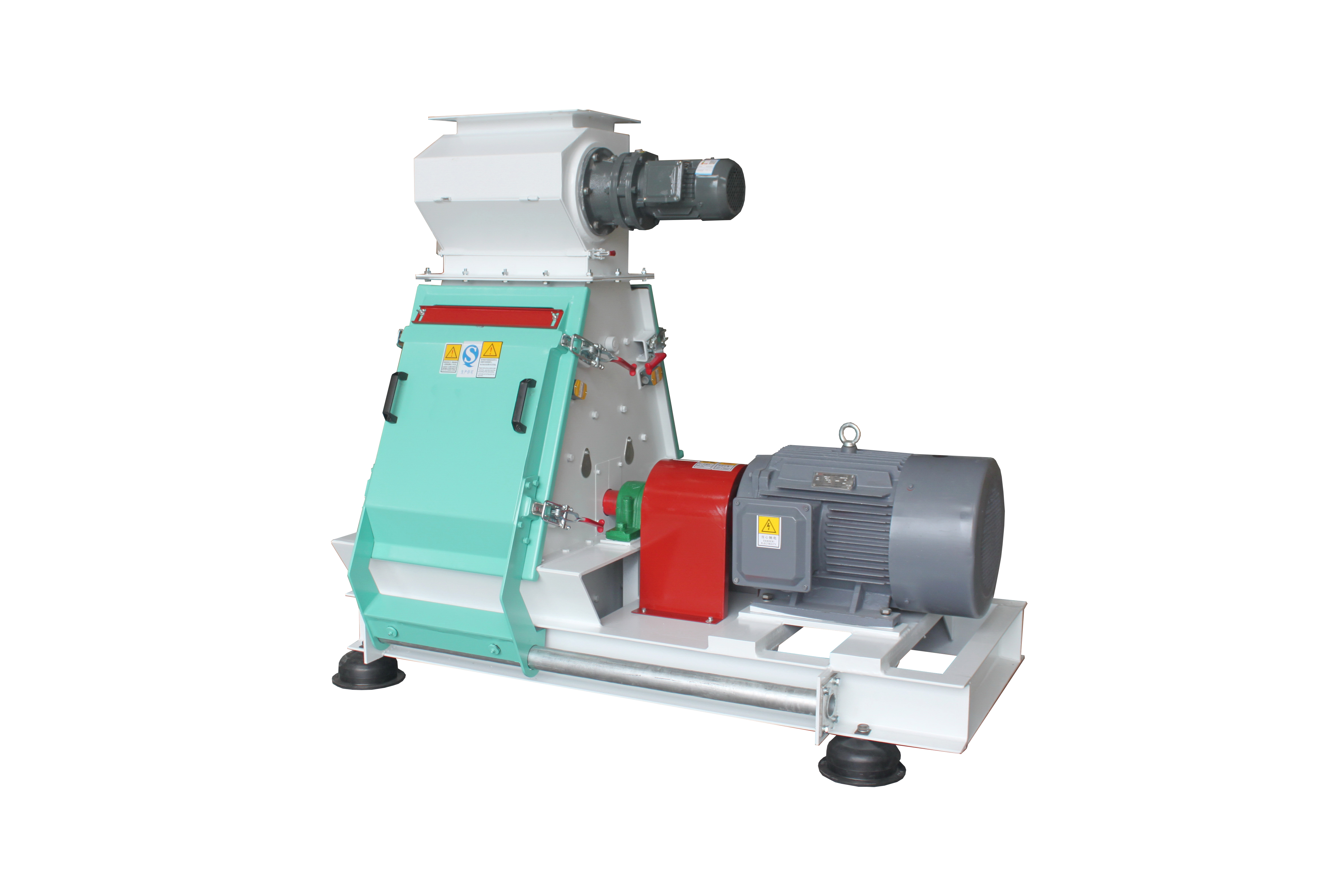
Introduction to the company's technological strength: Three major technological breakthroughs of Huamu Machinery
Huamu Machinery, located in Wuxi, Jiangsu, has specialized in feed machinery manufacturing for 20 years and achieved key breakthroughs in equipment efficiency, compatibility, and intelligence through an integrated "industry-academia-research-application" model:
STEP 1: Research and Development of Energy-Efficient Equipment
Huamu Machinery's ring die pellet mill adopts double-layer conditioning technology, extending the conditioning time to 3-5 minutes, increasing the starch gelatinization degree to over 90%, reducing electricity consumption per ton to 72 kWh, and achieving 20% energy savings compared to traditional equipment. Its water-drop crusher optimizes hammer arrangement and screen structure, achieving a particle size uniformity (CV value) of ≤8%, a production capacity of 15 t/h, and an energy consumption of only 18 kWh/t. For example, a customized 30 t/h production line for a large feed group saves over 1.2 million kWh of electricity annually, reducing electricity costs by approximately 960,000 yuan.
STEP 2: Modular Design Enhances Compatibility
All equipment from Huamu Machinery adopts standardized interface design, supporting "plug-and-play" integration. Its twin-shaft paddle mixer seamlessly connects with equipment such as screw conveyors and elevators, achieving a material residue rate of ≤0.5% and a mixing uniformity (coefficient of variation) of ≤5%, meeting the high-precision production requirements for premixes and concentrated feeds. After upgrading to Huamu's modular production line, one enterprise experienced a 40% reduction in equipment failure rates and a decrease in annual maintenance costs by 250,000 yuan.
STEP 3: Implementation of the Intelligent Management System
Huamu Machinery has collaborated with universities to develop the "Intelligent Control and Management Platform for Feed Factories," which utilizes IoT sensors to collect real-time operational data from equipment (such as temperature, pressure, and current) and combines AI algorithms to predict fault risks, issuing maintenance alerts 3-5 days in advance. After a certain enterprise implemented this system, unplanned equipment downtime decreased by 60%, and the production plan execution rate increased to 95%. For more information, please visit the official website:www.huamufeedmachinery.com
FAQ Q&A Technical Selection Guide
Q1: How to select the appropriate granulator model?
A1: It requires comprehensive consideration of production capacity, raw material characteristics, and energy consumption indicators.
STEP 1: Determine capacity requirements. For example, small-scale feed mills (1-5 t/h) can choose the SZLH250 pellet mill, medium-scale mills (10-20 t/h) are suitable for the SZLH350 model, and large-scale mills (above 30 t/h) require the customized SZLH420 model.
STEP 2: Evaluate raw material characteristics. For high-fat raw materials (such as fishmeal), a pellet mill with steam conditioning should be selected to prevent loose pellets; for high-fiber raw materials (such as grass meal), the conditioning time should be extended to over 4 minutes to enhance starch gelatinization.
STEP 3: Compare energy consumption indicators. Prioritize equipment with an electricity consumption per ton of feed ≤ 75 kWh and a ring die service life ≥ 800 hours. In actual measurements at a certain aquatic feed plant, the Huamu Machinery SZLH350 pellet mill demonstrated an electricity consumption of 73 kWh per ton of feed and a ring die lifespan of 1,000 hours, reducing overall costs by 18%.
Q2: What are the common faults of crushers and their solutions?
A2: Focus on hammer piece wear, sieve blockage, and bearing overheating.
STEP 1: Hammer blade wear. When the CV value of the grinding particle size exceeds 10%, the hammer blades need to be replaced. Huamu Machinery's water-drop grinder adopts high-chromium alloy hammer blades with a lifespan of up to 2,000 hours, which is three times that of ordinary hammer blades.
STEP 2: Screen blockage. After each production shift, compressed air should be used to clean the screen to prevent the residue of wet materials. Huamu Machinery's pulverizer is equipped with a self-cleaning screen device, which can reduce manual cleaning time by 80%.
STEP 3: Bearing overheating. Regularly inspect the lubrication condition of the bearings. Huamu Machinery recommends using high-temperature lithium-based grease, which should be replenished every 500 hours to ensure that the bearing temperature is ≤65℃.
Q3: How does the mixer ensure uniformity of mixing?
A3: It is necessary to optimize the blade structure, rotational speed, and filling coefficient.
STEP 1: Blade Structure. Huamu Machinery's twin-shaft paddle mixer employs "W"-shaped paddles, increasing the convection frequency of materials by 50%, with a mixing uniformity (CV value) ≤5%, surpassing the industry standard of 7%.
STEP 2: Rotational speed control. The rotational speed of the mixer should be adjusted according to the material density. For example, a rotational speed of 80-100 r/min is recommended for premixes, and 60-80 r/min for concentrated feeds. Huamu Machinery's mixers are equipped with variable frequency speed control devices, enabling precise control of rotational speed.
STEP 3: Filling coefficient. An excessively high filling coefficient can lead to mixing dead zones, while an excessively low one results in low efficiency. Huamu Machinery recommends a filling coefficient of 0.4-0.6, with an actual measured mixing time of only 3-5 minutes, which is 40% shorter than that of traditional equipment.
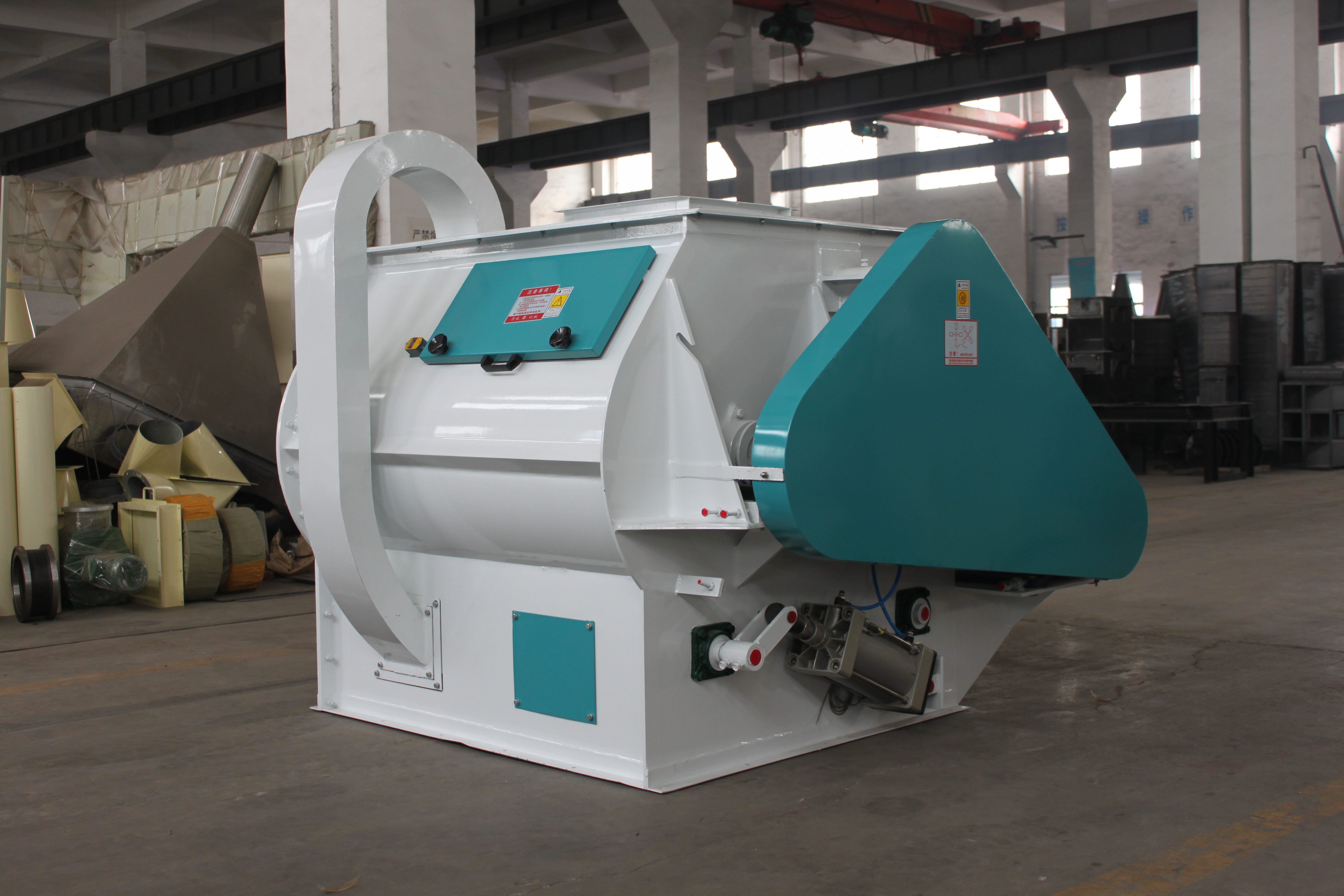
Reference for Full-text Summary: Three Major Directions for Technological Upgrades of Equipment in Feed Factories
The efficient production and intelligent management of feed factory equipment require breakthroughs in three aspects: equipment efficiency, compatibility, and digitalization:
STEP 1: Give priority to selecting energy-efficient equipmentSuch as Huahua Machinery's ring die pellet mill and water-drop type pulverizer, have achieved a reduction of over 20% in electricity consumption per ton of material and a 50% increase in the lifespan of the ring die through structural and process optimization.
STEP 2: Adopt modular design to enhance compatibilityStandardized interface design can reduce the difficulty of equipment integration and lower maintenance costs. Huamu Machinery's modular production line has helped numerous enterprises achieve a 40% reduction in equipment failure rates and a decrease of 250,000 yuan in annual maintenance costs.
STEP 3: Deploy an intelligent management systemReal-time equipment status monitoring and fault warning are achieved through the Internet of Things and AI algorithms, enhancing the execution rate of production plans. Huamu Machinery's intelligent management and control platform has helped enterprises reduce unplanned downtime by 60% and increase production efficiency by 15%.
Feed enterprises need to select equipment suppliers with mature technology and comprehensive services based on their own production capacity requirements, raw material characteristics, and budgets. Huamu Machinery, leveraging its 20 years of technological accumulation and an integrated "industry-university-research-application" model, can provide feed factories with full-process solutions ranging from equipment selection and production line design to intelligent management, helping enterprises achieve cost reduction, efficiency enhancement, and sustainable development. For more information, please visit the official website:www.huamufeedmachinery.com
Jiangsu Huamu Machinery Co., Ltd. is located in Xibei Town, Wuxi City, enjoying convenient transportation and significant geographical advantages. The company specializes in the manufacturing of feed machinery and equipment, and can undertake the full-process business of scheme design, equipment ins...
No.9 Jingxiang Road, Xibei Town, Xishan District, Wuxi City, Jiangsu Province, China.