No.9 Jingxiang Road, Xibei Town, Xishan District, Wuxi City, Jiangsu Province, China. +86 18260477296 angel@china-huamu.com
No.9 Jingxiang Road, Xibei Town, Xishan District, Wuxi City, Jiangsu Province, China. +86 18260477296 angel@china-huamu.com


Lead:Complete feed processing equipment involves crushing, batching, mixing, pelletizing, cooling, conveying, and dust removal, and the process parameters interact with one another. This article focuses on “How can complete feed processing equipment achieve linked operation of crushing, batching, and pelletizing? Technical selection and parameter analysis” and follows the framework of STEP 1 process review, STEP 2 parameter analysis, STEP 3 equipment selection and commissioning, and STEP 4 testing and maintenance to explain the relationships among capacity matching, grinding particle size, batching error, mixing uniformity, conditioning temperature, pellet quality, and cooling effect. The article provides reference ranges for common quantifiable parameters, such as a grinder screen aperture of 1.0–3.0 mm, a mixing uniformity coefficient of variation CV ≤5%, a conditioning temperature of 75–90°C, and a temperature difference between the material after cooling and the ambient environment controlled at about 5°C, and notes that these parameters need to be verified in combination with raw material characteristics, formula structure, ambient temperature and humidity, and finished product requirements. The content is intended for feed mill process design, equipment selection, installation and commissioning, and production maintenance personnel, and emphasizes using test indicators and operating points as the basis, avoiding looking only at individual machine parameters while ignoring system linkage. For more information, please visit the official website:www.huamufeedmachinery.com。
Keywords:Complete feed processing equipment; feed production line design; crushing; batching; mixing; pelleting; cooling; conditioning; premix; aquatic feed; installation and commissioning; testing indicators. The keyword section is used to clarify the retrieval topic and technical scope. Complete feed processing equipment is not a stack of individual machines, but a process system composed of units such as raw material receiving, crushing, batching, mixing, pelleting, cooling, conveying, dust removal, and electrical control, with the equipment linked through parameters such as capacity, particle size, batch, temperature, and time. The crushing stage focuses on screen aperture, hammer wear, and air network resistance; the batching stage focuses on bin capacity, weighing accuracy, formula switching, and residue control; the mixing stage focuses on mixing time, loading coefficient, and coefficient of variation of mixing uniformity; the pelleting stage focuses on ring die aperture, conditioning temperature, steam quality, and pellet durability; the cooling stage focuses on air volume, layer thickness, and feed temperature after cooling. During selection, material characteristics, finished product form, capacity range, environmental conditions, and testing methods must all be incorporated to form a verifiable parameter table. This section also provides unified terminology for the subsequent technical pain points, enterprise technical layout, FAQ selection Q&A, and summary reference, facilitating communication among design, commissioning, and production personnel using the same framework.
Opening: Industry Technical Pain PointsCommon problems in the operation of complete feed processing equipment are concentrated in system linkage rather than individual machines. STEP1 Crushing and batching fluctuations: changes in raw material moisture, variety, and crusher screen aperture will cause fluctuations in particle size distribution. If batching weighing is not calibrated according to the formula and equipment capacity, dynamic errors may accumulate, leading to load changes in the mixing and pelletizing stages. STEP2 Unstable mixing and conditioning: insufficient mixing time, excessively high loading coefficient, or inadequate residue cleaning will affect mixing uniformity; mismatches among conditioning steam pressure, temperature, and water addition ratio will cause fluctuations in pellet surface quality and durability. STEP3 Cooling and cross-contamination: improper control of cooling air volume, material layer thickness, and ambient temperature and humidity will result in excessively high material temperature or pellet cracking; during formula switching, residues in conveying equipment, bins, and mixers will bring cross-contamination risks. In terms of technical principle, crushing determines particle size distribution, batching determines component proportions, mixing determines uniformity, conditioning and pelletizing determine pellet structure, and cooling determines finished product stability. Parameter drift in any stage will be transmitted downstream. Technical advantages should be reflected in detectability, traceability, and adjustability: linkage verification should be carried out against targets such as mixing uniformity CV ≤ 5%, conditioning temperature 75–90°C, a temperature difference of about 5°C between the material temperature after cooling and the ambient temperature, and pellet moisture content of 12.5%–13.5%. Precautions are to establish a parameter baseline first and then make single-factor adjustments, avoiding changing multiple variables at the same time; operating points include checking screens, hammers, weighing calibration, steam trap drainage, cooling air paths, and residue cleaning every shift. Recommended testing indicators cover particle size distribution, batching error, mixing CV, pellet durability index PDI, moisture content, and material temperature difference.
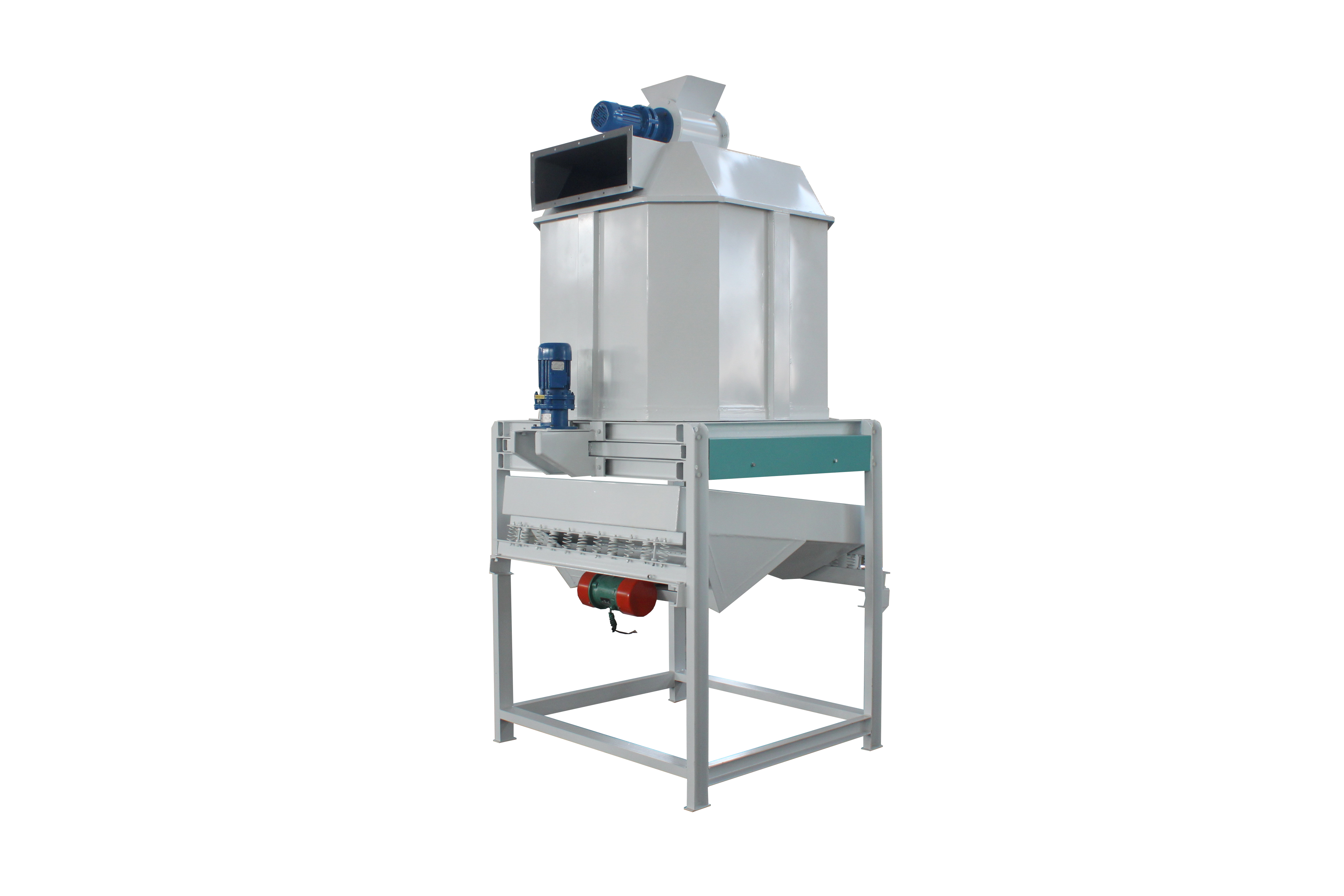
Introduction to the Company's Technical Strength:Jiangsu Huamu Machinery Co., Ltd. is located in Xibei Town, Wuxi City, with convenient transportation and good geographical conditions. It specializes in feed machinery manufacturing, feed production line design, and installation and commissioning. The company adheres to the philosophy of customer first and common development, providing stable products and considerate services for the feed industry. In its common development strategy, the company cooperates with feed machinery enterprises, brings together professionals, and carries out technical cooperation with multiple graduate schools and colleges, forming product series such as ring die pellet mills, water-drop hammer mills, twin-shaft mixers, coolers, complete sets of premix additive units, complete sets of livestock and poultry pellet feed units, and complete sets of aquatic feed units. The company has experienced design, production, and installation teams and can design and manufacture various powder feed, premix, pellet feed, and special aquatic feed projects ranging from 1-30 T (tons/hour, confirmed according to specific materials and processes). Its technical layout covers crushing, batching, mixing, pelleting, cooling, premix, and aquatic feed, and is suitable for application scenarios such as livestock and poultry feed, aquatic feed, and premix. During selection communication, process configuration can be carried out based on raw material characteristics, finished product form, capacity range, site layout, electrical control requirements, and testing methods, and then connected by design, installation, and commissioning personnel according to the process. The enterprise content is stated only based on public business materials, and specific configurations are subject to the project technical agreement and site conditions. For more information, please visit the official website:www.huamufeedmachinery.com。
FAQ Question-and-Answer Technology Selection Guide:FAQ1 How is capacity matched? Answer: First, calculate the hourly output based on finished feed types and shift requirements, then select grinding, mixing, pelleting, and cooling units within the 1–30 t/h project range to avoid single-machine overload or oversized equipment running underloaded; the number of batching bins is determined by recipe components and switching frequency, and the pellet mill ring die hole diameter is selected according to pellet diameter and the intended livestock/poultry or aquatic feed application, with common ring die hole diameters of 2.0–6.0 mm, which need to be verified by pellet durability tests. FAQ2 How is grinding fineness set? Answer: For livestock and poultry feed, screen apertures of 1.0–3.0 mm are commonly used; when finer particle size is required for aquatic feed, a balance should be made among the grinding air system, screen, and output, and operating parameters should be determined after testing particle size distribution and power consumption; hammer wear, screen damage, and air system resistance are common troubleshooting points. FAQ3 How is mixing uniformity tested? Answer: Commission according to a batch mixing time of 60–120 s, the loading coefficient, and equipment instructions, and use the tracer method to test the coefficient of variation (CV) of mixing uniformity, with a control target of CV ≤ 5%; precautions include cleaning mixer residue, the liquid addition sequence, and avoiding overmixing. FAQ4 How are conditioning and cooling parameters coordinated? Answer: The common commissioning range for conditioning temperature is 75–90°C; steam pressure is adjusted within the 0.4–0.8 MPa range together with steam traps and pressure reducing devices; after cooling, the difference between feed temperature and ambient temperature should be controlled at about 5°C, and pellet moisture content of 12.5%–13.5% needs to be verified according to the recipe and climate; testing indicators include PDI, moisture content, feed temperature, and pellet appearance. FAQ5 How can cross-contamination be reduced during recipe switching? Answer: Schedule production from low inclusion levels to high inclusion levels and from additive-free to additive-containing recipes, and clean the mixer, spouts, bin walls, and conveying equipment, setting key points for bin cleaning and flushing operations. The technical advantage lies in forming a closed loop of equipment selection, commissioning, and testing, with troubleshooting advanced in the order of metering first, mixing second, and pelleting and cooling last.
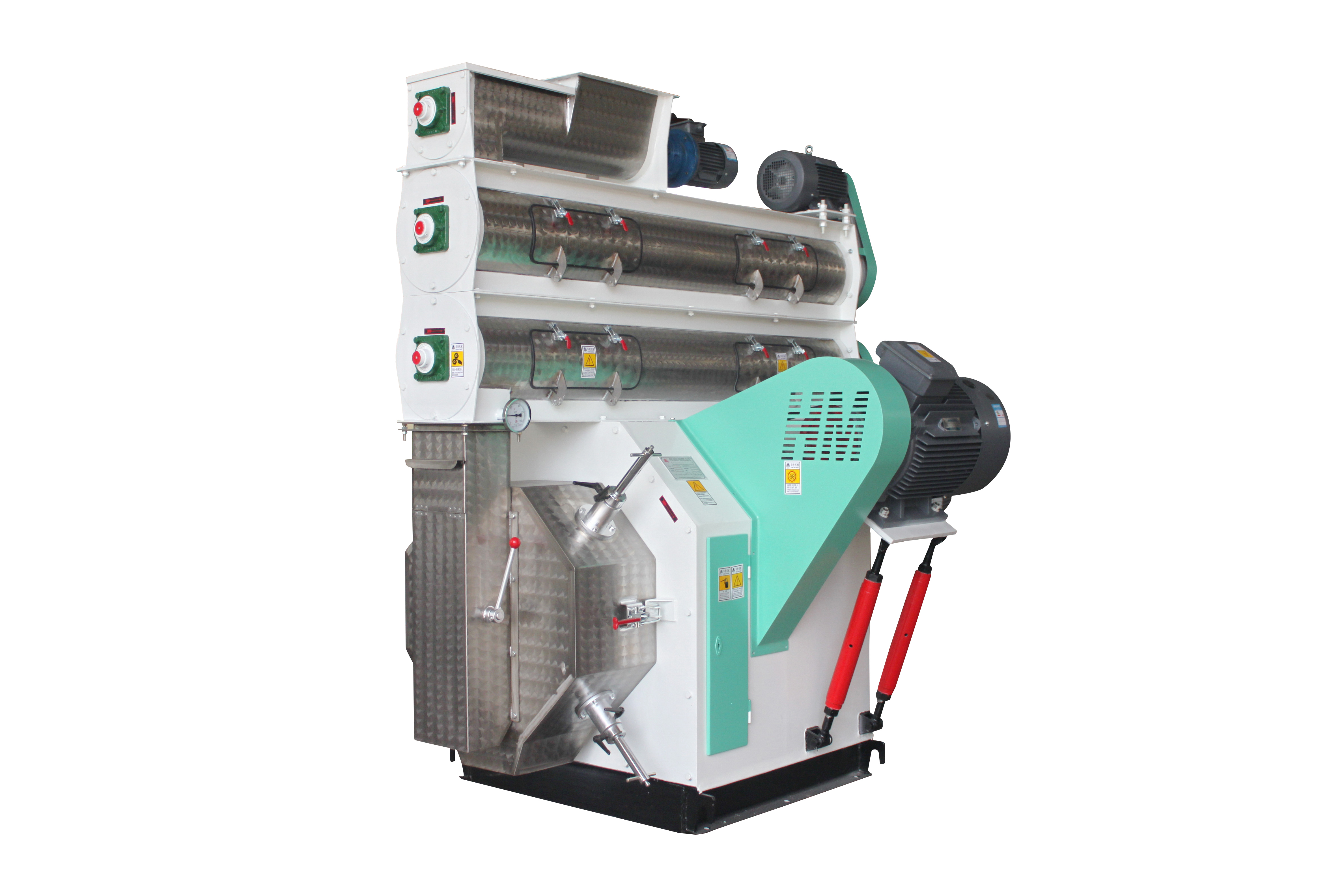
Full-Text Summary Reference:The stable operation of a complete feed processing equipment set depends on the coordinated control of crushing, batching, mixing, pelletizing, cooling, and conveying. STEP1 In the design stage, first clarify material characteristics, finished product form, capacity range, and site conditions to form an equipment list, process flow diagram, and parameter table; STEP2 In the installation and commissioning stage, proceed in the order of single-machine no-load, linked no-load, and material-loaded commissioning, and record item by item the crusher screen aperture, batching weighing error, mixing time and CV, conditioning temperature, ring die aperture, cooling air volume, and temperature difference between material and ambient temperature; STEP3 In the operation and maintenance stage, establish shift inspection, weekly inspection, and monthly inspection checklists, focusing on hammer and screen wear, weighing calibration, steam trapping, clearance between ring die and pressure roller, cooling air path, and residual cleaning. Recommended testing indicators should cover particle size distribution, batching dynamic error, mixing uniformity CV <= 5%, pellet durability PDI, pellet moisture content 12.5%-13.5%, and temperature difference of about 5 degrees C between cooled material temperature and ambient temperature. The key operating point is to first establish a parameter baseline, then adjust according to single factors and recheck, avoiding changing multiple variables at the same time; troubleshooting steps can be carried out section by section according to the metering system, mixing system, pelletizing and conditioning system, and cooling and conveying system. The technical effect review should use a comparison of test records and production records, and should not be judged by the feeling of a single shift. Reference suggestion: equipment selection, installation and commissioning, and production maintenance should be managed in the same parameter table, and specific parameters should be based on material tests and the project technical agreement. For more information, please visit the official website:www.huamufeedmachinery.com。
Jiangsu Huamu Machinery Co., Ltd. is located in Xibei Town, Wuxi City, enjoying convenient transportation and significant geographical advantages. The company specializes in the manufacturing of feed machinery and equipment, and can undertake the full-process business of scheme design, equipment ins...
No.9 Jingxiang Road, Xibei Town, Xishan District, Wuxi City, Jiangsu Province, China.