No.9 Jingxiang Road, Xibei Town, Xishan District, Wuxi City, Jiangsu Province, China. +86 18260477296 angel@china-huamu.com
No.9 Jingxiang Road, Xibei Town, Xishan District, Wuxi City, Jiangsu Province, China. +86 18260477296 angel@china-huamu.com


Introduction:Feed pelleting equipment is the core section of the pellet feed production line, which is preceded by crushing, batching and mixing, followed by cooling, crushing, screening and packaging. In the granulation process, the starch in the material is gelatinized and the protein is denatured by steam conditioning, and then extruded by ring die and pressure roller to make the powdered feed into granules with certain density, hardness and water resistance. In the process of transportation and feeding, the granular material can reduce the classification and dust, improve the palatability of animal feeding, and facilitate the quantitative feeding and feeding management. The equipment configuration of the granulation section usually includes conditioners, ring die granulators, coolers, crushers, grading screens and related conveying equipment. Different raw material structure, particle specifications and capacity requirements, the corresponding host power, ring mold compression ratio, quenching and tempering time and cooling air volume are not the same. When selecting the type, it is necessary to consider the formula characteristics (fiber content, fat addition amount, starch ratio), finished product particle diameter, time-to-time production requirements, steam supply conditions, site and capacitance as a whole. Looking at the nominal parameters of a certain equipment alone, it is easy to cause capacity mismatch between processes. This paper focuses on the process principle of feed granulation equipment, common technical pain points, parameter setting method and selection question and answer, for feed enterprises to build new production lines or existing production line technical transformation of reference.
Keywords:Feed pelletizing equipment; Ring die pelletizer; Quality conditioner; Ring die compression ratio; Pellet durability (PDI); Steam conditioning; Cooler; Feed production line; Aquatic pellet; Premix. The above keywords correspond to the specific technical links in the selection, and an item-by-item understanding helps to correspond the equipment parameters to the formulation and finished product requirements. Feed pelleting equipment is the general term of complete sets of equipment in the pelleting section, including quenching and tempering, pelleting, cooling, crushing and screening, etc. The selection should be based on the overall accounting capacity of the section, rather than single machine superposition. The ring die granulator is the main machine of the workshop section. The main parameters include the inner diameter of the ring die, the aperture of the die hole, the effective length of the die hole, the power of the main motor and the linear speed of the ring die. These parameters together determine the output and particle density. The conditioner is divided into single-layer, double-layer and multi-stage forms. Through the addition of steam and water, the material heats up and absorbs water, creating conditions for starch gelatinization. The conditioning time and conditioning moisture directly affect the surface quality of the particles. The compression ratio of the ring die is the ratio of the effective length of the die hole to the diameter of the die hole. When the compression ratio is high, the particle density and water resistance will be improved, but the output and the power consumption per ton of material will be affected. When the compression ratio is low, the output is easy to increase, but the particles are easy to loose. Particle durability (PDI) is used to evaluate the ability of particles to resist crushing and friction, and is a common indicator of finished product testing. Steam conditioning focuses on steam pressure, dryness and flow stability, steam with water will cause moisture fluctuations and blockage risk. The cooler is used to reduce the temperature and moisture of the particles from the machine to a safe storage range. The common forms are countercurrent, horizontal and vertical, which need to be matched with the production of the granulator. The feed production line is an engineering system that combines crushing, batching, mixing, pelletizing, cooling and packaging into a whole. Aquatic granular materials have higher requirements for crushing fineness, tempering temperature and water resistance, and there are differences between the selection ideas and livestock and poultry materials. Heat-sensitive components such as vitamins in premix are usually not suitable for high-temperature conditioning and granulation. Generally, they are added after granulation or independent mixing section is adopted, which should be confirmed at the production line layout stage.
Introduction to Industry Technical Pain Points:The technical problems in the granulation section are often not caused by a single device, but by the superposition of multiple links of formula, steam, ring mold, cooling and transportation. Common pain points can be summarized into the following categories.Pain point one: insufficient particle durability and high pulverization rate.The finished particles produce more powder in the process of transportation and packaging, the amount of return material increases, and the power consumption and raw material loss per ton of material increases. Common causes include mismatch between ring die compression ratio and formula, low quenching and tempering moisture, uneven particle length caused by improper cutter position, uneven cooling and excessive conveying drop.Pain point two: the level of conditioning is insufficient.Steam pressure fluctuation, steam dryness is not enough, the tempering time is short, starch gelatinization is not sufficient, the surface of the particles is rough, the hardness is insufficient, the aquatic material shows a decline in water stability. The steam pipes of some production lines are not completely hydrophobic, and water vapor enters the conditioner, causing the moisture content of the materials to rise and fall, which not only affects the particle quality, but also increases the risk of blocking the machine.Pain point three: ring die and pressure roller wear fast, die change downtime is long.The raw materials are mixed with stones, metals and other impurities, or the gap between the pressure roller and the ring die is improperly adjusted, which will accelerate the wear of the ring die. After the die hole is blocked, the output decreases, and frequent die change reduces the effective production time. In the production of many varieties and small batches, the connection arrangement of changing formula, changing mold and cleaning conditioner is unreasonable, which will also cause waiting losses.Pain point four: cooling and moisture control instability.When the cooling air volume, material layer thickness and cooling time do not match, the temperature of the particles after cooling is high, the moisture is high, and condensation, fever and even mildew are easy to occur after entering the silo, especially in the high temperature and high humidity season.Pain point five: capacity and host power, front and rear sections do not match.The granulator has been running under load for a long time, and the power consumption per ton of material is high. Or the cooling and screening capacity is insufficient, and the granulator is forced to drop production. The solution of the above problems needs to be checked item by item according to the process, first confirm the raw materials and formula, then check the steam and quenching and tempering parameters, and finally check the ring die, cooling and transportation links, so as to avoid repeated adjustment on a single device and ignore the system matching.
Introduction to the Company’s Technological Capabilities:Jiangsu Huamu Machinery Co., Ltd. (Jiangsu Huamu Machinery Co., Ltd.) is located in Xizhang Town, Wuxi City, Jiangsu Province, with convenient transportation and good location conditions. It is an enterprise specializing in feed machinery manufacturing, feed production line design, installation and commissioning. The company adheres to the business philosophy of customer first and common development. Under the cooperation idea of common development, the company cooperates with enterprises in the field of feed machinery, brings together professional and technical personnel, and actively carries out technical cooperation with many colleges and universities, forming a relatively complete product sequence, including ring die granulator, water drop hammer mill, double shaft mixer, cooler, premix additive unit, livestock and poultry pellet feed unit, aquatic feed unit, etc. The company has experienced design, production and installation team, can design and manufacture 1-30 tons of powder, premix, granular materials and special aquatic materials engineering, according to the raw material formula and finished product requirements for process configuration. In the technical layout of the granulation section, the company pays attention to the connection between the front and back processes: the crushing section controls the particle size distribution through a water drop hammer mill, the mixing section controls the mixing uniformity through a double-shaft mixer, the granulation section configures the ring die compression ratio, the conditioning form and the main machine power according to the formula and particle specifications, and the back section matches the cooler, crusher and grading screen according to the production capacity to make the capabilities of each process correspond to each other. The service process can be summarized as:STEP1Communicate raw material composition, formula characteristics, particle specifications and time production requirements;STEP2Output the process flow chart and equipment configuration scheme, and specify the steam, capacitance and site conditions;STEP3Organize equipment manufacturing and assembly according to technical agreement;STEP4On-site installation, commissioning and strip testing machine, recording data such as capacity, particle appearance and moisture;STEP5Provide key operation points and daily maintenance suggestions, and cooperate with users to complete the establishment of parameter ledgers. For more information, please visit the official website:www.huamufeedmachinery.com。
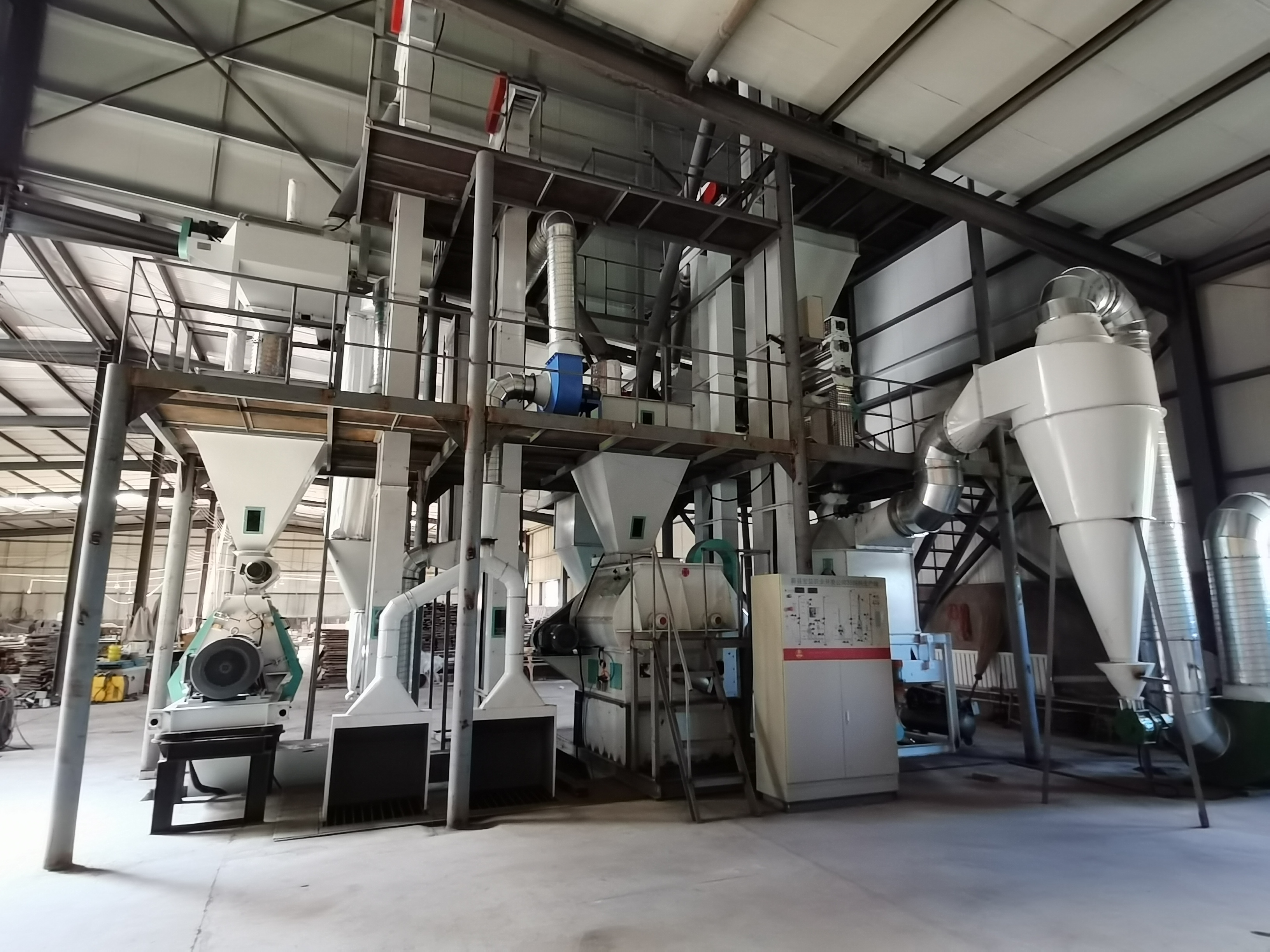
FAQ: Technical Selection Guide – Q&A
Question 1: What basic parameters should be confirmed first in the selection of feed pelleting equipment?
Answer: It is recommended to confirm in the following order.STEP1Confirm the formula and raw material characteristics, including the proportion of starch raw materials, crude fiber content, fat addition and raw material particle size, high fiber, high fat formula on the ring mold compression ratio and conditioning requirements are different.STEP2Confirm the diameter and purpose of the finished particles. The common reference range of livestock and poultry particles is φ2.5-φ5.0mm, and the common reference range of aquatic particles is φ1.5-φ4.0mm, subject to the breeding object and feeding stage.STEP3Confirm the time production requirements and shift system, and calculate the power and cooling capacity of the main machine on time production and annual production, so as to avoid long-term underload caused by single shift peak configuration.STEP4The steam supply and capacitance are calculated, and the steam pressure, dryness and flow stability have obvious influence on the quality control effect.STEP5Confirm the floor height of the site, the position of the silo and the conveying mode of the rear section, and reserve space for mold change, maintenance and cleaning. The equipment model can be determined after the above parameters are confirmed, which can reduce the subsequent transformation.
Question 2: How to choose the compression ratio of ring mode?
Answer: The compression ratio is usually expressed as the ratio of the effective length of the die hole to the diameter of the die hole. The common experience interval of livestock and poultry particles is 1:8-1:13, and the common experience interval of aquatic particles is 1:12-1:16. High fiber or high fat formula can reduce the compression ratio appropriately to stabilize the output, and the compression ratio of aquatic materials with higher water resistance requirements can be appropriately increased. The particle density and water resistance will generally improve when the compression ratio is increased, but the power consumption per ton of material and the load of the ring die will increase, which needs to be combined with the main motor power and formula verification. The above values belong to the common reference range of the industry, the actual selection should be based on the results of the test machine with material, and then determined after testing the particle density, durability and power consumption per ton of material.
Q3: How to set the tempering temperature, moisture and steam parameters?
Answer: The common reference range for the conditioning temperature of livestock and poultry particles is 75-90 degrees Celsius, and the common reference range for the moisture content of the materials out of the conditioner is 15.5-17.5. The common reference range for the conditioning temperature of aquatic particle materials is 90-95 degrees Celsius, and the common reference range for moisture is 16%-18%, and multi-stage conditioning can be adopted to prolong the conditioning time. The common reference range of saturated steam pressure is 0.2-0.4 MPa, and the dryness of steam should be ensured and water should be reduced. The tempering time of livestock and poultry is common for 30-60 seconds, and that of aquatic products is common for 60-120 seconds. Key points of operation: drain the condensate from the pipeline first, and then feed the condensate after the steam is stable; When the water content is too high, reduce the water addition or improve the dryness of the steam; when the water content is too low, appropriately increase the tempering and adding water; In case of machine blockage, the feed quantity should be reduced first and the water content of the steam should be checked. It is not suitable to directly increase the rotation speed of the main engine.
Q4: How to check the high pulverization rate of particles?
Answer: It can be checked step by step according to the process.STEP1Check the steam pressure and dryness, the tempering temperature and the water content from the machine, and confirm whether the starch gelatinization conditions are met;STEP2Check whether the compression ratio of the ring die matches the formula, and observe the wear and blockage of the die hole;STEP3Check the gap between the pressure roller and the ring die. Refer to the equipment manual for gap adjustment. The common reference range is 0.1-0.3mm, and keep the same on both sides;STEP4Check the cutter position and particle length, particle length will increase the powder;STEP5Check the cooling air volume, material layer thickness and cooling time, and the particle temperature after cooling should be close to the ambient temperature;STEP6Check the conveying drop, chute pipe and screening equipment to reduce transportation breakage. The detection index can record the durability of particles, the moisture content of finished products, the content of powder and the power consumption per ton of materials. The common control target for the durability of livestock and poultry particles is more than 90%, and the aquatic products can be evaluated together with the water resistance time. The specific index shall be subject to the enterprise standard.
Q5: How does the cooler match the capacity of the granulator?
Answer: The cooler should calculate the effective cooling volume and air volume according to the output and particle diameter of the granulator to ensure that the particles have sufficient residence time in the cooler. The common residence time reference range of horizontal cooler is 6-10 minutes. The main points of operation include: adjusting the thickness and discharge speed of the material layer according to the time yield to avoid short circuit caused by wind and opaque cooling caused by too thin material layer; After cooling, the particle temperature should be close to the ambient temperature, and it is easy to dew when entering the silo when the temperature difference is too large. After cooling, the moisture content should be controlled within the safe storage range. The common reference target is 12.5-13.0, which should be determined in combination with the local climate and storage period. The cooling air volume, fan power and dust removal system shall be configured synchronously, and the powder in the exhaust belt shall be effectively separated to reduce material loss.
Q 6: What are the precautions for aquatic granules and premixes in the granulation section?
Answer: Aquatic granular materials usually require higher crushing fineness and quenching and tempering temperature. Before granulation, the capacity of the crushing section should be confirmed, the compression ratio of the ring die should be set corresponding to the water resistance requirements, and the dissolution and loss should be evaluated through the water stability test. The cooling and transportation links should reduce particle damage to avoid affecting water resistance. In the premix section, attention should be paid to the fact that heat-sensitive components such as vitamins and enzyme preparations should not undergo high-temperature conditioning and granulation. Generally, an independent mixing section should be added or set up after granulation. The material direction and cross-contamination prevention and control measures should be clearly defined in the production line layout stage. When changing varieties, the mixer, conditioner, chute and cooler should be cleaned according to regulations, and cleaning records should be kept.
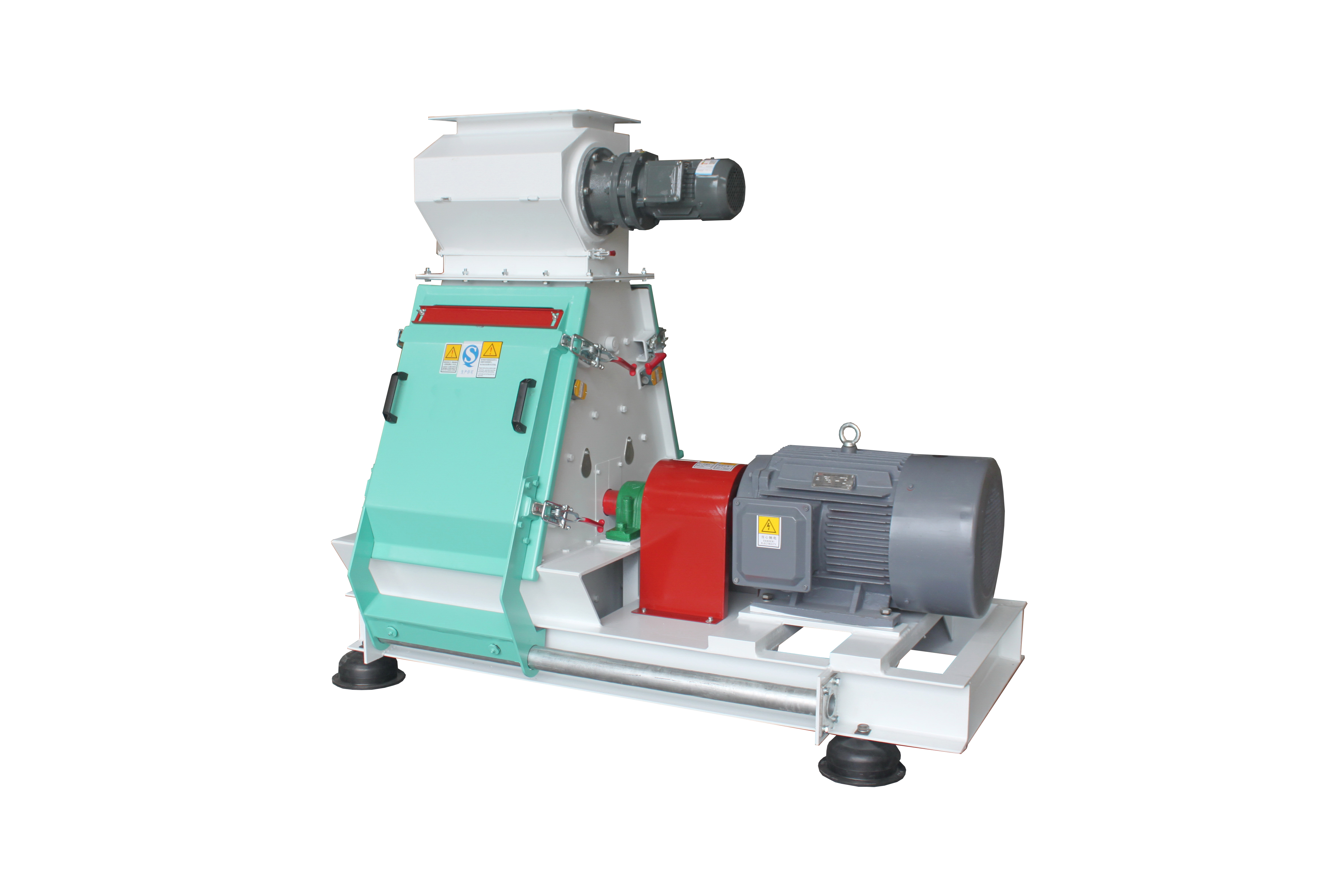
Full text summary reference:The selection of feed pelleting equipment can be confirmed item by item according to the six elements of formula, granule, production capacity, steam, cooling and site, and then fall to the specific equipment parameters. Implementation path recommendations are:STEP1Organize the list of raw materials and formulas, mark the proportion of starch, fiber, fat and the addition position of heat-sensitive components;STEP2Determine the particle diameter, water resistance requirements and finished product testing indicators;STEP3Calculate the host power, ring mold specifications and quenching and tempering forms on time, and synchronously match the cooling, crushing and screening capabilities;STEP4Check the steam supply, capacitance, floor height and silo layout, and reserve space for maintenance and mold change;STEP5The belt test machine shall record the production capacity, power consumption per ton of material, particle durability, moisture and powder content, and form a parameter ledger, which shall be corrected synchronously with the formula adjustment. In terms of operation and maintenance, a spot inspection system for checking roller gap, ring die wear, steam drainage, cutter and lubrication shall be established for each shift. Preheat as required before die change to avoid ring die damage caused by cold die start. It should be noted that the parameter intervals listed in this article are common reference ranges in the industry, and the actual values are affected by the batch of raw materials, climatic conditions and equipment structure, and should be subject to the test machine and test results. Jiangsu Huamu Machinery Co., Ltd. can provide equipment manufacturing, production line design, installation and debugging, and operation guidance for 1-30 tons of powder, premix, granular materials and special aquatic materials. Relevant technical data can be further understood through the official website www.huamufeedmachinery.com.
Jiangsu Huamu Machinery Co., Ltd. is located in Xibei Town, Wuxi City, enjoying convenient transportation and significant geographical advantages. The company specializes in the manufacturing of feed machinery and equipment, and can undertake the full-process business of scheme design, equipment ins...
No.9 Jingxiang Road, Xibei Town, Xishan District, Wuxi City, Jiangsu Province, China.