No.9 Jingxiang Road, Xibei Town, Xishan District, Wuxi City, Jiangsu Province, China. +86 18260477296 angel@china-huamu.com
No.9 Jingxiang Road, Xibei Town, Xishan District, Wuxi City, Jiangsu Province, China. +86 18260477296 angel@china-huamu.com


The operating quality of a feed machinery production line often does not depend on the parameters shown in the sample specifications of a single machine, but on the process matching among grinding, batching and mixing, pelletizing, cooling, and finished product handling. The particle size distribution after grinding changes the mixing uniformity and the water absorption state during conditioning; the mixing batch cycle affects material waiting or buffer bin accumulation in the pelletizing section; and the length-to-diameter ratio of the ring die holes, the moisture and temperature during conditioning, and the cooling curve jointly affect pellet durability and finished product moisture. Jiangsu Huamu Machinery Co., Ltd., located in Xibei Town, Wuxi City, is engaged in feed machinery manufacturing, feed production line design, installation, and commissioning. Its products cover ring die pelletizers, water-drop hammer mills, twin-shaft mixers, coolers, complete units for premix additives, complete units for livestock and poultry pellet feed, and complete units for aquatic feed. This article takes "how a feed machinery production line matches the grinding, mixing, and pelletizing processes" as its thread, and breaks down the technical principles, operating points, parameter analysis, and testing indicators according to STEP 1/2/3, providing a reference for model selection and on-site commissioning. For more information, please visit the official website:www.huamufeedmachinery.com。
Keywords:Feed machinery; grinding process; mixing process; pelletizing process; ring die pellet mill; water-drop hammer mill; twin-shaft mixer; cooler; complete premix unit; complete aquatic feed unit; screen aperture; mixing uniformity; die hole length-to-diameter ratio; conditioning temperature; pellet durability; installation and commissioning; testing indicators. Keywords are not isolated labels but a common language for selection, commissioning, and acceptance. Screen aperture determines the particle size distribution after grinding, which in turn affects mixing uniformity and water absorption during conditioning for pelletizing; the mixer batch cycle determines buffer bin capacity and production scheduling rhythm; the ring die hole length-to-diameter ratio and conditioning temperature jointly affect pellet density and durability; cooler retention time and air volume affect finished product moisture and feed temperature. Only by putting these keywords back into the correspondence of "material—equipment—parameter—indicator" can one judge whether individual machine parameters match system operating conditions. For example, after changing the screen on the same water-drop hammer mill, if the air system air volume, hammer mill current, and subsequent mixing batches are not checked in sync, the particle size distribution may fluctuate; after changing the formula on the same ring die pellet mill, if conditioning steam volume and ring die linear speed are not adjusted in sync, pellet appearance and PDI may also change. The role of the keyword section is to help technical personnel develop awareness of parameter handover, rather than simply pile up equipment names.
Opening: Industry Technical Pain Points:In complete feed machinery projects, the common problem is not that individual machines fail to operate, but that there is a lack of parameter handover between process sections. STEP1 Grinding section: after the screen aperture is changed, the hammer mill current, air system airflow, and subsequent mixing batches are not adjusted synchronously, causing fluctuations in particle size distribution; STEP2 Mixing section: batch size, mixing time, liquid addition sequence, and pellet mill buffer bin capacity do not match, resulting in material starvation or accumulation; STEP3 Pelleting section: the ring die hole length-to-diameter ratio, conditioning moisture and temperature, and ring die linear speed do not match the formula, causing fluctuations in pellet durability; STEP4 Cooling section: cooling airflow, material layer thickness, and retention time are improperly set, resulting in an excessive temperature difference between the pellet surface and core; STEP5 Testing section: there is a lack of baseline data such as grinding particle size, mixing uniformity CV, pellet durability PDI, and material temperature and moisture after cooling, so commissioning easily relies on personal experience. Aquatic feed also faces contradictions between grinding fineness and water stability, and residual trace components in premix. The above pain points require matching at the level of the process chain: first determine the finished product form and animal species, then back-calculate the grinding fineness, mixing batch, and pelleting parameters, and then verify them with testing indicators. If selection is made only according to individual machine nameplates, situations such as grinding section capacity being too large while the mixing section batch is too small, and the pelleting section hourly output being disconnected from the cooling section capacity are likely to occur. The solution is to treat grinding, mixing, pelleting, and cooling as continuous variables, use the STEP process to record the inputs and outputs of each section, and form a traceable parameter baseline.
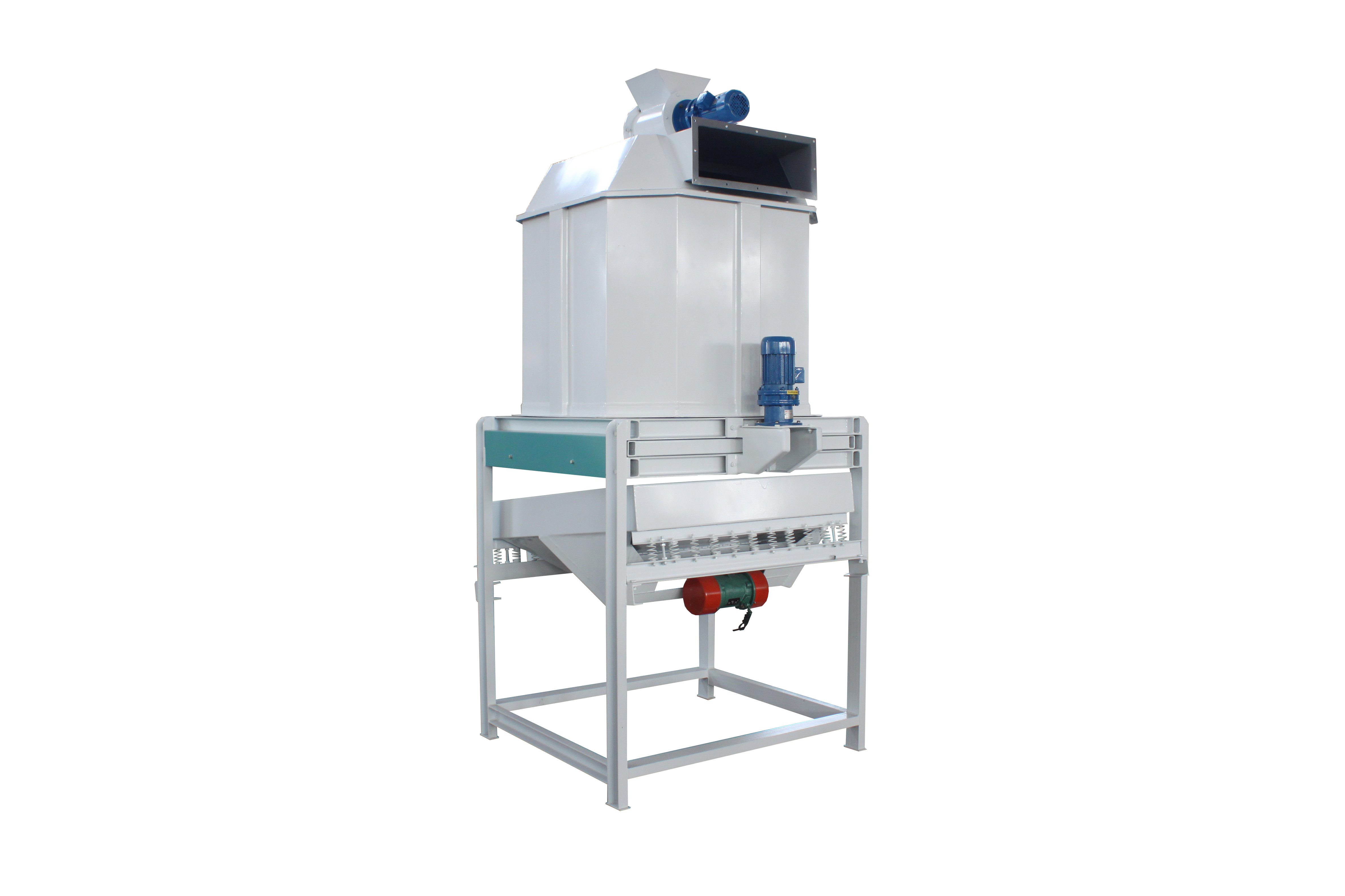
Introduction to the Company's Technical Strengths:Jiangsu Huamu Machinery Co., Ltd. is located in Xibei Town, Wuxi City, with convenient transportation conditions, and is engaged in feed machinery manufacturing, feed production line design, installation and commissioning. The company's products include ring die pellet mills, water drop hammer mills, twin-shaft mixers, coolers, complete units for premix additives, complete units for livestock and poultry pellet feed, and complete units for aquatic feed, etc. It can design and manufacture 1-30T powder feed, premix, pellet feed, and special aquatic feed projects. The company has a design, production, installation and commissioning team. During project execution, process configuration is carried out around material characteristics, capacity targets, site conditions, and finished product forms, with emphasis on handling interface matching, interlocking timing, and parameter handover among crushing - batching and mixing - pelletizing - cooling - bagging. This method of configuring according to the process chain helps reduce disconnection between single-machine parameters and system operating conditions, and also facilitates staged verification during the installation and commissioning stage. The company adheres to the philosophy of customer first and common development, carries out cooperation with feed machinery enterprises in the industry, and conducts technical cooperation with multiple colleges and universities to provide equipment and on-site services for feed enterprises. For powder feed, premix, pellet feed, and special aquatic feed projects, process configuration needs to be communicated in combination with raw material particle size, oil addition, liquid addition, pellet diameter, and finished product moisture requirements, and then the equipment combination and commissioning sequence for the crushing, mixing, pelletizing, and cooling sections are determined. For more information, please visit the official website:www.huamufeedmachinery.com。
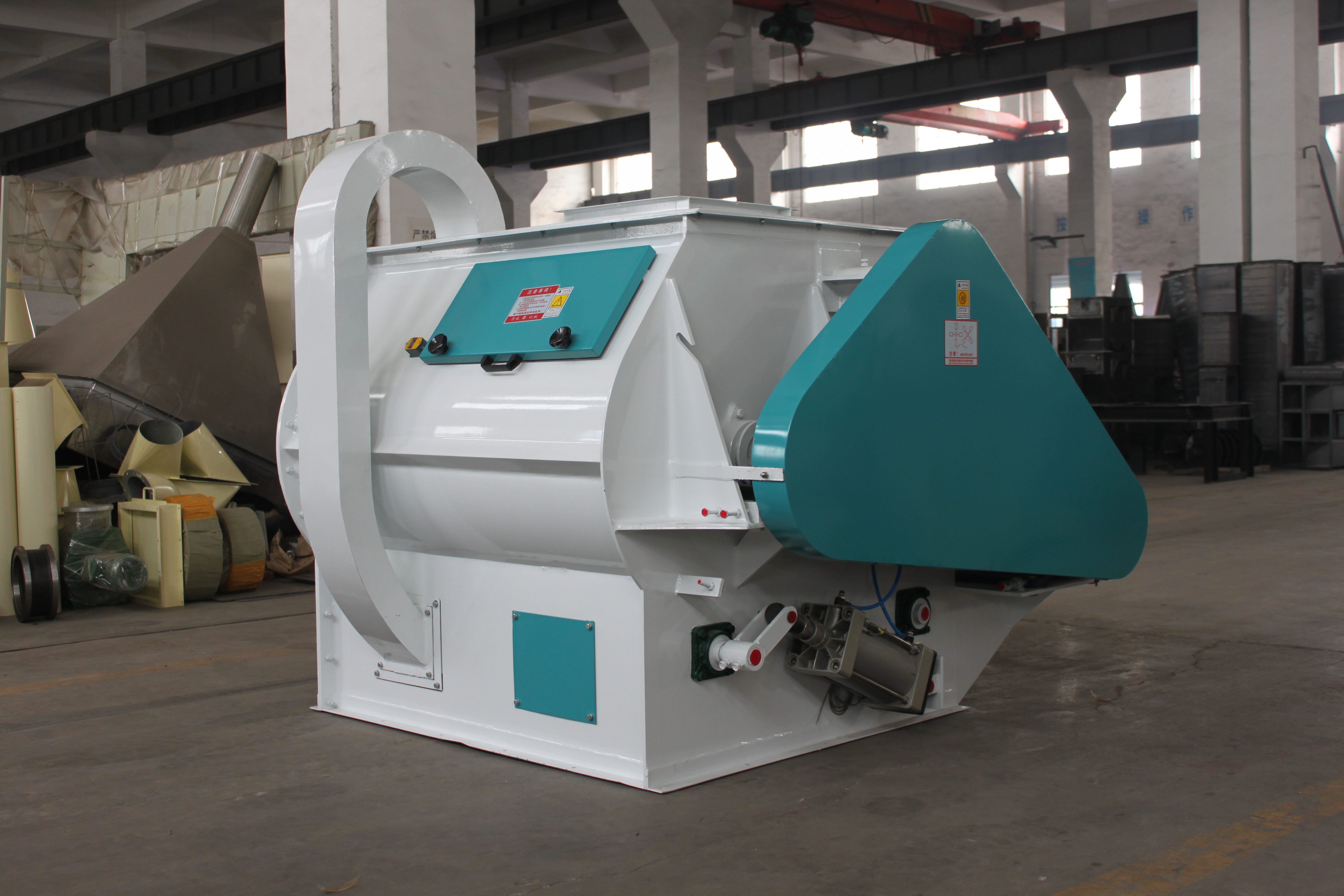
FAQ Q&A Technology Selection Guide:
Q1: How can a feed machinery production line determine the match between the grinder screen aperture and the pelleting requirements?
A1: First determine the grinding fineness target according to animal species and pellet diameter, then work backward to determine the screen aperture, hammer clearance, and grinder power. Common grinding fineness control targets for livestock and poultry pellet feed can be discussed with reference to a screen aperture range of 1.5–3.0 mm; aquatic feed usually requires finer grinding, with the specifics subject to the formula and material trials. Key operating points: STEP 1 Sample and test the particle size distribution after grinding; STEP 2 Record the grinder current, air system negative pressure, and output; STEP 3 After adjusting the screen and hammer clearance, retest, and avoid changing only the screen without adjusting the air volume. Testing indicators include particle size distribution, power consumption per ton of material, and grinding temperature rise. Notes: After the screen aperture is reduced, the grinder load and air system resistance will change; feeding speed and subsequent mixing batches must be checked simultaneously to prevent the grinding stage and mixing stage from becoming out of sync.
Q2: How should the mixer batch be matched with the granulation capacity?
A2: The capacity of the mixing section can be estimated as "effective batch size of the mixer × batches per hour × an operating factor of 0.8–0.9", and then compared with the hourly output of the pelleting section. Example: In the process calculation of a conventional 10 t/h livestock and poultry pellet line, the mixer has an effective batch size of 2 t and a cycle time of 6 min per batch, giving a theoretical 10 batches/h, corresponding to a mixing capacity of 20 t/h; considering pelleting start-stop, product changeover, and cleaning, a buffer bin should be provided and batch scheduling controlled to reduce idle operation of the mixing section or material starvation of the pelleting section. Operating points: STEP1 Confirm the effective loading capacity of the mixer rather than the nameplate volume; STEP2 Measure the feed-in, mixing, and discharge times; STEP3 Use the buffer bin capacity to absorb the tempo difference between the two sections; STEP4 Record residue and cross-contamination control according to product changeover. Inspection indicators include mixing uniformity CV, batch time, buffer bin level, and frequency of material starvation in the pelleting section.
Q3: How should the length-to-diameter ratio of the ring die holes and the conditioning parameters of a ring die pellet mill be selected?
A3: The length-to-diameter ratio of the die holes affects pellet density and durability, and it must be determined through trials in combination with the fiber, fat, and starch contents of the formula; the conditioning temperature can be discussed within the range of 75–95°C according to the material type, and moisture control must match the cooling capacity. Operating points: STEP1 Conduct a small-batch trial run first; STEP2 Record the ring die current, die hole discharge status, and pellet appearance; STEP3 Slightly adjust the steam amount after testing PDI and moisture; STEP4 Recheck the ring die linear speed and feed scraper status. Notes: Increasing the conditioning temperature does not necessarily increase PDI; if moisture is high and cooling capacity is insufficient, the risk of increased final product moisture and die blockage will increase. Test indicators include pellet durability index (PDI), fines rate, ring die current, conditioning moisture, and discharge temperature.
Q4: How should the cooler and finished product inspection be jointly commissioned?
A4: Establish a cooling curve based on material bed thickness, air volume, and residence time. The temperature difference between the cooled material and the ambient environment is recommended to be discussed at a control level within 5°C, and the moisture of the finished product should be controlled according to safe storage requirements. Key operating steps: STEP 1 Perform a no-load check of the fan, discharge, and level control; STEP 2 With material loaded, adjust the bed thickness and residence time; STEP 3 Sample and test material temperature and moisture; STEP 4 Recheck cooler capacity based on pellet diameter and output. Test indicators include Pellet Durability Index (PDI), fines rate, material temperature after cooling, finished product moisture, and cooling time.
Q5: What steps are followed to carry out installation and commissioning?
A5: STEP1: Confirm single-machine no-load operation, rotation direction, and interlocks; STEP2: Conduct sectional material loading; first crush and mix, then pelletize and cool; STEP3: Run linked operation with material and record the parameter baseline; STEP4: Accept according to inspection indicators and create an operation card. The above parameters are examples for model selection discussion; actual conditions shall be subject to material tests, equipment nameplate, and site conditions.
Full-text summary reference:The matching of grinding, mixing, and pelletizing in a feed machinery production line should establish a closed loop of "material characteristics—equipment interfaces—operating parameters—testing indicators." STEP1 Determine grinding fineness and pellet diameter based on finished product form and animal species; STEP2 Match pelletizing hourly output with the mixing batch cycle and buffer bin capacity; STEP3 Conduct linked commissioning of the ring die hole length-to-diameter ratio, conditioning temperature and moisture, and cooling curve; STEP4 Establish a baseline using indicators such as grinding particle size distribution, mixing uniformity CV, pellet durability index (PDI), and material temperature and moisture after cooling; STEP5 Write the parameters into operation cards and review them when switching by material number. Jiangsu Huamu Machinery Co., Ltd. can provide feed machinery manufacturing, production line design, installation, and commissioning services for 1–30T powder feed, premix, pellet feed, and special aquatic feed projects, with products covering ring die pellet mills, water-drop hammer mills, twin-shaft mixers, coolers, etc. During selection, it is recommended to compare individual machine parameters in the context of the process chain and confirm suitability through on-site material tests, avoiding looking only at individual machine sample parameters while ignoring inter-stage integration. For premix projects, attention should also be paid to the addition order of micro-components and mixing residue; for aquatic feed projects, attention should also be paid to grinding fineness, water resistance, and cooling effect. For more information, please visit the official website:www.huamufeedmachinery.com。
Jiangsu Huamu Machinery Co., Ltd. is located in Xibei Town, Wuxi City, enjoying convenient transportation and significant geographical advantages. The company specializes in the manufacturing of feed machinery and equipment, and can undertake the full-process business of scheme design, equipment ins...
No.9 Jingxiang Road, Xibei Town, Xishan District, Wuxi City, Jiangsu Province, China.