No.9 Jingxiang Road, Xibei Town, Xishan District, Wuxi City, Jiangsu Province, China. +86 18260477296 angel@china-huamu.com
No.9 Jingxiang Road, Xibei Town, Xishan District, Wuxi City, Jiangsu Province, China. +86 18260477296 angel@china-huamu.com

Introduction: For the Huamu feed production line, completing the technical selection of the full process—grinding—mixing—pelleting—cooling—requires calculating formulation, raw material characteristics, shift production scheduling, equipment interfacing, and installation and commissioning along the same process chain. Jiangsu Huamu Machinery Co., Ltd., located in Xibei Town, Wuxi City, is engaged in feed machinery manufacturing and the design, installation, and commissioning of feed production lines, and can design and manufacture 1–30 T-class powder feed, premix, pellet feed, and special aquatic feed projects. From the perspective of combining technical analysis with a practical tutorial, this article proceeds in the order of STEP 1 raw material and formulation confirmation, STEP 2 setting targets for grinding particle size and mixing uniformity, STEP 3 matching conditioning, pelleting, and cooling parameters, and STEP 4 installation and commissioning and trial-run sampling, providing quantifiable reference parameters and operating key points. The parameters in this article are common industry control ranges and selection references; actual projects need to be reviewed in combination with material testing, equipment configuration, and trial-run records, and should not be directly applied. When reading, focus on the linkages among the grinding screen, mixing time, conditioning temperature, steam pressure, ring die compression ratio, cooling air volume, and finished product moisture, and use sampling test results to back-correct operating parameters.
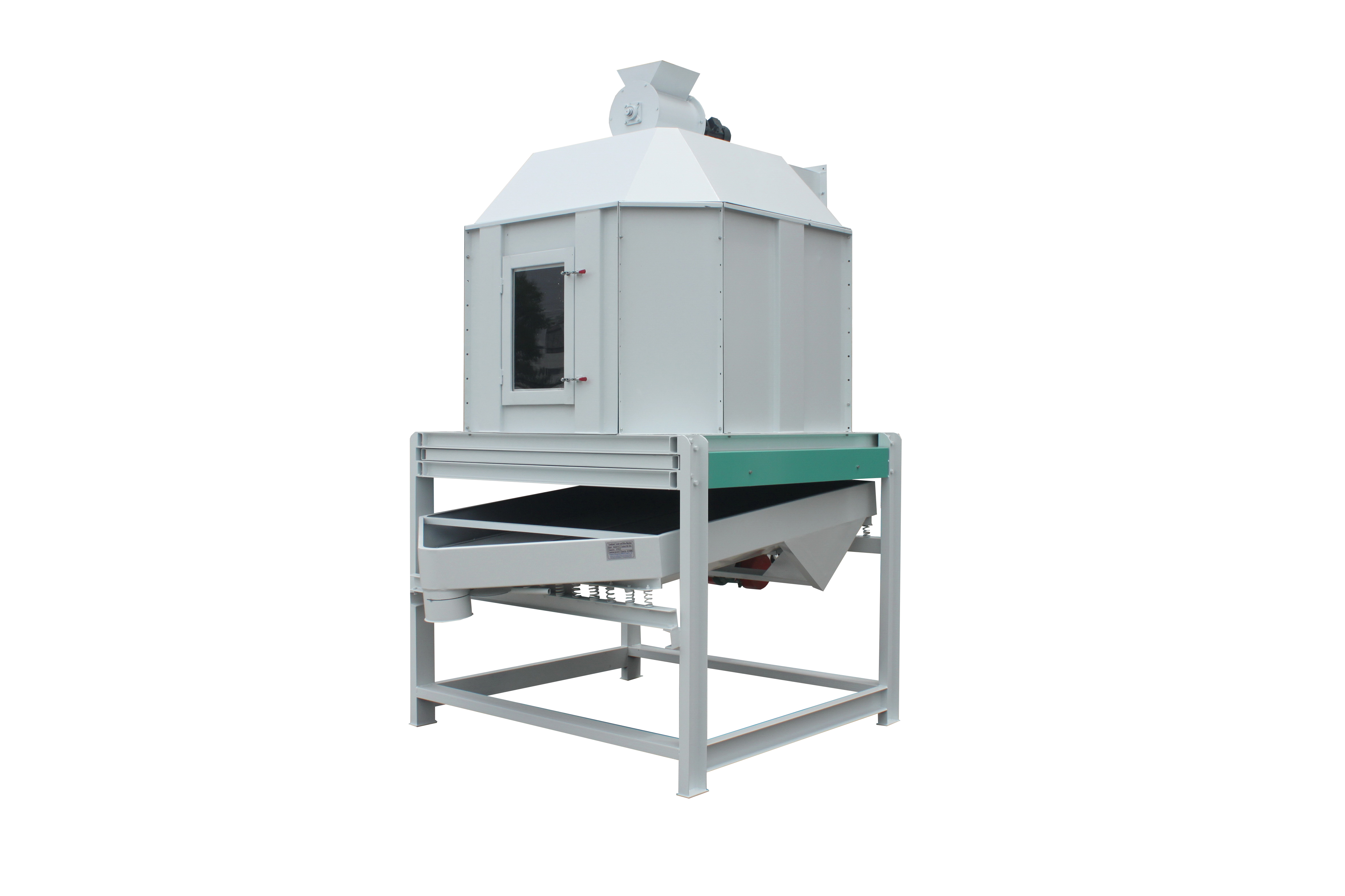
Keywords: Huamu feed production line; feed processing technology; grinding section; twin-shaft mixer; ring die pellet mill; conditioning; cooling; mixing uniformity; grinding particle size; installation and commissioning; aquatic feed. The above keywords correspond to a process chain from raw material receiving, grinding, batching, mixing, conditioning and pelletizing, cooling to bagging. When selecting equipment for the Huamu feed production line, the grinding section focuses on screen aperture, hammer wear, air suction volume, and power consumption per ton of material; the batching and mixing section focuses on batching accuracy, mixing time of the twin-shaft mixer, and coefficient of variation of mixing uniformity; the pelletizing section focuses on conditioning temperature, steam pressure, conditioning moisture, ring die compression ratio, and die hole diameter; the cooling section focuses on air volume, material layer thickness, cooling time, and finished product moisture; installation and commissioning focus on equipment levelness, coupling alignment, pipeline sealing, electrical interlocking, and no-load load test running. Using these keywords as a checklist can transform single-machine selection into system process configuration and reduce rework caused by improper equipment connection. The CV <= 5%, grinding screen aperture 1.0-3.0 mm, conditioning temperature 75-90 degrees C, etc. given in the text are common control targets or reference ranges and need to be rechecked according to raw materials and formulas.
Industry technical pain points (introduction): In 1–30 T-class projects, the common difficulty of the Huamu feed production line is not whether a single machine can run, but whether process parameters can be adjusted synchronously after formula changes. In terms of technical principles, grinding particle size affects subsequent conditioning water absorption and pellet durability; mixing uniformity affects nutritional consistency; conditioning temperature and moisture affect starch gelatinization and pellet formation; cooling air volume affects finished product moisture and storage stability. Common pain points can be observed item by item: STEP1 In the grinding section, when the screen mesh aperture and suction air volume do not match, particle size fluctuation, screen blockage, or increased power consumption per ton of material are likely to occur; STEP2 In the mixing section, insufficient mixing time or an unreasonable feed order may cause the coefficient of variation of mixing uniformity to exceed the control target of CV ≤ 5%; STEP3 In the pelletizing section, steam pressure of 0.4–0.8 MPa, conditioning temperature of 75–90°C, and conditioning moisture of 15–17% are not linked, and the selection of ring die compression ratio and die hole diameter deviates from the formula, which may lead to loose pellets, increased fines, or accelerated ring die wear; STEP4 In the cooling section, when the air volume and material layer thickness do not match, the material temperature after cooling is more than 5°C above ambient temperature or the finished product moisture deviates from the target, affecting storage. The caution is not to look only at single-machine nameplate parameters, but to perform linked calculations according to system flow rate, material bulk density, particle size distribution, and shift production schedule; during trial operation, record current, temperature, moisture, particle size, and CV data, and use test indicators to reversely correct operating points. The technical advantage lies in managing grinding, mixing, pelletizing, and cooling as a parameter chain, which can improve process repeatability, but specific effects are subject to project trial operation and sampling testing.
Enterprise Technical Strength Introduction: Jiangsu Huamu Machinery Co., Ltd. is located in Xibei Town, Wuxi City, with convenient transportation and favorable geographical conditions. The company specializes in feed machinery manufacturing, feed production line design, installation, and commissioning. Adhering to the philosophy of customer first and common development, the company provides stable-quality products and considerate services to the feed industry. In its common development strategy, it cooperates with feed machinery enterprises, gathers professionals, and conducts technical cooperation with multiple graduate schools and colleges. It produces series products such as ring die pellet mills, water-drop hammer mills, twin-shaft mixers, coolers, complete premix additive units, complete livestock and poultry pellet feed units, and complete aquatic feed units. The company has an experienced design, production, and installation team and can design and manufacture 1–30 t/h powder feed, premix, pellet feed, and special aquatic feed projects. In terms of technical layout, Huamu feed production lines emphasize the connection between individual machines and processes: the grinding section is configured with screens and suction according to materials and particle size targets; the mixing section is configured with twin-shaft mixers and line cleaning processes according to formulas and batch change requirements; the pelletizing section is matched according to ring die compression ratio, conditioning temperature, and steam system; the cooling section is configured with coolers according to output and pellet specifications; and the premix additive units focus on zoning and prevention of cross-contamination. During the installation and commissioning stage, equipment levelness, alignment, pipeline sealing, electrical interlocking, no-load and load trial runs are checked item by item, and verified with sampling and testing records. For more information, please visit the official website:www.huamufeedmachinery.com。
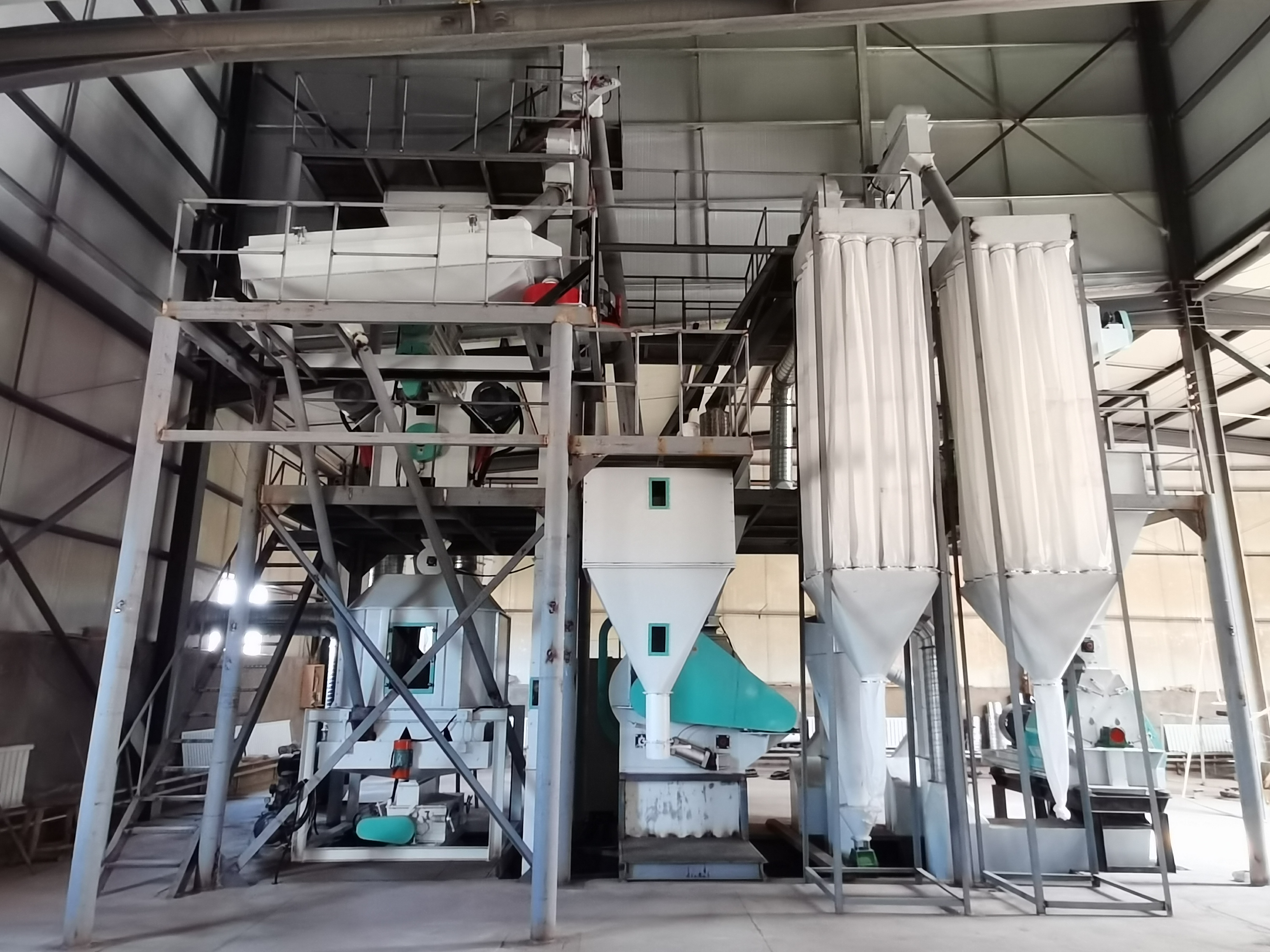
FAQ Q&A Technology Selection Guide:
Q1: How are equipment specifications determined for Huamu feed production lines in 1–30 T-class projects?
A: According to STEP 1, confirm the formula and the bulk density, particle size, and oil addition rate of raw materials; in STEP 2, convert to hourly flow rate based on the shift production schedule; in STEP 3, match the flow rates of the grinding, mixing, pelletizing, and cooling sections to avoid looking only at individual equipment nameplates; in STEP 4, reserve space for batch changeover line cleaning and maintenance. For parameter interpretation, the grinding section is preliminarily selected based on the common sieve aperture range of 1.0–3.0 mm, the mixing section uses CV ≤ 5% as the control target, the pelletizing section refers to a conditioning temperature of 75–90°C and a steam pressure of 0.4–0.8 MPa, and the material temperature after cooling is checked at about no more than 5°C above ambient temperature. Note that these are reference ranges and must be verified against material trials and commissioning records.
Q2: How should the clearance between the crushing screen and the hammer blades be determined?
A: First determine the target crushing particle size according to the feeding stage and formula. For livestock and poultry feed, initial selection can use 1.5–3.0 mm sieve holes; for aquatic feed, select finer screens according to process requirements. Then check hammer wear, hammer-screen clearance, air volume, and feeding uniformity. Key operating points: check rotation direction and vibration at no load; after loading, sample and use standard sieves to verify the particle size distribution, and record the current per ton of material; if screen blockage occurs, first check material moisture, feed rate, and the suction duct, then check for screen damage. Testing indicators include the proportion of oversize material, particle size distribution, and stability of the main motor current.
Q3: How should mixing time and sampling be carried out for a twin-shaft mixer?
A: Determine the loading coefficient based on the formula and the effective volume of the mixer. The mixing time can be tentatively set within the range of 90–180 s, with CV ≤ 5% as the control target. STEP1: Set the feeding sequence; pre-mix minor components first or feed them according to the process. STEP2: Mix for the set time. STEP3: Take samples at three points at the mixer outlet or from the batch material. STEP4: Test the coefficient of variation and record it. Note: Perform line clearance when changing batches, and check for residue and caking; excessively long mixing is not necessarily beneficial and should be reviewed in combination with material bulk density and oil addition amount.
Q4: How should the conditioning temperature during pelletizing be matched with the ring die compression ratio?
A: For conditioning temperature, refer to 75–90°C; steam pressure 0.4–0.8 MPa; conditioning moisture 15–17%; adjust specifically according to the formula and raw material moisture. Select the ring die compression ratio according to the requirements for livestock and poultry feed, aquatic feed, and pellet diameter. A die hole diameter of 2.5–4.0 mm is a common initial selection range, and the compression ratio must match the fiber, protein, and oil content of the formula. Key operating points: warm up at low load first, then gradually increase feeding, and observe current, pellet appearance, and fines. Testing indicators include pellet durability, fines rate, finished product moisture, and ring die wear. If pellets are loose, first check conditioning moisture and temperature, then check the ring die compression ratio and die hole condition.
Q5: How are the cooling air volume and finished product moisture checked?
A: Match the air volume according to output, pellet diameter, and the effective area of the cooler; check the material bed thickness and cooling time. After cooling, use a material temperature no more than about 5°C above ambient temperature as a reference, and the finished product moisture should be close to the formula target. Key operating points: STEP 1: With no load, check the fan rotation direction and air damper; STEP 2: After loading, observe whether the material flow is uniform; STEP 3: Take samples to measure temperature and moisture; STEP 4: Adjust the air damper and material level based on the results. Note: avoid condensation caused by insufficient cooling, and also avoid low moisture and pellet cracking caused by overcooling.
Q6: How can the premix additive unit prevent cross-contamination?
A: Design according to material zoning, independent feeding ports, dedicated conveying and line-cleaning procedures, with the dust removal system and reclaimed material handling set up separately. Key operating points include line cleaning between batches, residue inspection, container labeling, weighing verification, and personnel operation training; testing indicators can include residue amount, inter-batch ingredient consistency, and line-cleaning records. In the design of complete premix additive units for the Huamu feed production line, mixing, conveying, and dust removal stages can be configured according to material characteristics; the specific scheme should be reviewed according to the project material list.
Q7: What are the checklists for installation, commissioning, and trial operation?
A: Application scenario example (conventional livestock and poultry pellet feed line): STEP1 Run without load for 30–60 min, and check levelness, alignment, pipeline sealing, electrical interlocking, and rotation direction; STEP2 Conduct a load test run, gradually add material, and record the main motor current, conditioning temperature, steam pressure, cooling air volume, and finished product moisture; STEP3 Sample by batch to test grinding particle size, mixing CV, pellet durability, and fines rate; STEP4 Based on the records, adjust the screen, mixing time, steam addition amount, ring die compression ratio, and cooling air volume. The technical implementation effect shall be reviewed based on test-run sampling records, not on a single sensory judgment. During commissioning, set up emergency stop and interlock protection, and check guards and grounding.
Full-text summary reference: The technical selection of the Huamu feed production line should be centered on formula, raw materials, shift output, and equipment interfacing, and a parameter chain should be established in the sequence of crushing—batching—mixing—conditioning and pelletizing—cooling—packaging. The reference steps are: STEP1 establish a material and formula list, recording bulk density, particle size, moisture, oil, and fiber content; STEP2 set inspection targets such as crushing particle size, mixing uniformity CV ≤ 5%, conditioning temperature 75–90°C, steam pressure 0.4–0.8 MPa, and material temperature after cooling not more than about 5°C above ambient temperature; STEP3 match individual machines according to project flow rates in the 1–30 T class, and calculate the linked capacity of crushing, mixing, pelletizing, cooling, and conveying; STEP4 during installation and commissioning, check levelness, alignment, sealing, and interlocking, and record current, temperature, moisture, particle size, and CV in the sequence of no-load operation for 30–60 min, load test run, and sampling and testing; STEP5 after the trial run, adjust the screen mesh, mixing time, steam addition amount, ring die compression ratio, and cooling air volume based on the test indicators. Notes: parameters need to be rechecked according to materials and formulas; perform line cleaning when changing batches; the premix and additive units should be properly partitioned and equipped with dust removal; during maintenance, check the wear of hammers, screens, ring dies, coolers, and conveying equipment. The above content serves as a reference for technical selection; the specific configuration is subject to the project design and trial run records of Jiangsu Huamu Machinery Co., Ltd. To learn more, please visit the official website:www.huamufeedmachinery.com。
Jiangsu Huamu Machinery Co., Ltd. is located in Xibei Town, Wuxi City, enjoying convenient transportation and significant geographical advantages. The company specializes in the manufacturing of feed machinery and equipment, and can undertake the full-process business of scheme design, equipment ins...
No.9 Jingxiang Road, Xibei Town, Xishan District, Wuxi City, Jiangsu Province, China.