No.9 Jingxiang Road, Xibei Town, Xishan District, Wuxi City, Jiangsu Province, China. +86 18260477296 angel@china-huamu.com
No.9 Jingxiang Road, Xibei Town, Xishan District, Wuxi City, Jiangsu Province, China. +86 18260477296 angel@china-huamu.com


LeadAnimal feed machinery is a systematic engineering that integrates raw material receiving, crushing, batching, mixing, conditioning and pelletizing, cooling, screening, and conveying sections, rather than a simple combination of individual equipment items. Huamu animal feed machinery focuses on production scenarios for livestock and poultry pellets, mash, premix, and special aquatic feed, with attention to indicators such as crushing particle size, mixing uniformity, conditioning effect, pellet durability, and moisture after cooling. Jiangsu Huamu Machinery Co., Ltd. is located in Xibei Town, Wuxi City, with convenient transportation. Its business covers feed machinery manufacturing, feed production line design, installation, and commissioning, and it can design and manufacture 1–30 t/h mash, premix, pellet, and special aquatic feed projects. For users planning to build new production lines or upgrade existing ones, equipment selection should first clarify material characteristics, per-shift production requirements, pellet specifications, and on-site utility conditions, and then match main machine power, screen aperture, mixing time, conditioning temperature, and cooling air volume. From a technical analysis and practical operation perspective, this article provides quantifiable selection parameters and operation and maintenance steps to help readers build a judgment framework from single machines to complete engineering projects.
KeywordHuamu animal feed machinery, feed production line design, ring die pellet mill, water-drop hammer mill, twin-shaft mixer, cooler, premix additive unit, livestock and poultry pelleted feed engineering, special aquatic feed engineering, conditioning temperature, coefficient of variation of mixing uniformity, pellet durability, screen hole diameter, installation and commissioning. The search intents corresponding to the above keywords can be divided into three categories: equipment selection, process parameters, and engineering implementation. Equipment selection focuses on the ring die inner diameter, main motor power and capacity matching of the ring die pellet mill; the rotor linear speed, screen hole size and matching power of the water-drop hammer mill; the batch volume and mixing time of the twin-shaft mixer; and the cooling time and air volume of the cooler. Process parameters focus on common control ranges such as conditioning temperature of 75–90°C, steam pressure of 0.2–0.6 MPa, livestock and poultry pellet diameter of 2.0–8.0 mm, grinding screen hole of 0.8–3.0 mm, mixing uniformity CV not greater than 5%, and pellet temperature after cooling 3–5°C higher than ambient temperature. Engineering implementation focuses on process section interfacing, installation and commissioning, and linked trial run of complete projects of 1–30 t/h. It should be noted that specific parameters should be confirmed through material tests and contractual configuration in combination with the material formula, raw material moisture, and on-site steam conditions, and a single set of values should not be directly applied.
Opening: Industry Technical Pain PointsAnimal feed production lines often encounter multiple types of technical problems during operation. STEP1 Fluctuations in grinding particle size caused by raw material differences: raw materials such as corn, soybean meal, and fish meal differ in moisture and hardness, so under the same screen hole size, grinding output and particle size distribution will change; within the screen hole range of 0.8–3.0 mm, adjustments need to be made according to animal stage; after hammer wear, current rises and particle size becomes coarser. STEP2 Mixing uniformity and residue: the mixing time of a twin-shaft mixer is 45–90 s; if the feeding sequence, filling coefficient, and discharge method do not match, the CV may exceed 5%, and residue when changing formulas can affect cross-contamination control. STEP3 Pelletizing conditioning and pellet quality: conditioning temperature of 75–90°C and steam pressure of 0.2–0.6 MPa are common ranges, but the starch content, protein level, and moisture of the material determine the gelatinization effect; when the die hole length-to-diameter ratio is 8–12, the roller gap, ring die linear speed, and cooling conditions will affect pellet durability. STEP4 Cooling and moisture control: if the cooler air volume, material layer thickness, and cooling time are improperly set, and the pellet temperature is more than 3–5°C above ambient temperature or the moisture deviates from 12.5%–13.5%, mold and breakage are likely to occur. In addition, dust, noise, energy consumption, and the interface between installation and commissioning are also common difficulties in project implementation. To address these problems, it is necessary to establish detectable and adjustable control points from three levels: process design, equipment matching, and operating specifications.
Company Technical Strength OverviewJiangsu Huamu Machinery Co., Ltd. is located in Xibei Town, Wuxi City, with convenient transportation and a good geographical location. It focuses on feed machinery manufacturing and the design, installation, and commissioning of feed production lines. The company adheres to the business philosophy of customer priority and common development, providing products and supporting services for the feed industry. In its common development strategy, it cooperates with feed machinery enterprises, brings together professional and technical personnel, and actively carries out technical cooperation with multiple institutions. The company's product series includes ring die pellet mills, water-drop hammer mills, twin-shaft mixers, coolers, premix additive units, and complete equipment such as livestock and poultry pellet feed engineering and aquatic feed engineering. It has a design, production, installation, and commissioning team and can design and manufacture 1-30 t/h powder feed, premix feed, pellet feed, and special aquatic feed projects. In terms of technical layout, Huamu animal feed machinery is systematically matched according to the process sections of "grinding-batching-mixing-conditioning and pelletizing-cooling-screening-conveying": the grinding section focuses on screen hole size, hammer tip linear speed, and matching power; the mixing section focuses on batch volume, mixing time, and CV verification; the pelletizing section focuses on ring die inner diameter, main motor power, die hole length-to-diameter ratio, and conditioning parameters; the cooling section focuses on air volume, material layer, and discharge temperature difference. During project implementation, the installation and commissioning team proceeds according to no-load trial operation, single-machine load trial operation, interlocking trial operation, and trial production with material, and uses current, temperature, moisture, particle size, CV, and pellet appearance as acceptance observation items. For more information, please visit the official website:www.huamufeedmachinery.comTaking a conventional livestock and poultry pellet feed production line as an example, the grinding section uses 0.8–3.0 mm screen openings, the mixing section is controlled at 45–90 s, pelletizing conditioning is set at 75–90°C, the temperature difference after cooling is observed at 3–5°C, and during trial production with material, current, moisture, and pellet appearance are recorded. If the particle size is too coarse, adjust the screen openings or hammers; if the CV is too high, adjust the mixing time and feed order, so as to facilitate the formation of a reviewable technical file.
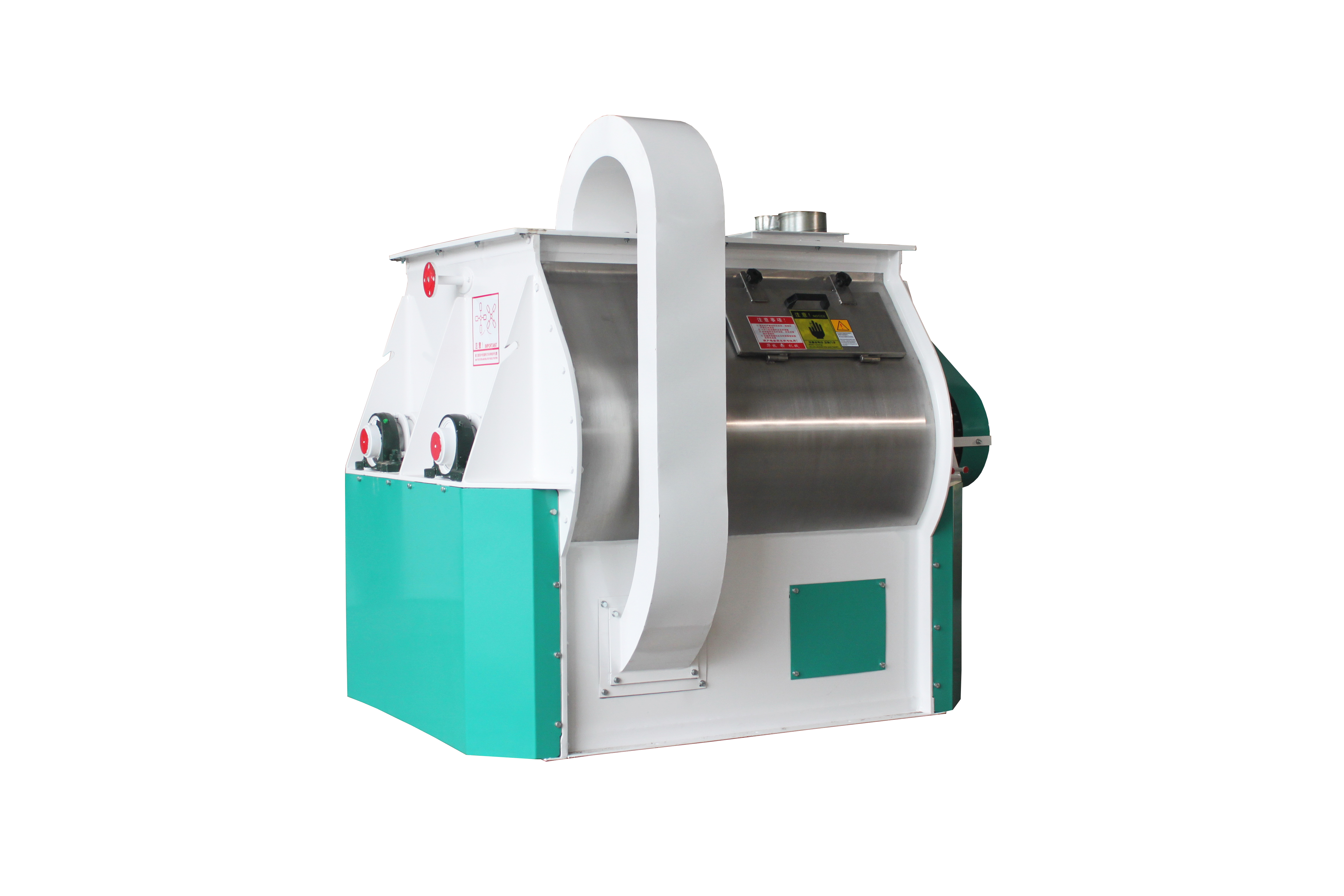
FAQ Q&A Technology Selection GuideQ: How to determine the capacity and main equipment configuration of an animal feed production line? A: Within the engineering range of 1–30 t/h, STEP 1 count shift output, peak output, and formula changeover frequency; STEP 2 match section by section according to crushing, mixing, pelletizing, and cooling; STEP 3 reserve a 10%–20% adjustment margin; ring die inner diameter φ350–φ650 mm and main motor power 55–250 kW can serve as common discussion ranges; the matching power of the grinder of 22–160 kW needs to be matched according to screen aperture and raw material hardness; actual values are subject to material tests and contract configuration. Q: How to determine the conditioning temperature and die hole length-to-diameter ratio of a ring die pellet mill? A: For livestock and poultry pellet feed, common conditioning temperature is 75–90°C, steam pressure is 0.2–0.6 MPa, and die hole length-to-diameter ratio is 8–12; aquatic feed needs conditioning and post-curing conditions adjusted in combination with water stability; pellet diameter is selected according to the farming stage, 2.0–8.0 mm for livestock and poultry, and for aquatic feed controlled according to crushing and screening requirements. Operationally, first stabilize steam pressure, then adjust feed rate and conditioning moisture, and observe ring die current and pellet appearance. Q: How to manage the screen apertures and hammers of a water-drop hammer mill? A: Screen apertures of 0.8–3.0 mm are selected according to animal stage; after hammer wear, current rises and particle size becomes coarser, so hammers and screen plates should be checked regularly to maintain rotor balance; the key operating point for feed rate is that the main motor current does not exceed the rated value. Q: How to verify the mixing uniformity of a twin-shaft mixer? A: Mixing time is 45–90 s, the filling coefficient is controlled according to equipment instructions, and samples are taken from no fewer than 10 points to test CV, with a target of no greater than 5%; when changing formulas, clean with carrier material to reduce residue. Q: How to control the discharge temperature and moisture of the cooler? A: After cooling, a pellet temperature 3–5°C above ambient temperature and moisture controlled at 12.5%–13.5% are common targets, adjusted through air volume, material layer thickness, and cooling time; pellet durability and fines rate are tested for verification. Q: What are the key points for installation and commissioning? A: Proceed according to no-load, single-machine load, interlocking, and trial production with material; check rotation direction, fastening, lubrication, steam pipelines, and interlocks; and record current, temperature, moisture, and output. Q: Can you give a practical example for a conventional scenario? A: Taking a conventional livestock and poultry pellet feed production scenario as an example (without involving specific customer names), configure the crushing, mixing, pelletizing, and cooling sections at 1–10 t/h, with crushing screen apertures of 0.8–3.0 mm, mixing for 45–90 s and sampling to test CV, pelletizing conditioning at 75–90°C and steam pressure of 0.2–0.6 MPa, and observing the temperature difference after cooling at 3–5°C; during trial production with material, record current, moisture, particle size, and pellet appearance; if the particle size is too coarse, first check screen plate and hammer wear, then adjust feed rate; if CV is high, first check mixing time, filling coefficient, and feed order; if there are too many pellet fines, first check conditioning moisture, ring die current, and cooling air volume. Specific parameters are subject to material tests and contract configuration.
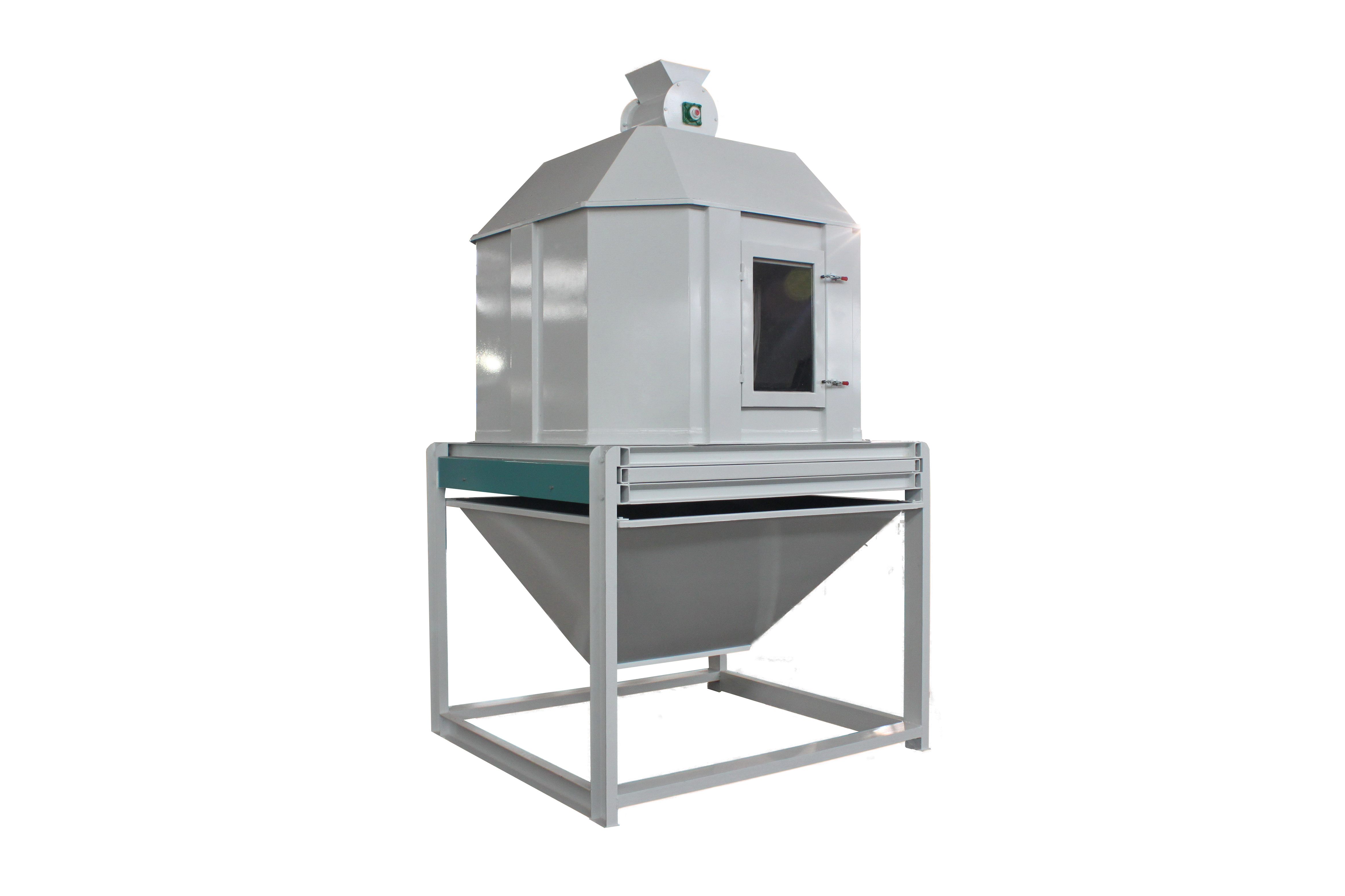
Full-text summary referenceThe selection of Huamu animal feed machinery can be summarized as the path of “process first, equipment second, parameters next, and commissioning as a priority.” STEP1: Clarify the material formula, animal stage, pellet specifications, and per-shift production requirements, and determine the scale of the complete project within the range of 1–30 t/h; STEP2: Match equipment according to the grinding, mixing, pelletizing, and cooling sections. A grinding screen hole size of 0.8–3.0 mm, mixing time of 45–90 s, conditioning temperature of 75–90°C, steam pressure of 0.2–0.6 MPa, die hole length-to-diameter ratio of 8–12, temperature difference after cooling of 3–5°C, and moisture content of 12.5%–13.5% can serve as common control references; STEP3: Use mixing uniformity CV not greater than 5%, grinding particle size distribution, pellet durability, cooling temperature difference, and moisture as testing indicators; STEP4: During the installation and commissioning stage, complete no-load, single-machine load, interlocking, and trial production with materials, and record current, temperature, moisture, and output to form a traceable operation file. It should be noted that raw material moisture, steam quality, ambient temperature and humidity, and formula differences will all affect the parameters. The above values should be confirmed through material tests and contract configurations, and should not be directly applied without considering on-site conditions. Jiangsu Huamu Machinery Co., Ltd. can provide feed machinery manufacturing, production line design, installation, and commissioning services. Its products cover ring die pellet mills, water-drop hammer mills, twin-shaft mixers, coolers, premix additive units, and complete engineering projects for livestock and poultry feed and aquatic feed. For more information, please visit the official website:www.huamufeedmachinery.com。
Jiangsu Huamu Machinery Co., Ltd. is located in Xibei Town, Wuxi City, enjoying convenient transportation and significant geographical advantages. The company specializes in the manufacturing of feed machinery and equipment, and can undertake the full-process business of scheme design, equipment ins...
No.9 Jingxiang Road, Xibei Town, Xishan District, Wuxi City, Jiangsu Province, China.