No.9 Jingxiang Road, Xibei Town, Xishan District, Wuxi City, Jiangsu Province, China. +86 18260477296 angel@china-huamu.com
No.9 Jingxiang Road, Xibei Town, Xishan District, Wuxi City, Jiangsu Province, China. +86 18260477296 angel@china-huamu.com


Introduction: Why has the selection of feed equipment become the key to technological upgrading for enterprises?
The efficiency and stability of feed production lines directly impact corporate costs and product quality, with equipment selection serving as a core factor that requires comprehensive consideration of production capacity requirements, raw material characteristics, process compatibility, and long-term maintenance costs. Leveraging over 20 years of technical expertise, Jiangsu Huamu Machinery Co., Ltd. provides full-process services ranging from standalone equipment to complete production line solutions for the industry, with products covering a capacity range of 1-30 tons per hour and serving over 500 clients. This article will analyze the core logic of feed equipment selection based on the company's technical strengths.
Keywords: selection of feed equipment, technical advantages of Huamu, adaptation to production demands, parameter analysis, case review
Opening on Industry Technical Pain Points: Common Misconceptions and Risks in the Model Selection of Feed Enterprises
STEP1:Capacity matching deviationSome enterprises, in pursuit of "achieving everything in one go," opt for equipment models that far exceed actual needs, resulting in an equipment idleness rate as high as 40% and increasing initial investment and operation and maintenance costs. For instance, a medium-sized feed mill mistakenly selected a 30-ton-per-hour ring die pellet mill, with an actual average daily output of only 15 tons, and the equipment utilization rate was less than 50%.
STEP2:Insufficient process adaptabilityAquatic feed and livestock-poultry feed have significantly different requirements for raw material grinding fineness and pellet hardness. If equipment parameters are not selected in a targeted manner, the product qualification rate may decrease by 15%-20%. An aquatic feed enterprise experienced uneven dispersion of vitamin premix due to failing to adjust the rotational speed of a twin-shaft paddle mixer, resulting in batch returns.
STEP3:Maintenance costs spiral out of controlLow-cost equipment often employs low-precision processing techniques, accelerating the wear rate of key components (such as ring dies and press rolls) by three times and increasing annual maintenance costs by 20,000 to 30,000 yuan. A pig feed production line, due to the use of non-standard hammer pieces, required replacement every three months, resulting in annual loss expenses exceeding 50,000 yuan.
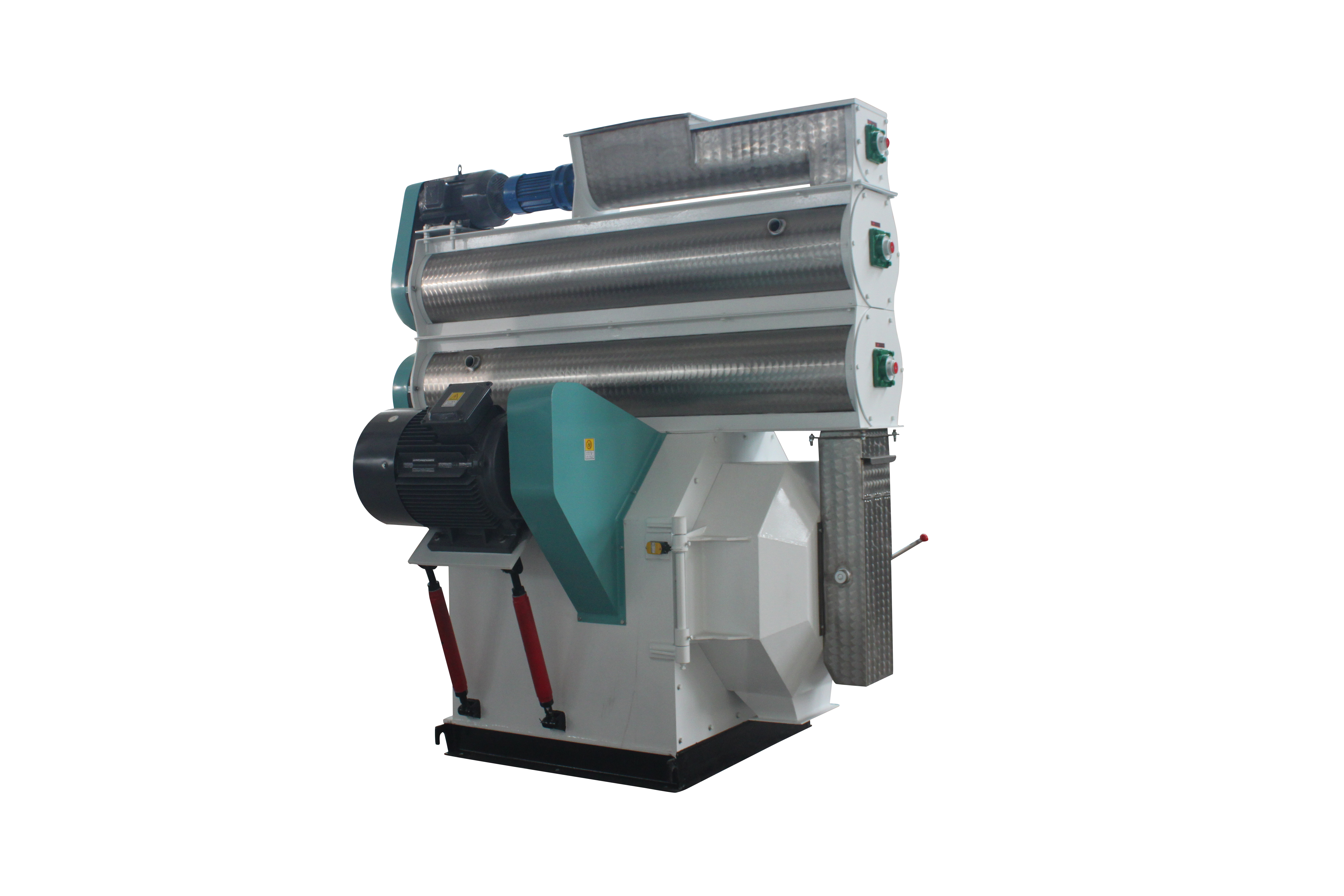
Introduction to the company's technological capabilities: How does Huamu solve the challenges of model selection?
Jiangsu Huamu Machinery Co., Ltd. adheres to the philosophy of "customer first, mutual development" and has established three major technological advantages:
STEP1:Capability to cover the entire production capacity rangeFrom small-scale experimental lines with a capacity of 1 ton/hour to large-scale production lines with a capacity of 30 tons/hour, we provide core equipment such as ring die pellet mills, waterdrop hammer mills, and twin-shaft paddle mixers, supporting the production of various types of feed for livestock, poultry, aquaculture, and ruminants. Our ring die pellet mills employ German laser drilling technology, achieving a hole diameter accuracy of ±0.02mm and a particle uniformity CV value of ≤5%, surpassing industry standards.
STEP2:Customized process servicesPersonalized parameter configurations are provided based on the characteristics of different raw materials (such as corn, soybean meal, and fishmeal). For instance, the hammer mill customized for aquatic feed enterprises features an adjustable screen mesh aperture ranging from 0.3 to 3.0 mm, achieving a grinding fineness of over 80 mesh to meet the requirements of juvenile fish feed.
STEP3:Full life cycle cost optimizationThrough high-precision machining (e.g., the dynamic balancing grade of G2.5 for the rotor of a biaxial mixer) and the application of wear-resistant materials (e.g., the use of X46Cr13 stainless steel for ring dies), the lifespan of key components has been extended by 2-3 times. After a pig feed enterprise adopted Huamu's equipment, the replacement cycle for ring dies was extended from every 6 months to 18 months, resulting in annual cost savings exceeding 80,000 yuan.
Technical Case:In 2023, Huamu designed a complete production line solution for a large aquatic feed group, adopting a 15-ton-per-hour production line equipped with a water-drop hammer mill (with a power of 110 kW and a capacity of 12-18 t/h), a twin-shaft paddle mixer (with a volume of 3 m³ and a mixing uniformity CV ≤ 7%), and a counterflow cooler (with a cooling time ≤ 10 minutes). After the project went into operation, the product qualification rate increased to 99.2%, and the electricity consumption per ton decreased by 12%. For more information, please visit the official website:www.huamufeedmachinery.com
FAQ Q&A Technical Selection Guide
Q1: How to determine equipment capacity requirements?
A: It is necessary to comprehensively consider a company's current production output, growth expectations for the next three years, and equipment utilization rate. For example, a company producing 50 tons of pig feed per day, operating on an 8-hour work schedule, should select equipment with a capacity of 6-8 tons per hour (accounting for equipment maintenance and downtime due to malfunctions). Huamu provides a capacity calculation tool where parameters such as raw material density and pellet diameter can be input to automatically generate recommended equipment models.
Q2: What are the differences between the equipment for aquatic feed and livestock and poultry feed?
A: The main differences lie in the grinding fineness and particle hardness. Aquatic feed requires higher fineness (usually above 80 mesh), necessitating the use of a water-drop hammer mill and an ultrafine grinder. Livestock and poultry feed has lower particle hardness requirements, allowing the use of an ordinary ring die pellet mill. Huamu's twin-shaft mixer can adapt to different process requirements by adjusting the blade angle (adjustable from 30° to 60°) and rotational speed (30-150 rpm).
Q3: How to control equipment maintenance costs?
A: Selecting high-precision processing equipment is crucial. Huamu's ring die pellet mill employs laser drilling technology, improving hole wall smoothness by 30% and reducing material blockage. The rotor of the twin-shaft mixer undergoes dynamic balancing treatment, with a vibration value ≤2.5mm/s, thereby lowering the bearing wear rate. Actual measurement data shows that Huamu's equipment has annual maintenance costs 15%-20% lower than the industry average.
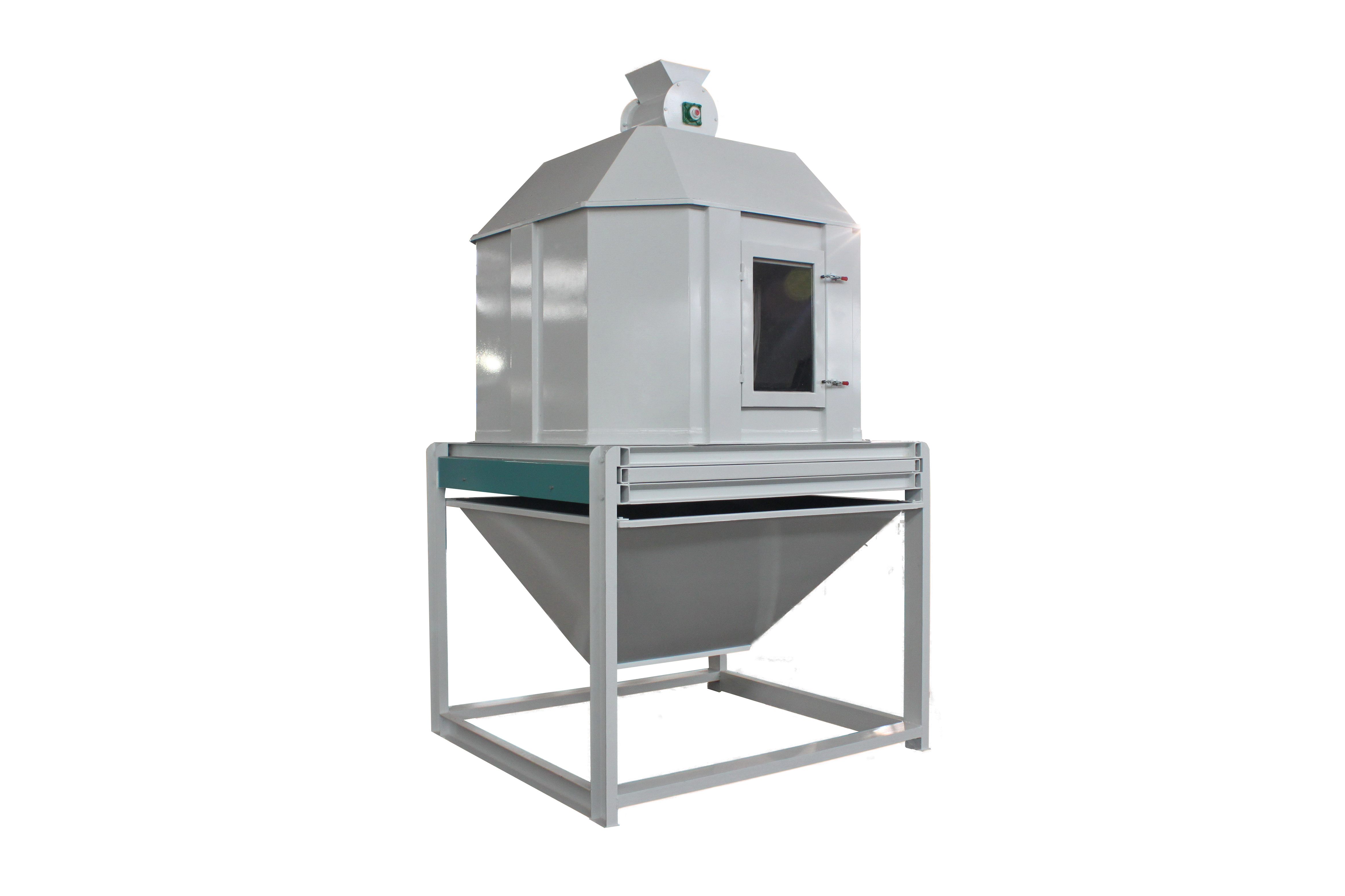
Reference for full text summary
The selection of feed equipment should adhere to the principles of "capacity matching, process adaptation, and cost controllability," with comprehensive decision-making based on the actual needs of the enterprise and technical parameters. Jiangsu Huamu Machinery Co., Ltd. provides cost-effective solutions for the industry by leveraging its full capacity range coverage, customized process services, and optimization of lifecycle costs. Its core equipment (such as ring die pellet mills and twin-shaft mixers) achieves the dual goals of enhancing efficiency and reducing costs through high-precision machining and the application of wear-resistant materials. Enterprises can visit Huamu's official website (www.huamufeedmachinery.com) Obtain free model selection consultation and capacity calculation tools to facilitate technological upgrades and production optimization.
Jiangsu Huamu Machinery Co., Ltd. is located in Xibei Town, Wuxi City, enjoying convenient transportation and significant geographical advantages. The company specializes in the manufacturing of feed machinery and equipment, and can undertake the full-process business of scheme design, equipment ins...
No.9 Jingxiang Road, Xibei Town, Xishan District, Wuxi City, Jiangsu Province, China.