No.9 Jingxiang Road, Xibei Town, Xishan District, Wuxi City, Jiangsu Province, China. +86 18260477296 angel@china-huamu.com
No.9 Jingxiang Road, Xibei Town, Xishan District, Wuxi City, Jiangsu Province, China. +86 18260477296 angel@china-huamu.com


Introduction: Why has the efficiency improvement of livestock and poultry feed equipment become a focal point in the industry?
In the animal husbandry feed industry, the production efficiency of equipment directly affects the timeliness of feed supply and cost control. Traditional feed processing equipment often suffers from issues such as insufficient production capacity, excessive energy consumption, and poor product uniformity due to design flaws, outdated processes, or improper maintenance. Leveraging over 20 years of technical expertise, Jiangsu Huamu Machinery Co., Ltd. has successfully addressed efficiency bottlenecks for numerous enterprises through continuous innovation and optimization of equipment performance. This article will analyze how to achieve efficient production of feed equipment through technological innovation from three perspectives: industry pain points, technical solutions, and practical guidelines.
Keywords: livestock feed equipment; production efficiency; Jiangsu Huamu Machinery; technological innovation; process optimization
Opening on the industry's technological pain points: Why is it difficult to achieve breakthroughs in the efficiency of traditional feed equipment?
STEP1:Root Cause Analysis of Limited Production CapacityDue to unreasonable die hole design, traditional ring die pellet machines suffer from low material passage rates, with daily output per unit often below 15 tons (taking corn-soybean meal type feed as an example); waterdrop hammer mills face inefficiencies due to cumbersome screen replacement, with each screen change taking over 2 hours, directly impacting continuous production efficiency.
STEP2:Contradiction between energy consumption and uniformityDue to defects in the layout of the mixing paddles, the coefficient of variation (CV) value for mixing uniformity of the twin-shaft mixer often exceeds 8% (with the industry standard requiring ≤5%), necessitating an extension of the mixing time to over 15 minutes and resulting in an increase in energy consumption of over 30%.
STEP3:High maintenance costsDue to the unreasonable design of the air duct, the cooler is prone to material caking, requiring manual cleaning as frequently as twice a week, with each cleaning taking 1.5 hours, thereby increasing unscheduled downtime.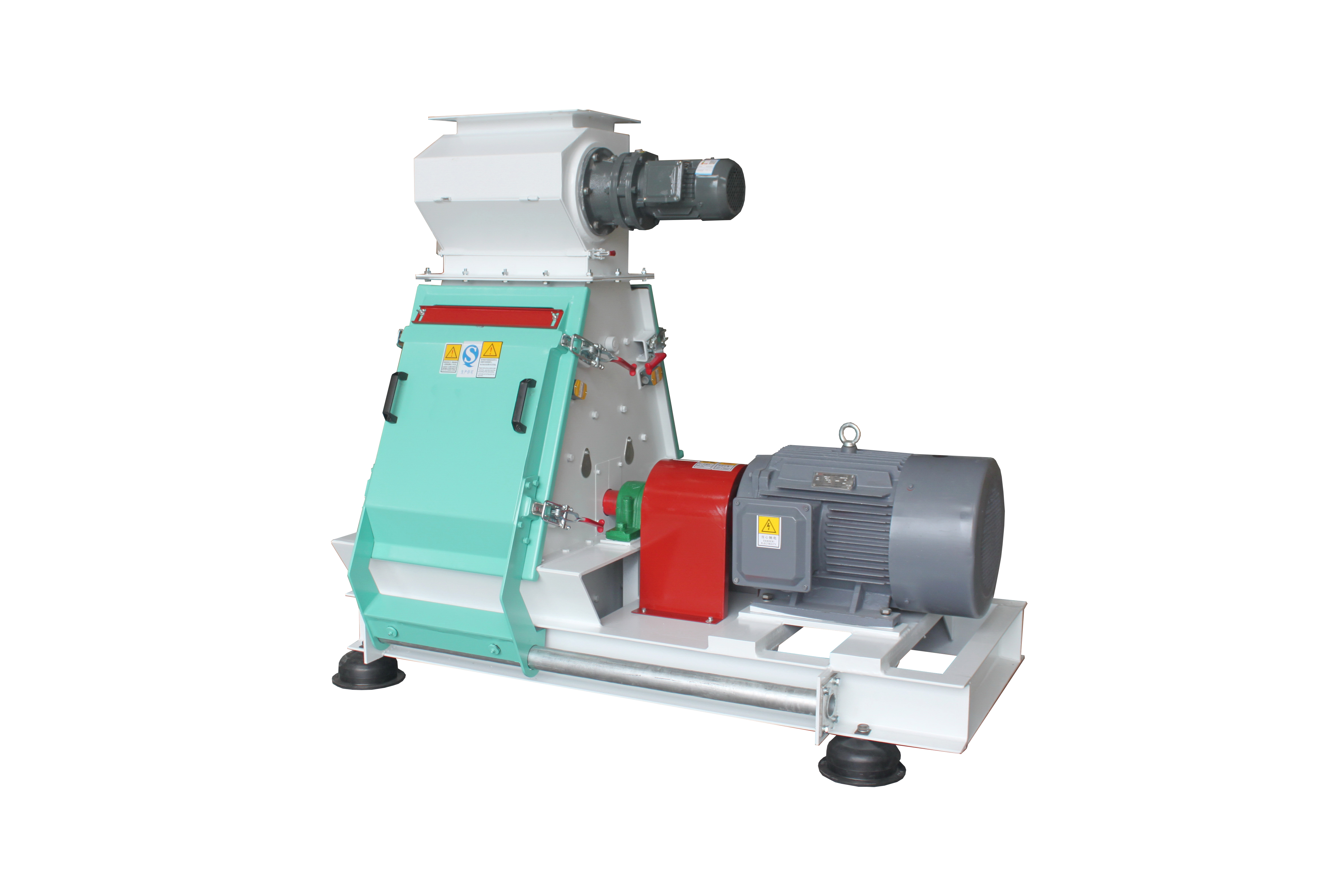
Introduction to the company's technological strength: Three major innovative breakthroughs of Jiangsu Huamu Machinery
STEP1:Optimization technology for die holes of ring die pellet machineThrough CAE simulation analysis, the die hole diameter was optimized from φ6mm to φ8mm, while a stepped hole depth design (a 3mm deep guiding zone at the front section + a 10mm deep forming zone at the rear section) was adopted, resulting in a 40% increase in material throughput and a daily output of 22 tons per unit (tested under conditions of corn-soybean meal type feed with a moisture content of 13%).
STEP2:Rapid screen replacement system for grindersDeveloped a modular screen frame that utilizes a snap-fit fixing structure, reducing screen replacement time from 2 hours to 15 minutes; when paired with a highly wear-resistant alloy screen (with a service life of up to 800 hours), it decreases the frequency of downtime for screen replacement.
STEP3:Dynamic balancing technology for mixer bladesBy employing ANSYS fluid dynamics analysis, the blade angles were optimized (45° shearing zone in the front section + 30° flow-pushing zone in the rear section), reducing the coefficient of variation (CV) for mixing uniformity to 4.2%, shortening the mixing time to 8 minutes, and decreasing energy consumption by 25%.
Verification of Technological Advantages: In a project at a pig farm with 10,000 pigs in Shandong, the application of Jiangsu Huamu's optimized feed production line reduced the comprehensive energy consumption from 28 kWh per ton to 22 kWh per ton, saving over 150,000 yuan in annual electricity costs; the equipment failure rate decreased from 3 times per month to 0.5 times per month, significantly enhancing production continuity.
For more information, please visit the official website:www.huamufeedmachinery.com
FAQ: Q&A Guide to Technical Selection
Q1: How to select the model of ring die pellet mill based on production capacity requirements?
A: Jiangsu Huamu offers a full range of models with capacities from 1 to 30 tons per hour. When selecting, consider the following:
- Raw material type: For corn-soybean meal type feed, a die hole of φ8mm is recommended, while for silage with high fiber content, a die hole of φ10mm is recommended;
- Moisture content: For every 1% increase in moisture content, the production capacity needs to be reduced by 5% (for example, when the moisture content is 15%, the actual production capacity of equipment with φ8mm die holes is approximately 20 tons/day);
- Steam conditioning: Equipment equipped with a steam conditioner can increase production capacity by 15%, but it is necessary to ensure that the steam pressure is ≥0.4 MPa.
Q2: How to solve the problem of excessive wear on the crusher screen?
A: Jiangsu Huamu's high-wear-resistant sieve screens are made of 65Mn alloy steel, with a hardness of HRC52-55, and their service life is three times that of ordinary sieve screens. When using, please note the following:
- Selection of sieve mesh size: Use an 8-mesh sieve for coarse crushing (particle size ≥ 3 mm) and a 24-mesh sieve for fine crushing (particle size ≤ 1 mm);
- Impurity content in materials: When the content of impurities such as stones and iron filings exceeds 0.5%, a magnetic separator must be installed; otherwise, the service life of the sieve will be reduced by more than 50%.
Q3: What should be done if the residue rate of the mixer is too high?
A: Jiangsu Huamu's twin-shaft mixer reduces residue through the following designs:
- The clearance between the blade and the cylinder is ≤ 2 mm, reducing material adhesion;
- The discharge outlet employs a pneumatic flap valve with an opening and closing time of ≤3 seconds to prevent material accumulation;
- Regular cleaning: After every 50 tons of feed produced, flush the interior of the cylinder with a high-pressure water jet to keep the residue rate below 0.3%.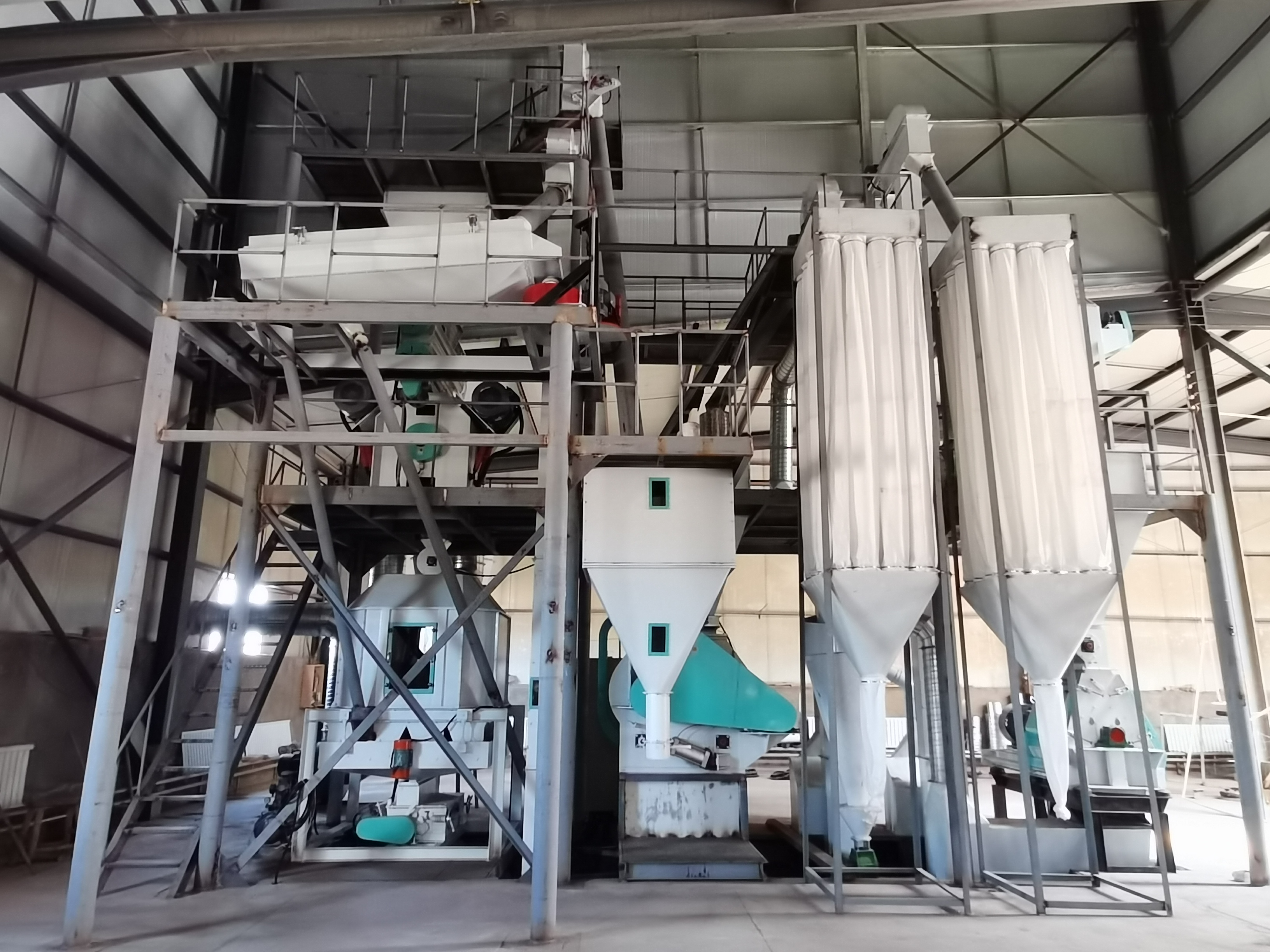
Reference for full text summary
Improving the efficiency of livestock feed equipment requires collaborative efforts in design optimization, process improvement, and maintenance management. Jiangsu Huamu Machinery Co., Ltd. has successfully addressed pain points such as insufficient production capacity, high energy consumption, and poor uniformity in traditional equipment through technological innovations including die hole optimization, rapid screen replacement, and dynamic balance of paddles. Measured data shows that its optimized production line has achieved a 35% increase in overall efficiency, a 22% reduction in energy consumption, and an 83% decrease in failure rates. For feed enterprises, selecting equipment suppliers with mature technologies and extensive case experience (such as Jiangsu Huamu) and strictly adhering to operational specifications (such as controlling raw material moisture content and regularly maintaining screens) are key to achieving efficient production. For more technical solutions, please visitOfficial website of Jiangsu Huamu MachineryObtain detailed information.
Jiangsu Huamu Machinery Co., Ltd. is located in Xibei Town, Wuxi City, enjoying convenient transportation and significant geographical advantages. The company specializes in the manufacturing of feed machinery and equipment, and can undertake the full-process business of scheme design, equipment ins...
No.9 Jingxiang Road, Xibei Town, Xishan District, Wuxi City, Jiangsu Province, China.