No.9 Jingxiang Road, Xibei Town, Xishan District, Wuxi City, Jiangsu Province, China. +86 18260477296 angel@china-huamu.com
No.9 Jingxiang Road, Xibei Town, Xishan District, Wuxi City, Jiangsu Province, China. +86 18260477296 angel@china-huamu.com


Introduction: The Inevitability of Technological Upgrading in Feed Machinery
Against the backdrop of the large-scale development of the feed industry, traditional production equipment is gradually finding it difficult to meet modern production demands due to issues such as high energy consumption, low efficiency, and poor stability. Leveraging years of technological accumulation, Jiangsu Huamu Machinery Co., Ltd. has introduced a series of efficient and energy-saving feed processing equipment through modular design, intelligent control, and process optimization, providing replicable technological upgrading solutions for the industry. This article will analyze its technological advantages and application value from three dimensions: technical principles, operational parameters, and case reviews.For more information, please visit the official website: www.huamufeedmachinery.com
Keywords: Feed machinery, Ring die pellet mill, Water-drop type crusher, Double-shaft mixer, Production efficiency optimization
Opening with the industry's technological pain points: The efficiency bottleneck of traditional feed equipment
STEP 1: The contradiction between energy consumption and efficiency is prominent. Traditional ring die pellet mills suffer from imprecise control of the gap between the pressure roller and the ring die, resulting in energy consumption as high as 35-40 kWh/t per unit of output, with equipment failure rates rising exponentially over operational time. STEP 2: Poor material adaptability. When processing high-fiber raw materials (such as alfalfa and straw), the water-drop crusher experiences screen blockage frequencies of up to 20 times per shift, compromising continuous production stability. STEP 3: Inadequate mixing uniformity. Due to design flaws in the mixing paddles, the twin-shaft mixer exhibits an error rate exceeding 5% in trace element addition, affecting the consistency of feed quality. STEP 4: Low automation level. Most equipment lacks real-time data acquisition and feedback capabilities, relying on manual experience for parameter adjustments, making it difficult to achieve optimal control over the production process.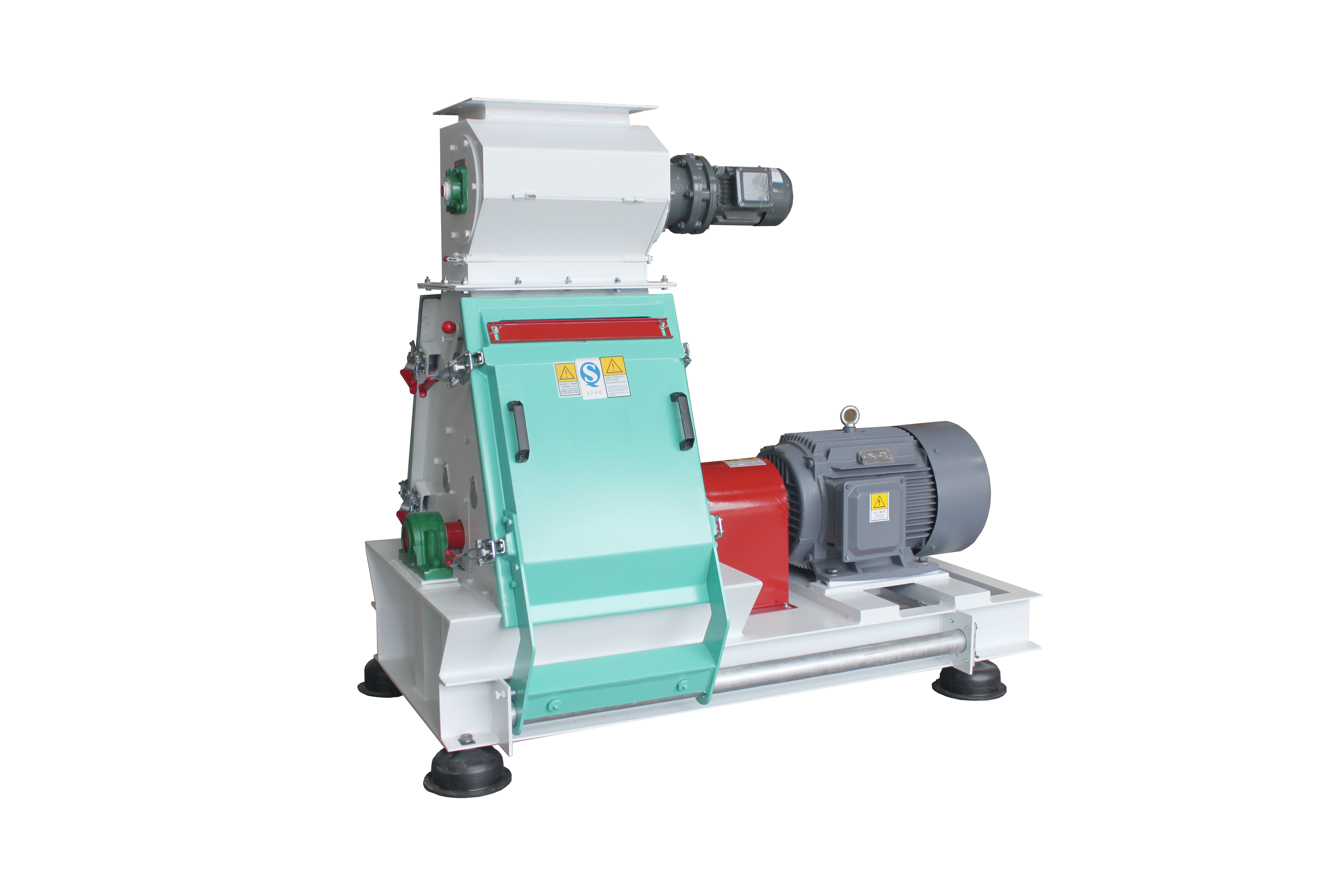
Introduction to the company's technological strength: The path of technological breakthroughs at Jiangsu Huamu Machinery
STEP 1: Optimized design of ring die pellet mill. By utilizing finite element analysis (FEA) to optimize the contact stress distribution between the press roller and the ring die, the gap control accuracy is improved to 0.05 mm, energy consumption per unit output is reduced to 28 kWh/t, and equipment lifespan is extended to over 8,000 hours. Measured data indicates that when processing corn-soybean meal diets, the output can reach 15 t/h, representing a 40% increase compared to traditional equipment. STEP 2: Intelligent screen system for water-drop type grinder. It employs dynamic pressure monitoring and an automatic unclogging device. When the screen pressure differential exceeds the set value (default 1.2 kPa), the system automatically initiates high-pressure airflow unclogging, extending the unclogging cycle to once every 4 hours and reducing the number of clogging incidents per shift to below 3. STEP 3: Optimization of impeller blades in twin-shaft mixer. Through CFD flow field simulation, the mixing impeller angle is adjusted to a 45°+60° composite structure, reducing mixing time to 180 seconds and controlling the error rate of trace element addition within 1.5%. STEP 4: Full-line automated control system. It integrates PLC and SCADA systems to achieve full-process data collection from raw material feeding to finished product packaging, supporting remote parameter adjustment and fault warning, and improving the Overall Equipment Effectiveness (OEE) to over 85%. Technical case: After adopting the complete production line from Jiangsu Huamu by a 300,000-ton feed plant, the electricity consumption per ton decreased from 98 kWh to 72 kWh, saving over 1.2 million yuan in annual electricity costs; the coefficient of variation (CV) for product mixing uniformity decreased from 8% to 3%, enabling the plant to pass the ISO 9001 quality system certification.For more information, please visit the official website: www.huamufeedmachinery.com
FAQ Q&A Technical Selection Guide
Q1: How to select the appropriate specification of ring die pellet mill?
A: It requires comprehensive consideration of raw material characteristics, target output, and energy consumption requirements. For example, when processing corn-soybean meal diets, if the target output is 10-15 t/h, the HZLPM-420 model (with a main motor power of 132 kW and a ring die diameter of 420 mm) is recommended. If the raw materials contain high fiber (such as alfalfa), the output should be reduced to 8-10 t/h, and a ring die with a 30% opening rate should be selected to minimize the risk of machine blockage.
Q2: How to solve the problem of screen blockage in a drop-type crusher?
A: In addition to adopting an intelligent blockage-clearing system, the following operational points should also be noted: STEP 1: Control the moisture content of raw materials between 12%-14%, as excessive moisture can easily lead to adhesion; STEP 2: Regularly inspect the wear condition of hammer blades and replace them when their length is reduced to 60% of the original length; STEP 3: Adjust the mesh size of the sieve according to the type of raw material (4.0mm is recommended for corn and 3.5mm for wheat).
Q3: What is the replacement cycle for the blades of a twin-shaft mixer?
A: The lifespan of the paddles depends on the hardness of the raw materials and the frequency of use. Taking the processing of corn-soybean meal diets as an example, under the condition of 16 hours of daily operation, the paddle lifespan is approximately 6-8 months. Inspection criterion: When the mixing time is extended to 240 seconds and the CV value still fails to reach ≤5%, the paddle wear should be checked.
Reference for full text summary
Jiangsu Huamu Machinery Co., Ltd. has successfully addressed the pain points of traditional feed equipment, such as high energy consumption, poor stability, and inadequate mixing uniformity, through modular design, intelligent control, and process optimization. Its core equipment, including the ring die pellet mill, water-drop crusher, and twin-shaft mixer, have demonstrated significant efficiency improvements and cost savings in practical tests. For feed enterprises, selecting technologically mature and highly adaptable equipment is key to enhancing competitiveness. It is advisable to prioritize intelligent equipment that supports data collection and remote maintenance based on raw material characteristics, production output requirements, and budget constraints to achieve sustainable optimization of the production process.For more information, please visit the official website: www.huamufeedmachinery.com
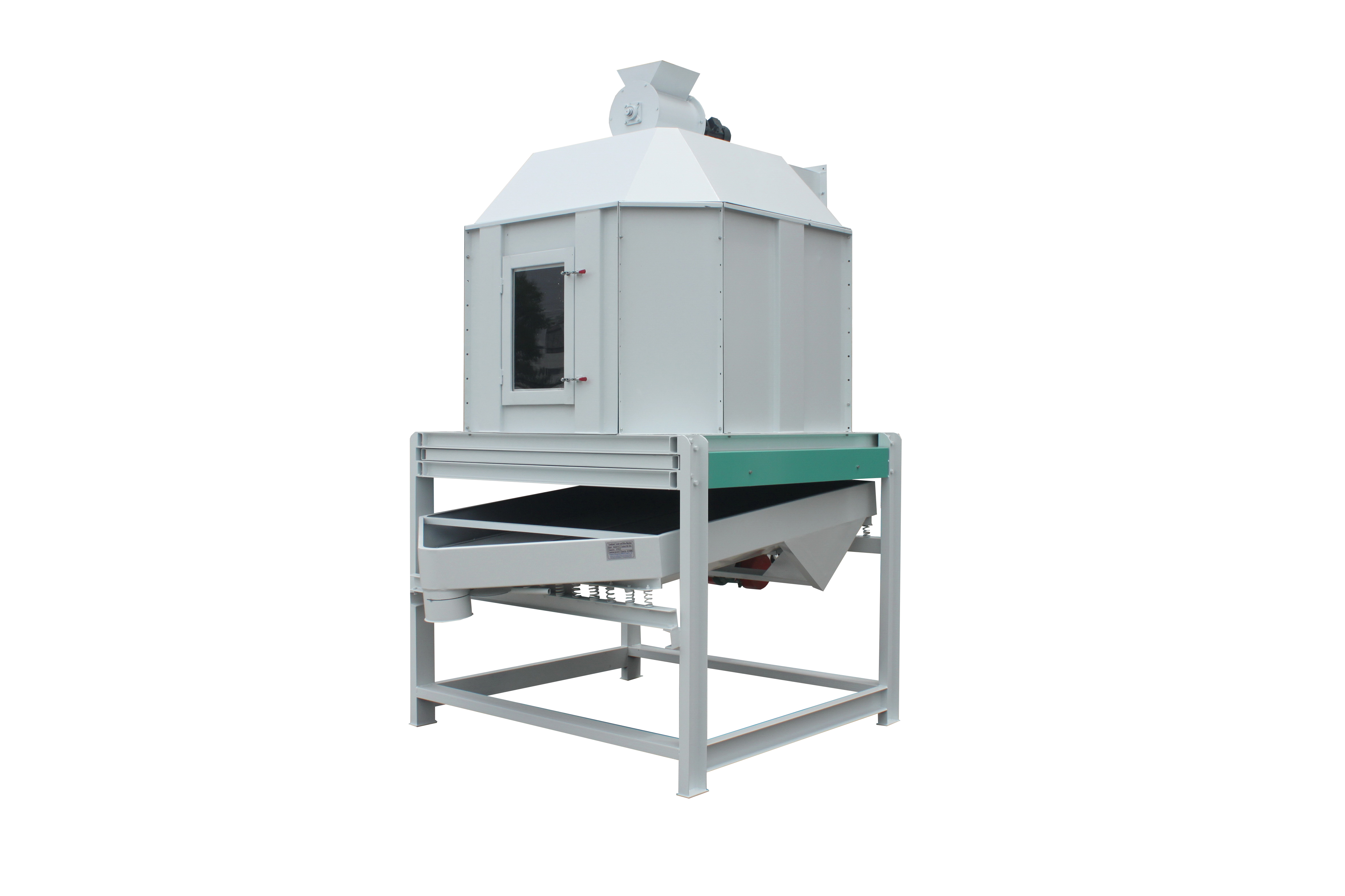
Jiangsu Huamu Machinery Co., Ltd. is located in Xibei Town, Wuxi City, enjoying convenient transportation and significant geographical advantages. The company specializes in the manufacturing of feed machinery and equipment, and can undertake the full-process business of scheme design, equipment ins...
No.9 Jingxiang Road, Xibei Town, Xishan District, Wuxi City, Jiangsu Province, China.