
Establishing a modern feed processing plant requires careful selection of professional equipment to ensure efficient production and high-quality feed output. As a leading manufacturer specializing in feed machinery and complete production line solutions, Jiangsu Huamu Machinery Co., Ltd. provides comprehensive equipment selection guidance and cost analysis for global feed industry clients. This article will walk you through the essential equipment selection process, production line configuration, and key considerations for building a professional feed processing plant.
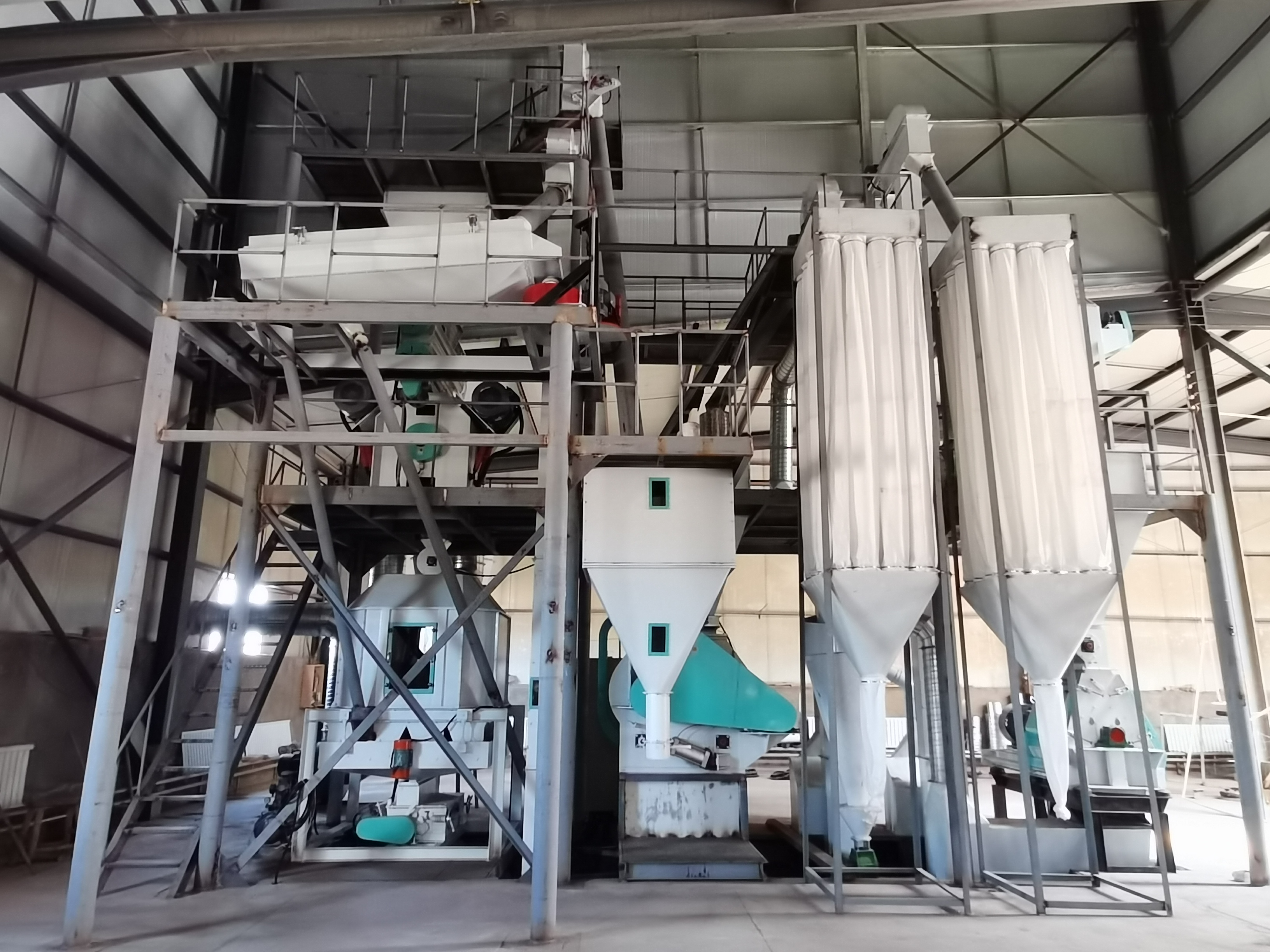
Core Equipment Selection for Feed Processing Plants
The foundation of any feed processing plant lies in its core equipment selection. Based on our 15+ years of industry experience serving clients in 50+ countries, we recommend focusing on these essential machines:
1. Pellet Machine (Feed Granulator)
The pellet machine is the heart of feed production, converting powdered feed into uniform pellets. Our medium-sized belt-driven pellet machines feature:
- Dual-motor narrow belt transmission for stable operation
- High production capacity (5-8 tons/hour for standard models)
- Low noise operation (below 85dB)
- Adjustable pellet diameter (2-12mm)
- Annual sales volume exceeding 500 units in domestic market
These machines are ideal for producing pellets for poultry, livestock, and aquatic feed, with special models available for shrimp and fish feed production.
2. Hammer Mill (Feed Grinder)
Our waterdrop-type hammer mills represent the latest generation of feed grinding technology:
- Unique waterdrop crushing chamber design
- “Mountain-shaped” secondary impact structure
- 25% higher output compared to traditional models
- Multi-function capability (coarse, fine, and ultra-fine grinding)
- Suitable for processing corn, soybean meal, wheat bran, and other raw materials
The hammer mill’s versatility makes it essential for producing high-grade livestock feed, aquatic feed, and even industrial raw materials for alcohol and citric acid production.
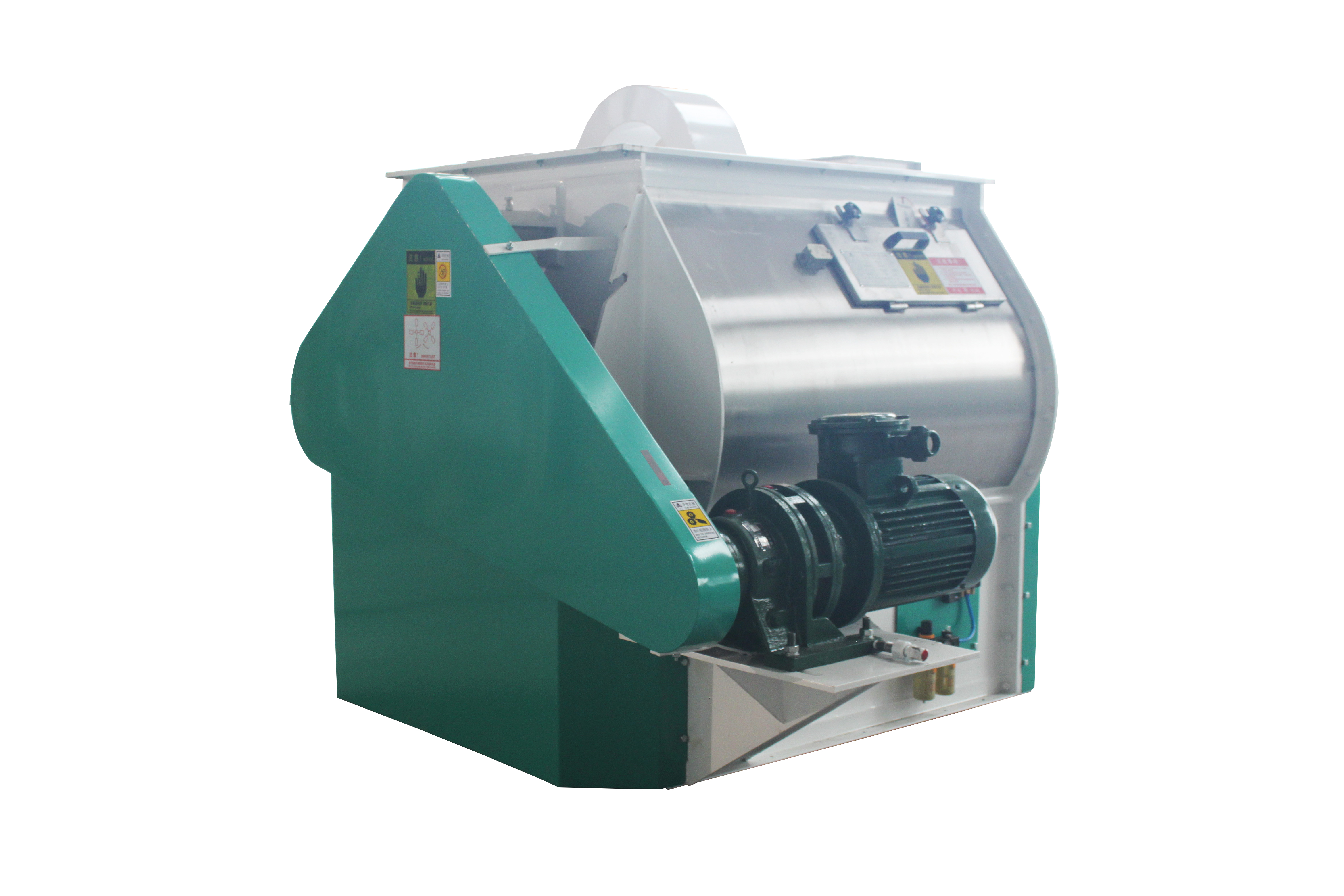
3. Mixer (Feed Blending Machine)
Precision mixing is crucial for feed quality consistency. Our double-shaft paddle mixers offer:
- Rapid mixing cycle (30-90 seconds per batch)
- High mixing uniformity (CV≤5%)
- No material segregation during operation
- Optional atomizing spray system for liquid addition
- Customizable capacities from 500kg to 10,000kg per batch
These mixers are widely used in feed, food, and chemical industries for blending powdered and granular materials with excellent results.
Complete Feed Production Line Configuration
Building a complete feed processing plant requires more than just individual machines – it needs a well-coordinated system. Based on our experience in designing and installing over 200 complete production lines worldwide, here’s our recommended configuration:
| Production Stage | Recommended Equipment | Capacity Range |
|---|---|---|
| Raw Material Receiving | Bucket elevator, screw conveyor, dust collector | 1-30 tons/hour |
| Grinding | Waterdrop hammer mill | 1-20 tons/hour |
| Batching & Mixing | Automatic batching system, double-shaft mixer | 0.5-10 tons/batch |
| Pelleting | Ring die pellet machine | 1-8 tons/hour |
| Cooling & Screening | Counterflow cooler, vibrating screen | 1-30 tons/hour |
| Packaging | Automatic packing scale | 5-50kg bags |
This configuration covers all types of feed production including poultry feed, livestock feed, aquatic feed, and premixes. Our turnkey solutions include complete plant design, equipment manufacturing, installation, commissioning, and operator training.
Cost Analysis of Feed Production Lines
The investment cost for a feed processing plant varies significantly based on capacity and configuration. Here’s a general cost breakdown for different scale plants:
Small-scale Plant (1-3 tons/hour)
- Equipment cost: $30,000 – $80,000
- Building requirements: 200-500㎡
- Suitable for: Small farms, cooperative feed production
- ROI period: 1.5-2.5 years
Medium-scale Plant (5-10 tons/hour)
- Equipment cost: $120,000 – $300,000
- Building requirements: 800-1500㎡
- Suitable for: Commercial feed producers, medium farms
- ROI period: 2-3 years
Large-scale Plant (15-30 tons/hour)
- Equipment cost: $400,000 – $1,000,000+
- Building requirements: 2000-5000㎡
- Suitable for: Industrial feed production, export-oriented plants
- ROI period: 3-5 years
Note: These costs include core equipment only. Additional expenses for building construction, utilities, and working capital should be considered separately. Our team provides detailed cost breakdowns and financial analysis for each project.
Key Considerations for Equipment Selection
When selecting feed processing equipment, consider these critical factors:
1. Production Capacity Requirements
Determine your target output based on market demand and feed consumption. Overcapacity leads to wasted investment, while undercapacity limits growth potential. Our engineers help calculate optimal capacity based on your specific situation.
2. Feed Type and Quality Standards
Different animals require different feed specifications. Poultry feed typically needs smaller pellets (2-4mm) while cattle feed can be larger (6-8mm). Aquatic feed often requires floating or sinking properties. Our equipment can be customized to meet these requirements.
3. Energy Efficiency and Operating Costs
Energy consumption accounts for a significant portion of operating costs. Our equipment features:
- Energy-saving motor designs
- Optimized transmission systems
- Automatic control for minimal idle time
These features reduce power consumption by 15-20% compared to traditional designs.
4. Equipment Durability and Maintenance
Feed processing involves abrasive materials and continuous operation. Our equipment uses:
- High-chrome alloy hammers and dies
- Stainless steel contact parts
- Modular design for easy maintenance
This ensures long service life and minimal downtime.
FAQ
What factors affect the price of feed pellet machines?
The price of feed pellet machines depends on capacity, motor power, die specifications, and automation level. Our medium-sized belt-driven pellet machines range from $8,000 to $25,000 depending on configuration. Custom features like stainless steel construction or special die designs may increase costs.
How to choose the right hammer mill for my feed plant?
Select a hammer mill based on your required output and raw material characteristics. For coarse grinding of grains, a 15-22kW hammer mill suffices. For fine grinding of fibrous materials, choose a 30-37kW model with smaller screen sizes. Our engineers can recommend the optimal model after analyzing your feed formula.
What’s the warranty period for your feed processing equipment?
We provide 12 months warranty for all equipment from the date of commissioning. During this period, we supply free replacement parts for any manufacturing defects. Our after-sales team offers 24/7 technical support and can dispatch engineers worldwide for major repairs.
Can you customize equipment for special feed requirements?
Absolutely. We specialize in custom solutions for unique feed requirements. This includes:
- Special pellet shapes and sizes
- Floating/sinking aquatic feed production
- Organic feed processing with minimal metal contamination
- Pharmaceutical feed with precise mixing requirements
Our R&D team works closely with clients to develop tailored solutions.
How long does it take to install a complete feed production line?
Installation time depends on plant size and complexity. A small 1-3 tons/hour plant typically takes 30-45 days, while a large 20-30 tons/hour industrial plant may require 60-90 days. This includes equipment installation, electrical wiring, pipeline connection, and commissioning. Our installation teams have completed projects in 35+ countries with on-time delivery rates exceeding 95%.
Summary
Selecting the right feed processing equipment requires comprehensive consideration of production capacity, feed specifications, budget constraints, and long-term operational efficiency. Jiangsu Huamu Machinery Co., Ltd. offers complete solutions from single machine supply to turnkey plant construction, with professional services covering design, manufacturing, installation, and after-sales support. Our ISO9001 certified products and experience serving clients in 50+ countries ensure reliable performance and investment protection. Contact our experts today for a customized equipment selection plan and detailed cost analysis for your feed processing project.