
Feed processing plant equipment selection is one of the most important decisions a feed mill investor, farm owner, or project contractor will make. The machines you choose determine your daily output, your pellet quality, your energy consumption, and how easily your plant can be expanded later. Whether you are building a brand-new 5 t/h poultry feed factory, upgrading an existing line, or adding an aquatic feed workshop, the logic behind choosing equipment stays the same: match the machines to your formula, your capacity target, and your raw materials — not the other way around.
Jiangsu Huamu Machinery Co., Ltd. is a feed machinery manufacturer based in Xibei Town, Wuxi City, Jiangsu Province, China. The company specializes in the design, manufacturing, installation, and commissioning of feed machinery, biomass machinery, and organic fertilizer machinery production lines. With a registered capital of 10 million RMB, a 10,000 square meter production site, ISO 9001 quality system certification, and recognition as a Jiangsu Provincial “Specialized, Refined, Distinctive and Innovative” (SRDI) small and medium enterprise in 2024, Huamu supplies complete feed plant solutions ranging from 1 to 30 t/h to customers in more than 50 countries and regions.
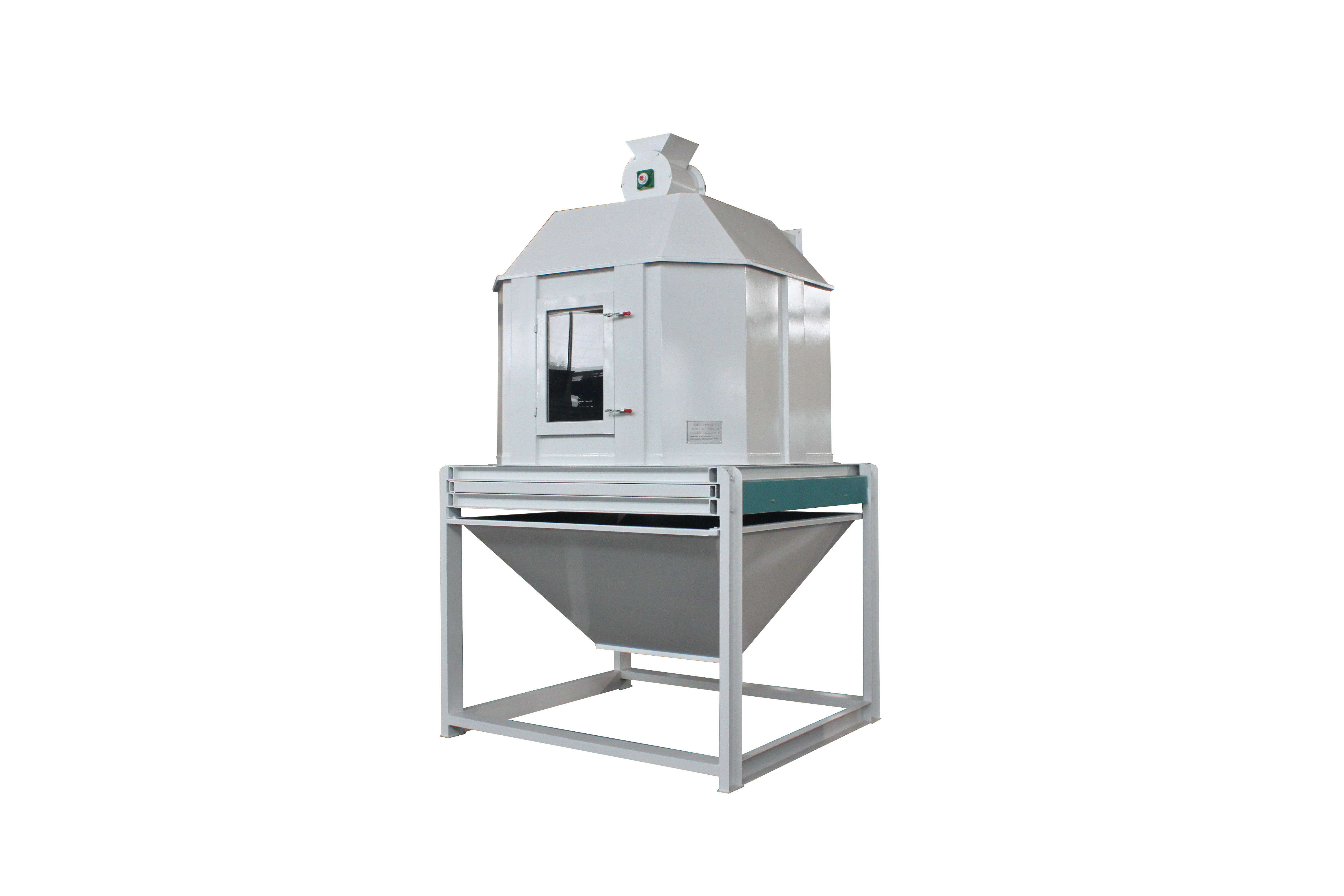
What Equipment Is Included in a Complete Feed Processing Plant?
A complete feed production line is a chain of process stages, and each stage has its own equipment group. When people ask what equipment a feed processing plant needs, the most useful answer is to break the plant down by function rather than by machine name. Every stage has to receive material, process it, and transfer it to the next stage without bottlenecks.
The typical process flow for a pellet feed plant is: raw material receiving and storage, primary and secondary grinding, batching and weighing, mixing, conditioning and pelleting, cooling, crumbling and screening, and finally finished product packing. Auxiliary systems — elevators, conveyors, dust collectors, and control systems — run through all of these stages. For powder feed or premix projects, the pelleting stage is removed and the plant ends at mixing and packing.
Below is a practical breakdown of the main equipment groups used in a standard feed processing plant. This structure applies to poultry feed, livestock feed, ruminant feed, aquatic feed, and premix material projects, with different emphasis depending on the formula.
| Process Stage | Core Equipment | Function |
|---|---|---|
| Receiving and storage | Silos, receiving hoppers, bucket elevators, conveyors | Unload, store and transfer raw grain and meals |
| Grinding | Waterdrop hammer mill | Reduce particle size for coarse, fine or micro-fine grinding |
| Batching and mixing | Batching scale, double shaft paddle mixer | Weigh ingredients and blend to a uniform batch |
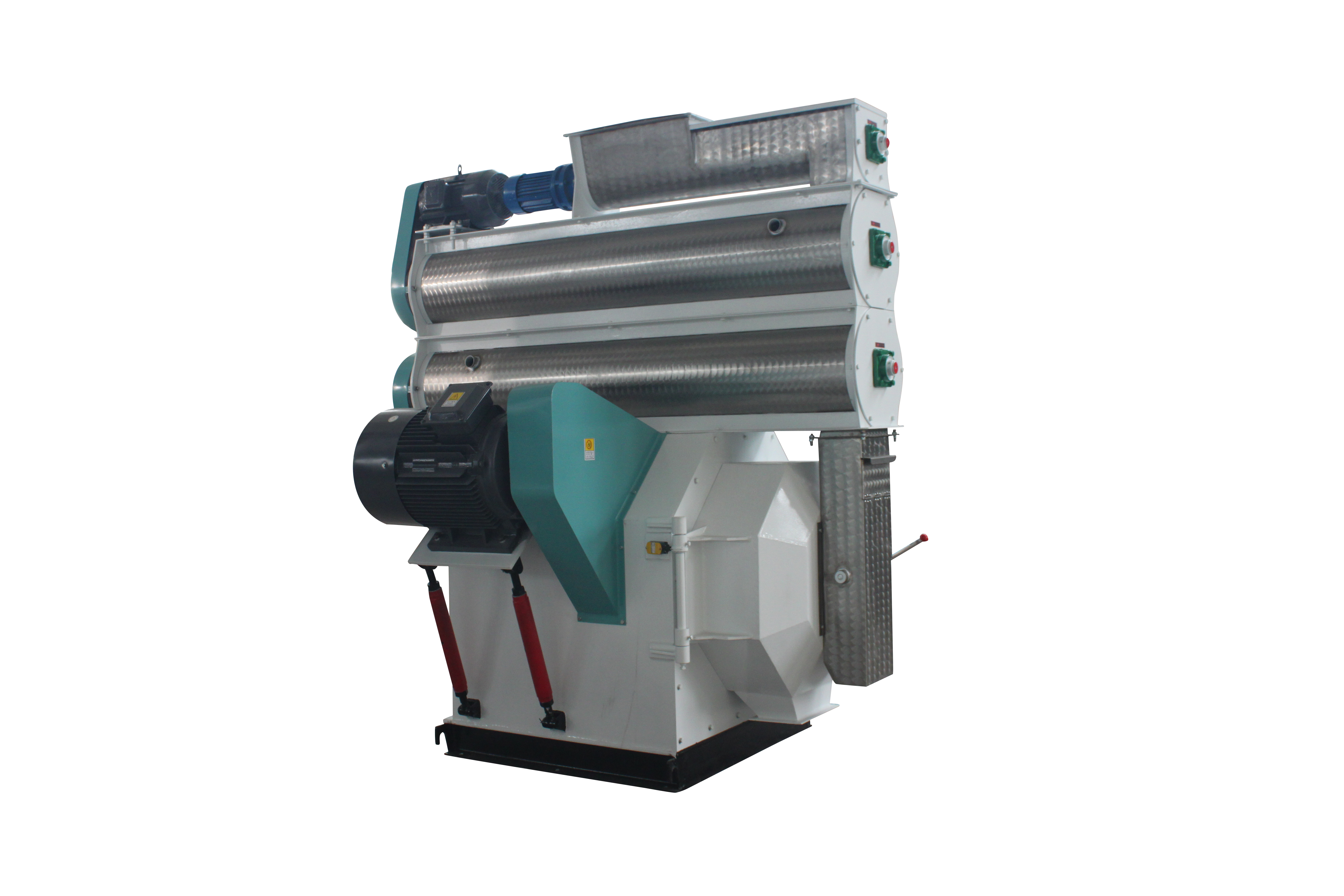
| Pelleting | Ring die pellet machine, conditioner | Compress mash feed into dense, durable pellets |
| Cooling and finishing | Counter-flow cooler, crumbler, stabilizer, screener | Reduce pellet temperature and moisture, size and grade pellets |
| Packing and auxiliary | Packing machine, elevator, conveyor, dust collector, dryer | Bag finished feed, control dust and move material |
Feed Processing Plant Equipment Selection Guide: Stage-by-Stage Recommendations
Choosing equipment stage by stage keeps the project realistic. Each decision should be made against three questions: what capacity must this machine pass, what material characteristics must it handle, and how much downtime can my operation tolerate. The following recommendations reflect how experienced feed mill engineers approach the selection process.
1. Grinding: Match the Hammer Mill to Your Finest Formula
Grinding is usually the first bottleneck people discover after commissioning. The hammer mill must be sized for the finest and hardest material in the product mix, not the average. For high-grade poultry feed, aquatic feed, and raw material grinding in alcohol plants and citric acid plants, a waterdrop hammer mill with a “mountain-shaped” secondary impact structure is a proven choice. Jiangsu Huamu’s waterdrop hammer mill is designed with a waterdrop-shaped grinding chamber and a secondary grinding structure that increases output by approximately 25% compared with conventional configurations, while allowing coarse, fine, and micro-fine grinding in a single machine.
When selecting a hammer mill, confirm the rotor speed, screen hole sizes available, hammer thickness, and whether the mill can be switched quickly between screen sizes. A mill that is difficult to open will slow your product changeovers far more than a slightly lower motor rating would.
2. Mixing: Uniformity Comes Before Speed
The mixer determines feed quality consistency more than any other machine in a powder feed plant. A double shaft paddle mixer achieves a full mixing cycle in just 30-90 seconds per batch with a coefficient of variation (CV) of no more than 5%, and it does not cause segregation after discharge. For formulas that include molasses, oil, or other liquids, a customizable atomized spraying system distributes additives evenly into the batch instead of creating local wet spots.
For most small and medium feed plants, batch size should be chosen so that mixing time matches the output of the pellet mill or packing line above and below it. An oversized mixer that runs half empty wastes energy and reduces mixing accuracy; an undersized mixer forces operators to run more batches than the rest of the line can support.
3. Pelleting: The Heart of the Feed Production Line
The pellet machine converts mixed mash into pellets, and it is the machine buyers ask about most often. For small and medium feed factories, belt-driven ring die pellet machines offer a practical balance between price and performance. Jiangsu Huamu’s belt-type pellet machines use a dual-motor powerful narrow-belt drive that runs smoothly, delivers high output, and keeps noise low. Annual production and sales reach 500 units, which reflects strong market acceptance of this machine type among livestock, poultry, and aquatic feed producers.
Selection points to check include ring die diameter, effective die width, main motor power, conditioner configuration, and the availability of spare ring dies and rollers. A pellet machine is only as productive as its die and roller condition, so confirm that consumables can be supplied reliably after commissioning.
4. Cooling and Finishing: Do Not Undersize These Machines
Cooling, crumbling, and screening are frequently underestimated. Hot pellets that are packed too early will sweat inside the bag, causing mold and customer complaints. A counter-flow cooler sized correctly for the pellet mill output, together with a crumbler for starter and chick feeds and a screener for fines removal, protects product quality. For aquatic feed, a stabilizer is typically added to control density and water stability.
5. Packing and Dust Control
Packing capacity should slightly exceed production capacity so that bagging never becomes the constraint. Dust collectors on grinding, mixing, and packing points are not optional in modern plants: they protect operators, reduce material loss, and help the plant meet environmental requirements. Conveying equipment — bucket elevators and screw or belt conveyors — should be sized with a 10-20% margin above the highest throughput stage in the line.
How to Match Equipment Capacity to Your Target Output
Feed processing plant equipment selection starts with a capacity number: how many tons per hour of finished feed do you need? Once that number is fixed, every stage can be sized relative to it. Jiangsu Huamu designs and manufactures complete projects from 1 to 30 t/h covering powder feed, premix feed, pellet feed, and special aquatic product feed.
The table below shows typical configuration logic at three capacity levels. These are planning references, not fixed specifications, because the final configuration depends on formula complexity, raw material bulk density, automation level, and site layout.
| Plant Capacity | Typical Product Focus | Configuration Notes |
|---|---|---|
| 1-3 t/h | Farm feed, small commercial mill, single-species feed | Compact layout, one hammer mill, one mixer, one pellet machine, manual or semi-automatic batching |
| 5-10 t/h | Multi-species poultry, swine and ruminant feed | Multiple grinding lines, automatic batching, double shaft mixer, cooling and crumbling section, automatic packing |
| 15-30 t/h | Commercial feed plants, aquatic and premium feed | Parallel process lines, full automation and central control, dedicated aquatic feed line with stabilizer and dryer |
One common mistake is to size individual machines independently and then discover that the elevator or the cooler cannot keep up. A second mistake is to buy for today’s output only. If your market is growing, leave space for a second pellet machine and design the conveying and batching systems for the future capacity from the start.
Key Equipment Performance Factors to Compare Before You Buy
When comparing quotations from different feed machinery manufacturers, do not compare only the price per machine. Compare the performance figures that will affect your cost per ton over the next five years.
- Grinding efficiency: output per kilowatt-hour at your target screen size, plus the ability to switch between coarse and fine grinding without replacing the whole mill.
- Mixing uniformity: a CV of 5% or lower and no segregation after discharge; liquid addition capability for molasses and oil.
- Pellet quality: die and roller life, pellet durability, and how easily the machine is adjusted for different die sizes.
- Drive reliability: belt or direct drive, motor configuration, and noise and vibration levels during operation.
- Service support: spare parts availability, commissioning support, and operator training.
For most buyers, the total cost of ownership matters more than the initial quote. A machine that is 20% more expensive but delivers 25% more output at lower noise and downtime is usually the better investment for a plant that runs two or three shifts.
Why Choose Jiangsu Huamu Machinery as Your Feed Plant Equipment Supplier
Jiangsu Huamu Machinery manufactures the core machines in-house and designs the complete line around them. The product range covers ring die pellet machines, waterdrop hammer mills, double shaft mixers, coolers, stabilizers, crumblers, extruders, dryers, finished product packing machines, and a complete set of auxiliary equipment including elevators, conveyors, and dust collectors. This means fewer interfaces for the buyer to manage during a project.
The company also provides a premix material additive complete unit and complete units for pellet animal and poultry feed and aquatic product material, so a single supplier can cover several product categories. Huamu operates with an experienced design, production, and installation team capable of designing and building 1-30 t/h powder, premix, pellet, and special aquatic feed projects.
For overseas customers, working with a single manufacturer that designs, manufactures, installs, and commissions reduces coordination risk. Huamu products are already exported to more than 50 countries and regions, and the company follows a “customer first, common development” principle in its long-term cooperation with feed industry partners.
Planning and Installation Tips for New Feed Mills
Equipment selection is only half of the project. The other half is layout and commissioning. Three practical points consistently determine whether a plant starts up smoothly.
Design the Material Flow Before Ordering Machines
Decide where raw materials arrive, where finished bags leave, and how the product moves between those two points. A plant that requires repeated manual transfer will lose more productivity than any single machine choice can recover. Vertical flow, with grinding and batching on upper levels and pelleting and packing below, is preferred where building height allows.
Confirm Power Supply and Dust Control Early
Total installed power on a 10 t/h line is substantial, and local power supply capacity must be confirmed before the electrical design is finalized. Dust collection points should also be planned at the design stage rather than retrofitted later, because ducting routes are much easier to reserve than to add.
Train Operators During Commissioning
Commissioning is the best training opportunity your team will get. Operators who understand ring die adjustment, screen replacement, mixer cycle timing, and cooler airflow will run the plant more efficiently and reduce unplanned stops. Huamu’s installation and commissioning teams support this phase as part of the project delivery.
FAQ
What equipment do I need for a complete feed processing plant?
A complete feed processing plant typically includes a waterdrop hammer mill for grinding, a batching system, a double shaft paddle mixer, a ring die pellet machine with conditioner, a counter-flow cooler, a crumbler and screener, a finished product packing machine, plus bucket elevators, conveyors, and dust collectors. Powder and premix plants may not require the pelleting and cooling stages.
How do I decide the capacity of my feed production line?
Start from your planned finished feed sales or internal farm consumption per day, then divide by the number of production hours to get tons per hour. Add a margin for seasonal peaks and product changeovers. Jiangsu Huamu designs complete projects from 1 to 30 t/h, so the line can be configured around your actual target rather than a fixed model range.
What mixing uniformity can a double shaft paddle mixer achieve?
The double shaft paddle mixer completes a batch in 30-90 seconds and achieves a coefficient of variation of 5% or lower, without segregation after discharge. An optional atomized spraying system allows molasses, oil, and other liquids to be added evenly across the batch.
Can one hammer mill handle coarse, fine, and micro-fine grinding?
Yes. The waterdrop hammer mill with a “mountain-shaped” secondary impact structure is designed for multi-purpose grinding, covering coarse, fine, and micro-fine particle sizes by changing the screen configuration. Its output is approximately 25% higher than conventional configurations, and it is suitable for premium livestock and poultry feed, aquatic feed, and raw material grinding in alcohol and citric acid plants.
Does Jiangsu Huamu Machinery provide installation and commissioning?
Yes. The company provides feed production line design, equipment manufacturing, installation, and debugging services with its own experienced design, production, and installation team. Turnkey delivery is available for new feed plants as well as upgrades and retrofits of existing factories.
What product categories can a Huamu feed production line produce?
Huamu complete units cover poultry feed, livestock and swine feed, ruminant feed, aquatic feed, powder feed, premix feed, and special aquatic product feed. The same engineering team can combine grinding, mixing, pelleting, cooling, and packing modules according to the formula requirements of each product category.
Summary
Feed processing plant equipment selection is a process of matching capacity, material characteristics, and product quality targets to the right machines at each stage. Grinding, mixing, and pelleting are the three stages that most directly determine output and feed quality, while cooling, screening, packing, and dust control protect the final product and the working environment. Sizing the line as a whole — instead of machine by machine — is what separates a plant that runs smoothly from one that struggles with bottlenecks.
Jiangsu Huamu Machinery combines in-house manufacturing of ring die pellet machines, waterdrop hammer mills, double shaft mixers, coolers, and auxiliary equipment with complete line design, installation, and commissioning for 1-30 t/h projects. For buyers planning a new feed factory or upgrading an existing one, involving the equipment supplier at the layout stage is the most effective way to control cost, schedule, and long-term operating performance.