
Selecting the right feed mixer is crucial for achieving optimal production efficiency and feed quality in modern animal nutrition operations. As a leading manufacturer specializing in feed machinery with over 15 years of experience, Jiangsu Huamu Machinery Co., Ltd. understands the complexities involved in this decision-making process. This comprehensive guide will walk you through the essential considerations for choosing the best feed mixer, drawing on our expertise in designing and producing over 500 industrial feed mixers annually.
Understanding Feed Mixer Types and Applications
The feed mixing equipment market offers several types of mixers, each with distinct characteristics suited for specific applications. The three primary categories are:
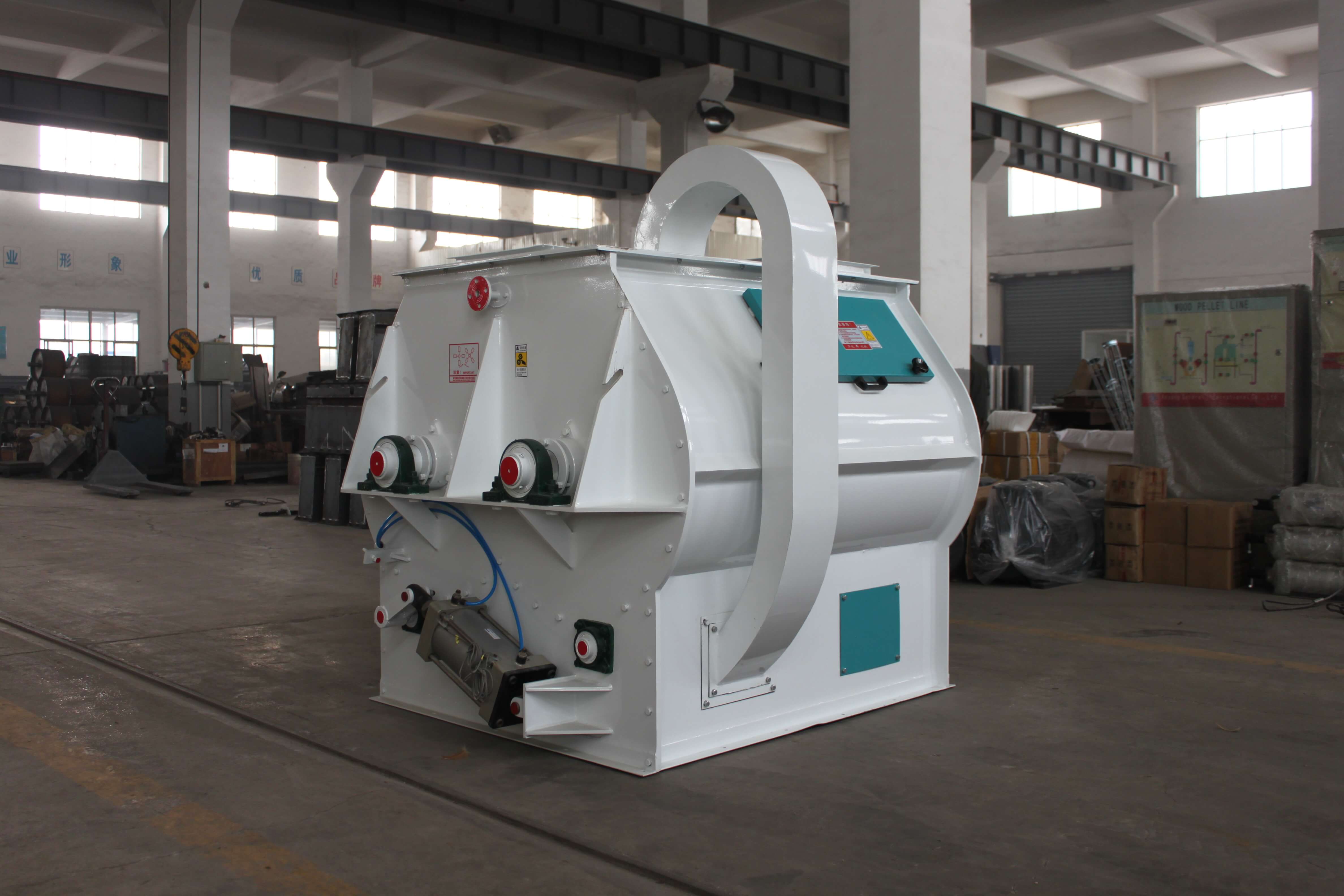
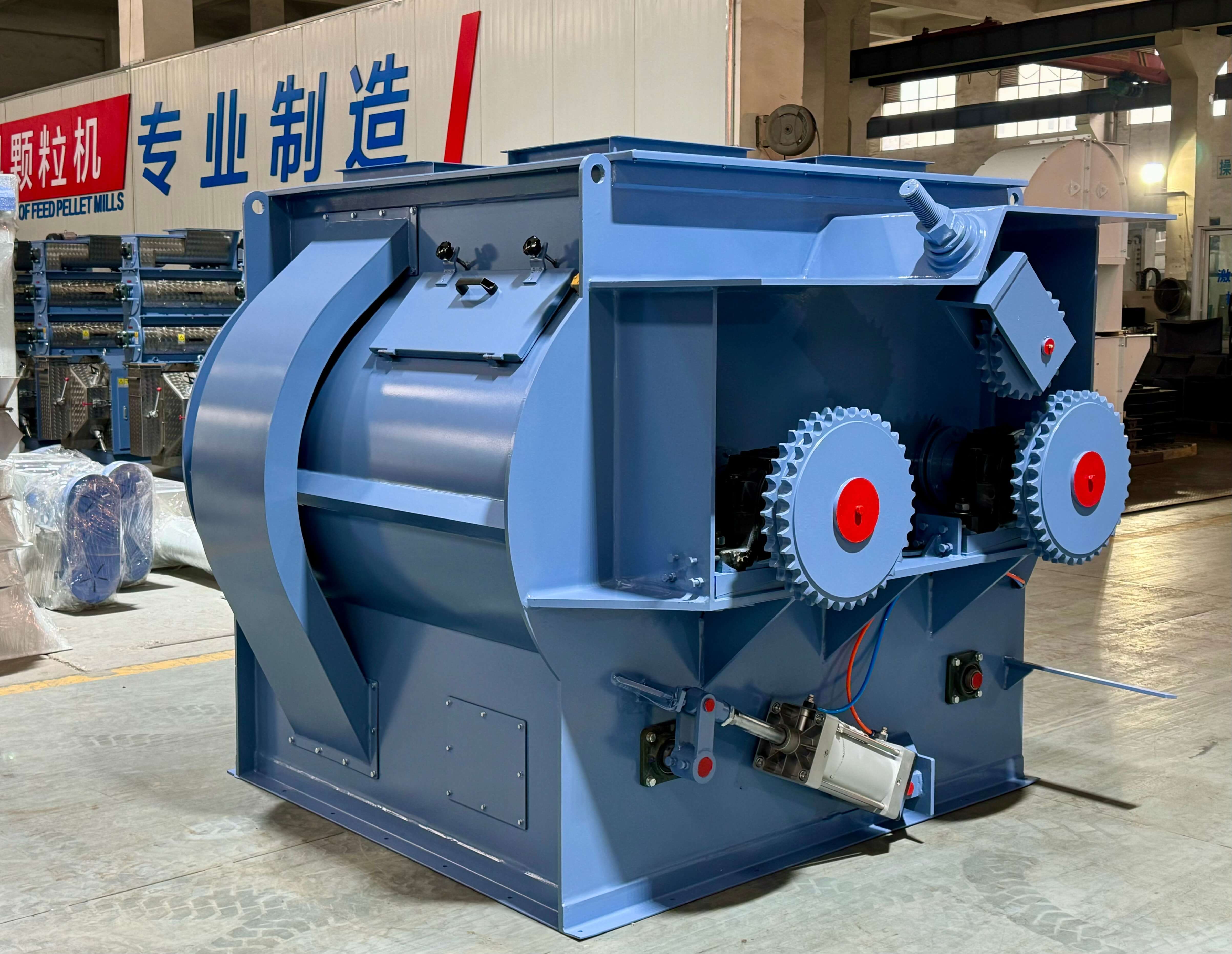
1. Double Shaft Paddle Mixers (Our Specialty)
Our flagship product features twin horizontal shafts with overlapping paddles that create a three-dimensional mixing action. This design achieves complete uniformity in just 30-90 seconds per batch while maintaining a coefficient of variation (CV) below 5% – a benchmark in the industry. The short mixing cycle enables higher daily throughput, with capacities ranging from 1-30 tons/hour depending on your production scale.
The double shaft mixer’s gentle mixing action prevents particle segregation, making it ideal for:
- Premix production requiring precise ingredient distribution
- Aquatic feed with high lipid content
- Medicated feed requiring homogeneous medication dispersion
- Specialty feeds with multiple micro-ingredients
2. Single Shaft Horizontal Mixers
These traditional mixers feature a single rotating shaft with paddles or ribbons. While more economical, they typically require longer mixing times (3-5 minutes) and may struggle with achieving uniformity in complex formulations. They work best for simple grain-based feeds with few additives.
3. Vertical Mixers
Common in small-scale operations, vertical mixers use augers to lift and drop materials. They have limited capacity and longer mixing cycles (5-10 minutes), making them unsuitable for high-volume commercial production.
Key Selection Criteria for Feed Mixers
When evaluating feed mixers, consider these critical factors that directly impact production efficiency and feed quality:
1. Mixing Uniformity (CV Value)
The coefficient of variation measures ingredient distribution consistency. Lower CV values indicate better uniformity. Our double shaft mixers consistently achieve CV≤5%, ensuring every animal receives balanced nutrition. This precision is vital for:
- Medicated feed compliance
- Trace mineral inclusion
- Premix quality control
- Aquatic feed stability
2. Mixing Cycle Time
Shorter cycles increase daily throughput. Our 30-90 second mixing cycles enable processing up to 240 batches per 12-hour shift (for 30-second cycles), translating to 72-240 tons/day for a 10-ton mixer. This efficiency reduces labor costs and energy consumption per ton of feed produced.
3. Residue Retention
Minimal material retention prevents cross-contamination between batches. Our mixers feature optimized paddle designs and self-cleaning discharge gates that typically leave less than 0.5% residue, crucial for:
- Allergen-free feed production
- Organic feed certification
- Specialty feed lines
- Frequent recipe changes
4. Customization Options
Production needs vary significantly. Look for manufacturers offering tailored solutions like:
- Liquid addition systems (molasses, oils, enzymes)
- Steam injection for pellet conditioning
- Stainless steel construction for corrosive environments
- Explosion-proof designs for grain dust applications
- ATEX compliance for hazardous areas
Technical Specifications Comparison
The following table compares key parameters of our double shaft feed mixer with industry averages:
| Parameter | Jiangsu Huamu Double Shaft Mixer | Industry Average |
|---|---|---|
| Mixing Cycle | 30-90 seconds | 3-5 minutes |
| CV Uniformity | ≤5% | 7-10% |
| Residue Rate | ≤0.5% | 1-2% |
| Power Consumption | 0.5-1.2 kW/ton | 1.5-2.5 kW/ton |
| Maintenance Interval | 800-1000 hours | 400-600 hours |
Why Choose Jiangsu Huamu Feed Mixers?
As a ISO9001-certified manufacturer serving clients in 50+ countries, we offer distinct advantages:
1. Proven Performance
Our mixers have been installed in over 200 feed mills worldwide, including:
- A 24,000 T/year aquatic feed plant in Vietnam
- A 120,000 T/year poultry feed complex in Nigeria
- A specialty pet food facility in Poland requiring CV≤3%
- Multiple organic feed producers in Europe
2. Engineering Expertise
Our R&D team collaborates with top agricultural universities to continuously improve mixer designs. Recent innovations include:
- Self-cleaning discharge gates reducing residue by 60%
- Energy-efficient motor drives cutting power use by 25%
- Quick-change paddle system reducing maintenance time by 40%
3. Comprehensive Support
We provide end-to-end solutions beyond equipment supply:
- Free factory layout design
- On-site installation supervision
- Operator training programs
- 24/7 technical support
- Spare parts guaranteed within 72 hours
FAQ
What makes double shaft mixers superior for aquatic feed production?
Aquatic feeds require precise distribution of high-fat ingredients and micro-nutrients. Our double shaft mixers’ three-dimensional mixing action ensures uniform lipid coating on particles while maintaining CV≤5% for trace minerals. The gentle mixing prevents particle size reduction, crucial for floating feed stability.
How do you ensure liquid addition accuracy?
Our mixers feature German-imported flow meters with ±0.5% accuracy and PLC-controlled injection systems. The multiple nozzle design creates fine atomization, achieving homogeneous liquid distribution even at 8% inclusion rates. We calibrate each system before shipment using traceable test methods.
What maintenance is required for optimal performance?
Daily checks include lubricating bearings and inspecting paddle wear. Monthly tasks involve cleaning the mixing chamber and verifying belt tension. Our mixers use wear-resistant alloy paddles lasting 8,000+ hours under normal conditions. We provide detailed maintenance manuals and video guides.
Can you customize mixers for organic feed production?
Absolutely. We offer stainless steel 304 construction, CIP cleaning systems, and documentation packages for organic certification. Our mixers’ low residue rates (≤0.3%) prevent cross-contamination between organic and conventional feed lines.
Summary
Choosing the right feed mixer requires evaluating mixing uniformity, cycle time, residue control, and customization options. Jiangsu Huamu’s double shaft feed mixers excel in all these areas, offering industry-leading CV≤5% uniformity, 30-90 second mixing cycles, and residue rates below 0.5%. With over 500 installations worldwide and continuous R&D investments, we provide reliable, efficient mixing solutions tailored to your specific production needs. Contact our technical team today for a free consultation and customized quotation.