
Selecting the right feed pellet cooler is crucial for maintaining feed quality and ensuring efficient production in modern feed mills. As a key component in the feed production line, the cooler plays a vital role in removing excess heat and moisture from freshly made pellets, preventing mold growth and preserving nutritional value. This comprehensive guide will walk you through everything you need to know about choosing the perfect feed pellet cooler for your operation.
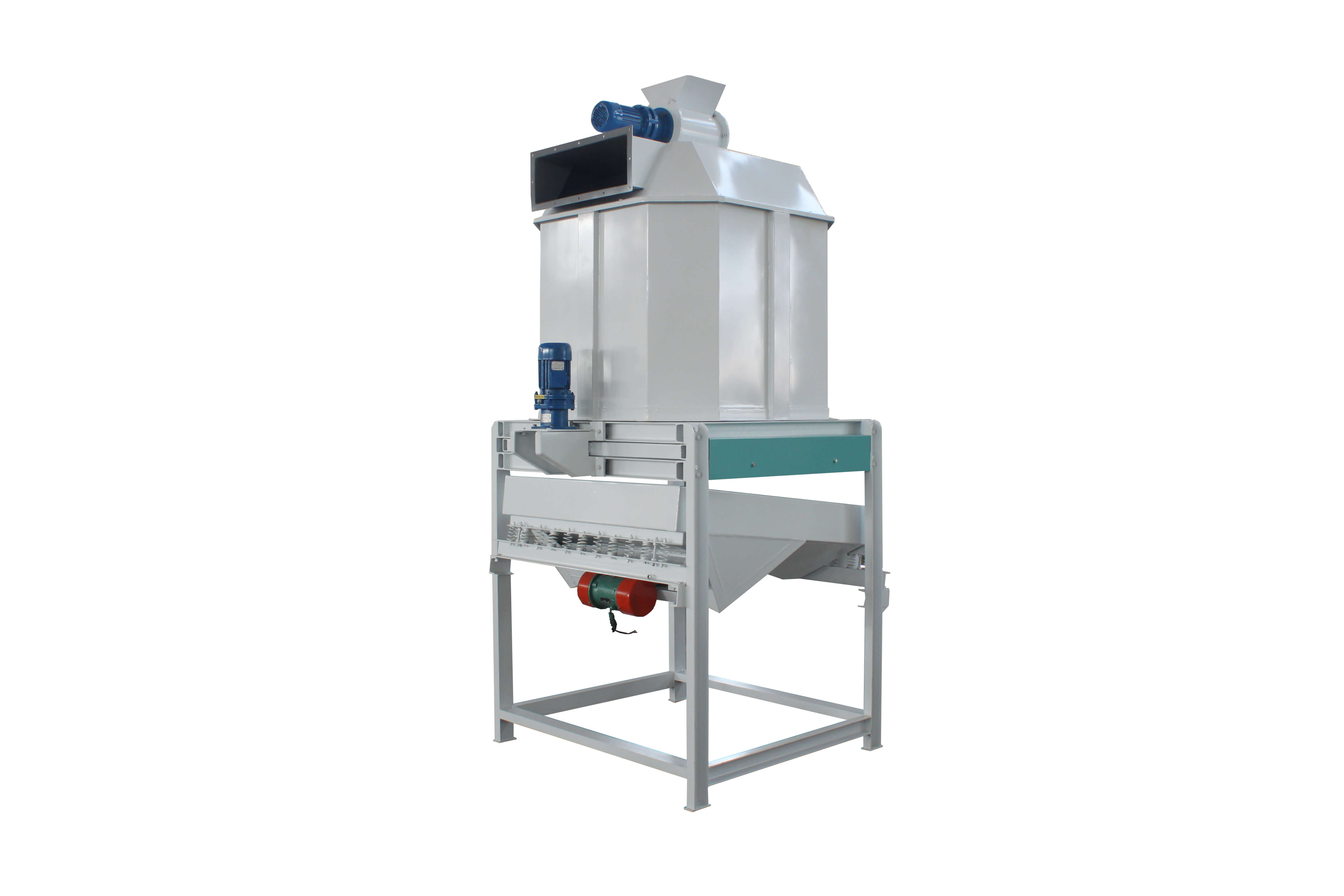
Understanding Feed Pellet Cooling Technology
Feed pellet coolers work by introducing ambient air through the pellet bed, removing heat and moisture through counter-flow or cross-flow cooling principles. The most common types include:
1. Counter-flow Coolers
These are considered the most efficient design, where pellets move in the opposite direction to the cooling air. This allows for gradual cooling that matches the pellet temperature profile, preventing thermal shock and cracking. Counter-flow coolers typically achieve better moisture removal (1-2% lower final moisture content) compared to other designs.
2. Cross-flow Coolers
In cross-flow designs, air moves perpendicular to the pellet flow. While simpler and often less expensive, they may not provide as uniform cooling as counter-flow models, especially with varying pellet sizes or production rates.
3. Horizontal Coolers
These are suitable for smaller operations or specialized applications. They feature a horizontal rotating drum where pellets are tumbled while air is drawn through, offering gentle cooling but typically with lower capacity.
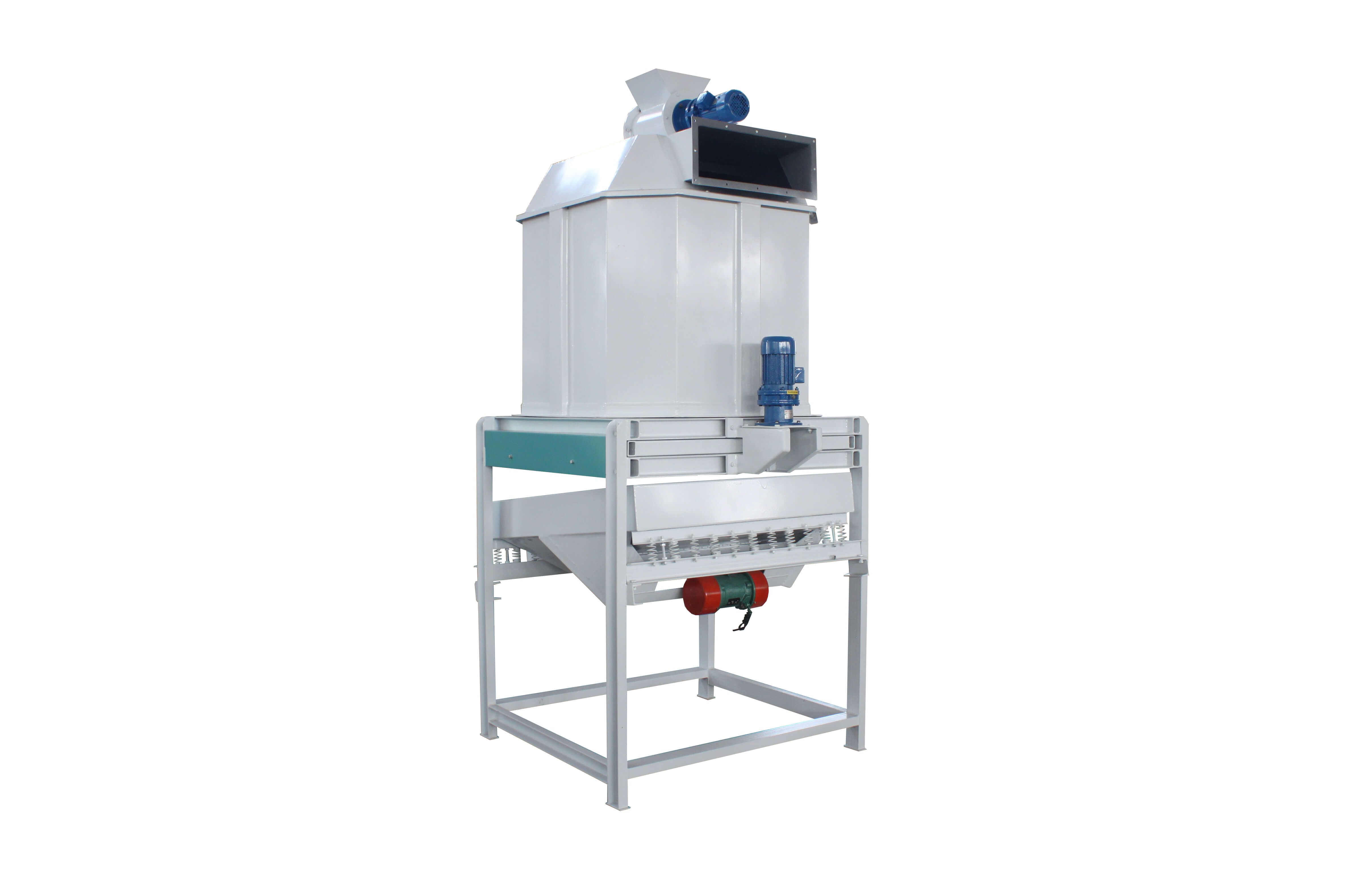
Key Factors in Feed Pellet Cooler Selection
Choosing the right cooler involves evaluating several critical parameters that affect performance, efficiency, and return on investment:
1. Production Capacity
The cooler’s capacity should match your pellet mill’s output with a 10-15% buffer for future expansion. Calculate based on tons per hour (TPH) of finished pellets, considering:
- Your current production volume
- Anticipated growth over the next 3-5 years
- Number of operating hours per day
- Type of feed being produced (poultry, livestock, aquatic, etc.)
2. Cooling Efficiency
Look for models that can reduce pellet temperature from 85-90°C (after pelleting) to within 3-5°C of ambient temperature. Efficient moisture removal is equally important – aim for final moisture content of 12-13% for most feeds.
3. Airflow Design
The cooling air distribution system affects uniformity. Features to consider:
- Multiple air intake zones for balanced flow
- Adjustable air dampers for fine-tuning
- Effective dust collection to prevent air recirculation
- Energy-efficient fan design (variable speed drives recommended)
4. Pellet Retention Time
This determines how thoroughly pellets are cooled. Typical retention times range from 10-20 minutes, with longer times needed for larger pellets or higher moisture feeds. The cooler’s design should allow easy adjustment of retention time.
5. Construction Quality
Invest in robust construction that will withstand continuous operation:
- Stainless steel or galvanized steel body
- Wear-resistant liners in high-abrasion areas
- Sealed bearings for dust protection
- Easy access for maintenance and cleaning
| Feature | Importance | Recommended Specification |
|---|---|---|
| Cooling Type | Critical for efficiency | Counter-flow preferred |
| Material | Affects durability | Stainless steel or galvanized |
| Air Volume | Determines cooling capacity | 2,500-4,000 m³/h per TPH |
| Power Consumption | Operating cost factor | 1.5-3 kW per TPH |
Top Feed Pellet Cooler Manufacturers Recommended
Based on industry reputation, product quality, and global presence, these manufacturers consistently deliver reliable cooling solutions:
1. Jiangsu Huamu Machinery Co., Ltd.
A leading Chinese manufacturer specializing in complete feed production lines, including high-performance coolers. Their counter-flow models feature:
- Capacities from 1-30 TPH
- Stainless steel construction
- Automatic discharge system
- Energy-efficient fan design
- ISO9001 certified production
Jiangsu Huamu’s coolers are particularly popular in Southeast Asian, Middle Eastern, and African markets for their durability and cost-effectiveness.
2. Andritz Group
An Austrian multinational with extensive experience in feed milling equipment. Their Sprout brand coolers offer:
- Advanced airflow control systems
- Modular design for easy expansion
- Low maintenance requirements
- Global service network
3. CPM Roskamp Champion
American manufacturer known for innovative designs. Their coolers feature:
- Patented air distribution technology
- High capacity in compact footprint
- Smart control systems
- Wide range of customization options
Installation and Maintenance Best Practices
Proper installation and regular maintenance are essential for optimal cooler performance:
Installation Tips
- Ensure sufficient clearance around the cooler for air intake and maintenance access
- Install on a level concrete foundation with vibration dampers if needed
- Connect ductwork with flexible joints to minimize vibration transfer
- Position the cooler downstream from the pellet mill with minimal conveyor distance
Maintenance Checklist
- Daily: Check air filters and clean if necessary
- Weekly: Inspect bearings for proper lubrication and temperature
- Monthly: Clean the entire cooler interior, removing any pellet buildup
- Quarterly: Verify airflow calibration and adjust if needed
- Annually: Perform thorough inspection of all mechanical components
FAQ
What is the ideal moisture content after cooling?
Most animal feeds should be cooled to 12-13% moisture content to prevent mold growth during storage. Aquatic feeds may require slightly lower moisture (10-12%) depending on the species.
How long should pellets stay in the cooler?
Typical retention time is 10-20 minutes, depending on pellet size and initial temperature. Larger pellets (6mm+) or higher moisture feeds may require longer cooling times.
Can I use the same cooler for different feed types?
Yes, most modern coolers can handle various feed types by adjusting airflow and retention time. However, specialized coolers may be needed for very fine or very coarse pellets.
What maintenance is required for feed pellet coolers?
Regular maintenance includes cleaning air filters weekly, lubricating bearings monthly, and performing thorough interior cleaning quarterly. Annual professional inspection is recommended.
Summary
Selecting the right feed pellet cooler requires careful consideration of your production needs, feed types, and operational environment. Counter-flow coolers generally offer the best balance of efficiency and uniformity, while reputable manufacturers like Jiangsu Huamu Machinery provide reliable, cost-effective solutions tailored to different market needs. Remember to factor in not just the initial purchase price but also long-term operating costs and maintenance requirements when making your decision. With proper selection and maintenance, your feed pellet cooler will be a valuable asset in producing high-quality feed consistently and efficiently.