
Building a modern feed factory requires careful planning and selection of high-quality equipment that meets your production needs while ensuring cost-effectiveness. As a leading feed machinery manufacturer with 15 years of experience, Jiangsu Huamu Machinery Co., Ltd. has helped hundreds of clients worldwide establish efficient feed production facilities. This comprehensive guide covers everything you need to know about selecting the right equipment for your feed factory, from essential machinery to cost considerations and industry best practices.
Essential Equipment for Building a Feed Factory
A complete feed production line typically includes several key pieces of equipment that work together to transform raw materials into finished feed pellets. The core components required for most feed factories include:
1. Feed Pellet Machine (Granulator)
The feed pellet machine is the heart of any feed production line, responsible for compressing mixed powder into uniform pellets. Jiangsu Huamu’s belt-driven pellet machines stand out for their:
- Stable operation with dual-motor narrow belt transmission
- High production capacity (500 sets sold annually in China)
- Low noise operation (below 85dB)
- Versatility for poultry, livestock, and aquatic feed
- Available in capacities from 1-30 tons per hour
Our pellet machines feature advanced die and roller technology that ensures consistent pellet quality while minimizing energy consumption. The die specifications can be customized based on your specific feed formulation requirements.
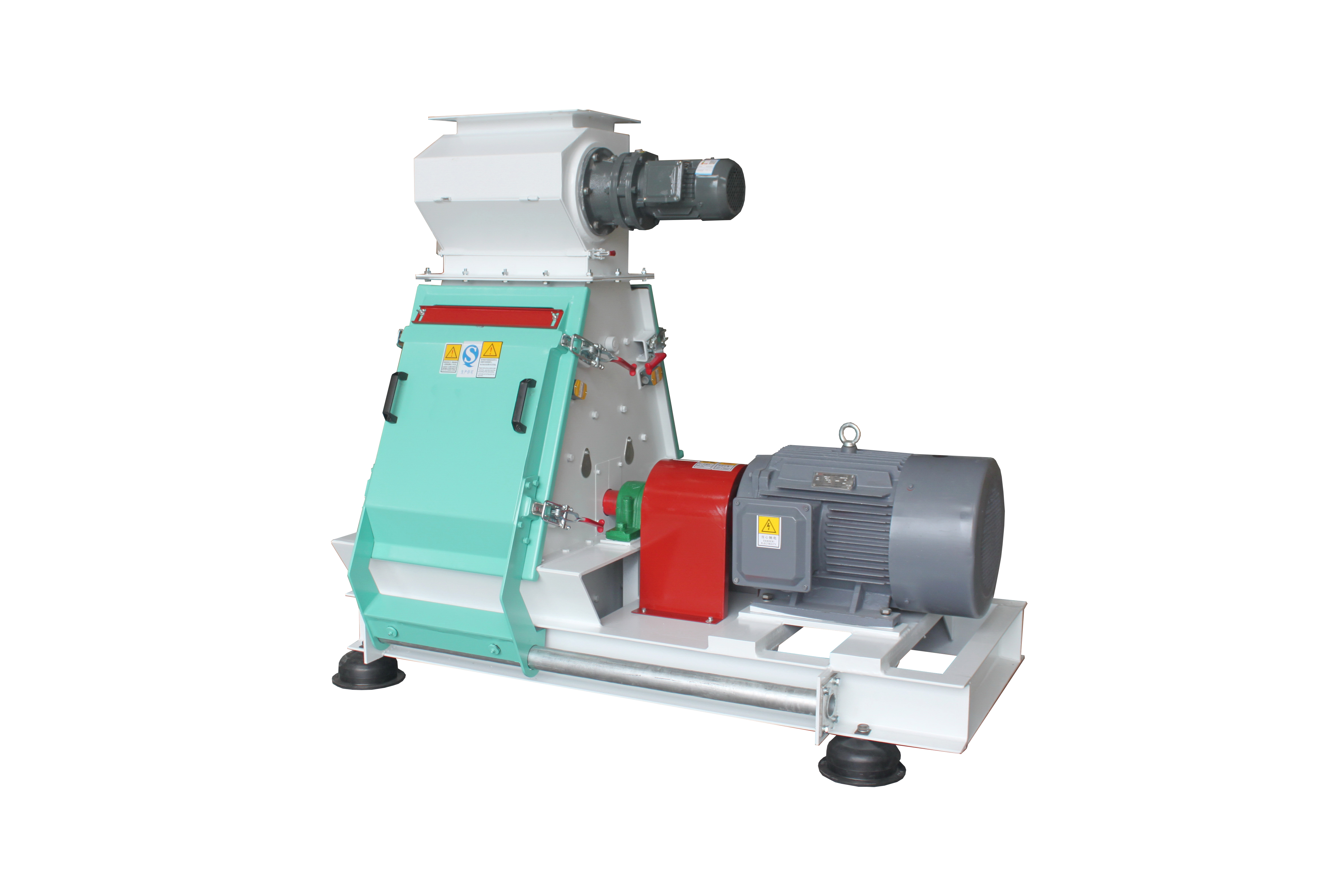
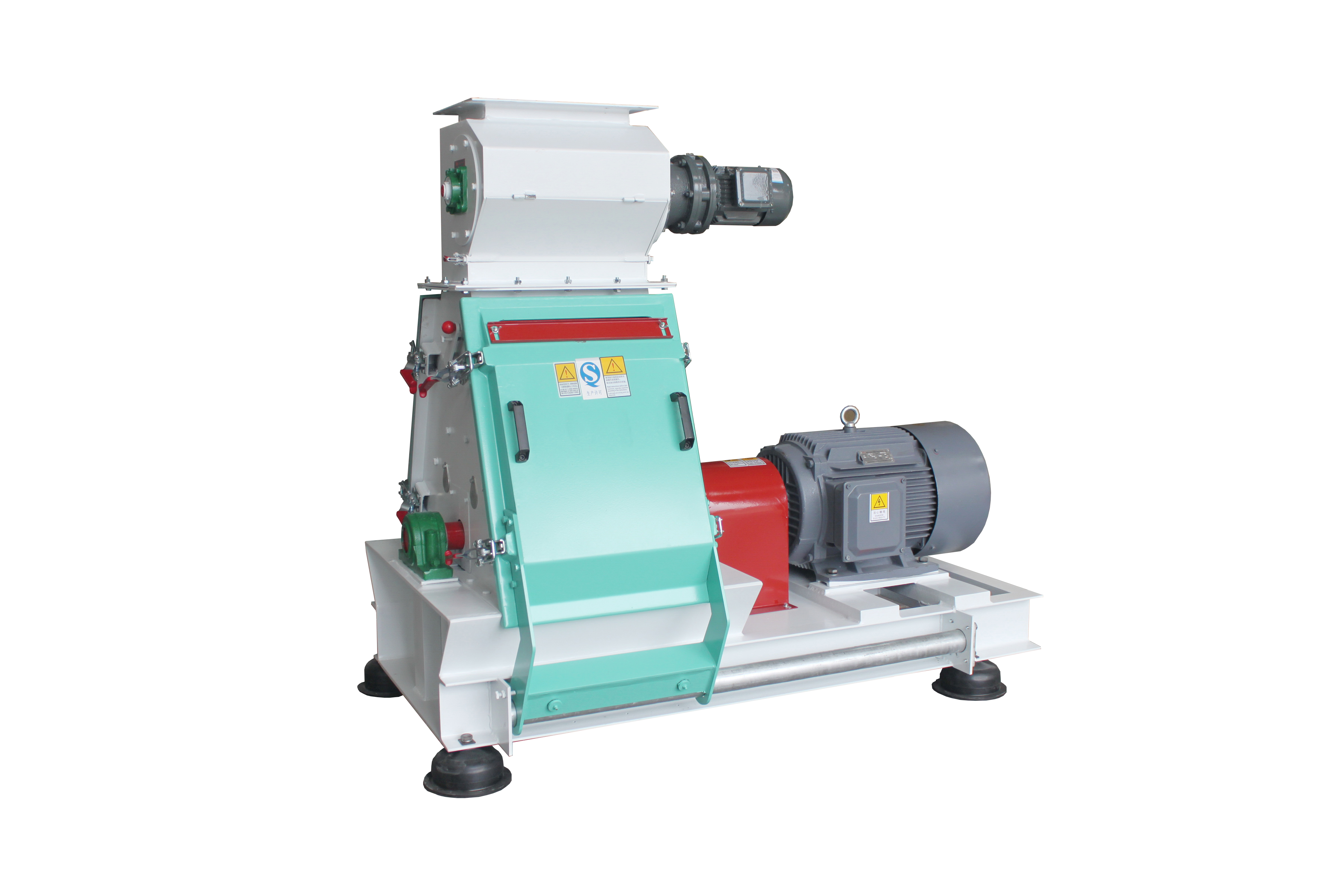
2. Hammer Mill (Grinder)
The hammer mill prepares raw materials by reducing particle size through impact grinding. Our water-drop design hammer mills offer several advantages:
- 25% higher output compared to traditional designs
- Multi-functional grinding (coarse, fine, and ultra-fine)
- Special “mountain” shaped secondary impact structure
- Suitable for premium livestock feed, aquatic feed, and industrial raw materials
- Easy screen replacement for different particle sizes
This versatility makes our hammer mills ideal for feed factories processing multiple feed types or serving diverse markets. The robust construction ensures reliable performance even with abrasive materials.
3. Feed Mixer
Precise mixing is crucial for feed quality and animal performance. Our double-shaft paddle mixers provide:
- Fast mixing cycles (30-90 seconds per batch)
- Uniform mixing with CV≤5% (Coefficient of Variation)
- No material segregation during mixing
- Optional liquid addition system for molasses, oils, etc.
- Customizable batch sizes from 500kg to 10,000kg
The advanced mixing technology ensures every particle receives consistent nutrient distribution, which is particularly important for premium feed formulations and pre-mix production. The low residual design minimizes material waste between batches.
4. Supporting Equipment
A complete feed production line also requires several auxiliary machines:
- Cooler: Reduces pellet temperature and moisture content
- Crumbler: Breaks large pellets into smaller sizes
- Screener: Separates oversized and undersized particles
- Packing Machine: Automated weighing and packaging
- Conveying System: Bucket elevators and screw conveyors
- Dust Collection: Cyclone separators and pulse dust collectors
Jiangsu Huamu provides all these components as part of our turnkey feed factory solutions, ensuring perfect compatibility between all machines in your production line.
Factors Affecting Feed Production Line Costs
The total investment for a feed factory varies significantly based on several key factors. Understanding these variables helps you budget accurately and make informed equipment selection decisions:
1. Production Capacity Requirements
Feed lines are typically designed based on hourly or annual output capacity. Common capacity ranges include:
| Capacity Range | Typical Investment | Suitable For |
|---|---|---|
| 1-3 TPH | $30,000-$80,000 | Small farms, specialty feed |
| 5-10 TPH | $80,000-$150,000 | Medium commercial feed mills |
| 15-30 TPH | $150,000-$500,000+ | Large industrial feed plants |
Higher capacity lines benefit from economies of scale but require larger initial investments. Jiangsu Huamu offers flexible solutions that can be expanded as your business grows.
2. Equipment Configuration Level
The cost varies based on equipment specifications and materials:
- Basic Configuration: Standard components with manual controls
- Premium Configuration: High-quality bearings, motors, and automation
- Custom Configuration: Special materials for corrosive environments, explosion-proof designs, etc.
Our engineers help you balance initial investment with long-term operating costs by selecting the most appropriate configuration for your specific needs.
3. Factory Layout and Building Requirements
The physical space available influences equipment selection and layout design. Factors include:
- Building height for vertical installations
- Floor space for horizontal layouts
- Structural load-bearing capacity
- Utility access points (power, steam, compressed air)
Jiangsu Huamu provides free factory layout design services with every equipment purchase to optimize space utilization and workflow efficiency.
4. Automation Level
Modern feed factories can incorporate varying degrees of automation:
- Semi-automatic: Manual batching with automated processing
- Fully automatic: Computer-controlled batching and processing
- Smart Factory: IoT integration with remote monitoring
While higher automation increases initial costs, it typically reduces long-term labor expenses and improves production consistency. Our team helps you evaluate the ROI of different automation levels.
Why Choose Jiangsu Huamu for Your Feed Factory Equipment
With numerous feed machinery suppliers in the market, several factors set Jiangsu Huamu apart as the preferred choice for global clients:
1. Proven Track Record
Since our establishment, we’ve successfully completed over 300 feed factory projects worldwide, including:
- 15-ton/hour poultry feed line in Nigeria
- 20-ton/hour aquatic feed plant in Vietnam
- 10-ton/hour premium pet food factory in Poland
- Complete renovation of 25-year-old feed mill in Bangladesh
Our extensive project portfolio demonstrates our ability to handle diverse requirements across different markets and feed types.
2. Comprehensive Quality Control
We maintain strict quality standards throughout the manufacturing process:
- ISO9001:2015 certified production facilities
- 100% raw material inspection before processing
- Full-load testing for every machine before shipment
- Detailed quality documentation for each order
Our commitment to quality has earned us the “Specialized, Refined, and Distinctive New SMEs of Jiangsu Province” award in 2024.
3. Global Service Network
We support our international clients through:
- Multilingual technical support team
- Spare parts inventory in key regions
- On-site commissioning and training
- 24/7 emergency response service
Our global service network ensures minimal downtime and maximum productivity for your feed factory operation.
4. Customization Capabilities
Every feed factory has unique requirements. Our engineering team specializes in:
- Custom equipment modifications for special feed formulations
- Integrating third-party equipment into our production lines
- Designing solutions for limited spaces or unusual building layouts
- Creating phased expansion plans for growing businesses
This flexibility has made us the preferred partner for many international feed producers looking for tailored solutions.
FAQ
What is the typical lead time for a complete feed production line?
Lead times vary based on capacity and configuration. Standard capacity lines (5-10 TPH) typically require 60-90 days for manufacturing and testing. Larger capacity or custom-designed projects may take 90-120 days. We provide detailed production schedules with every quotation and maintain regular progress updates throughout the manufacturing process.
How do you ensure the quality of your feed machinery?
Quality control begins with raw material selection – we only use certified steel and components from reputable suppliers. Each machine undergoes: 1) Individual component inspection, 2) Assembly quality checks, 3) No-load testing, and 4) Full-load production testing with actual feed materials before shipment. We also maintain complete traceability for all components used in our equipment.
What kind of after-sales support do you provide?
Our after-sales service includes: 1) Installation and commissioning by experienced engineers, 2) Operator training covering both operation and basic maintenance, 3) One-year warranty with extended options available, 4) Lifetime technical support, 5) Fast spare parts delivery (typically within 72 hours for stock items), and 6) Regular maintenance reminders and service check-ups.
Can you help with factory layout design?
Absolutely. We provide free factory layout design services with every equipment purchase. Our design process includes: 1) Understanding your specific requirements and constraints, 2) Creating 2D and 3D layout options, 3) Optimizing workflow and material flow, 4) Ensuring compliance with safety standards, and 5) Providing detailed equipment placement drawings and elevation views.
Summary
Establishing a modern feed factory requires careful consideration of equipment selection, production capacity, quality standards, and long-term operating costs. Jiangsu Huamu Machinery Co., Ltd. offers comprehensive solutions that address all these aspects through our complete range of feed processing equipment, custom engineering capabilities, and global service support. With over 500 feed pellet machines sold annually in China and projects completed in more than 50 countries, we have the experience and expertise to help you build a feed factory that meets your current needs while being scalable for future growth. Contact our team today for a detailed quotation and personalized consultation on your feed production project.