
Selecting the right equipment for your feed processing plant is crucial for achieving optimal production efficiency and product quality. As a leading manufacturer with 15 years of experience in the feed machinery industry, Jiangsu Huamu Machinery Co., Ltd. understands the complexities involved in equipment selection for modern feed production. This comprehensive guide will walk you through the key considerations for selecting feed processing equipment, analyze costs for different production scales, and introduce our professional solutions that have helped over 500 clients worldwide establish efficient feed production operations.
Understanding Feed Processing Equipment Types
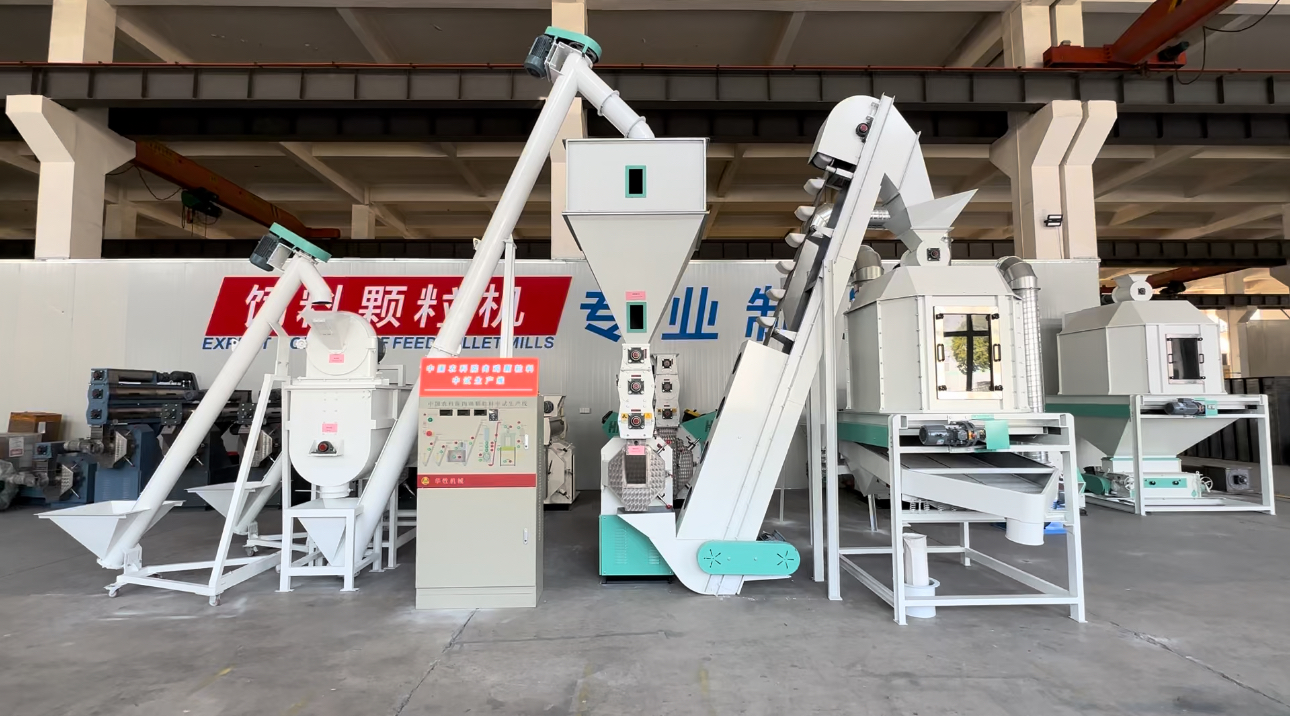
The core equipment in any feed processing plant typically includes pellet machines, hammer mills, mixers, coolers, and auxiliary conveying systems. Each type of equipment serves specific functions in the production process:
1. Feed Pellet Machines: The heart of any feed production line, pellet machines convert powdered feed ingredients into uniform pellets. Our small to medium-sized belt-driven pellet machines feature dual-motor narrow belt transmission for stable operation, high output (up to 5 tons/hour), and low noise levels. These machines are ideal for producing various animal feeds including poultry, livestock, and aquatic feeds.
2. Hammer Mills: Our water-drop type hammer mills incorporate an innovative “mountain-shaped” secondary crushing structure that increases production capacity by 25% compared to traditional designs. These versatile machines handle coarse, fine, and ultra-fine grinding for premium animal feeds, aquatic feeds, and industrial raw materials like those used in alcohol or citric acid production.
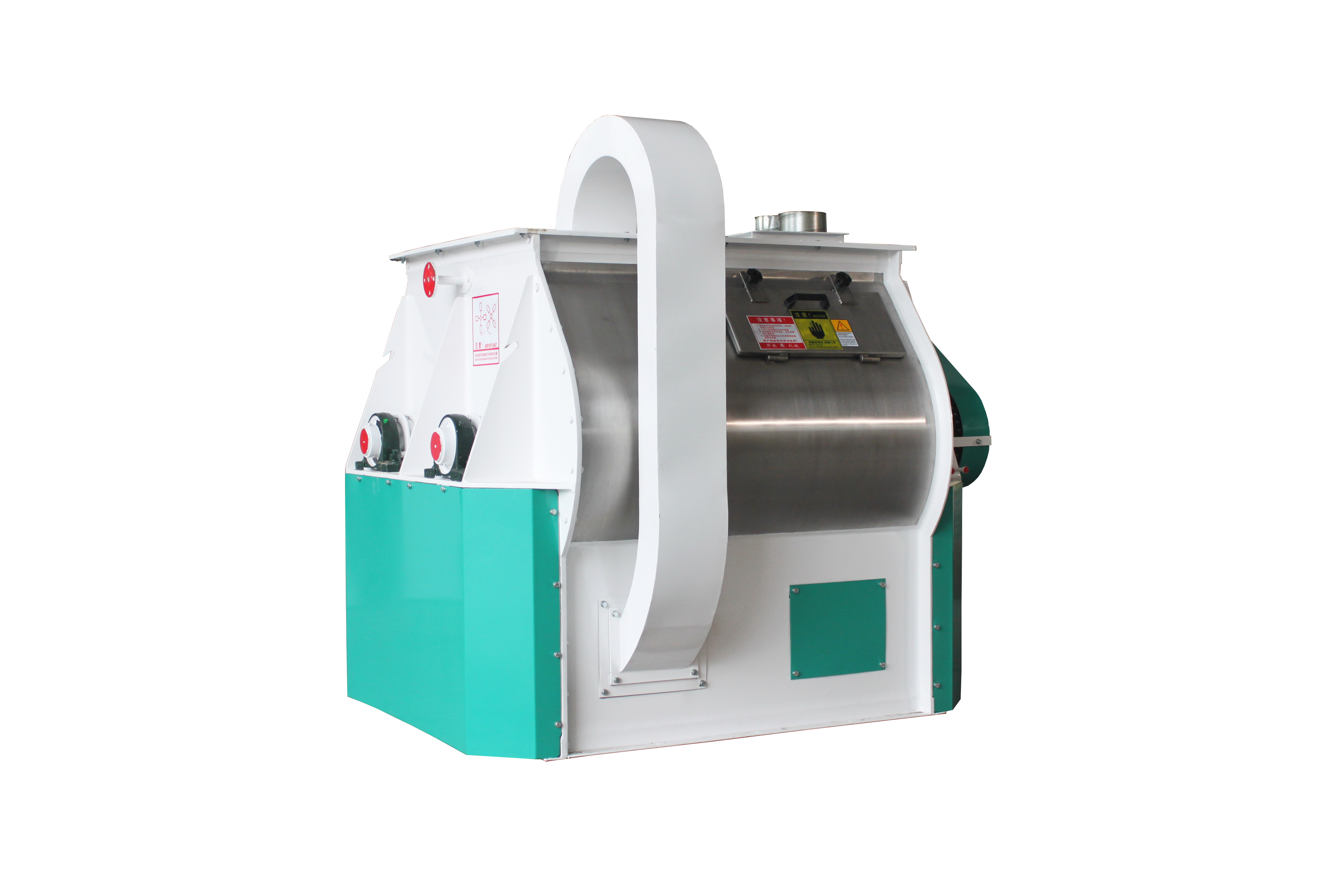
3. Double Shaft Mixers: With mixing cycles of just 30-90 seconds per batch and uniformity variation coefficient (CV) ≤5%, our double-shaft paddle mixers ensure consistent product quality. The optional atomizing spray system enables even addition of liquid ingredients like molasses or oils, making these mixers suitable for feed, food, and chemical industries.
4. Cooling Systems: Proper cooling is essential for maintaining pellet quality and shelf life. Our counter-flow coolers effectively reduce pellet temperature and moisture content while preserving nutritional value.
5. Auxiliary Equipment: Complete feed production requires conveyors, elevators, dust collectors, and packaging machines. We provide all necessary auxiliary equipment to create fully integrated production lines.
Factors Influencing Feed Processing Equipment Selection
Choosing the right equipment involves evaluating several critical factors that impact both initial investment and long-term operational efficiency:
1. Production Capacity Requirements
The scale of your operation determines the size and quantity of equipment needed. Our company specializes in designing projects with capacities ranging from 1 to 30 tons per hour, catering to small family farms, medium-sized feed mills, and large commercial operations. For example, a 5-ton/hour poultry feed line would typically include:
- 1 set of 30kW hammer mill
- 1 set of 55kW pellet machine
- 1 set of 5.5kW double-shaft mixer
- 1 set of counter-flow cooler
- Complete conveying and packaging system
2. Feed Type and Formula
Different animals require specific feed formulations with varying particle sizes and densities. Aquatic feeds, for instance, need smaller particle sizes (0.5-2.0mm) compared to poultry feeds (2.0-5.0mm). Our equipment offers adjustable parameters to accommodate these requirements:
| Feed Type | Recommended Pellet Size | Hammer Mill Screen Size |
|---|---|---|
| Poultry Feed | 2.0-5.0mm | 3.0-6.0mm |
| Livestock Feed | 4.0-8.0mm | 4.0-8.0mm |
| Aquatic Feed | 0.5-2.0mm | 0.8-2.0mm |
3. Space and Layout Considerations
Efficient plant layout minimizes material handling and reduces production costs. Our engineering team provides 3D layout designs that optimize equipment placement based on your available space and workflow requirements. For compact spaces, we recommend vertical layouts that stack processing units to save floor area.
4. Energy Efficiency Requirements
Energy costs typically account for 15-20% of total feed production expenses. Our equipment features energy-saving designs including:
- High-efficiency motors with IE3 standard
- Optimized transmission systems with minimal power loss
- Automatic control systems that adjust operation based on load
- Heat recovery systems for pellet coolers
Cost Analysis of Feed Processing Equipment
The total investment in feed processing equipment varies significantly based on production scale, equipment configuration, and automation level. Here’s a breakdown of typical costs for different project sizes:
| Project Scale | Capacity (T/H) | Equipment Cost Range | Installation Period |
|---|---|---|---|
| Small Farm | 1-2 | $30,000-$60,000 | 15-25 days |
| Medium Plant | 5-10 | $120,000-$250,000 | 30-45 days |
| Large Commercial | 15-30 | $350,000-$800,000+ | 60-90 days |
These costs include all core processing equipment, conveyors, dust control systems, and electrical control panels. Additional expenses to consider include:
- Building construction or renovation: $50-$150/m² depending on local costs
- Installation and commissioning: 8-12% of equipment cost
- Training: Included in our turnkey packages
- Spare parts: Recommended 3-5% of equipment cost for first year
Why Choose Jiangsu Huamu Machinery
As a specialized feed machinery manufacturer with ISO9001 certification and “Specialized, Refined, Distinctive, New” enterprise designation from Jiangsu Province, we offer distinct advantages:
1. Customized Solutions: Our engineering team creates tailored designs based on your specific requirements, raw material characteristics, and product specifications. We’ve successfully completed projects for diverse clients including:
- A 10T/h poultry feed plant in Nigeria with integrated grain cleaning system
- A 5T/h aquatic feed line in Vietnam featuring micro-pellet production capability
- A 20T/h premium pig feed factory in Poland with automated batching system
2. Quality Assurance: We implement strict quality control throughout manufacturing:
- Raw material inspection before production
- In-process quality checks at each manufacturing stage
- 100% load testing before shipment
- 24-month warranty on all equipment
3. Comprehensive Support: Our service includes:
- Free plant layout design and equipment selection consultation
- On-site installation and commissioning by experienced technicians
- Operator training covering equipment operation and basic maintenance
- 24/7 technical support through our global service network
- Readily available spare parts with fast delivery
FAQ
What factors determine the price of a feed pellet machine?
The price depends on production capacity, motor power, pellet size range, and automation level. Our small belt-driven pellet machines (1-3T/h) range from $8,500-$15,000 while medium-sized models (5-10T/h) cost $18,000-$35,000. We offer volume discounts for complete production lines.
How to choose between ring die and flat die pellet machines?
Ring die machines are better for large-scale production (3T/h+) with higher efficiency and better pellet quality. Flat die machines suit small-scale operations (under 1T/h) with simpler operation and lower cost. Our company specializes in ring die pellet machines for professional feed production.
What maintenance is required for feed processing equipment?
Daily maintenance includes cleaning, lubrication, and inspection of wear parts. Monthly checks should verify belt tension and motor performance. Annual overhauls should replace worn components like hammer mill screens and pellet machine dies. We provide detailed maintenance manuals with all equipment.
How long does it take to install a complete feed production line?
Installation time depends on project scale: 1-2T/h lines take 15-25 days, 5-10T/h lines require 30-45 days, and larger projects need 60-90 days. Our installation teams work efficiently to minimize downtime at your facility.
Can your equipment handle both animal and aquatic feed production?
Yes, our equipment is versatile enough for all feed types. By adjusting parameters like hammer mill screen size, pellet machine die specifications, and mixer time, you can produce premium feeds for poultry, livestock, fish, shrimp, and other species from the same equipment.
Summary
Selecting the right feed processing equipment requires careful consideration of production needs, feed specifications, space constraints, and budget. As a professional manufacturer with 15 years of experience, Jiangsu Huamu Machinery offers complete solutions from single machines to turnkey production lines. Our equipment combines advanced technology with robust construction to deliver reliable performance for feed producers worldwide. Whether you’re establishing a new facility or upgrading existing operations, our team provides expert guidance to help you make informed equipment selections that maximize productivity and profitability.