
In the global feed production industry, selecting the right mixing equipment is crucial for maintaining product quality and production efficiency. As a leading manufacturer of feed machinery with over 15 years of experience, Jiangsu Huamu Machinery Co., Ltd. understands the complex requirements of modern feed production. This comprehensive guide will help you navigate the selection process for feed mixers, covering everything from basic types to advanced technical specifications.
Understanding Different Types of Feed Mixers
Feed mixers come in various configurations, each designed for specific production requirements. The three primary types are:
1. Double Shaft Paddle Mixers
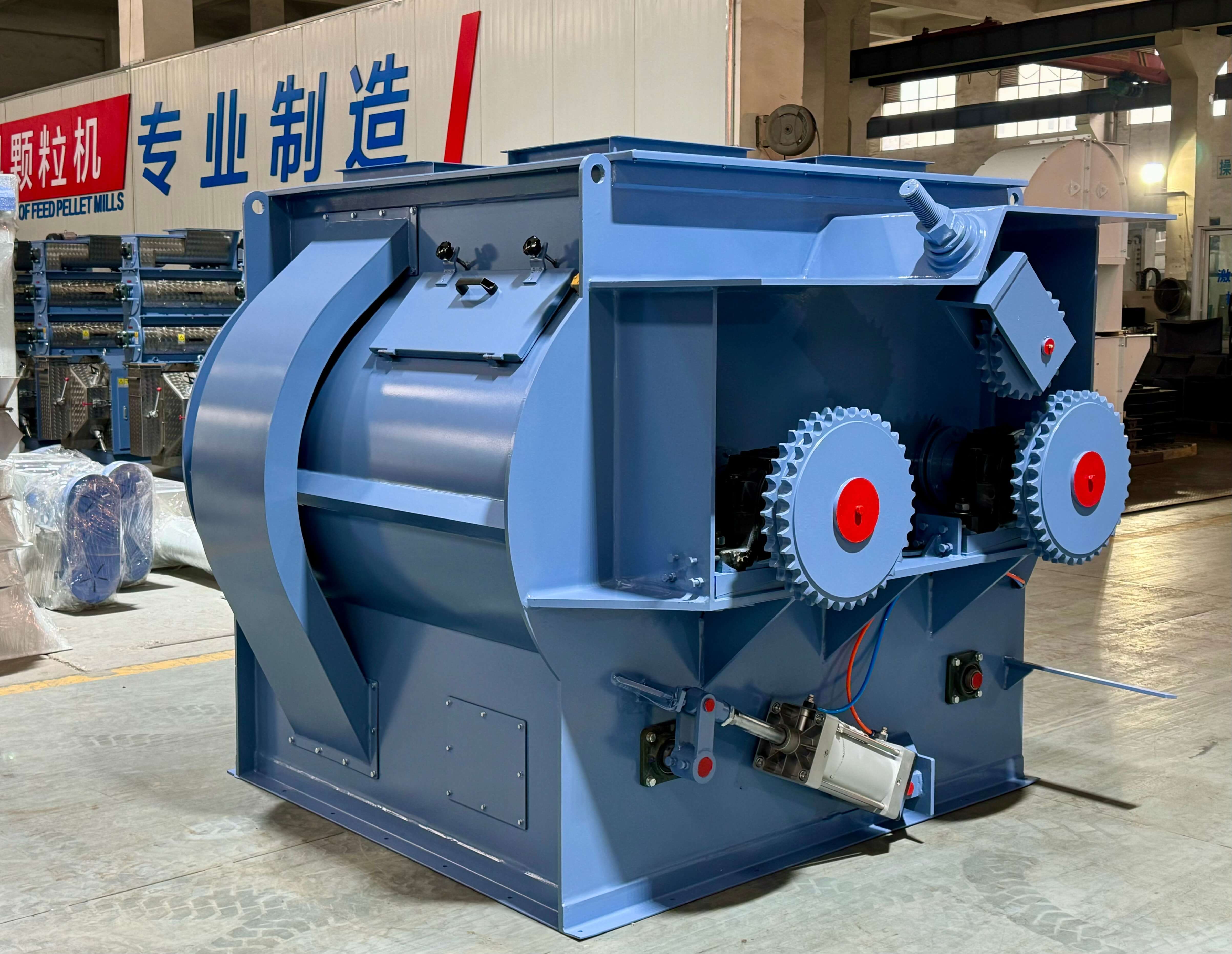
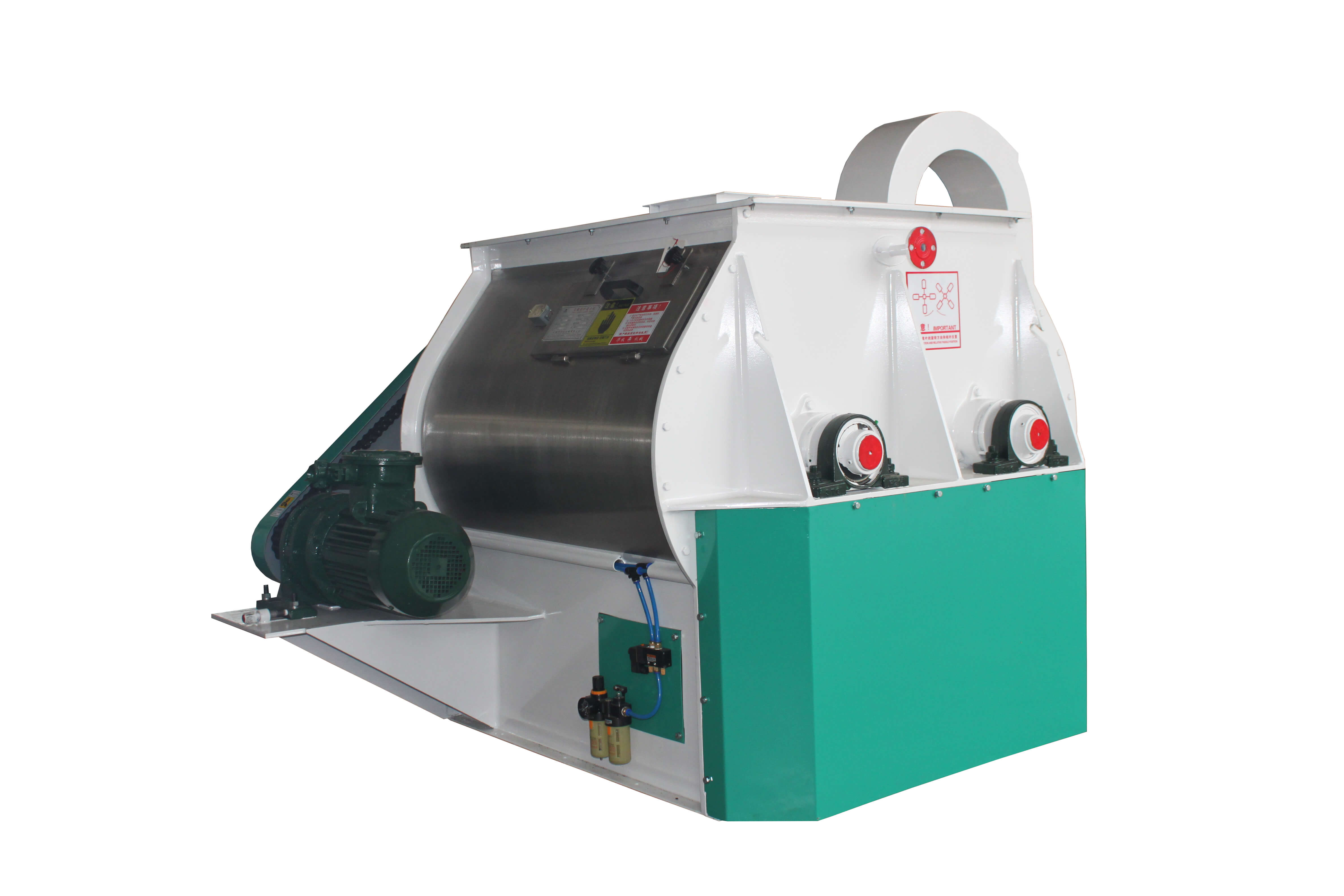
Our flagship product, the double shaft paddle mixer, represents the pinnacle of feed mixing technology. This type features two parallel rotating shafts with paddle-shaped mixing elements that create a three-dimensional mixing action. The key advantages include:
- Extremely short mixing cycle (30-90 seconds per batch)
- Uniform mixing with CV≤5% (Coefficient of Variation)
- No material segregation during discharge
- Customizable liquid addition systems for precise formulation
These mixers are ideal for producing premium animal feeds, including poultry, livestock, and aquatic feeds, where consistency and nutrient distribution are critical.
2. Single Shaft Ribbon Mixers
Single shaft ribbon mixers use a helical ribbon agitator that rotates within a U-shaped trough. While generally having longer mixing cycles than double shaft models, they offer:
- Good for mixing powders and granules
- Lower initial investment cost
- Simpler maintenance requirements
- Suitable for basic feed formulations
3. Vertical Mixers
Vertical mixers are compact units that use rotating augers to lift and mix materials. They’re commonly used in small-scale operations or where floor space is limited, offering:
- Space-saving design
- Lower power consumption
- Simple operation
- Best for coarse mixing applications
Key Selection Criteria for Feed Mixers
Choosing the right feed mixer involves evaluating several critical factors that impact both immediate performance and long-term operational efficiency:
1. Production Capacity Requirements
The mixer’s capacity should align with your production goals. At Jiangsu Huamu, we offer mixers ranging from 1-30 tons per hour to accommodate facilities of all sizes. Consider:
- Current production volume
- Anticipated growth over the next 5 years
- Batch size requirements
- Number of shifts per day
2. Mixing Uniformity
The coefficient of variation (CV) is the standard measure of mixing uniformity. Our double shaft mixers consistently achieve CV≤5%, ensuring every particle of feed contains the precise nutrient formulation. This is particularly critical for:
- Premix production
- Medicated feeds
- Specialty diets (e.g., broiler starter feeds)
- Aquatic feeds requiring precise nutrient ratios
3. Material Handling Characteristics
Different feed ingredients have unique physical properties that affect mixing:
| Ingredient Type | Mixing Consideration | Recommended Mixer |
|---|---|---|
| Fine powders | Prone to dust generation | Double shaft with dust collection |
| Fibrous materials | Require aggressive mixing | Double shaft with paddle design |
| Liquid addition | Needs precise control | Double shaft with spray system |
| Abrasive materials | Requires wear-resistant parts | All types with special linings |
4. Maintenance and Operational Costs
Beyond the initial purchase price, consider:
- Power consumption per ton of feed produced
- Wear part replacement frequency and cost
- Downtime required for routine maintenance
- Availability of spare parts and technical support
Our double shaft mixers are engineered for minimal maintenance, with easily accessible components and standardized wear parts that reduce operational costs over the equipment’s lifespan.
Technical Specifications of Jiangsu Huamu Feed Mixers
As a ISO9001 certified manufacturer, we adhere to strict quality standards in all our equipment. Our double shaft feed mixers feature:
- Carbon steel or stainless steel construction options
- SIEMENS or ABB electrical components
- SKF or NSK bearings for reliable operation
- Customizable discharge systems (manual, pneumatic, or electric)
- Optional weighing systems for precise batching
- Dust collection ports for environmental control
The mixing chamber design incorporates our patented “mountain-shaped” secondary impact structure that ensures complete material circulation and prevents dead zones. This innovation has been proven through extensive testing to deliver superior mixing performance compared to traditional designs.
Application-Specific Mixer Solutions
Different feed production applications have unique requirements:
1. Poultry Feed Production
Broiler and layer feeds require precise nutrient distribution to support rapid growth or consistent egg production. Our double shaft mixers excel in:
- Mixing micro-ingredients uniformly
- Handling high-fat diets without separation
- Maintaining feed structure for pelleting
- Short cycle times for high-volume production
2. Aquatic Feed Production
Aquatic feeds demand exacting standards for nutrient ratios and water stability. Our mixers address these challenges through:
- Precise liquid addition systems for fat coating
- Gentle mixing to preserve particle integrity
- Consistent distribution of expensive ingredients
- Corrosion-resistant materials for marine environments
3. Premix Production
Producing high-quality premixes requires the most demanding mixing performance. Our equipment is trusted by leading premix manufacturers for:
- Achieving CV≤3% for critical nutrients
- Handling trace minerals without segregation
- Mixing viscous liquid carriers effectively
- Clean-out capabilities between batches
FAQ
What makes double shaft mixers superior for feed production?
Double shaft mixers create a three-dimensional mixing action through counter-rotating shafts with paddle agitators. This design eliminates dead zones, reduces mixing time by 50-70% compared to single shaft models, and achieves superior uniformity (CV≤5%) critical for nutrient distribution in animal feeds.
How to determine the right mixer capacity for my facility?
Calculate your required capacity by considering: 1) Current production volume, 2) Number of operating hours per day, 3) Batch size requirements, and 4) Anticipated growth. For example, a facility producing 100 tons/day with 16 operating hours needs a mixer with at least 6.25 tons/hour capacity. We recommend adding 20-30% capacity buffer for future expansion.
What maintenance is required for industrial feed mixers?
Regular maintenance includes: 1) Daily inspection of bearings and seals, 2) Weekly lubrication of moving parts, 3) Monthly check of paddle wear (replace when worn to 50% of original thickness), 4) Quarterly inspection of drive belts/chains, and 5) Annual internal cleaning and inspection. Our mixers are designed for easy access to all components to minimize downtime during maintenance.
Can you customize mixers for specific feed formulations?
Absolutely. We offer complete customization including: 1) Special materials for corrosive environments, 2) Precision liquid addition systems, 3) Temperature control for heat-sensitive ingredients, 4) Multiple discharge options, and 5) Integration with automated batching systems. Our engineering team works closely with customers to develop solutions tailored to their specific production needs.
What certifications should a reliable feed mixer have?
Look for manufacturers with: 1) ISO9001 quality management certification, 2) CE marking for European compliance, 3) ATEX certification if handling dusty materials, 4) OEM/ODM capabilities for custom solutions, and 5) Export licenses for international shipments. All our equipment meets these standards and includes comprehensive documentation for regulatory compliance.
Summary
Selecting the right feed mixer is a strategic investment that impacts feed quality, production efficiency, and operational costs. Jiangsu Huamu’s double shaft feed mixers represent the pinnacle of mixing technology, offering unmatched uniformity, reliability, and customization options. With over 500 units installed worldwide and a reputation for exceptional after-sales service, we’ve become the preferred choice for discerning feed producers.
Our commitment to quality extends beyond equipment manufacturing. We provide complete turnkey solutions including plant design, equipment installation, operator training, and lifetime technical support. Whether you’re building a new facility or upgrading existing equipment, our team of experts is ready to help you achieve optimal feed production performance.