
For modern livestock farms and feed processing enterprises, selecting the right equipment is crucial for improving production efficiency and ensuring product quality. As a professional feed machinery manufacturer with over 15 years of experience, Jiangsu Huamu Machinery Co., Ltd. specializes in providing complete solutions for feed processing plants of various scales. This comprehensive guide will walk you through the essential equipment needed for feed production, cost considerations, and how to select the most suitable machinery for your specific requirements.
Essential Equipment for Feed Processing Plants
A complete feed processing plant typically requires several key pieces of equipment working in harmony to transform raw materials into high-quality finished feed. The core equipment includes:
1. Feed Pellet Machine (Granulator)
The pellet machine is the heart of any feed production line, responsible for converting powdered feed mixtures into uniform pellets. Our ring die pellet machines feature:
- Double-motor narrow belt transmission for stable operation
- High production capacity (500 sets sold annually in China)
- Low noise operation (below 85dB)
- Suitable for all types of livestock and aquatic feed
- Pellet diameter range: 2-12mm adjustable
For small to medium-scale operations, our belt-driven pellet machines offer excellent cost-performance ratio with capacities from 1-10 tons per hour.
2. Feed Hammer Mill (Grinder)
The hammer mill prepares raw materials by reducing particle size through impact and shearing forces. Our water-drop type hammer mills feature:
- Unique water-drop crushing chamber design
- “Mountain” shaped secondary impact structure
- 25% higher output compared to traditional models
- Multi-function capability (coarse, fine, and micro grinding)
- Suitable for high-grade livestock feed, aquatic feed, and industrial raw materials
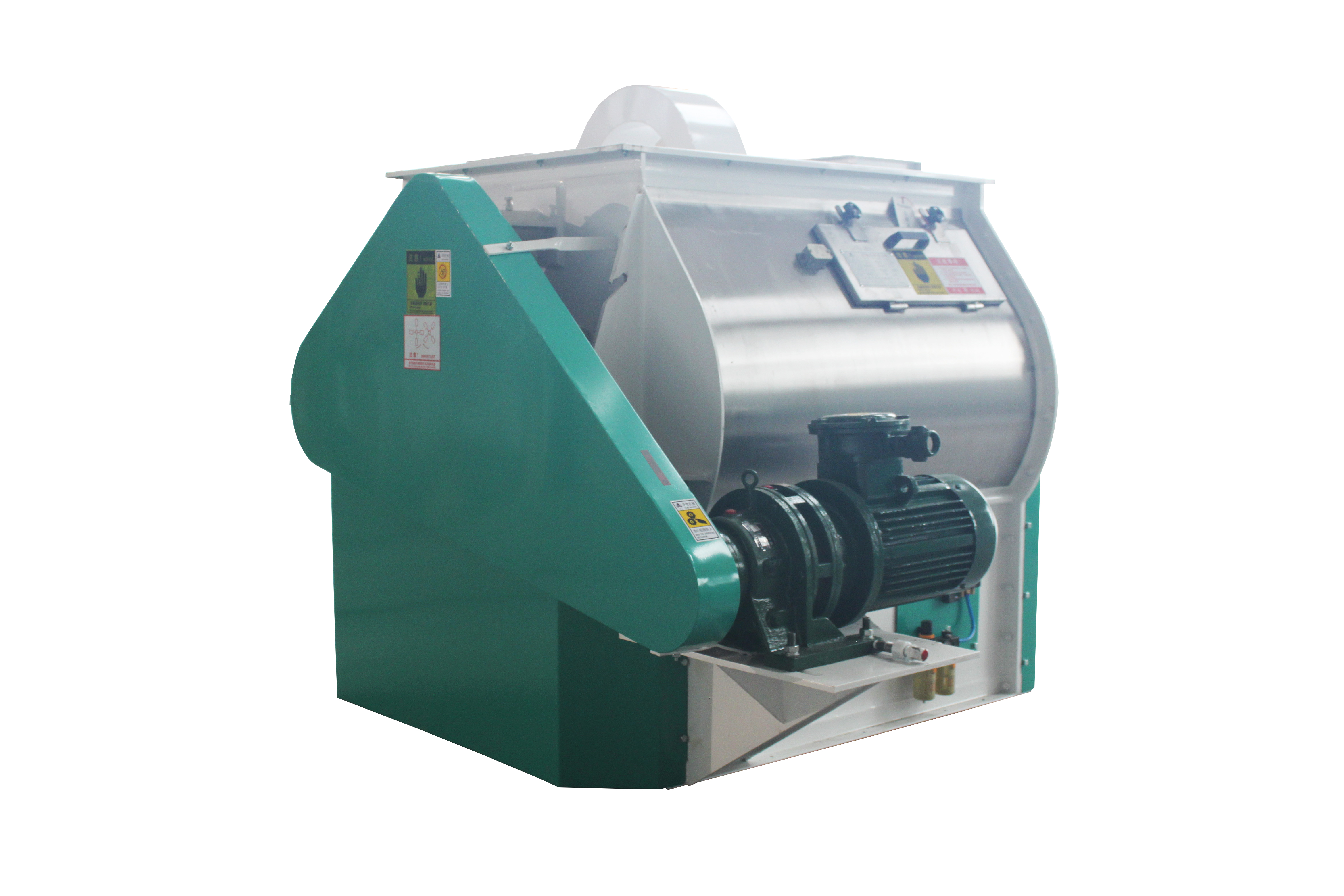
3. Feed Mixer
Uniform mixing is critical for feed quality. Our double-shaft paddle mixers offer:
- Rapid mixing cycle (30-90 seconds per batch)
- High mixing uniformity (CV≤5%)
- No segregation of ingredients
- Optional atomizing spray system for liquid addition
- Capacities from 500kg to 10,000kg per batch
4. Supporting Equipment
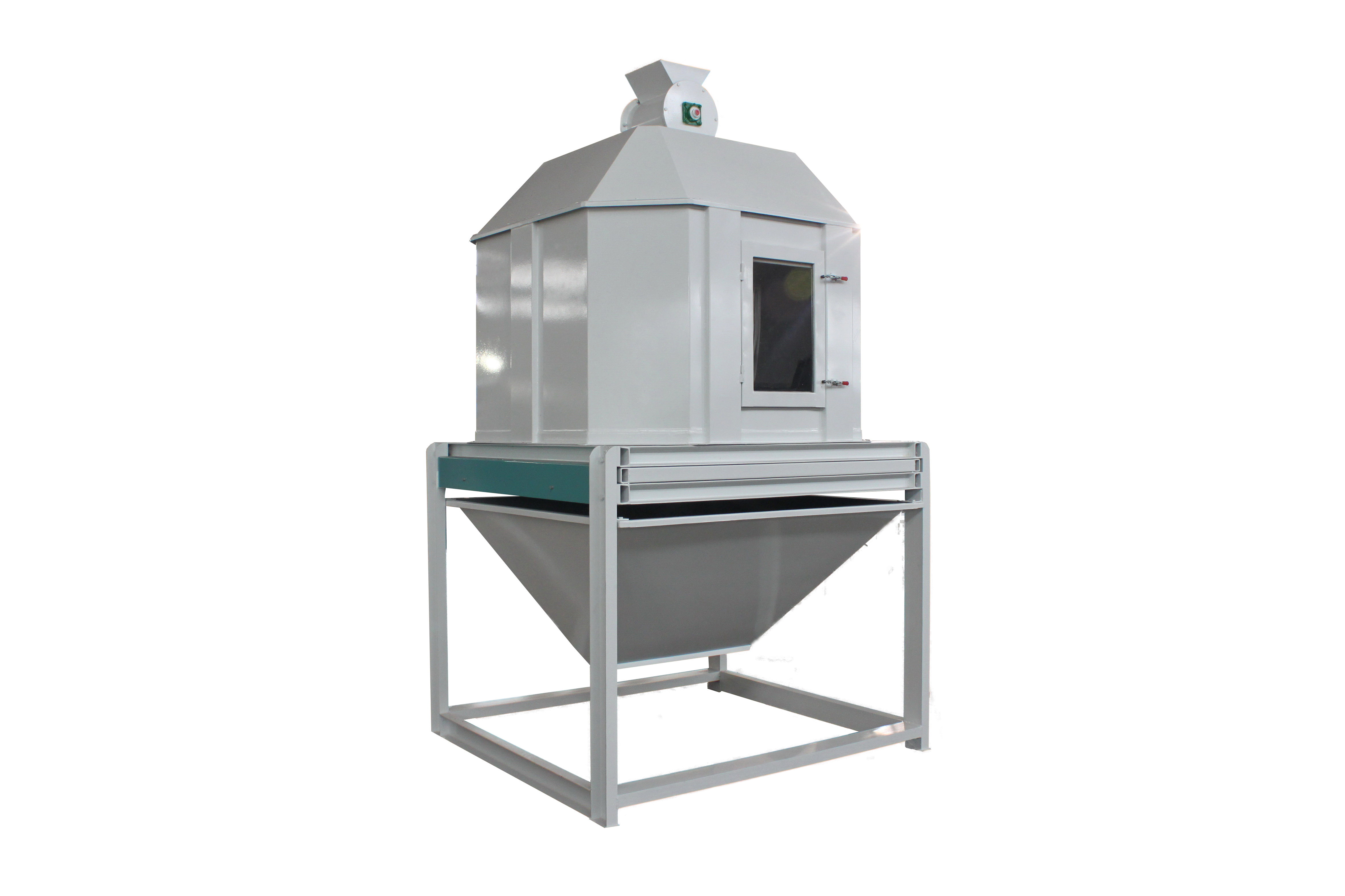
In addition to the core machinery, a complete feed processing line requires several auxiliary equipment:
- Cooler: Reduces pellet temperature and moisture content
- Crumbler: Breaks large pellets into smaller sizes
- Screening Machine: Separates oversized and undersized particles
- Packing Machine: Automated weighing and packaging system
- Conveying System: Bucket elevators, screw conveyors, and pneumatic conveying
- Dust Collection System: Cyclone separators and pulse dust collectors
Complete Feed Production Line Cost Analysis
The investment cost for a complete feed processing line varies significantly based on production capacity, equipment configuration, and automation level. Here’s a general cost breakdown for different scale plants:
| Production Capacity | Equipment Configuration | Approximate Cost (USD) |
|---|---|---|
| 1-2 tons/hour | Basic configuration with manual operation | 25,000 – 40,000 |
| 3-5 tons/hour | Semi-automatic with basic automation | 50,000 – 80,000 |
| 8-10 tons/hour | Fully automatic with PLC control | 100,000 – 150,000 |
| 15-20 tons/hour | High-capacity with advanced automation | 200,000 – 350,000 |
| 25-30 tons/hour | Industrial scale with full automation | 400,000 – 600,000+ |
Note: These are approximate costs for reference only. Actual prices may vary based on specific equipment requirements, raw material costs, and exchange rates. For accurate quotations, please contact our sales team with your detailed requirements.
Key Factors Affecting Feed Processing Equipment Prices
When evaluating feed processing equipment costs, several factors significantly influence the final price:
1. Production Capacity
Higher capacity equipment generally costs more due to larger motors, heavier-duty components, and more sophisticated control systems. However, the cost per ton of production capacity decreases with larger systems.
2. Equipment Material
The choice of materials affects both price and durability. Our equipment uses high-quality alloy steel for critical wear parts, ensuring longer service life and better value over time compared to cheaper alternatives.
3. Automation Level
Fully automatic systems with PLC control and touch screen interfaces cost more than basic manual operation equipment but offer significant labor savings and consistent product quality.
4. Customization Requirements
Special requirements such as explosion-proof design, stainless steel construction for food-grade applications, or specific pellet sizes may increase costs but are essential for certain applications.
5. Brand Reputation
Established brands like Jiangsu Huamu with ISO9001 certification and global export experience may have slightly higher prices but offer better reliability, after-sales service, and spare parts availability.
How to Select the Right Feed Processing Equipment Supplier
Choosing a reliable equipment supplier is as important as selecting the equipment itself. Here are key factors to consider:
1. Manufacturing Experience
Look for suppliers with at least 10 years of experience in feed machinery manufacturing. Jiangsu Huamu has been serving the global feed industry since 2009 with projects in over 50 countries.
2. Product Range
A supplier offering a complete range of equipment can provide better integration and after-sales support. We manufacture all core components in-house, ensuring quality control throughout the production process.
3. Technical Support
Ensure the supplier offers comprehensive technical support including installation, commissioning, operator training, and maintenance guidance. Our team provides on-site services worldwide.
4. Spare Parts Availability
Check the supplier’s policy on spare parts supply and lead times. We maintain a large inventory of critical spare parts and can ship most items within 72 hours.
5. Customer References
Request case studies or contact information for previous customers in your region or with similar production requirements. We have successfully completed projects for livestock farms, aquaculture operations, and commercial feed mills worldwide.
FAQ
What is the typical payback period for a feed processing plant?
The payback period depends on production capacity, feed pricing, and operating costs. For small-scale operations (1-2 tons/hour), the payback period is usually 18-24 months. Medium-scale plants (5-10 tons/hour) typically recover investment in 12-18 months, while larger industrial plants may achieve payback in 8-12 months.
How to determine the right production capacity for my feed plant?
Consider these factors: 1) Your current and projected feed demand 2) Available investment budget 3) Raw material supply stability 4) Storage capacity 5) Market competition. Our experts can help analyze your specific situation and recommend optimal capacity.
What maintenance is required for feed processing equipment?
Regular maintenance includes: 1) Daily cleaning of equipment 2) Weekly lubrication of moving parts 3) Monthly inspection of wear parts 4) Quarterly calibration of sensors and control systems 5) Annual overhaul of major components. We provide detailed maintenance manuals and training for all equipment.
Can your equipment process both livestock and aquatic feed?
Yes, our equipment is versatile and can produce all types of feed including poultry, livestock, ruminant, and aquatic feed. By adjusting parameters like pellet size, hardness, and formulation, you can produce different feed types with the same equipment.
What is your minimum order quantity for feed processing equipment?
We accept orders for single machines as well as complete production lines. There’s no strict minimum order quantity, though we recommend purchasing complete sets from the same manufacturer to ensure compatibility and optimal performance.
Summary
Establishing a modern feed processing plant requires careful consideration of equipment selection, cost analysis, and supplier evaluation. Jiangsu Huamu Machinery offers complete solutions from single machines to turnkey projects with capacities from 1-30 tons per hour. Our equipment combines advanced technology with robust construction, ensuring reliable performance and excellent return on investment.
With ISO9001 certification, global export experience, and projects in over 50 countries, we understand the specific requirements of international customers. Our professional team provides comprehensive services including equipment selection, factory layout design, installation supervision, operator training, and lifetime technical support.
Whether you’re planning a new feed factory or upgrading an existing facility, contact us today for a customized solution that meets your production needs and budget requirements. Let us help you build a modern, efficient feed processing operation that drives your business success.