
Selecting the right feed mixer is crucial for achieving optimal feed quality, production efficiency, and cost-effectiveness in animal feed manufacturing. As a leading feed machinery manufacturer with 20+ years of experience, Jiangsu Huamu understands the challenges feed producers face when choosing equipment. This comprehensive guide will help you navigate the selection process and identify the best feed mixer for your specific needs.
Understanding Feed Mixer Types and Applications
Feed mixers come in various types, each designed for specific applications and production requirements. The three most common types are:
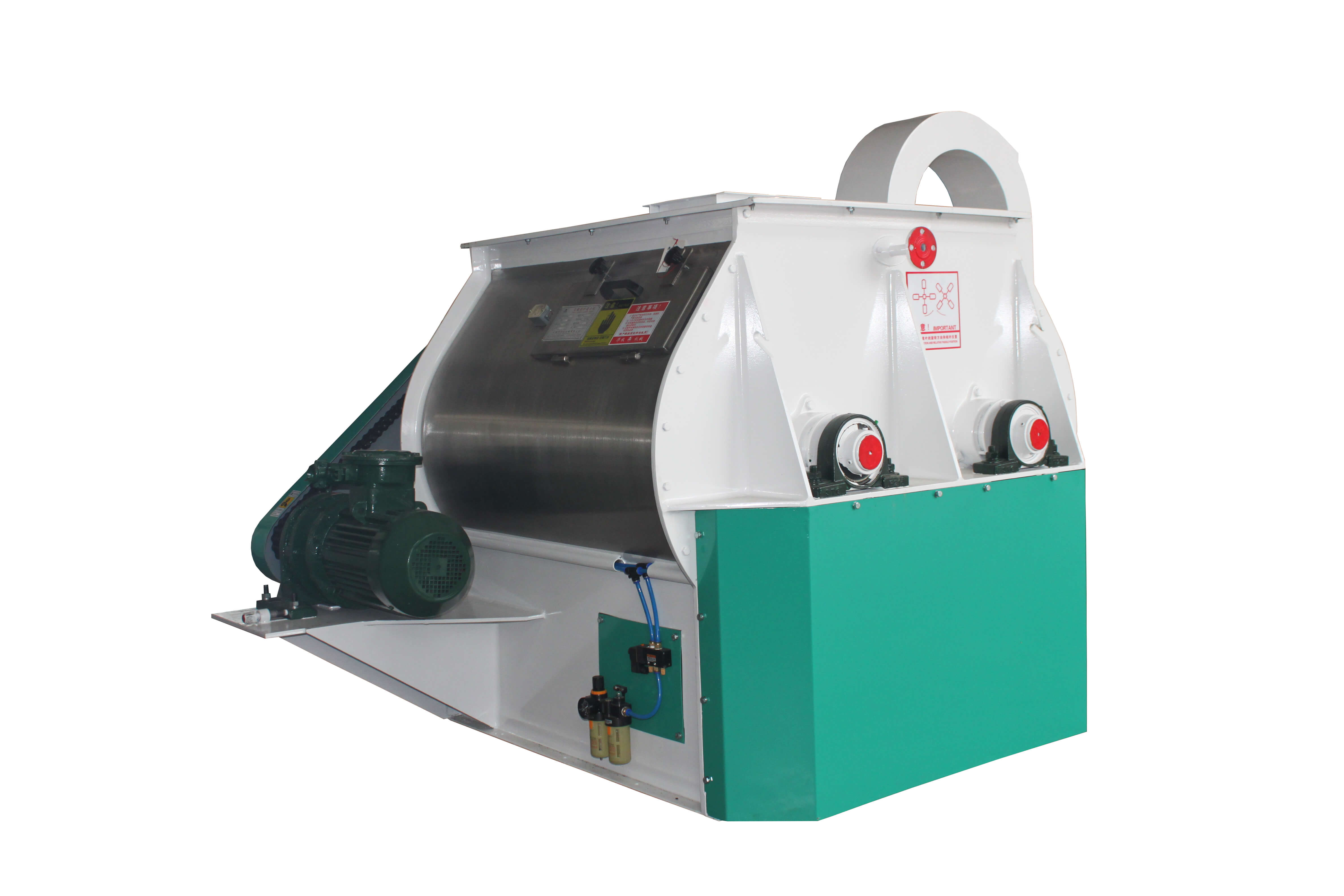
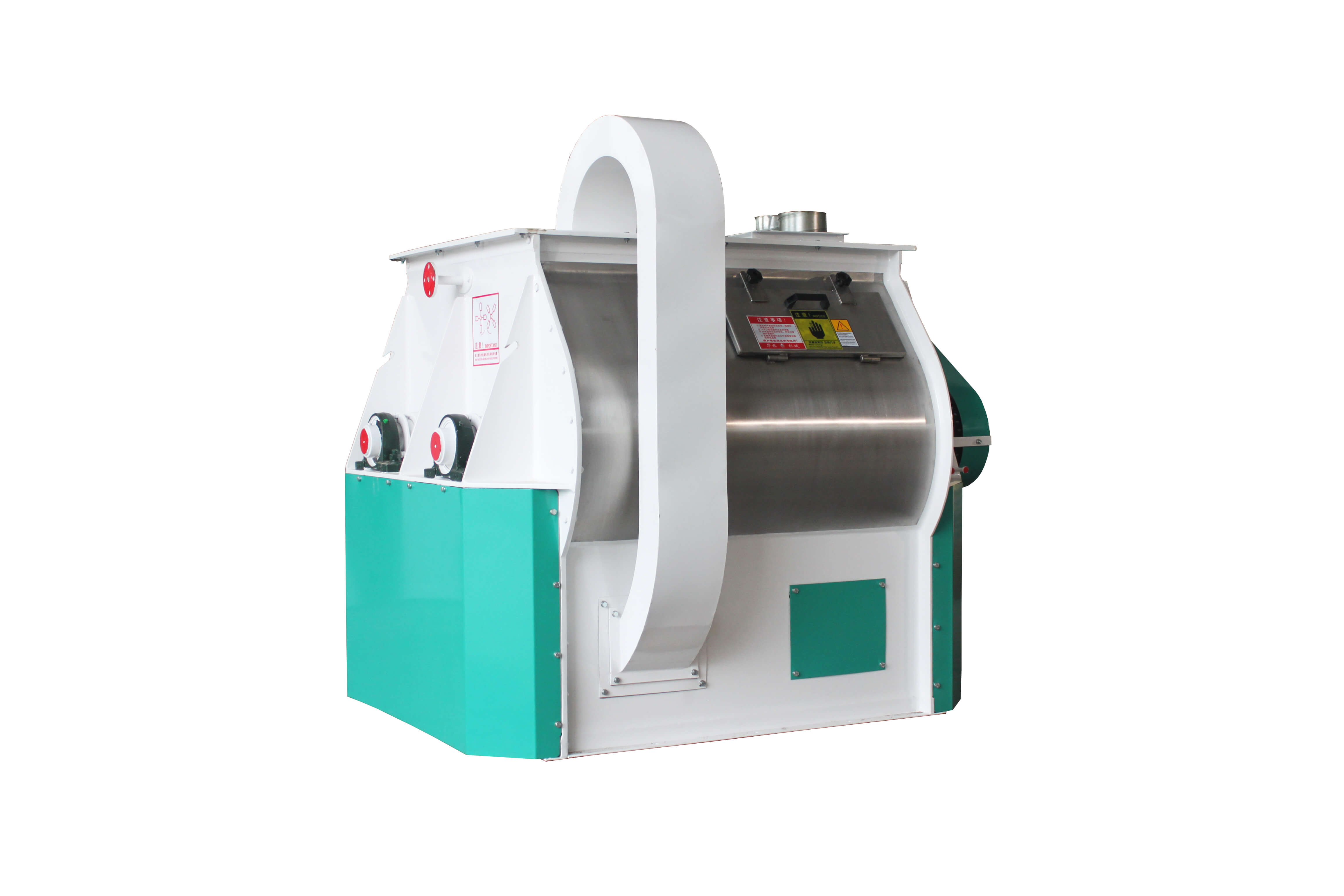
1. Double Shaft Paddle Mixers (Recommended for Most Applications)
Our flagship product, the double shaft paddle mixer, offers unmatched performance for feed production. This mixer features:
- Rapid mixing cycle of just 30-90 seconds per batch
- Exceptional uniformity with CV≤5% (Coefficient of Variation)
- No material segregation during mixing
- Optional atomizing system for precise liquid addition
- Capacity range from 500kg to 10,000kg per batch
This mixer is ideal for producing all types of compound feed, including poultry, livestock, aquatic, and pet feeds. Its versatility makes it suitable for both small-scale farms and large commercial feed mills.
2. Single Shaft Horizontal Mixers
Single shaft mixers are more economical options suitable for:
- Small to medium-scale feed production
- Premix production with simpler formulations
- Facilities with limited budget constraints
While offering good mixing performance, they typically have longer mixing cycles (3-5 minutes) and slightly higher CV values (5-7%) compared to double shaft models.
3. Vertical Mixers
Vertical mixers are compact units best suited for:
- On-farm feed preparation
- Small-scale operations with limited space
- Simple feed formulations without fine ingredients
These mixers have the longest mixing times (5-10 minutes) and highest CV values (7-10%), making them less suitable for commercial feed production requiring precise formulations.
Key Factors to Consider When Selecting a Feed Mixer
Choosing the right feed mixer involves evaluating several critical parameters that affect both immediate performance and long-term operational efficiency:
1. Mixing Uniformity (CV Value)
The most important performance indicator, the Coefficient of Variation (CV), measures how evenly ingredients are mixed. Lower CV values indicate better uniformity:
- CV≤5%: Excellent uniformity (our double shaft mixers achieve this)
- CV 5-7%: Good uniformity (typical of single shaft mixers)
- CV>7%: Acceptable for simple formulations only
Poor mixing uniformity leads to inconsistent feed quality, affecting animal growth performance and increasing feed conversion ratios.
2. Mixing Time
Shorter mixing cycles improve production capacity and energy efficiency. Our double shaft mixers complete a batch in 30-90 seconds, compared to 3-5 minutes for single shaft models and 5-10 minutes for vertical mixers.
3. Liquid Addition Capability
For modern feed formulations requiring precise liquid addition (molasses, fats, enzymes, etc.), choose a mixer with:
- Atomizing spray system for uniform liquid distribution
- Adjustable nozzle positions for different batch sizes
- Separate liquid addition ports to prevent clogging
Our double shaft mixers can add liquids at rates up to 10% of the batch weight while maintaining uniformity.
4. Material Residue and Cleanability
Look for mixers with:
- Paddle tips designed to minimize material adhesion
- Smooth internal surfaces without dead corners
- Quick-release doors for easy cleaning
- Optional CIP (Clean-in-Place) systems for large-scale operations
Our mixers feature optimized paddle designs that reduce residue to less than 0.5% of batch weight, ensuring product quality and minimizing cross-contamination risks.
5. Capacity and Scalability
Select a mixer size that matches your production needs while allowing for future growth:
| Production Scale | Recommended Mixer Capacity | Batch Size Range |
|---|---|---|
| Small farm | 500-1,000kg | 300-800kg |
| Medium feed mill | 2,000-5,000kg | 1,500-4,000kg |
| Large commercial mill | 8,000-12,000kg | 6,000-10,000kg |
6. Power Consumption
Energy efficiency directly impacts operating costs. Our double shaft mixers consume 0.8-1.2kW·h per ton of feed produced, which is 15-20% lower than comparable single shaft models due to their optimized transmission design.
7. Maintenance Requirements
Choose a mixer with:
- Easily accessible components for routine maintenance
- Standardized spare parts for quick replacements
- Durable wear parts (paddle tips, seals, bearings)
- Comprehensive maintenance manuals and training
Our mixers come with 12-month warranties and lifetime technical support, with spare parts available within 48 hours for most regions.
Why Jiangsu Huamu Stands Out Among Feed Mixer Suppliers
When evaluating potential suppliers, consider these factors that make Jiangsu Huamu the preferred choice for discerning feed producers worldwide:
1. Proven Track Record
With over 500 feed mixer installations in 50+ countries, we have accumulated extensive experience across diverse operating conditions and feed formulations. Our clients include:
- Large commercial feed mills producing 100+ tons/day
- Integrated poultry operations with on-site feed production
- Aquaculture farms requiring specialized shrimp/fish feed mixers
- Premix manufacturers needing precise micro-ingredient blending
2. Customization Capabilities
We understand that no two feed operations are identical. Our engineering team works closely with clients to design mixers that meet specific requirements:
- Special materials for corrosive environments
- Explosion-proof designs for dusty environments
- Mobile mixer units for field operations
- Multi-language control panels
3. Comprehensive Quality Control
Every mixer undergoes rigorous testing before shipment:
- Empty run testing for mechanical reliability
- Load testing with actual feed materials
- Uniformity verification using tracer methods
- Safety inspections per CE/ISO standards
4. Global Service Network
Our international service team provides:
- On-site installation and commissioning
- Operator training programs
- Preventive maintenance schedules
- 24/7 technical support hotline
FAQ
What makes double shaft feed mixers superior to single shaft models?
Double shaft mixers offer significantly better mixing uniformity (CV≤5% vs. 5-7%), shorter mixing cycles (30-90s vs. 3-5min), and more precise liquid addition capabilities. Their dual paddle rotation creates complex material flow patterns that eliminate dead zones and prevent segregation, making them ideal for complex feed formulations.
How often should feed mixer paddles be replaced?
Under normal operating conditions (8 hours/day, 300 days/year), our standard carbon steel paddles last 3-5 years. For abrasive formulations (high mineral content), we recommend hardfacing treatment or tungsten carbide tips, which extend service life to 5-8 years. Regular inspection every 6 months helps determine optimal replacement timing.
Can your mixers handle sticky materials like molasses?
Absolutely. Our double shaft mixers feature an advanced atomizing system with 0.5mm nozzle openings that create fine mist particles for uniform molasses distribution. The paddle design minimizes material adhesion, and we offer optional Teflon-coated paddles for extremely sticky formulations. After mixing, residue typically remains below 0.3% of batch weight.
What maintenance is required for optimal mixer performance?
Daily maintenance includes: 1) Cleaning the mixer body and paddles 2) Checking lubrication levels 3) Inspecting belt tension (for belt-driven models). Monthly tasks should include: 1) Checking paddle wear 2) Verifying nozzle condition 3) Testing safety interlocks. We provide detailed maintenance schedules and training as part of our service package.
How do you ensure mixing uniformity meets specifications?
Each mixer undergoes rigorous factory testing using tracer methods (adding colored particles to the batch). We measure CV values at multiple points in the mixer chamber using specialized sampling equipment. Only mixers achieving CV≤5% consistently across all test points receive our quality certification before shipment.
Summary
Selecting the right feed mixer requires careful consideration of your specific production requirements, feed formulation complexity, and long-term operational goals. Jiangsu Huamu’s double shaft paddle mixers represent the optimal choice for most modern feed production operations, offering unmatched mixing uniformity, production efficiency, and reliability. With our 20+ years of experience, comprehensive quality control, and global service network, we are well-positioned to be your trusted partner in feed equipment solutions. Contact our technical team today for a personalized consultation and quotation tailored to your specific needs.