
Selecting the right counter flow feed cooler is crucial for maintaining feed quality and optimizing production efficiency in modern feed mills. As a leading manufacturer with over 15 years of experience in feed machinery production, Jiangsu Huamu Machinery has helped hundreds of feed producers worldwide implement effective cooling solutions. This comprehensive guide will walk you through the key considerations in selecting counter flow feed coolers, drawing from our expertise in designing and manufacturing complete feed production lines.
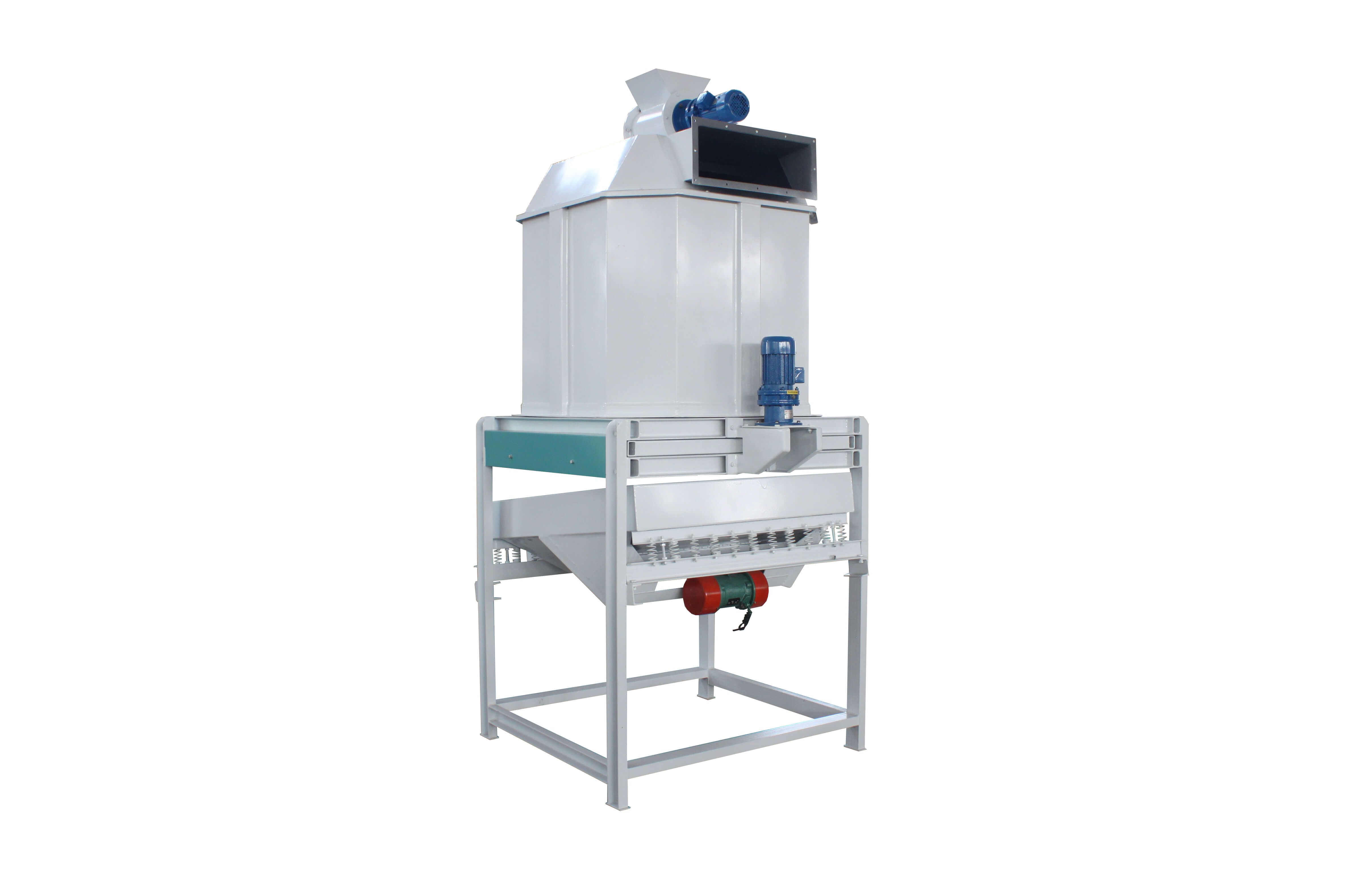
Understanding Counter Flow Cooling Principle
Counter flow cooling technology represents the most advanced solution in feed pellet cooling. Unlike traditional cross flow systems where hot pellets and cooling air move perpendicularly, counter flow design ensures hot pellets and cooling air move in opposite directions. This creates a gradual cooling process where pellets are cooled from the inside out, maintaining their structural integrity and nutritional value.
The core advantage of counter flow cooling lies in its ability to achieve uniform cooling with minimal temperature differentials. Our testing shows that counter flow coolers can reduce pellet temperature from 85-90°C to within 3-5°C of ambient temperature, while maintaining moisture content within ±0.5% of the target value. This precision is particularly critical for premium aquatic feeds and specialty livestock feeds where quality parameters are stringent.
Key Selection Criteria for Counter Flow Feed Coolers
When evaluating counter flow feed coolers, several technical parameters determine their performance and suitability for your specific production needs:
1. Cooling Capacity and Air Volume
The cooling capacity should match your production output requirements. For example, our standard models range from 1-30 tons/hour, with corresponding air volumes from 3,000 to 30,000 m³/h. The key is to ensure sufficient air exchange rate (typically 25-30 m³/ton/min) to effectively remove heat and moisture without causing pellet breakage.
Our engineering team recommends selecting a cooler with 20-30% extra capacity than your current maximum production to accommodate future expansion and handle peak loads. All our coolers feature variable frequency drives on the fans, allowing precise air volume control based on actual production needs.
2. Material and Construction Quality
The service life of a feed cooler largely depends on its construction materials. At Jiangsu Huamu, we use 304 stainless steel for all contact parts and galvanized steel for structural components. This combination provides excellent corrosion resistance while maintaining structural integrity under heavy loads.
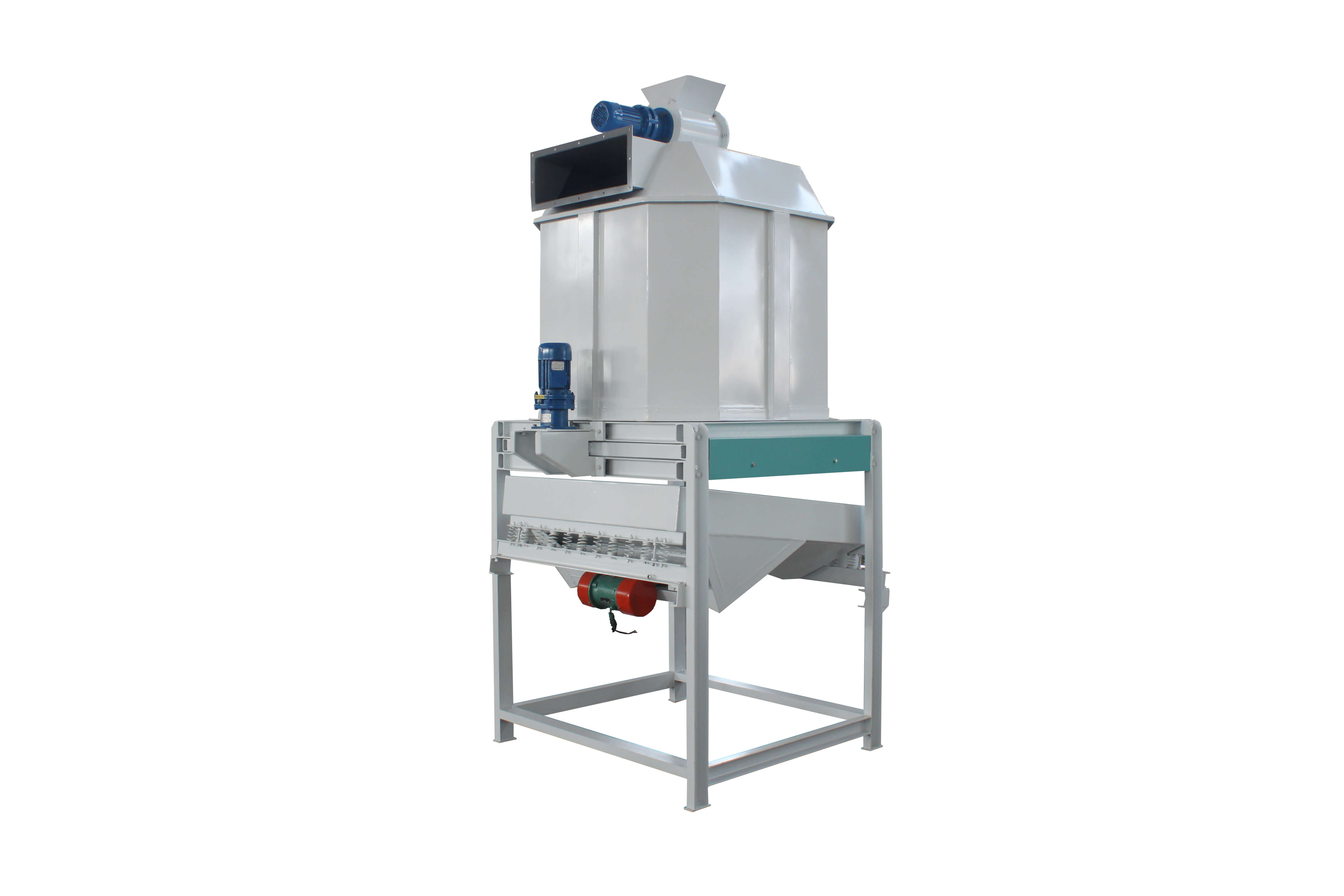
Pay special attention to the cooler’s air distribution system. Our patented design features optimized air ducts and perforated plates that ensure uniform air distribution across the entire cooling bed. This prevents “hot spots” that could lead to uneven cooling and pellet quality issues.
3. Energy Efficiency Features
Modern feed production demands energy-efficient solutions. Our counter flow coolers incorporate several energy-saving technologies:
- Variable frequency drives for precise air volume control
- Heat recovery systems that capture waste heat for pre-heating incoming air
- Low-resistance air duct design reducing fan power consumption
- Automatic discharge systems that minimize pellet breakage and dust generation
Independent testing shows our coolers consume 15-20% less energy compared to traditional designs while maintaining equivalent cooling performance. This translates to significant operational cost savings over the equipment’s lifespan.
4. Automation and Control Systems
The level of automation directly impacts production efficiency and product consistency. Our advanced coolers feature PLC control systems with the following capabilities:
| Feature | Description |
|---|---|
| Automatic Level Control | Maintains consistent pellet bed depth for optimal cooling |
| Temperature Monitoring | Real-time display of inlet and outlet temperatures |
| Moisture Control | Adjusts cooling parameters based on moisture content |
| Remote Monitoring | Enables operation monitoring via mobile devices |
| Alarm System | Notifies operators of abnormal conditions |
Application-Specific Considerations
Different feed types have unique cooling requirements that must be addressed during equipment selection:
1. Poultry Feed Production
Poultry feeds typically require rapid cooling to prevent mold growth while maintaining pellet durability. Our counter flow coolers for poultry feed feature shorter cooling cycles (3-5 minutes) and optimized air distribution to achieve uniform cooling without excessive pellet abrasion.
For broiler feeds where fine particles are critical, we incorporate special discharge systems that minimize fines generation during cooling. The result is feed with excellent flowability and minimal dust content.
2. Aquatic Feed Production
Aquatic feeds demand the most precise cooling control due to their high fat content and susceptibility to quality degradation. Our aquatic feed coolers feature:
- Dual-stage cooling for gradual temperature reduction
- Special air distribution plates preventing pellet clumping
- Stainless steel construction for corrosion resistance
- Precise moisture control (±0.3% accuracy)
These features ensure the production of high-quality floating or sinking feeds that meet the stringent requirements of shrimp, fish, and other aquatic species.
3. Ruminant Feed Production
For cattle and sheep feeds where fiber content is high, our coolers incorporate special designs to handle these challenging materials. The optimized air distribution prevents fiber bridging while ensuring thorough cooling of the entire feed mass.
Installation and Maintenance Best Practices
Proper installation and maintenance are as important as equipment selection for achieving optimal performance:
1. Installation Requirements
Counter flow coolers should be installed on level concrete foundations with sufficient space around them for maintenance access. The air intake should be positioned away from dust sources and protected with appropriate filters. Our installation teams follow strict protocols to ensure:
- Proper alignment of all components
- Correct air duct connections
- Accurate leveling of the cooling bed
- Functional safety guards
2. Routine Maintenance
Regular maintenance extends equipment life and maintains performance. Key maintenance tasks include:
- Daily cleaning of air filters and dust collection systems
- Weekly inspection of drive components and lubrication points
- Monthly check of air distribution plates for blockages
- Quarterly inspection of structural components for corrosion
Our coolers are designed for easy maintenance with quick-access panels and tool-free disassembly of key components. This reduces downtime during maintenance operations.
FAQ
What makes counter flow coolers better than cross flow models?
Counter flow coolers provide more uniform cooling by exposing pellets to progressively cooler air as they move through the machine. This gradual cooling preserves pellet quality better than cross flow designs where hot pellets are suddenly exposed to cold air, which can cause thermal shock and quality degradation.
How do I determine the right cooler size for my production?
The cooler capacity should match your pellet mill’s output with a 20-30% safety margin. For example, a 10 TPH pellet mill needs a cooler rated for 12-13 TPH. Our engineers can help calculate the exact requirements based on your specific feed formulations and production parameters.
What maintenance is required for counter flow coolers?
Daily maintenance includes cleaning air filters and checking for blockages. Weekly tasks involve lubricating moving parts and inspecting belts/chains. Monthly maintenance should verify air distribution uniformity and check for structural issues. Proper maintenance can extend equipment life by 30-50%.
Can counter flow coolers handle high-fat aquatic feeds?
Yes, our aquatic feed coolers are specially designed for high-fat formulations. They feature dual-stage cooling, anti-clumping designs, and precise moisture control to handle these challenging materials while maintaining feed quality and nutritional value.
Summary
Selecting the right counter flow feed cooler requires careful evaluation of your production requirements, feed types, and quality standards. As a leading ISO9001 certified manufacturer with 15+ years’ experience, Jiangsu Huamu Machinery offers a complete range of counter flow coolers designed for optimal performance in various feed production scenarios. Our equipment combines advanced technology with robust construction to deliver reliable, energy-efficient cooling solutions that enhance your feed quality and production efficiency.
Whether you’re building a new feed mill or upgrading existing equipment, our team of experts can help you select and configure the perfect cooling solution tailored to your specific needs. Contact us today to discuss how we can support your feed production goals with our high-quality counter flow feed coolers and complete feed processing solutions.