
Selecting the right feed processing equipment is crucial for any farm or feed mill operation. The quality of your equipment directly impacts feed quality, production efficiency, and overall profitability. As a leading manufacturer of feed processing machinery with over 15 years of experience, Jiangsu Huamu Machinery Co., Ltd. understands the challenges and considerations involved in equipment selection. This comprehensive guide will walk you through everything you need to know about choosing the best feed processing equipment for your specific needs.
Understanding Your Feed Processing Requirements
Before selecting any equipment, it’s essential to clearly define your production requirements. Start by answering these fundamental questions:
- What types of feed will you be producing (poultry, livestock, aquatic, etc.)?
- What is your target production capacity (tons per hour)?
- What are your available space and power supply constraints?
- What is your budget for equipment investment?
- Will you need complete turnkey solutions or individual machines?
At Jiangsu Huamu, we specialize in designing complete feed production lines ranging from 1-30 tons per hour. Our experienced engineers can help you analyze your specific requirements and recommend the optimal equipment configuration. For example, a small poultry farm might only need a basic pellet machine and mixer, while a large commercial feed mill would require a complete production line with multiple processing stages.
Key Feed Processing Equipment Types
Modern feed processing typically involves several key pieces of equipment working in sequence. Let’s examine the most important types:
1. Feed Pellet Machines
The feed pellet machine is the heart of any feed processing operation. It converts powdered feed ingredients into uniform pellets through a process of compression and extrusion. Our company’s belt-driven pellet machines are particularly popular for several reasons:
- Stable operation with dual-motor power transmission
- High production capacity (up to 500 sets sold annually in China)
- Low noise levels suitable for various working environments
- Versatile applications for livestock, poultry, and aquatic feeds
When selecting a pellet machine, consider factors like die diameter, compression ratio, and power requirements. Our technical team can help match the right machine specifications to your specific feed formulation and production goals.
2. Feed Hammer Mills
Our waterdrop hammer mills represent the next generation in feed grinding technology. These machines feature several innovative design elements:
- Waterdrop-shaped grinding chamber for improved material flow
- “Mountain-shaped” secondary impact structure for finer grinding
- 25% higher output compared to traditional designs
- Multi-functional capability for coarse, fine, and ultra-fine grinding
The hammer mill is typically the first processing stage in a feed production line. Proper particle size reduction is critical for optimal pellet quality and animal digestibility. Our hammer mills can handle a wide range of raw materials including grains, oilseeds, and fibrous ingredients.
3. Feed Mixers
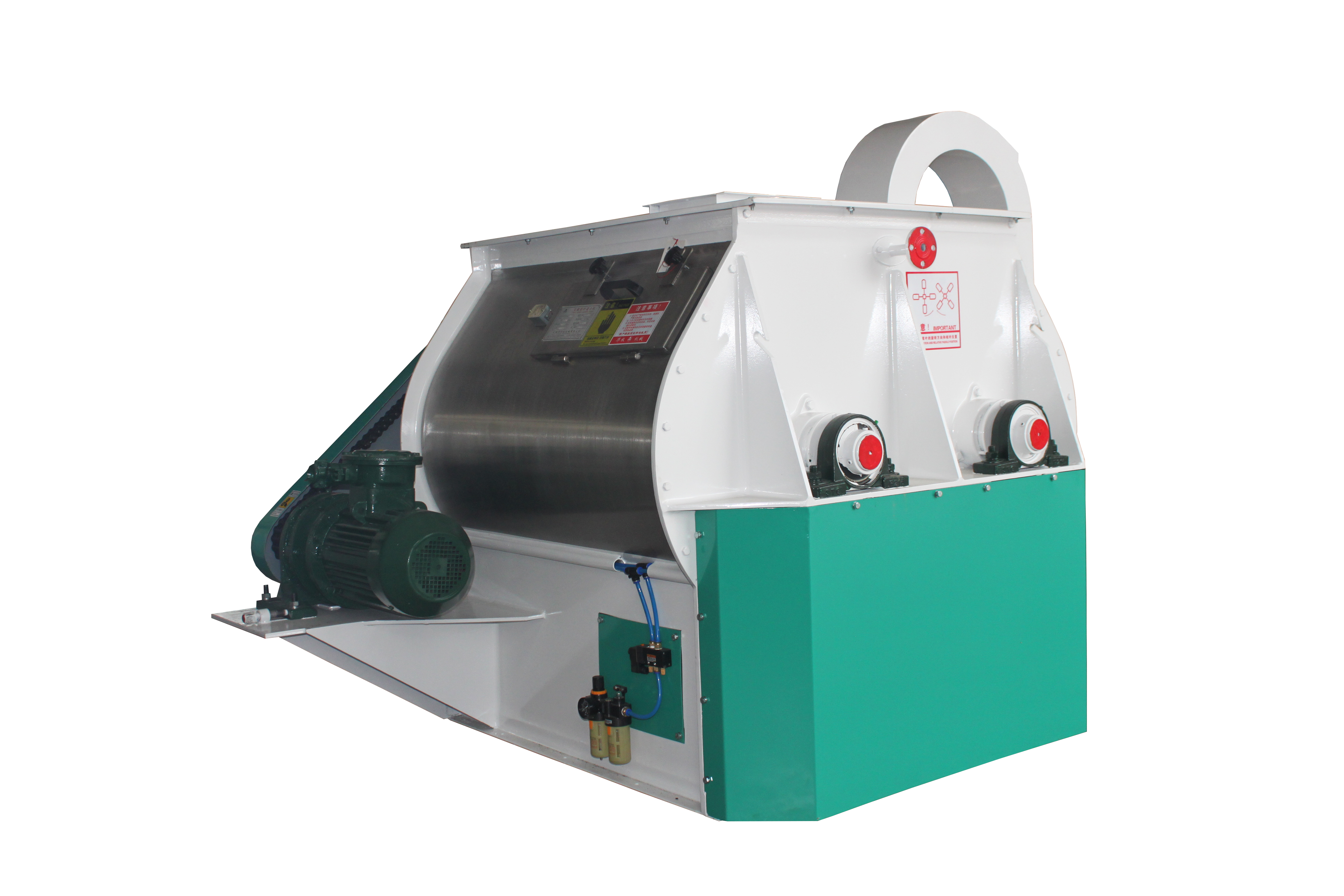
Uniform mixing is essential for consistent feed quality. Our double-shaft paddle mixers offer several advantages:
- Rapid mixing cycle of just 30-90 seconds per batch
- Exceptional mixing uniformity with CV≤5%
- No segregation of ingredients during mixing
- Optional liquid addition system for molasses or fat coating
For farms producing specialized feeds like pre-mixes or high-fat diets, the mixing equipment becomes even more critical. Our mixers can be customized with various paddle configurations and drive systems to match your specific formulation requirements.
Complete Feed Production Line Configuration
While individual machines are important, the real value comes from integrating them into a complete production system. A typical feed processing line includes:
| Processing Stage | Recommended Equipment | Key Functions |
|---|---|---|
| Raw Material Reception | Bucket Elevator, Screw Conveyor | Material transfer and storage |
| Grinding | Waterdrop Hammer Mill | Particle size reduction |
| Batching | Automatic Batching System | Precise ingredient measurement |
| Mixing | Double Shaft Paddle Mixer | Uniform ingredient blending |
| Pelleting | Ring Die Pellet Machine | Feed pellet formation |
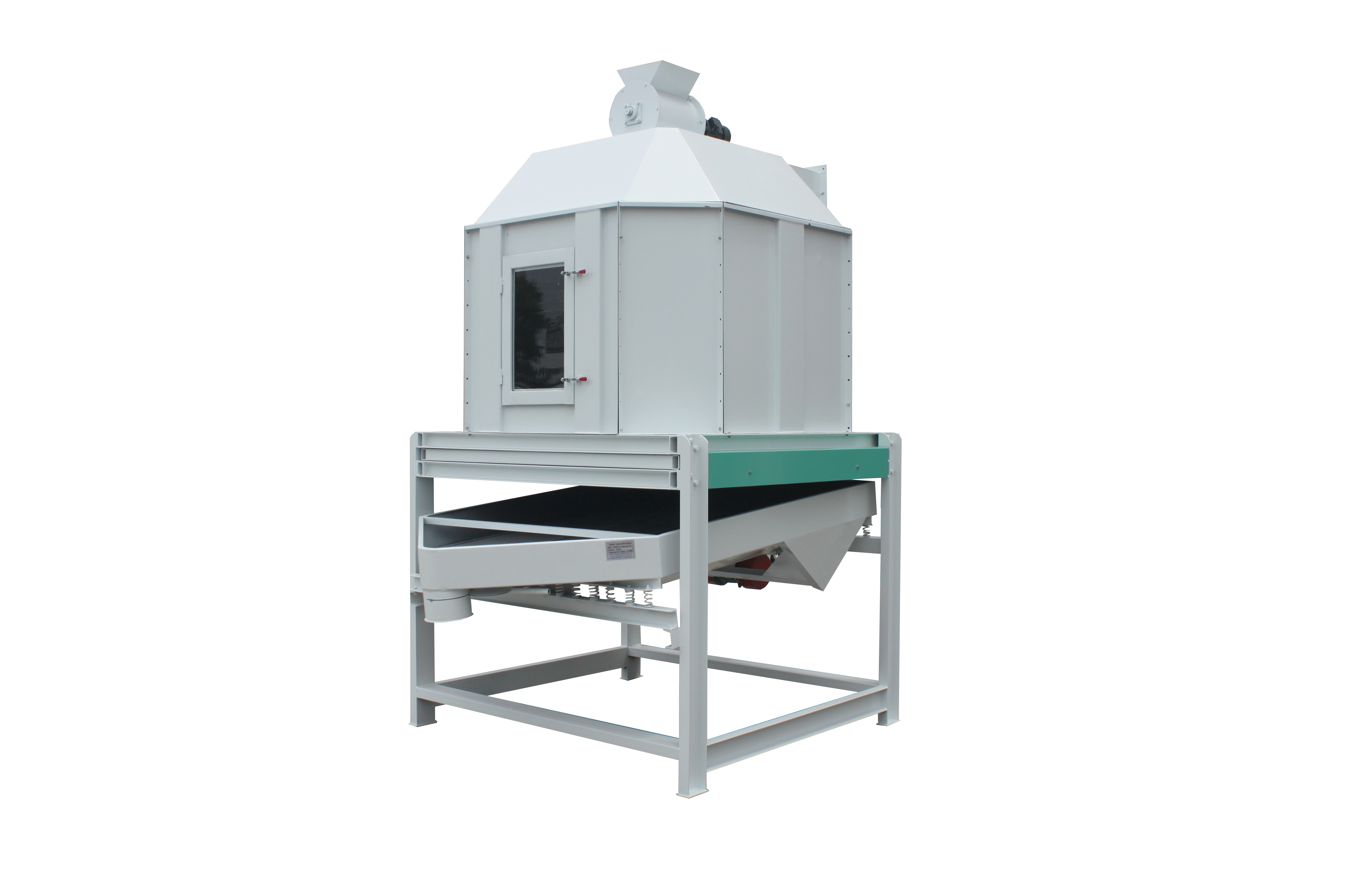
| Cooling & Crumbing | Counterflow Cooler, Pellet Crumbler | Pellet stabilization and sizing |
| Packaging | Automatic Packing Scale | Final product packaging |
The configuration can be adjusted based on your specific feed types and production scale. For example, aquatic feed production often requires additional stages like extrusion and vacuum coating, while ruminant feed might require specific processing parameters for optimal rumen health.
Factors Affecting Feed Processing Equipment Prices
One of the most common questions we receive is about equipment pricing. While exact costs depend on many factors, understanding the key price determinants can help you budget effectively:
1. Production Capacity
Larger capacity equipment generally costs more but offers lower per-ton production costs. Our company provides scalable solutions from 1-30 tons/hour to match different investment levels.
2. Equipment Configuration
Basic models with standard features cost less than fully customized solutions with advanced automation and control systems. Consider both your current needs and potential future expansion when selecting equipment.
3. Material Quality
High-quality components like alloy steel dies, wear-resistant hammers, and precision bearings increase initial costs but reduce long-term maintenance expenses. Our equipment uses premium materials to ensure durability and reliability.
4. Brand Reputation
Established brands like Jiangsu Huamu may cost slightly more than unknown manufacturers, but you get proven technology, reliable after-sales service, and readily available spare parts. Our company has been serving global customers since 2009 with a strong track record.
5. Complete Line vs. Individual Machines
Purchasing a complete production line from one supplier often provides better value than buying individual machines from multiple vendors. We offer package pricing discounts for complete line purchases.
FAQ
What makes Jiangsu Huamu’s feed pellet machines different from other brands?
Our belt-driven pellet machines feature dual-motor power transmission for stable operation, high production capacity (up to 500 sets sold annually in China), and low noise levels. The design is specifically optimized for various feed types including livestock, poultry, and aquatic feeds.
How do I determine the right capacity for my feed processing equipment?
Capacity selection depends on your farm size or market demand. For small farms, a 1-5 ton/hour line may suffice, while commercial feed mills typically need 10-30 tons/hour capacity. Our engineers can help analyze your specific situation and recommend optimal sizing.
What maintenance is required for feed hammer mills?
Regular maintenance includes checking hammer wear, inspecting screen condition, lubricating bearings, and cleaning the grinding chamber. Our hammer mills are designed for easy maintenance with quick-open doors and accessible components. We provide comprehensive maintenance manuals with all equipment.
Can your mixers handle liquid addition for fat-coated feeds?
Yes, our double-shaft paddle mixers can be equipped with optional liquid addition systems for precise application of molasses, oils, or other liquid ingredients. This feature is particularly valuable for producing high-fat diets or pre-mixes that require uniform coating.
How long does it take to install a complete feed production line?
Installation time depends on line complexity and site preparation. A standard 5-10 ton/hour line typically takes 30-45 days for installation and commissioning. Our installation teams work efficiently to minimize downtime and ensure smooth startup.
Summary
Selecting the right feed processing equipment requires careful consideration of your production requirements, feed types, and budget constraints. As a specialized manufacturer with ISO9001 certification and exports to over 50 countries, Jiangsu Huamu Machinery Co., Ltd. offers proven solutions for farms and feed mills of all sizes. Our complete product range includes high-quality pellet machines, innovative hammer mills, and efficient mixers, all backed by professional engineering support and reliable after-sales service. Whether you need individual machines or a complete turnkey production line, we can help you implement a cost-effective solution that meets your specific needs. Contact our team today to discuss your feed processing requirements and receive a customized equipment recommendation.