
For modern livestock farms and feed processing plants, selecting the right equipment is crucial for ensuring production efficiency, feed quality, and cost-effectiveness. Jiangsu Huamu Machinery Co., Ltd., a specialized manufacturer of feed processing equipment located in Wuxi, China, offers comprehensive solutions for feed production lines, including feed pellet machines, hammer mills, mixers, and complete turnkey projects.
This guide provides detailed insights into essential feed processing equipment for livestock farms, covering equipment selection, cost considerations, and application scenarios to help you make informed decisions for your feed production needs.
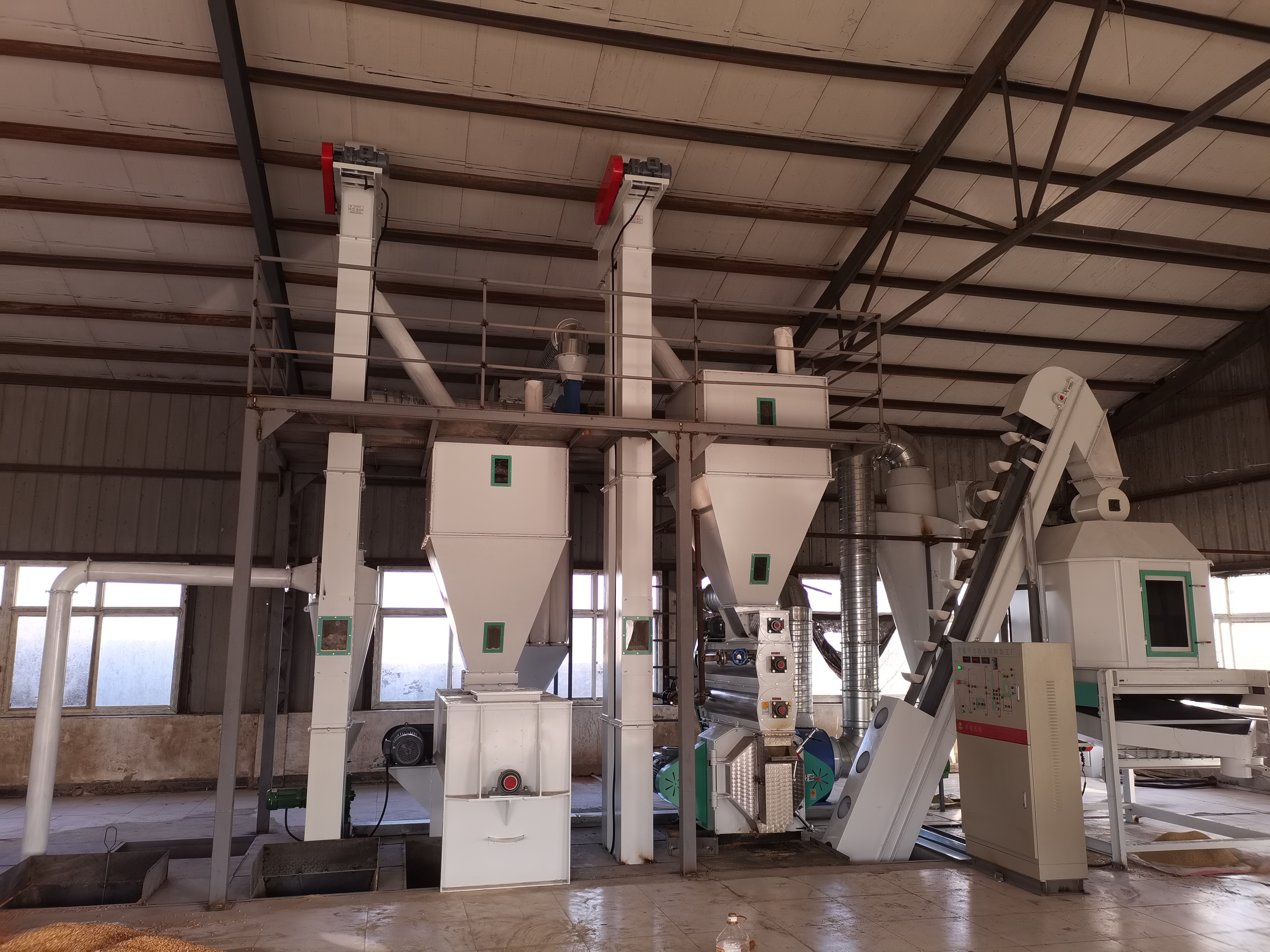
Core Feed Processing Equipment for Livestock Farms
The foundation of any efficient feed processing operation lies in selecting the right equipment for your specific production requirements. Jiangsu Huamu offers a complete range of professional-grade machinery designed to meet the diverse needs of livestock farms, from small-scale operations to large commercial feed mills.
1. Feed Pellet Machine (Ring Die Pellet Mill)
The feed pellet machine is the most critical equipment in any feed production line, responsible for converting mixed powder materials into uniform pellets. Jiangsu Huamu’s ring die pellet machines feature:
- Dual-motor narrow belt transmission for stable operation
- High production capacity (up to 500 sets sold annually in China)
- Low noise operation (below 85dB)
- Suitable for all types of livestock and aquatic feed pelleting
- Customizable pellet sizes (2-12mm diameter)
These pellet machines are particularly well-suited for producing high-quality pellets for poultry (chicken, duck, goose), livestock (cattle, sheep, pigs), and aquatic animals (fish, shrimp, crab). The pelleting process improves feed digestibility, reduces waste, and enhances storage stability.
2. Hammer Mill (Water Drop Type)
The hammer mill serves as the primary size reduction equipment in feed processing. Jiangsu Huamu’s water drop type hammer mill offers several advantages:
- Unique water drop-shaped grinding chamber for efficient material flow
- “Mountain-shaped” secondary impact structure increases output by 25%
- Multi-functional design for coarse, fine, and micro-fine grinding
- Suitable for processing various raw materials including grains, oilseeds, and fibrous materials
- Widely used in premium livestock feed, aquatic feed, and industrial raw material processing (alcohol plants, citric acid factories)
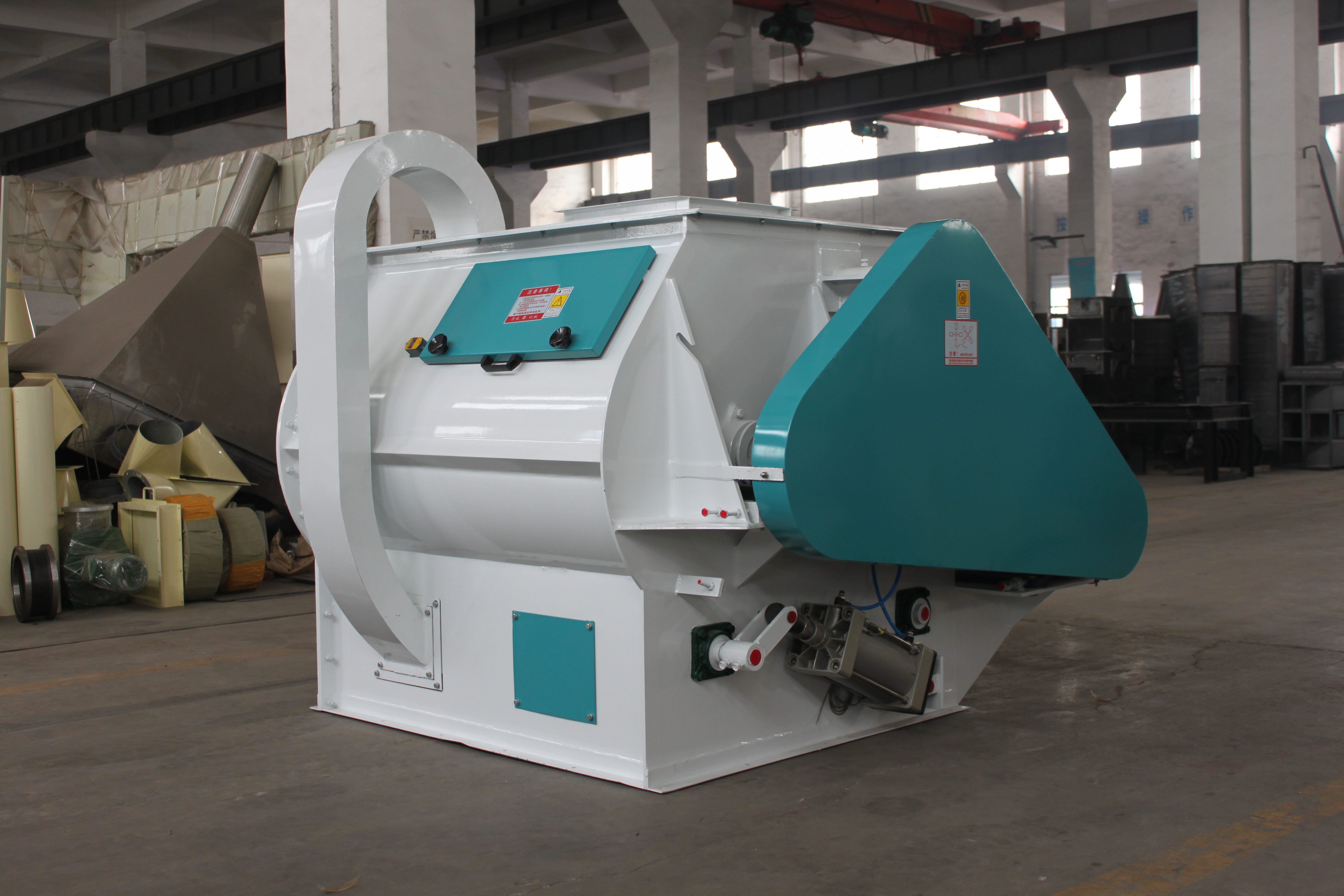
3. Feed Mixer (Double Shaft Paddle Type)
Achieving uniform mixing is essential for producing consistent, high-quality feed. Jiangsu Huamu’s double shaft paddle mixers feature:
- Rapid mixing cycle of just 30-90 seconds per batch
- Exceptional mixing uniformity with CV≤5% (Coefficient of Variation)
- No material segregation during mixing
- Optional atomizing spray system for uniform addition of liquids (molasses, oils)
- Versatile applications in feed, food, and chemical industries
These mixers are ideal for producing various types of feed including complete feed, concentrate feed, and premixes, ensuring every batch meets strict quality standards.
Complete Feed Production Line Solutions
Beyond individual machines, Jiangsu Huamu specializes in designing and installing complete feed production lines tailored to specific customer requirements. Our turnkey solutions cover:
1. Production Capacity Options
We offer scalable production lines with capacities ranging from 1 to 30 tons per hour, suitable for:
- Small-scale farms and cooperatives (1-5 t/h)
- Medium-sized feed mills (5-15 t/h)
- Large commercial feed plants (15-30 t/h)
2. Feed Type Specialization
Our production lines can be customized for various feed types including:
- Poultry feed (chicken, duck, goose)
- Livestock feed (cattle, sheep, pigs)
- Aquatic feed (fish, shrimp, crab)
- Premium pig feed
- Concentrate feed and premixes
3. Auxiliary Equipment
In addition to core machinery, we provide a complete range of auxiliary equipment to ensure smooth operation:
- Coolers for temperature control
- Stabilizers for feed quality preservation
- Crushers for size reduction
- Expanders for special feed processing
- Dryers for moisture control
- Packaging machines for final product handling
- Elevators and conveyors for material transport
- Dust collectors for environmental protection
| Equipment Type | Production Capacity | Suitable Feed Types |
|---|---|---|
| Ring Die Pellet Machine | 1-10 t/h | All livestock and aquatic feeds |
| Water Drop Hammer Mill | 3-15 t/h | Grains, oilseeds, fibrous materials |
| Double Shaft Mixer | 1-10 m³/batch | Powder and granular materials |
Cost Considerations for Feed Processing Equipment
When planning a feed processing plant, understanding the cost structure is essential for budgeting and investment decision-making. Several factors influence the overall cost:
1. Equipment Configuration
The cost varies significantly based on:
- Production capacity (tons per hour)
- Degree of automation (manual, semi-automatic, fully automatic)
- Material of construction (carbon steel, stainless steel)
- Included auxiliary equipment
- Customization requirements
2. Feed Pellet Machine Price Factors
Key determinants of pellet machine pricing include:
- Output capacity (smaller machines cost less but have lower output)
- Motor power (higher power for higher capacity)
- Ring die specifications (diameter affects capacity)
- Material quality (durable components last longer)
- Brand reputation and after-sales service
3. Complete Production Line Cost Estimation
As a rough guideline, complete feed production line costs range from:
- Small-scale (1-3 t/h): $50,000 – $150,000
- Medium-scale (5-10 t/h): $150,000 – $350,000
- Large-scale (15-30 t/h): $350,000 – $800,000+
These estimates include core equipment, auxiliary machinery, installation, and basic training. Actual costs may vary based on specific requirements and local market conditions.
How to Select the Right Feed Processing Equipment Supplier
Choosing a reliable equipment supplier is as important as selecting the right machinery. Consider these factors when evaluating potential suppliers:
1. Manufacturing Experience and Expertise
Look for suppliers with:
- Multiple years of experience in feed machinery manufacturing
- Proven track record of successful projects
- Specialization in your specific feed type requirements
- ISO 9001 or similar quality certifications
2. Technical Capabilities
Evaluate their:
- R&D and innovation capabilities
- Ability to customize solutions
- Quality control processes
- Use of advanced manufacturing technologies
3. After-Sales Support
Important considerations include:
- Availability of spare parts
- Technical support and maintenance services
- Operator training programs
- Warranty terms and conditions
4. International Market Presence
For global buyers:
- Export experience and capabilities
- Compliance with international standards
- References from international clients
- Language support for technical documentation
FAQ
What factors determine the price of a feed pellet machine?
The price of a feed pellet machine depends on several factors including production capacity (tons per hour), motor power, ring die specifications, material quality, and brand reputation. Higher capacity machines with more durable components typically cost more but offer better long-term value through increased productivity and reliability.
How do I calculate the cost of a complete feed production line?
To estimate the cost of a complete feed production line, consider: 1) Your required production capacity (tons per hour), 2) The types of feed you need to produce, 3) The degree of automation desired, 4) Included auxiliary equipment, and 5) Installation and training requirements. A professional supplier can provide a detailed quotation based on your specific needs.
What equipment is essential for starting a small feed processing plant?
For a small-scale feed processing plant (1-3 t/h), the essential equipment includes: 1) Hammer mill for size reduction, 2) Feed mixer for uniform blending, 3) Feed pellet machine for pelleting, 4) Cooler for temperature control, 5) Packaging machine for final product handling, and 6) Conveyors for material transport between processes.
How to choose between different feed pellet machine models?
When selecting a feed pellet machine model, consider: 1) Your production capacity requirements, 2) The types of feed materials you’ll process, 3) The desired pellet quality and size, 4) Energy efficiency requirements, 5) Available budget, and 6) After-sales support availability. Consult with a professional supplier to match the right model to your specific needs.
Summary
Selecting the right feed processing equipment is a critical decision for any livestock farm or feed production operation. Jiangsu Huamu Machinery offers professional-grade solutions tailored to meet diverse production requirements, from individual machines to complete turnkey production lines.
Our core products including ring die pellet machines, water drop hammer mills, and double shaft mixers provide reliable performance, high efficiency, and excellent feed quality. With production capacities ranging from 1 to 30 tons per hour, we serve farms of all sizes and specializations.
When considering feed processing equipment costs, remember that quality machinery represents a long-term investment that pays dividends through improved production efficiency, better feed quality, and reduced operating costs. Partnering with an experienced, reputable supplier ensures you receive not just equipment, but comprehensive support for your entire feed production operation.
For international buyers, Jiangsu Huamu’s global presence, ISO 9001 certification, and export experience make us a reliable choice for professional feed processing equipment solutions.