
When it comes to efficient and uniform mixing of powdered and granular materials in the feed, food, and chemical industries, double shaft feed mixers stand out as one of the most reliable solutions. These powerful machines offer rapid mixing cycles, excellent uniformity, and versatile applications that make them indispensable in modern production facilities. However, with numerous manufacturers and models available in the market, selecting the right double shaft feed mixer can be a challenging task for buyers.
In this comprehensive guide, we’ll explore everything you need to know about double shaft feed mixers, including their working principles, key features, application scenarios, and most importantly – how to choose the best model for your specific needs. We’ll also recommend some of the top manufacturers in the industry, with a special focus on Jiangsu Huamu Machinery Co., Ltd., a leading Chinese supplier known for its high-quality feed machinery and complete production line solutions.
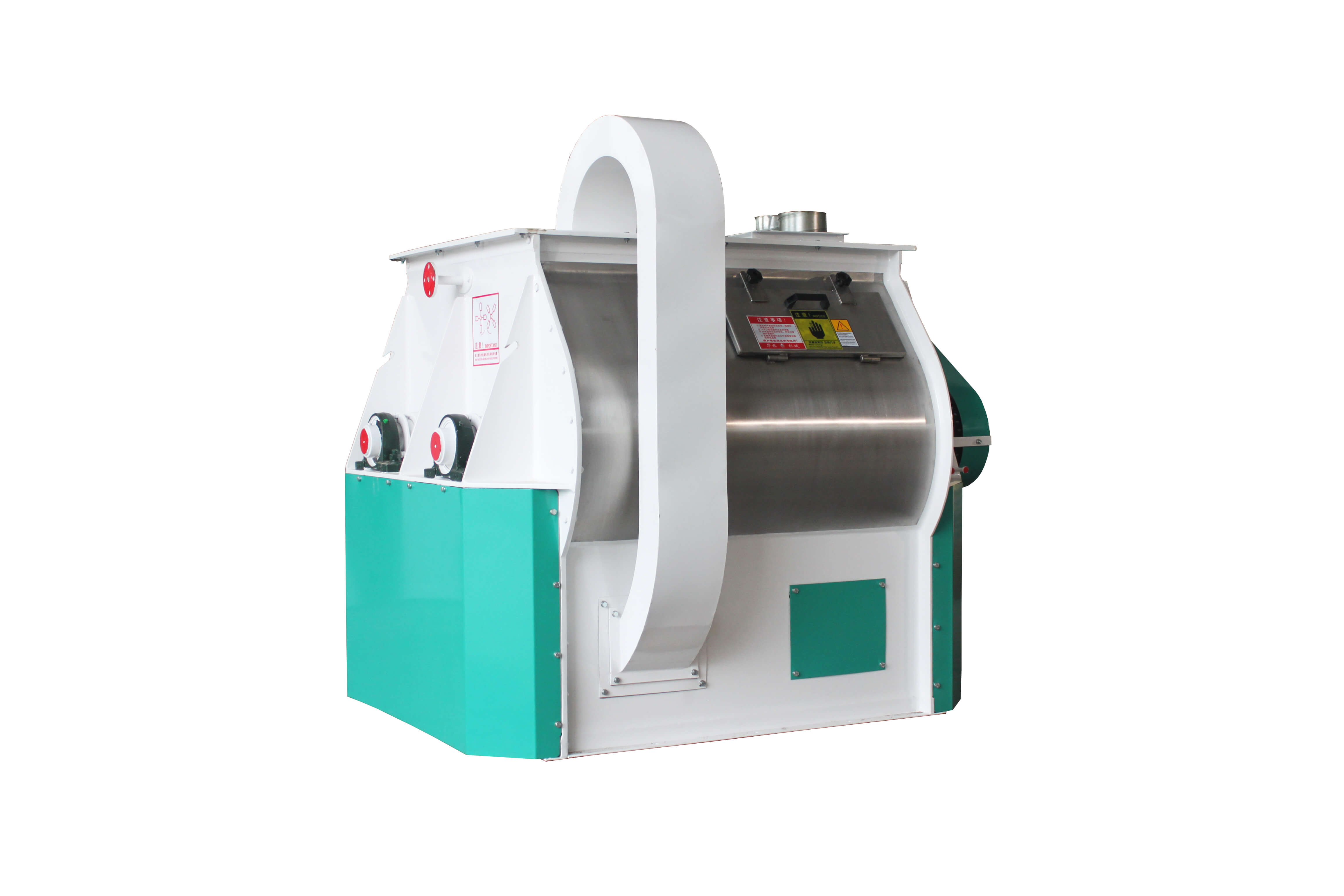
Understanding Double Shaft Feed Mixers
A double shaft feed mixer, also known as a twin-shaft paddle mixer, is a type of industrial mixing equipment that utilizes two parallel rotating shafts equipped with paddle-shaped mixing elements. These paddles work in tandem to create a complex three-dimensional mixing action that ensures rapid and thorough blending of materials.
The core advantage of double shaft mixers lies in their ability to achieve high mixing uniformity in a short period. Unlike single-shaft mixers that rely primarily on gravitational flow, double shaft mixers actively propel materials through the mixing chamber using the paddles’ mechanical action. This results in a more intense mixing process that breaks up agglomerates and ensures consistent distribution of all ingredients, even those with different particle sizes or densities.
Most double shaft feed mixers feature a horizontal cylindrical mixing chamber with inspection doors for easy cleaning and maintenance. The mixing shafts are typically driven by gear motors or belt drives, with variable speed control available on some models to optimize mixing performance for different materials.
Key Features to Look for in a Double Shaft Feed Mixer
When evaluating different double shaft feed mixer models, several key features can help you determine which one best meets your requirements:
1. Mixing Capacity and Batch Size
The first consideration is the mixer’s capacity, which is usually expressed in cubic meters or kilograms per batch. Choose a model that can handle your typical batch size with some margin for flexibility. Jiangsu Huamu offers double shaft mixers with capacities ranging from 0.25m³ to 20m³ per batch, suitable for various production scales.
2. Mixing Uniformity (CV Value)
The coefficient of variation (CV) is a critical metric that measures mixing uniformity. A lower CV indicates more consistent mixing. Look for mixers with a CV of ≤5%, which is considered excellent for most feed applications. Jiangsu Huamu’s double shaft mixers consistently achieve CV values below 5%, ensuring high-quality feed production.
3. Mixing Cycle Time
Faster mixing cycles improve overall production efficiency. Top-performing double shaft mixers can complete a mixing cycle in as little as 30-90 seconds, depending on the material and batch size. This rapid turnover allows for higher throughput and reduced energy consumption per ton of product.
4. Paddle Design and Configuration
The design and arrangement of mixing paddles significantly impact mixing performance. Look for mixers with optimized paddle shapes and angles that create a strong axial and radial flow pattern. Some advanced models feature adjustable or replaceable paddles to accommodate different material characteristics.
5. Customization Options
Consider whether the manufacturer offers customization options to tailor the mixer to your specific needs. For example, Jiangsu Huamu can equip their double shaft mixers with a雾化喷涂系统 (atomizing spraying system) for uniform addition of liquids like molasses or oils, which is particularly valuable for premium feed production.
Application Scenarios for Double Shaft Feed Mixers
Double shaft feed mixers are incredibly versatile machines that find applications across various industries:
1. Livestock Feed Production
In the animal feed industry, double shaft mixers are widely used for producing compound feed for pigs, poultry, cattle, and sheep. Their ability to handle different raw materials, including grains, protein meals, minerals, and vitamins, makes them ideal for creating balanced rations that meet specific nutritional requirements.
2. Aquatic Feed Manufacturing
Aquatic feed production demands precise control over ingredient proportions and mixing uniformity to ensure optimal feed performance in water. Double shaft mixers excel in this application, producing high-quality aquafeed with excellent water stability and nutrient availability.
3. Pet Food Processing
The pet food industry requires mixers that can handle a wide range of ingredients, including meats, grains, vegetables, and supplements, while maintaining strict hygiene standards. Double shaft mixers with easy-clean designs and food-grade materials are well-suited for this application.
4. Food Industry Applications
Beyond animal feed, double shaft mixers are used in various food processing applications, such as mixing flour, sugar, spices, and other ingredients for bakery products, snacks, and ready-to-eat meals. Their gentle mixing action helps preserve the integrity of delicate ingredients.
5. Chemical Industry Blending
In the chemical industry, double shaft mixers are employed for blending powders, granules, and other materials to create homogeneous mixtures for fertilizers, plastics, detergents, and other products. Their robust construction and corrosion-resistant materials make them suitable for handling various chemical substances.
| Feature | Double Shaft Feed Mixer | Single Shaft Feed Mixer |
|---|---|---|
| Mixing Uniformity (CV) | ≤5% | 5-10% |
| Mixing Cycle Time | 30-90 seconds/batch | 2-5 minutes/batch |
| Energy Consumption | Lower per ton of product | Higher per ton of product |
| Material Compatibility | Excellent for different densities and particle sizes | Better for similar materials |
| Maintenance Requirements | Moderate (regular paddle inspection) | Lower (fewer moving parts) |
Top Double Shaft Feed Mixer Manufacturers Recommended
When it comes to sourcing a high-quality double shaft feed mixer, choosing a reputable manufacturer with proven expertise is crucial. Here are some top recommendations based on industry reputation, product quality, and customer feedback:
1. Jiangsu Huamu Machinery Co., Ltd.
As a specialized manufacturer of feed machinery located in Wuxi, China, Jiangsu Huamu has established itself as a leading supplier of double shaft feed mixers and complete feed production lines. Their double shaft mixers feature:
- Mixing cycle of just 30-90 seconds per batch
- CV value of ≤5% for excellent uniformity
- No material segregation during mixing
- Optional atomizing spraying system for liquid addition
- Customizable capacities from 0.25m³ to 20m³ per batch
- Wide application in feed, food, and chemical industries
Jiangsu Huamu’s commitment to quality is evident in their ISO9001 certification and status as a “Specialized, Refined, and New” small and medium-sized enterprise in Jiangsu Province. With over 500 double shaft mixers sold annually, they have the experience and capacity to meet diverse customer needs.
2. Andritz Group
An international technology company, Andritz offers a range of industrial mixing solutions, including double shaft paddle mixers known for their robust construction and reliable performance. Their mixers are suitable for heavy-duty applications in various industries.
3. Muyang Group
Another prominent Chinese manufacturer, Muyang provides double shaft feed mixers with advanced features like automatic weighing systems and PLC control for precise operation. They cater to both domestic and international markets with a strong focus on innovation.
4. Van Aarsen International
Specializing in animal feed production technology, Van Aarsen offers high-quality double shaft mixers designed for optimal feed quality and production efficiency. Their mixers incorporate the latest technological advancements for superior performance.
How to Choose the Right Double Shaft Feed Mixer Manufacturer
Selecting the best manufacturer for your double shaft feed mixer involves evaluating several factors beyond just the product specifications:
1. Industry Experience and Expertise
Look for manufacturers with a proven track record in designing and producing double shaft feed mixers. Companies like Jiangsu Huamu, with decades of experience in the feed machinery industry, are more likely to provide reliable products and professional support.
2. Product Quality and Certification
Ensure the manufacturer follows strict quality control processes and holds relevant certifications like ISO9001. This guarantees that their products meet international standards for performance and safety.
3. Customization Capabilities
Choose a manufacturer that can tailor their mixers to your specific requirements, whether it’s adjusting the capacity, adding special features like a spraying system, or designing for unique material characteristics.
4. After-Sales Support and Service
Reliable after-sales service is crucial for minimizing downtime and ensuring long-term performance. Look for manufacturers that offer comprehensive support, including installation guidance, operator training, spare parts availability, and maintenance services.
5. Global Presence and Export Experience
If you’re an international buyer, select a manufacturer with experience in exporting to your region. This ensures they understand the logistical, regulatory, and technical requirements specific to your market. Jiangsu Huamu, for example, exports to over 50 countries worldwide, demonstrating their ability to serve global customers effectively.
FAQ
What is the typical mixing cycle time for a double shaft feed mixer?
Most high-quality double shaft feed mixers can complete a mixing cycle in 30-90 seconds per batch, depending on the material and batch size. This rapid mixing capability significantly improves production efficiency compared to other types of mixers.
Can a double shaft feed mixer handle both coarse and fine materials?
Yes, one of the key advantages of double shaft feed mixers is their ability to effectively mix materials with different particle sizes and densities without segregation. The three-dimensional mixing action ensures uniform distribution of all ingredients.
How often should the mixing paddles be inspected or replaced?
The frequency of paddle inspection and replacement depends on usage intensity and material characteristics. Generally, it’s recommended to inspect paddles during regular maintenance intervals (e.g., every 3-6 months) and replace them when significant wear is observed to maintain optimal mixing performance.
What is the power consumption range for double shaft feed mixers?
Power consumption varies based on mixer capacity and model. Smaller mixers (0.25-1m³) may require 5.5-11kW, while larger industrial models (10-20m³) can consume 55-110kW. Energy-efficient designs and variable speed drives can help reduce overall power consumption.
Can double shaft feed mixers be integrated into existing production lines?
Yes, most double shaft feed mixers are designed for easy integration into new or existing production lines. Reputable manufacturers like Jiangsu Huamu offer complete turnkey solutions and can customize the mixer’s inlet/outlet configurations to match your specific layout requirements.
Summary
Choosing the right double shaft feed mixer is a critical decision that can significantly impact your production efficiency, feed quality, and operating costs. By understanding the key features, application scenarios, and selection criteria outlined in this guide, you’re well-equipped to make an informed choice that meets your specific needs.
Jiangsu Huamu Machinery Co., Ltd. stands out as an excellent choice for buyers seeking high-quality double shaft feed mixers backed by extensive industry experience, customization capabilities, and reliable after-sales support. Their commitment to customer-first principles and continuous innovation has made them a trusted partner for feed producers worldwide.
Remember to consider not just the mixer itself but also the manufacturer’s overall capabilities, including their ability to provide complete production line solutions if needed. With the right double shaft feed mixer in place, you can achieve faster mixing cycles, superior feed uniformity, and ultimately, better results for your livestock, aquaculture, or industrial applications.