
Setting up a feed processing plant requires careful consideration of various equipment components to ensure efficient and high-quality production. Whether you’re planning to build a new feed factory or upgrade an existing one, selecting the right machinery is crucial for success. This comprehensive guide will walk you through the essential equipment needed for a complete feed production line, with insights from Jiangsu Huamu Machinery Co., Ltd., a leading manufacturer specializing in feed processing solutions.
Essential Equipment for Building a Feed Processing Plant
A complete feed processing plant typically requires several key pieces of equipment working in harmony to transform raw materials into finished feed products. The core equipment includes pellet machines, hammer mills, mixers, coolers, and various auxiliary machines. Let’s examine each component in detail.
1. Pellet Machine (Feed Granulator)
The pellet machine is the heart of any feed production line, responsible for converting powdered feed into pellets of consistent size and shape. Jiangsu Huamu’s ring die pellet machines are particularly popular in the industry due to their:
- Stable operation with dual-motor narrow belt drive
- High production capacity (up to 500 sets sold annually in China)
- Low noise levels during operation
- Versatility for various feed types including poultry, livestock, and aquatic feeds
These pellet machines come in different models to accommodate production scales from 1-30 tons per hour, making them suitable for both small farms and large commercial feed factories.
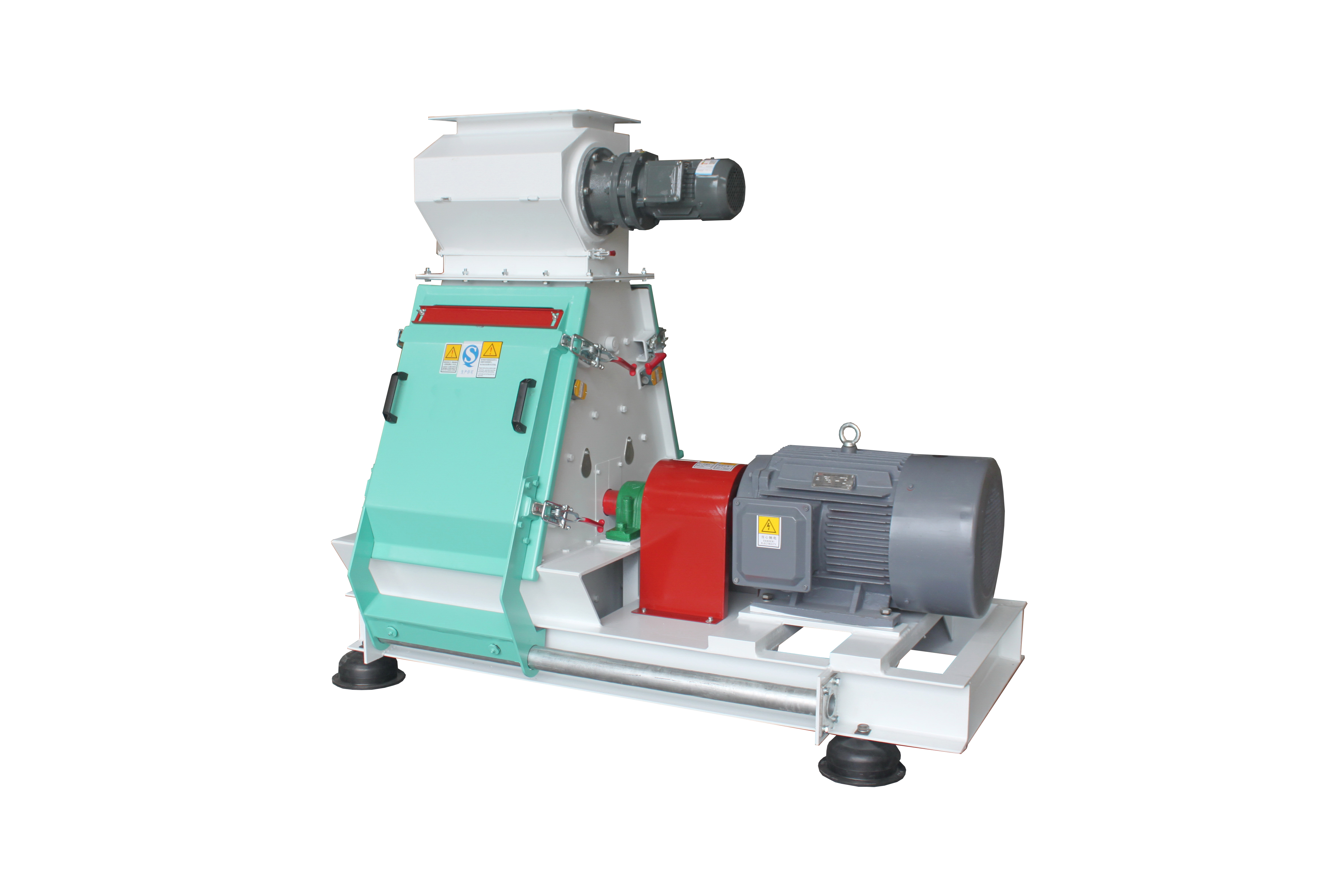
2. Hammer Mill (Grinding Equipment)
Before pelletizing, raw materials need to be ground to the appropriate particle size. Jiangsu Huamu’s waterdrop hammer mills excel in this role with their:
- Waterdrop-shaped grinding chamber for efficient material flow
- “Mountain-shaped” secondary impact structure increasing output by 25%
- Multi-functional design for coarse, fine, and ultra-fine grinding
- Application across premium livestock feed, aquatic feed, and industrial raw materials like those used in alcohol and citric acid production
3. Mixer (Blending Equipment)
Uniform mixing of ingredients is critical for feed quality. The double-shaft paddle mixer from Jiangsu Huamu offers:
- Rapid mixing cycles of just 30-90 seconds per batch
- Exceptional mixing uniformity with CV≤5% (Coefficient of Variation)
- No segregation of ingredients during mixing
- Optional atomizing spray system for even addition of liquids like molasses or oils
- Versatility for feed, food, and chemical industry applications
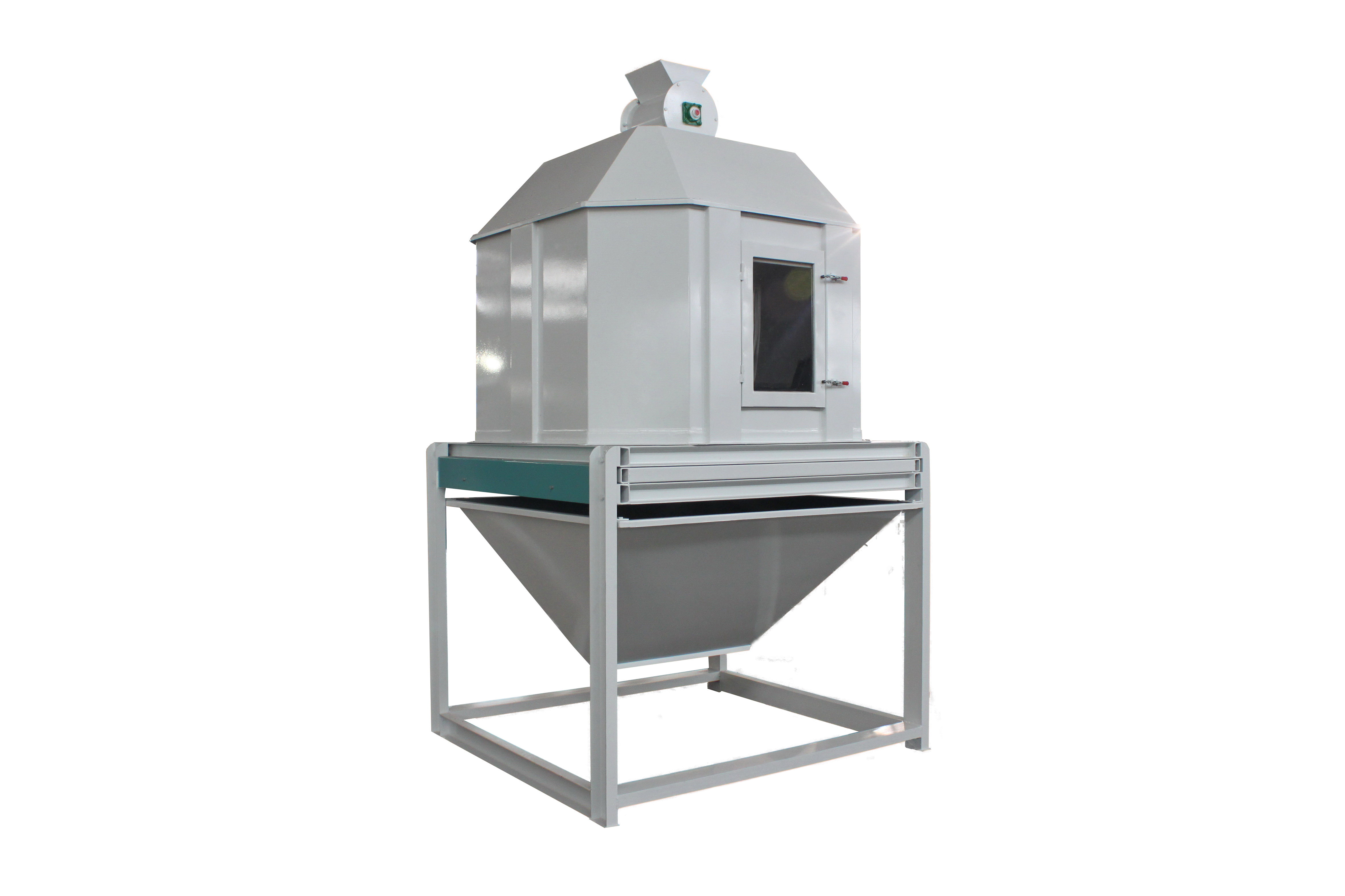
4. Cooler (Post-Pelleting Equipment)
After pelletizing, feed pellets need to be cooled to reduce moisture content and improve storage stability. Jiangsu Huamu provides counterflow coolers that effectively lower pellet temperature while maintaining nutritional value.
5. Auxiliary Equipment
A complete feed production line also requires several auxiliary machines:
- Crushers for size reduction before grinding
- Expanders for special feed processing requirements
- Dryers for moisture control
- Packaging machines for final product presentation
- Elevators and conveyors for material handling between processes
- Dust collectors for maintaining clean working conditions
Factors Influencing Feed Processing Equipment Selection
Choosing the right equipment for your feed factory involves considering several key factors:
1. Production Capacity Requirements
Determine your target output in tons per hour. Jiangsu Huamu offers solutions from 1-30 TPH, allowing you to select equipment that matches your current needs while considering future expansion possibilities.
2. Feed Types and Formulations
Different animal species require specific feed formulations. Consider whether you’ll produce:
- Poultry feed (chicken, duck, goose)
- Ruminant feed (cattle, sheep)
- Aquatic feed (fish, shrimp)
- Premixes and specialty feeds
Jiangsu Huamu’s equipment is designed to handle all these feed types effectively.
3. Space and Layout Considerations
The physical layout of your feed factory impacts equipment selection. Jiangsu Huamu’s engineering team can help design an optimal layout that maximizes space utilization and workflow efficiency.
4. Budget Constraints
While quality should never be compromised, budget considerations are important. Jiangsu Huamu offers competitive pricing without sacrificing performance, with complete production line solutions starting from affordable price points.
5. After-Sales Support and Service
Reliable after-sales service is crucial for minimizing downtime. As an ISO9001 certified company, Jiangsu Huamu provides comprehensive support including installation, debugging, operator training, and maintenance services.
| Equipment Type | Capacity Range | Suitable For | Key Advantage |
|---|---|---|---|
| Pellet Machine | 1-30 TPH | All feed types | Stable operation, high output |
| Hammer Mill | 1-20 TPH | Coarse to fine grinding | 25% higher output |
| Double Shaft Mixer | 0.5-20 m³/batch | Powder & particle mixing | CV≤5%, rapid mixing |
FAQ
What’s the typical cost range for setting up a complete feed production line?
The cost varies significantly based on production capacity and equipment configuration. For small-scale operations (1-5 TPH), a basic production line might cost between $50,000-$150,000 USD. Medium-scale lines (10-20 TPH) typically range from $150,000-$500,000 USD, while large commercial lines (20-30 TPH) can exceed $500,000 USD. Jiangsu Huamu offers customized solutions at competitive prices with high ROI potential.
How long does it take to install and commission a complete feed production line?
Installation and commissioning time depends on project complexity and size. For standard production lines, Jiangsu Huamu typically completes installation within 30-60 days after equipment arrival at your site. Our experienced technical team ensures smooth setup and provides comprehensive operator training.
What makes Jiangsu Huamu’s pellet machines different from other brands?
Our pellet machines feature several unique advantages: 1) Dual-motor narrow belt drive for stable operation 2) Specialized ring die design for various feed types 3) High production efficiency with lower energy consumption 4) Durable construction with long service life 5) Proven performance with 500+ units sold annually in China. These factors make our pellet machines the preferred choice for many feed producers.
Can your equipment handle both livestock and aquatic feed production?
Absolutely. Jiangsu Huamu’s equipment is designed for versatility. Our pellet machines can produce both livestock and aquatic feed pellets by simply changing the die specifications. The hammer mills and mixers are equally suitable for all feed types, making our solutions ideal for factories producing multiple feed varieties.
What after-sales support does Jiangsu Huamu provide?
We offer comprehensive after-sales support including: 1) One-year warranty on all equipment 2) Lifetime technical support 3) Spare parts supply at competitive prices 4) On-site maintenance services 5) Regular equipment inspection and optimization 6) Operator training programs. Our global service network ensures prompt assistance wherever your factory is located.
Summary
Building a feed processing plant requires careful selection of equipment that matches your production goals, feed types, and budget constraints. Jiangsu Huamu Machinery Co., Ltd. offers complete solutions from individual machines to turnkey production lines, with a proven track record in designing and manufacturing high-quality feed processing equipment. Our core products including pellet machines, hammer mills, and mixers provide reliable performance with competitive pricing, backed by comprehensive after-sales support. With over 500 pellet machines sold annually in China and export to 50+ countries, we have the expertise to help you establish or upgrade your feed production facility efficiently and cost-effectively.