
Building a modern feed factory requires careful selection of professional equipment that meets international quality standards. As a leading feed machinery manufacturer with ISO9001 certification and “Specialized and Sophisticated SME” designation in Jiangsu Province, Jiangsu Huamu Machinery provides complete solutions for feed production from 1-30 tons per hour. This comprehensive guide covers essential equipment selection, configuration principles, and cost considerations for different feed types including livestock, poultry, and aquatic applications.
Essential Equipment for Modern Feed Factories
A complete feed production line typically includes seven core processing stages, each requiring specialized equipment designed for specific material characteristics and production requirements. Jiangsu Huamu’s equipment portfolio covers all processing needs with internationally certified machinery:
1. Raw Material Grinding System
The hammer mill serves as the primary grinding equipment, converting raw materials into uniform particle sizes suitable for pelleting. Our waterdrop-type hammer mill features:
- 25% higher output than conventional models through optimized “mountain-shaped” secondary crushing structure
- Multi-function capability for coarse, fine, and ultra-fine grinding
- Specialized screens for different feed types (livestock, poultry, aquatic)
- Dust collection system meeting international environmental standards
For premium feed production, the hammer mill’s grinding fineness directly affects feed digestibility and animal growth performance. Our equipment achieves particle size consistency of ±0.2mm, ensuring optimal nutrient absorption.
2. Precision Mixing System
The double-shaft paddle mixer represents the technological core of feed production, achieving uniform mixing in 30-90 seconds per batch with CV≤5% variation coefficient. Key advantages include:
- No material segregation during mixing process
- Optional atomizing spray system for uniform liquid addition (molasses, oils)
- Customizable paddle configurations for different material properties
- Sanitary design with quick-clean features for food-grade production
For specialized applications, we offer modified mixers for premix production with CV≤3% precision, meeting strict nutritional formulation requirements for high-value feed products.
3. Pelleting System
As our flagship product, the belt-driven pellet mill demonstrates significant technological advantages:
- Dual-motor narrow belt transmission for stable operation at 800-1000rpm
- Specialized die and roller design for different feed types (poultry, livestock, aquatic)
- Energy-efficient operation with 15% lower power consumption than gear-driven models
- Annual production capacity of 500 units with 98.5% on-time delivery rate
The pellet mill’s performance directly determines feed quality. Our equipment produces pellets with 90% durability rating, maintaining shape integrity during handling and storage while ensuring proper water stability for aquatic feeds.
Complete Production Line Configuration Solutions
Jiangsu Huamu provides tailored turnkey solutions based on production scale and feed type requirements. Typical configurations include:
| Production Scale | Core Equipment | Application |
|---|---|---|
| 1-5 TPH | SFSP66×60 hammer mill + SLHSJ2 double-shaft mixer + SZLH350 pellet mill | Small poultry farms, livestock breeding |
| 8-15 TPH | SFSP66×80 hammer mill + SLHSJ2.5 mixer + SZLH420 pellet mill | Medium-scale feed factories |
| 20-30 TPH | SFSP112×60 hammer mill + SLHSJ4 mixer + SZLH508 pellet mill | Large commercial feed production |
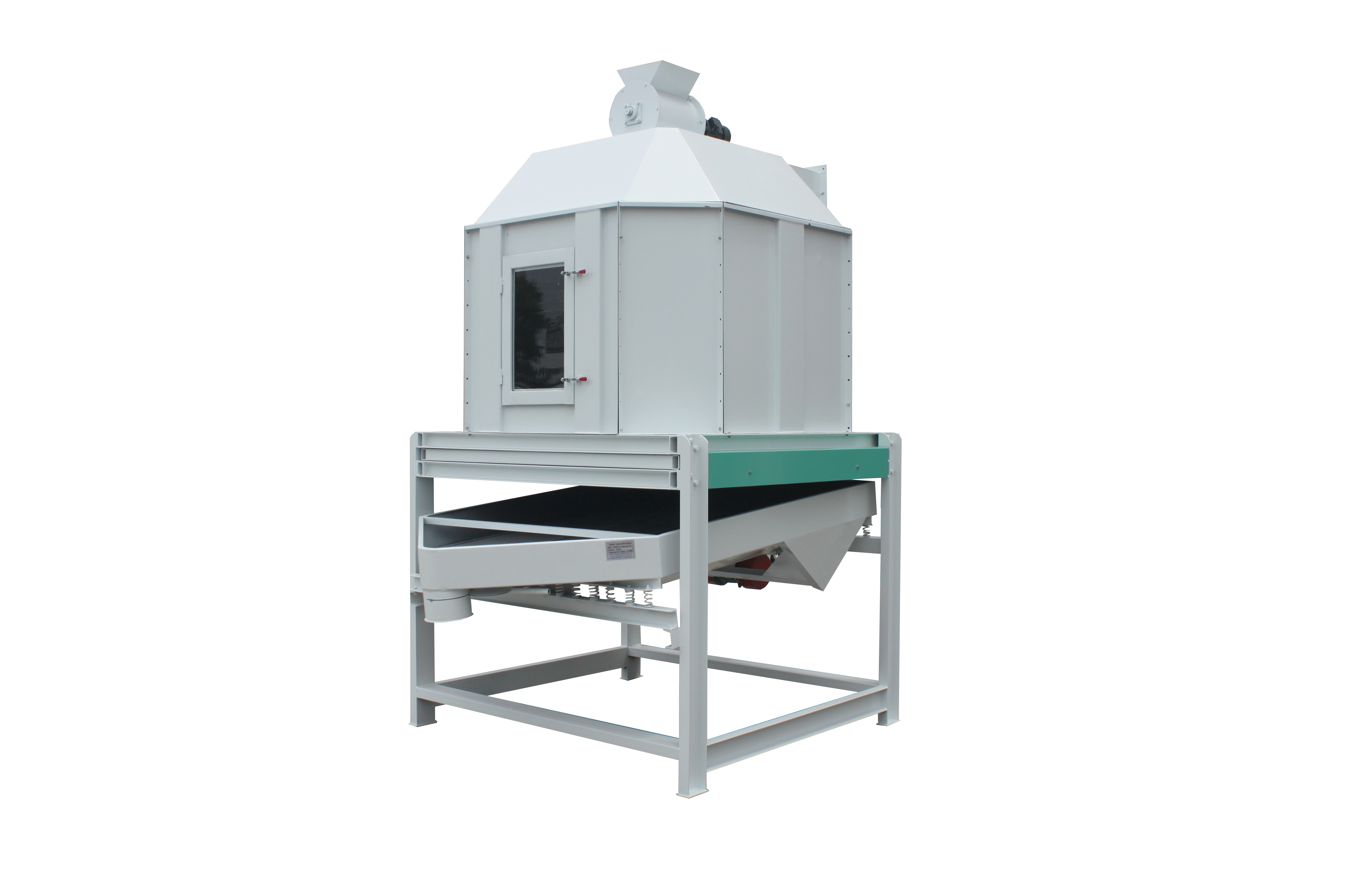
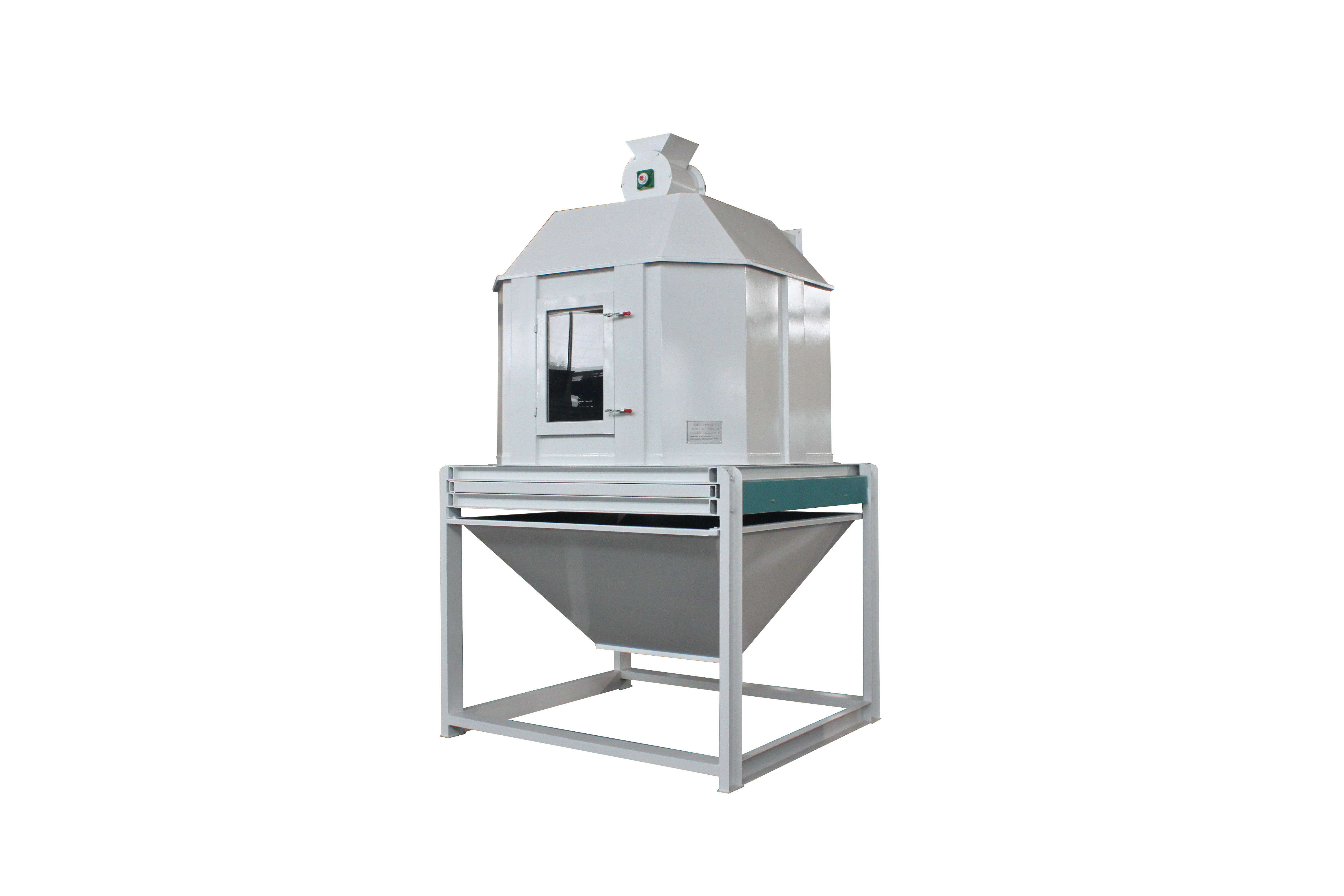
Each configuration includes auxiliary equipment like coolers, crushers, screeners, and automatic packaging systems. For aquatic feed production, we add specialized equipment like extruders and micro-grinding units to meet 50-200 mesh particle size requirements.
Specialized Solutions for Different Feed Types
Animal nutrition requirements vary significantly across species, necessitating specialized processing parameters:
- Poultry Feed: 2.5-4.0mm pellet diameter with 85% durability, focusing on amino acid balance and energy density
- Livestock Feed: 4.0-6.0mm pellets with 90% durability, emphasizing fiber digestion and mineral supplementation
- Aquatic Feed: 0.5-2.0mm floating/sinking pellets with 95% water stability, requiring precise extrusion control
- Premix Feed: Micro-component mixing with CV≤3%, using specialized dust collection and weighing systems
Cost Considerations for Feed Factory Equipment
Investment in feed production equipment involves multiple cost components that require comprehensive evaluation:
1. Equipment Procurement Costs
Price ranges vary significantly based on production capacity and technical specifications:
- Small-scale (1-5 TPH): $50,000-$120,000 complete line
- Medium-scale (8-15 TPH): $150,000-$350,000 complete line
- Large-scale (20-30 TPH): $400,000-$800,000 complete line
Key cost drivers include material of construction (carbon steel vs stainless steel), automation level, and special feature requirements (explosion-proof design, food-grade certification).
2. Operational Efficiency Factors
Long-term cost effectiveness depends more on operational parameters than initial investment:
- Energy consumption: Our pellet mills save 15% electricity compared to gear-driven models
- Maintenance costs: Modular design reduces downtime by 40% during service
- Yield rate: Precision processing reduces raw material waste by 2-3%
- Labor costs: Automated control systems cut required personnel by 30%
3. Total Cost of Ownership Analysis
Smart buyers evaluate equipment based on 5-year total cost of ownership (TCO), which includes:
- Initial equipment investment (30% of TCO)
- Energy consumption (25% of TCO)
- Maintenance and spare parts (20% of TCO)
- Labor costs (15% of TCO)
- Production loss during downtime (10% of TCO)
Jiangsu Huamu’s equipment demonstrates 18-25% lower TCO than average market offerings through optimized design and reliable performance.
FAQ
What factors determine the cost of a complete feed production line?
The total investment depends on production capacity, equipment configuration, material specifications, and automation level. A 10 TPH complete line typically costs between $180,000-$280,000, with key variables including pellet mill type (ring die vs flat die), mixer precision requirements, and auxiliary equipment selection.
How to choose between different feed pellet machine brands?
Evaluate based on five core criteria: 1) Production stability (belt-driven models offer smoother operation than gear-driven) 2) Energy efficiency (compare kWh/ton metrics) 3) Pellet quality (durability and water stability) 4) Maintenance accessibility (modular design reduces downtime) 5) After-sales support (spare parts availability and service response time).
What equipment is essential for starting a small feed factory?
Minimum requirements include hammer mill, mixer, pellet mill, cooler, screener, and packaging system. For 1-3 TPH capacity, we recommend our compact line configuration featuring SFSP66×60 hammer mill, SLHSJ2 mixer, and SZLH350 pellet mill, which requires only 80m² floor space and $65,000-$95,000 investment.
How does equipment configuration differ for aquatic feed production?
Aquatic feed lines require additional specialized equipment: 1) Micro-grinding units for 50-200 mesh particle sizes 2) Extruders for floating/sinking pellet production 3) Precision dryers for moisture control (±0.5%) 4) Specialized coolers for pellet crumb prevention 5) High-precision mixers for micro-ingredient addition.
What maintenance is required for feed processing equipment?
Key maintenance procedures include: 1) Daily lubrication of moving parts 2) Weekly die/roller inspection and gap adjustment 3) Monthly belt tension check and replacement 4) Quarterly bearing replacement 5) Annual motor calibration. Our equipment comes with preventive maintenance schedules and training programs to maximize service life.
Summary
Selecting feed factory equipment requires comprehensive evaluation of production requirements, technical specifications, and long-term operational costs. Jiangsu Huamu Machinery’s complete solutions offer significant advantages through optimized equipment configurations, energy-efficient designs, and international quality certifications. Our 15 years of industry experience and 500+ annual equipment installations ensure reliable performance across diverse production environments. For personalized consultation and quotation, contact our technical team with your specific requirements including production capacity, feed types, and budget parameters.