
Setting up a feed production factory requires careful planning and equipment selection. As a leading manufacturer of feed processing machinery in China, Jiangsu Huamu Machinery Co., Ltd. provides comprehensive solutions for feed factories of all scales. This guide will walk you through the essential equipment needed, cost considerations, and how to select the right machinery for your specific production requirements.
Essential Equipment for Feed Production Line
A complete feed production line typically includes several key pieces of equipment working in sequence. The core machinery consists of feed pellet machines, hammer mills, and mixers, supplemented by various auxiliary equipment. Let’s examine each component in detail:
1. Feed Pellet Machine
The feed pellet machine is the heart of any feed production line. Jiangsu Huamu specializes in medium and small-sized belt-driven pellet machines that feature:
- Dual-motor narrow belt transmission for stable operation
- High production capacity (up to 500 sets sold annually in China)
- Low noise levels suitable for various working environments
- Versatility for processing different types of animal feed including poultry, livestock, and aquatic feed
Our pellet machines come in various models to accommodate different production scales, from 1-30 tons per hour. The ring die design ensures uniform pellet size and quality, which is crucial for animal nutrition and feed efficiency.
2. Hammer Mill (Grinding Machine)
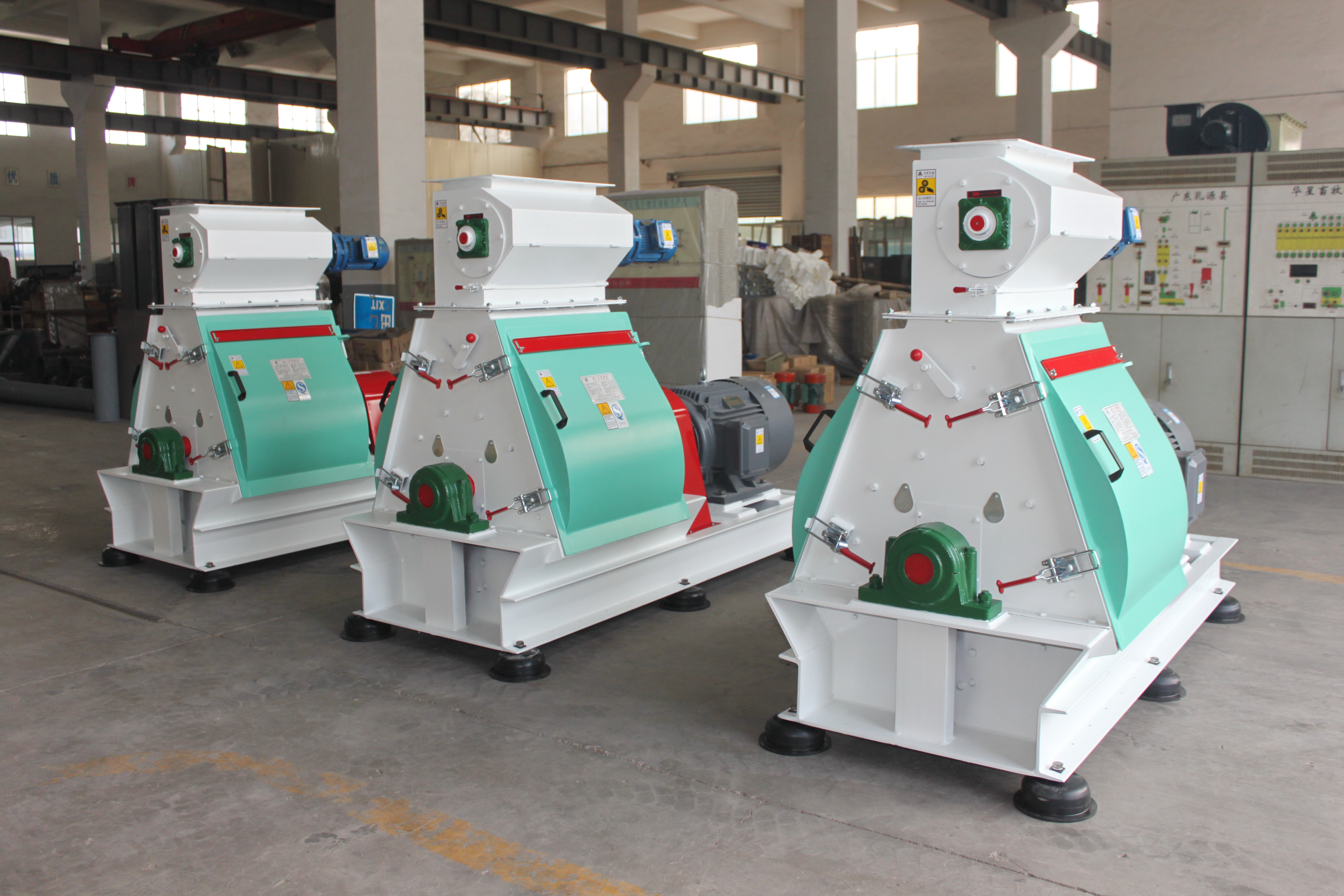
The hammer mill serves as the grinding unit in the production line. Our waterdrop-type hammer mill offers several advantages:
- 25% higher production capacity compared to traditional designs
- “Mountain-shaped” secondary crushing structure for efficient grinding
- Multi-purpose functionality for coarse, fine, and ultra-fine grinding
- Suitable for premium livestock feed, aquatic feed, and industrial raw materials like those used in alcohol and citric acid production
The waterdrop-shaped grinding chamber reduces material circulation and improves grinding efficiency, while the special screen installation method prevents screen damage and prolongs service life.
3. Mixer (Blending Machine)
Our double-shaft paddle mixer represents the pinnacle of feed mixing technology with these features:
- Rapid mixing cycle of just 30-90 seconds per batch
- Exceptional mixing uniformity with CV≤5% (Coefficient of Variation)
- No segregation of ingredients during mixing
- Optional atomizing spray system for uniform addition of liquids like molasses and oils
This mixer is widely used across industries including feed, food, and chemical processing for its ability to handle both powder and granular materials with consistent results. The double-shaft design ensures thorough mixing even with large batches.
4. Auxiliary Equipment
In addition to the core machinery, a complete feed production line requires several auxiliary components:
| Equipment Type | Function |
|---|---|
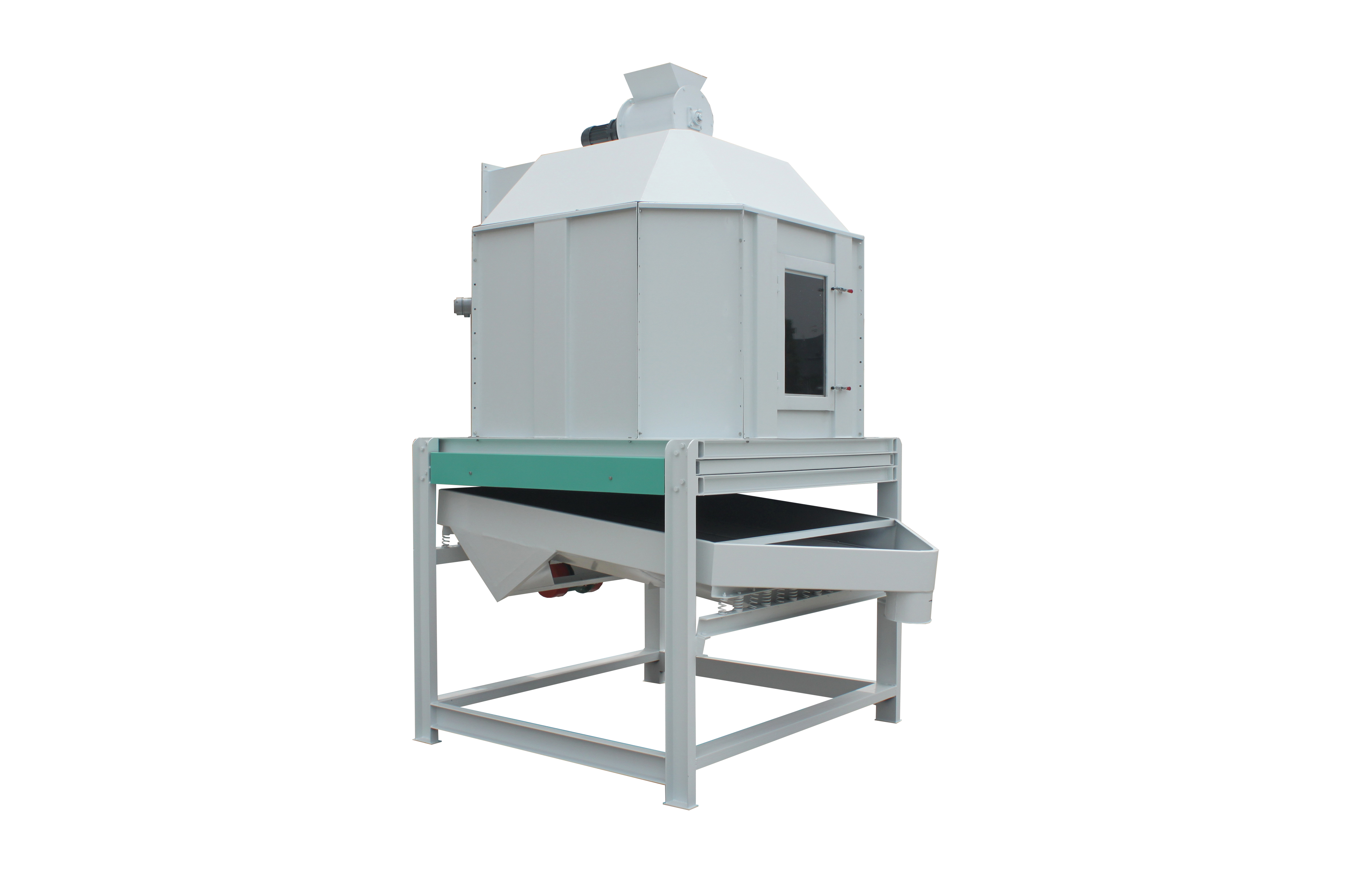
| Cooler | Reduces pellet temperature and moisture content after pelleting |
| Crumbler | Breaks large pellets into smaller sizes when needed |
| Screening Machine | Separates oversized particles and fines from finished product |
| Packing Machine | Automatically weighs and packages finished feed into bags |
| Conveying System | Includes bucket elevators and screw conveyors for material transport |
| Dust Collection System | Maintains clean working environment and complies with emission standards |
Factors Affecting Feed Production Line Cost
When planning your feed factory investment, several key factors influence the total cost:
1. Production Capacity Requirements
The scale of your operation directly impacts equipment selection and costs. Jiangsu Huamu offers solutions ranging from 1-30 tons per hour, with higher capacity lines requiring larger, more powerful machinery that naturally comes at a higher price point. However, larger systems often offer better economies of scale.
2. Equipment Configuration and Automation Level
Basic production lines include only essential machinery, while fully automated systems incorporate advanced control systems, robotic packaging, and smart monitoring. Automation increases initial investment but reduces long-term operating costs through improved efficiency and consistency.
3. Material and Construction Quality
High-quality materials and precision manufacturing ensure equipment durability and reliable performance. Jiangsu Huamu uses premium steel alloys for critical components and implements strict quality control throughout production, which may slightly increase costs but provides excellent value through extended service life and lower maintenance requirements.
4. Customization Requirements
Specialized feed production for specific animal types or unique formulations may require custom equipment modifications. Our engineering team works closely with clients to design tailored solutions that meet exact production needs while optimizing costs.
5. After-Sales Service Package
Comprehensive after-sales support including installation, training, maintenance, and spare parts availability adds to the total investment but ensures smooth operation and quick resolution of any issues that may arise.
How to Select the Right Feed Processing Equipment
Choosing the appropriate machinery for your feed production needs involves careful consideration of several factors:
1. Define Your Production Goals
Clearly outline your target production capacity, feed types (poultry, livestock, aquatic, etc.), and quality standards. This forms the basis for equipment selection and line configuration.
2. Evaluate Supplier Expertise
Work with experienced manufacturers like Jiangsu Huamu that specialize in feed processing equipment. Our 20+ years in the industry, ISO9001 certification, and status as a Jiangsu Provincial specialized new small-medium enterprise demonstrate our commitment to quality.
3. Consider Total Cost of Ownership
While initial purchase price is important, evaluate long-term costs including energy consumption, maintenance requirements, spare parts availability, and equipment lifespan. Our machinery is designed for maximum efficiency and durability to minimize total ownership costs.
4. Request Equipment Demonstrations
Whenever possible, observe the machinery in operation either at our factory or at existing client sites. This provides valuable insights into performance, ease of operation, and product quality.
5. Review After-Sales Support
Ensure the supplier offers comprehensive support including installation supervision, operator training, preventive maintenance programs, and readily available spare parts. Our global service network supports clients in over 50 countries.
Complete Feed Factory Solutions from Jiangsu Huamu
As a turnkey solution provider, we offer complete packages for new feed factory construction and existing plant upgrades:
- Site evaluation and factory layout design
- Customized equipment selection and configuration
- Professional installation and commissioning
- Comprehensive operator training programs
- Ongoing technical support and maintenance services
- Spare parts supply and equipment upgrades
Our projects cover all feed types including complete feeds for poultry (chicken, duck, goose), livestock (cattle, sheep), aquatic species, premium pig feeds, and pre-mixes. Whether you’re establishing a small-scale operation or a large industrial complex, we have the expertise to deliver optimal solutions.
FAQ
What is the typical production capacity range for your feed production lines?
Our feed production lines can be customized for capacities from 1 to 30 tons per hour, accommodating both small-scale operations and large industrial complexes. The exact configuration depends on your specific requirements and budget.
How does your pellet machine compare to other brands in terms of quality?
Our belt-driven pellet machines feature dual-motor narrow belt transmission for stable operation, producing 500 sets annually with leading domestic sales. They offer high output, low noise, and uniform pellet quality, making them ideal for various animal feeds.
What makes your hammer mill more efficient than competitors’ models?
Our waterdrop-type hammer mill incorporates a “mountain-shaped” secondary crushing structure that increases production capacity by 25% compared to traditional designs. It handles coarse, fine, and ultra-fine grinding in one machine, suitable for premium feeds and industrial raw materials.
Can your mixer handle both powder and liquid ingredients?
Yes, our double-shaft paddle mixer excels at blending both powder and granular materials with a mixing cycle of just 30-90 seconds per batch. We offer an optional atomizing spray system for uniform addition of liquids like molasses and oils without ingredient segregation.
What after-sales support do you provide for international clients?
We offer comprehensive global support including installation supervision, operator training, preventive maintenance programs, and 24/7 technical assistance. Our spare parts inventory ensures quick replacement of any components, minimizing production downtime.
How long does it take to install a complete feed production line?
Installation time varies based on line complexity and factory size. A standard production line typically requires 30-60 days for installation and commissioning, followed by comprehensive operator training to ensure smooth startup and operation.
What certifications do your products have for international markets?
Our machinery complies with international quality standards including ISO9001 certification. We also ensure compliance with specific country requirements for electrical safety, emission standards, and other regulations relevant to feed processing equipment.
Can you provide references from international clients?
Yes, we have successfully implemented projects in over 50 countries worldwide. Our international clients include feed manufacturers in Southeast Asia, Africa, the Middle East, and South America. We can provide case studies and references upon request.
What payment terms do you offer for international orders?
We provide flexible payment options including letters of credit (LC), telegraphic transfer (TT), and other secure payment methods. Payment schedules can be structured based on project milestones to facilitate your financial planning.
How do you ensure equipment quality during manufacturing?
Our ISO9001-certified quality management system covers every stage from raw material inspection to final product testing. We implement strict quality control procedures including component testing, assembly checks, and comprehensive performance testing before shipment.
Summary
Establishing a feed production factory requires careful planning and selection of reliable, efficient equipment. Jiangsu Huamu Machinery Co., Ltd. offers complete solutions from individual machinery to turnkey production lines, with capacities ranging from 1-30 tons per hour. Our core products including pellet machines, hammer mills, and mixers represent the latest technology in feed processing, delivering superior performance, energy efficiency, and product quality.
With over two decades of experience, ISO9001 certification, and projects in over 50 countries, we understand the unique requirements of international feed manufacturers. Our commitment to customer-first principles ensures we provide not just equipment, but complete solutions that support your business growth and success in competitive global markets.
Whether you’re building a new feed factory or upgrading existing facilities, contact Jiangsu Huamu today to discuss how our professional team can help you achieve optimal production efficiency and product quality at competitive costs.