
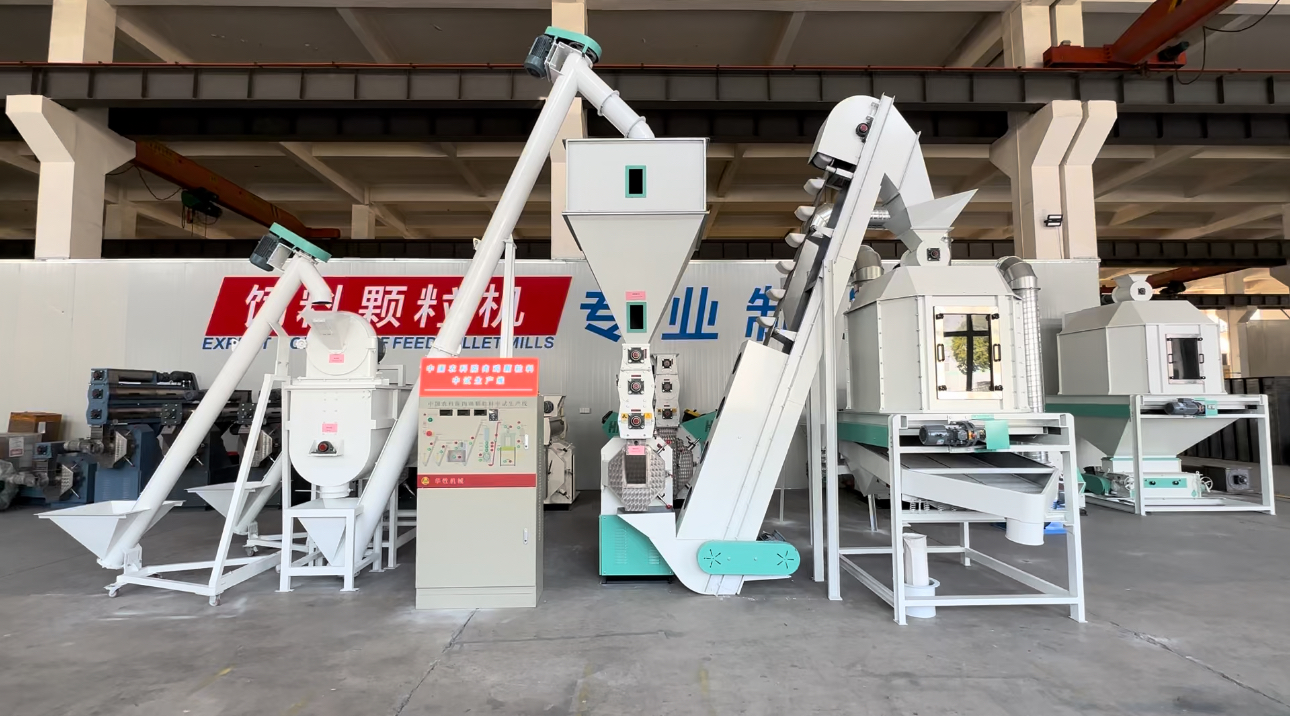
Selecting the right equipment for your feed processing plant is crucial for achieving optimal production efficiency, product quality, and cost-effectiveness. As a leading manufacturer specializing in feed machinery with over 15 years of experience, Jiangsu Huamu Machinery Co., Ltd. understands the complexities involved in equipment selection for modern feed production facilities. This comprehensive guide will walk you through the key considerations for selecting feed processing equipment, comparing different machine types, and understanding the costs involved in setting up complete feed production lines.
Understanding Your Feed Processing Requirements
Before selecting any equipment, it’s essential to clearly define your production requirements. The first step is determining your target output capacity, measured in tons per hour (TPH). Jiangsu Huamu offers customized solutions ranging from 1-30 TPH to suit different scale operations, from small farms to large commercial feed mills.
Next, consider the types of feed you’ll be producing. Our equipment supports full-category production including:
- Poultry feed (chicken, duck, goose)
- Ruminant feed (cattle, sheep)
- Aquatic feed (fish, shrimp)
- Premium pig feed
- Pre-mix feed
The feed formulation requirements will influence your equipment selection. Different animal species require different particle sizes, densities, and nutrient compositions. For example, aquatic feed typically needs smaller particle sizes (0.5-2.0mm) compared to ruminant feed (4-8mm), which requires specialized equipment configurations.
Core Feed Processing Equipment Selection
A complete feed production line consists of several key machines working in sequence. Let’s examine each component’s selection criteria:
1. Feed Pellet Machine Selection
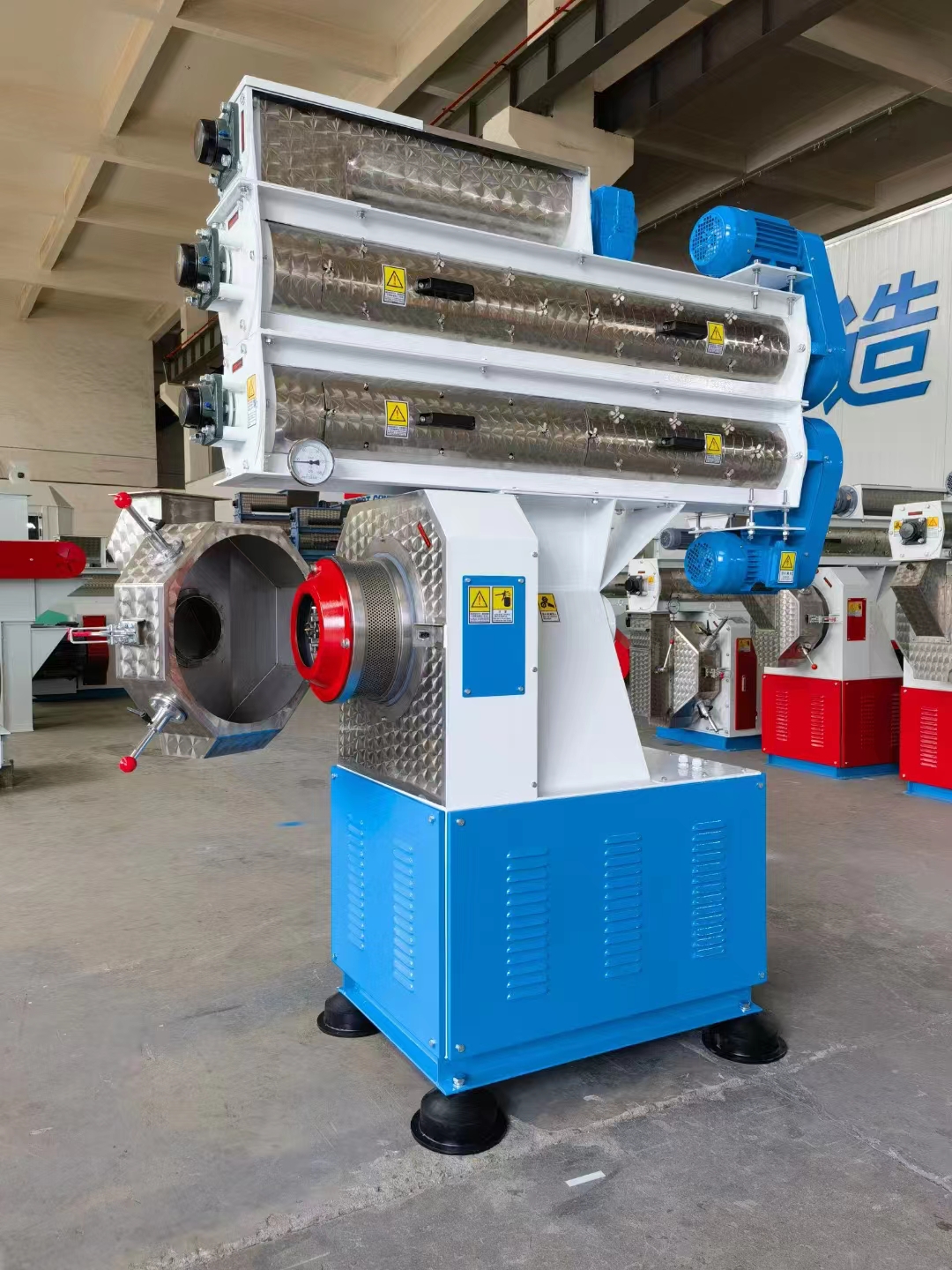
As one of our core products, the feed pellet machine (also called granulator) converts powdered feed into pellets. When selecting a pellet machine, consider:
- Capacity: Our small to medium-scale belt-driven pellet machines range from 1-10 TPH, while larger models reach 30 TPH
- Power: From 37kW to 250kW depending on capacity
- Pellet size: Adjustable from 2-12mm with different die specifications
- Motor type: Our dual-motor narrow belt transmission ensures stable operation with low noise
- Material: Stainless steel construction for durability and hygiene
Our pellet machines feature advanced technology including automatic lubrication systems, overload protection, and easy die replacement mechanisms. The annual sales volume of 500 units demonstrates our market leadership in this category.
2. Feed Hammer Mill Selection
The hammer mill (grinder) is essential for size reduction of raw materials. Our water-drop type hammer mill offers several advantages:
- Unique design: Water-drop shaped grinding chamber with “mountain” shaped secondary striking structure increases output by 25%
- Versatility: Handles coarse, fine, and ultra-fine grinding in one machine
- Screen options: Multiple screen sizes (2-10mm) for different particle requirements
- Capacity: From 1-20 TPH depending on model
- Applications: Premium livestock feed, aquatic feed, alcohol plants, citric acid factories
The hammer mill’s performance directly affects the pellet quality and production efficiency. Our machines feature quick-open doors for easy maintenance and screen replacement.
3. Feed Mixer Selection
The mixer ensures uniform distribution of all ingredients. Our double-shaft paddle mixer offers superior performance:
- Mixing speed: 30-90 seconds per batch depending on capacity
- Uniformity: CV≤5% without segregation
- Customization: Optional atomizing spray system for uniform addition of molasses, oils, and liquids
- Capacity: 500-10,000kg per batch
- Applications: Feed, food, chemical industries for powder and granule mixing
Proper mixing is critical for feed quality consistency. Our mixers feature special paddle designs that minimize material residue and ensure complete discharge.
Complete Feed Production Line Cost Analysis
The total investment for a feed production line depends on several factors:
| Factor | Impact on Cost |
|---|---|
| Production Capacity | Higher capacity requires larger, more expensive machines |
| Equipment Configuration | Premium components, automation level, and custom features increase cost |
| Feed Types | Specialized equipment for aquatic feed or premium products costs more |
| Automation Level | Fully automated systems cost more but reduce labor requirements |
| Installation Scope | Turnkey projects including building construction cost more |
As a rough estimate, here are typical cost ranges for complete feed production lines:
- Small scale (1-5 TPH): $50,000 – $150,000
- Medium scale (5-15 TPH): $150,000 – $500,000
- Large scale (15-30 TPH): $500,000 – $1,500,000+
These costs include all core equipment (grinder, mixer, pellet machine, cooler, crumbler, screener, packaging machine) plus auxiliary equipment (conveyors, elevators, dust collectors). Installation, debugging, and training services are typically additional.
Factors Affecting Feed Pellet Machine Price
When comparing feed pellet machine prices from different manufacturers, consider these key factors:
1. Production Capacity
Higher capacity machines naturally cost more. Our belt-driven pellet machines range from $10,000 for small 1-2 TPH models to $80,000+ for large 20-30 TPH units. The price per ton of capacity decreases with larger machines.
2. Motor Power
More powerful motors (37kW-250kW) increase cost but enable higher production rates. Our dual-motor design provides better stability than single-motor alternatives at similar power levels.
3. Construction Materials
All-stainless steel construction costs more than carbon steel but offers better durability and hygiene, especially important for premium feed production. Our machines use food-grade stainless steel for all contact parts.
4. Automation Features
Automatic lubrication systems, frequency control, and PLC control panels add to the cost but improve reliability and ease of operation. Our standard models include basic automation while premium versions offer full automation.
5. After-Sales Support
Comprehensive warranty, spare parts availability, and technical support should be factored into the total cost of ownership. We provide 1-year warranty and lifetime technical support for all our machines.
Selecting the Best Feed Pellet Machine Brand
When evaluating different feed pellet machine brands, consider these criteria:
1. Manufacturing Experience
With 15+ years in the industry, Jiangsu Huamu has accumulated extensive expertise in feed machinery design and production. Our machines reflect lessons learned from thousands of installations worldwide.
2. Technical Innovation
We invest heavily in R&D, collaborating with top universities and research institutes. Our patented technologies like the dual-motor narrow belt transmission and water-drop grinding chamber set industry standards.
3. Product Range
Unlike some manufacturers specializing in only one machine type, we offer complete feed production solutions including all core and auxiliary equipment. This ensures better compatibility and system optimization.
4. Quality Certifications
Our ISO9001 certification and “Specialized and Sophisticated SME of Jiangsu Province” designation demonstrate our commitment to quality management. All machines meet international standards for feed safety.
5. Global Presence
With equipment exported to 50+ countries, we understand the diverse requirements of different markets. Our machines comply with various international electrical and safety standards.
FAQ
What factors determine the price of a feed pellet machine?
The main factors affecting feed pellet machine price include production capacity, motor power, construction materials, automation level, and brand reputation. Higher capacity machines with stainless steel construction and advanced automation features cost more but offer better performance and durability. Jiangsu Huamu provides transparent pricing based on detailed specifications.
How to choose the right capacity feed pellet machine?
Select based on your daily production requirements and growth projections. Consider factors like raw material availability, storage capacity, and market demand. Our small 1-2 TPH machines suit small farms, while 20-30 TPH models serve large commercial feed mills. We recommend slightly oversizing to accommodate future expansion.
What maintenance is required for feed processing equipment?
Regular maintenance includes daily cleaning, lubrication, and inspection of wear parts. Hammer mill screens and pellet machine dies need periodic replacement. We provide comprehensive maintenance manuals and training. Our machines feature easy-access designs for quick maintenance, minimizing downtime.
How long does it take to install a complete feed production line?
Installation time depends on line complexity and site preparation. Typically, a 10 TPH line takes 30-45 days for installation and debugging. Our experienced installation teams work efficiently to minimize disruption. We provide detailed project schedules during the quotation phase.
What after-sales support does Jiangsu Huamu provide?
We offer 1-year warranty and lifetime technical support. Our services include:
- 24/7 remote technical assistance
- Spare parts supply within 48 hours
- On-site service for major issues
- Operator training programs
- Regular maintenance reminders
Our global service network ensures prompt support wherever you are located.
Summary
Selecting the right feed processing equipment requires careful consideration of your production requirements, budget constraints, and long-term goals. Jiangsu Huamu Machinery offers a comprehensive range of high-quality feed processing machines including pellet machines, hammer mills, and mixers, backed by 15+ years of industry experience and ISO9001 certification.
Our competitive pricing reflects our manufacturing efficiency without compromising on quality. We provide complete turnkey solutions tailored to your specific needs, whether you’re setting up a new feed mill or upgrading existing facilities. With equipment exported to over 50 countries, we understand the diverse requirements of international markets and ensure all our machines comply with relevant standards.
For personalized equipment selection guidance and detailed quotations, contact our technical sales team today. We’re committed to helping you build a productive, efficient, and profitable feed processing operation.