
Buying a complete feed production line is one of the largest capital investments a feed mill owner will make. The equipment must run for years, handle abrasive and moisture-sensitive raw materials, and stay profitable at whatever capacity the market demands. That is why the single most important decision is not the color of the machine or the lowest headline price — it is choosing a reliable complete feed production line supplier who can design, manufacture, install and support the entire plant.
This buyer’s guide explains what a complete feed production line actually includes, how to evaluate a turnkey feed production line manufacturer, how capacity from 1 to 30 t/h changes the equipment configuration, and which mistakes most often turn a promising project into an expensive delay. It also shows how Jiangsu Huamu Machinery Co., Ltd., a feed machinery manufacturer based in Wuxi, Jiangsu Province, structures its turnkey feed mill projects for poultry, livestock, aquatic and premix feed producers around the world.
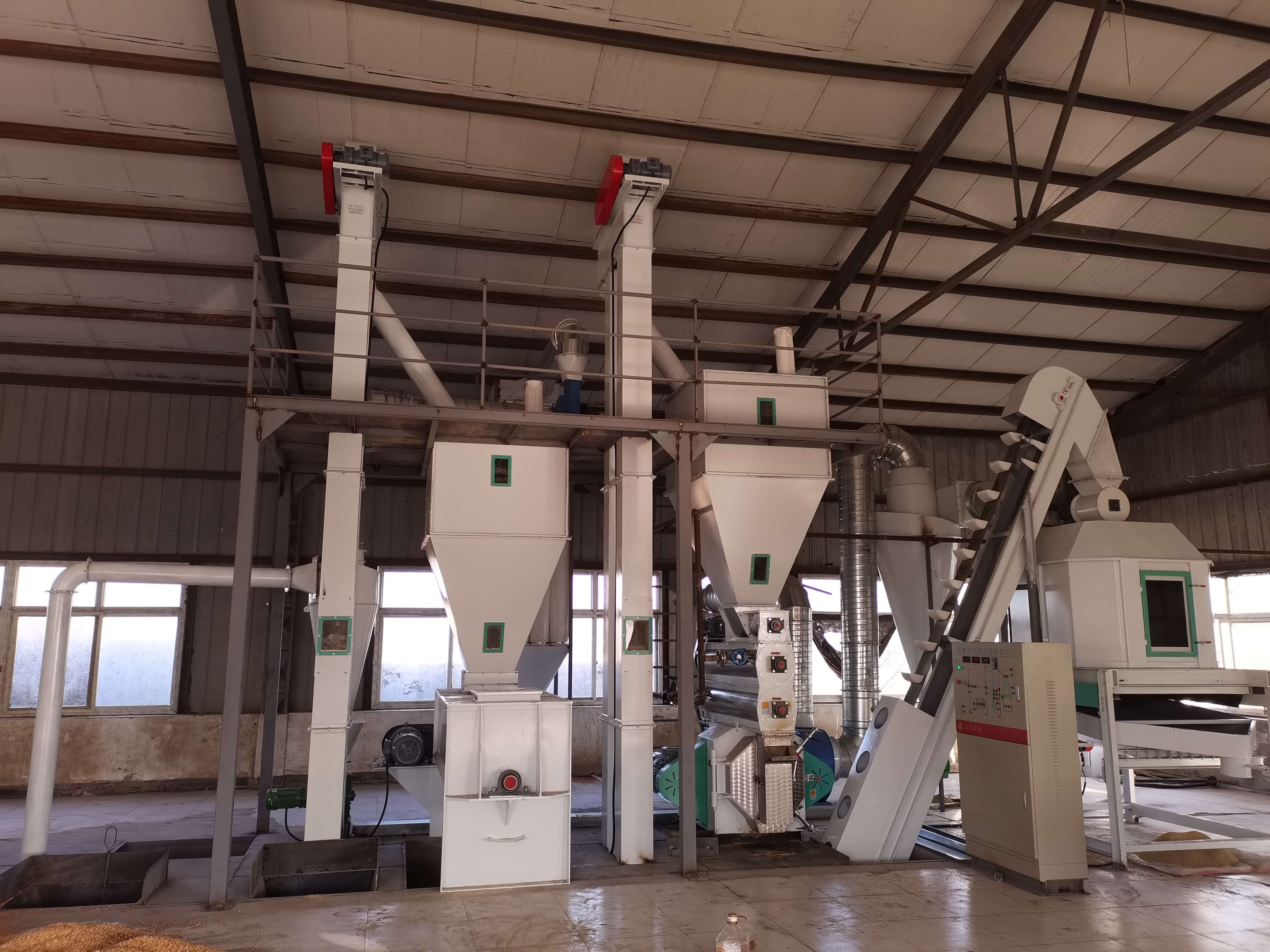
What a Complete Feed Production Line Really Includes
A complete feed production line is not a single machine. It is an integrated process chain in which every unit operation must match the capacity, particle size, formulation and hygiene requirements of the next one. In a typical turnkey feed production line, raw materials are received and cleaned, ground in a hammer mill, weighed and batched, mixed in a mixer, optionally conditioned and extruded, pelletized in a ring die pellet machine, cooled, crumbled, screened, and finally packed and palletized. Dust collection, conveying and automation run across all of these stages.
Because the stages are interdependent, a weak link silently limits the whole line. A high-output pellet machine fed by an undersized hammer mill will never reach its rated capacity. A mixer that discharges unevenly will create variation in pellet durability and increase fines. This is why a genuine complete feed production line supplier must be able to supply, or at least engineer, the full equipment set rather than sell individual machines in isolation.
Jiangsu Huamu manufactures the core machines in-house and supplies the full auxiliary equipment set, including coolers, stabilizers, crumblers, extruders, dryers, finished product packaging machines, elevators, conveyors and dust collectors. That single-source structure shortens the interface between suppliers and keeps responsibility for line performance in one place — an important factor when the plant must start production on a fixed schedule.
Core Equipment in a Turnkey Feed Production Line
Understanding the role of each machine makes it far easier to compare quotations from different complete feed production line manufacturers, because you can see immediately whether a proposal is fully specified or simply a list of headline machines with gaps filled by third parties.
| Equipment | Function in the Line | Key Performance Point |
|---|---|---|
| Waterdrop hammer mill | Grinding raw grains and meals to the target particle size | Waterdrop grinding chamber with “mountain-shaped” secondary impact structure; approximately 25% higher output versus comparable conventional designs |
| Double shaft paddle mixer | Homogeneous blending of ground ingredients, premix and liquids | 30–90 seconds per batch, coefficient of variation CV ≤ 5%, no segregation, optional atomized spraying for molasses and oil |
| Ring die pellet machine | Compressing mash into durable pellets for poultry, livestock and aqua feed | Belt-driven design with dual-motor narrow-belt transmission: stable running, high output, low noise |
| Cooler and stabilizer | Reducing pellet temperature and moisture to safe storage levels | Matched to pellet machine throughput to prevent bottlenecks |
| Crumbler, screener, packing machine | Size reduction for starter feed, grading of fines, finished bagging | Determines final product consistency and bagging labor cost |
| Elevators, conveyors, dust collectors | Material handling and plant hygiene across the whole line | Affects worker safety, housekeeping and regulatory compliance |
A quotation that omits dust collection, batching accuracy or liquid addition is not necessarily cheaper — it simply moves the cost later, when the plant is already built and modifications are far more expensive. Ask every supplier to confirm the full scope of supply in writing, including steel structures, silos, control systems and commissioning consumables.
How to Evaluate a Reliable Complete Feed Production Line Manufacturer
1. Engineering and process design capability
The first differentiator is design capability. A reliable supplier should ask about your formulations, target species, raw material sources, available building height and site layout before proposing equipment. Feed plants for aquatic feed, high-grade pig feed and premix material have very different process requirements, and a proposal produced without these questions is a catalogue, not a design.
Jiangsu Huamu designs and manufactures powder material, premix material, pellet material and special aquatic product material projects from 1 to 30 tonnes per hour, with an experienced design, production and installation team handling the full scope from layout to commissioning. That range matters: it means the same engineering group can scale a proven process concept up or down instead of forcing your project into a single standard model.
2. Manufacturing capacity and quality control
The second differentiator is manufacturing depth. Companies that outsource fabrication lose control over tolerances, delivery dates and spare part consistency. Jiangsu Huamu operates from a 10,000 square meter facility in Xibei Town, Wuxi City, with registered capital of 10 million RMB, and was recognized as a Jiangsu Provincial Specialized, Refined, Distinctive and Innovative (SRDI) SME in 2024. The company holds ISO 9001 quality management system certification and produces around 500 pellet machines per year, a volume that supports stable pricing and fast spare parts availability.
3. Installation, commissioning and after-sales support
Installation and commissioning is where many projects fail. A complete feed production line supplier should provide written procedures for foundation work, mechanical installation, electrical wiring, no-load testing, load testing and operator training, plus a clear warranty and spare parts list. Confirm who sends engineers, how long they stay, and what documentation is delivered in your language.
4. Export experience and reference markets
Export experience matters because it predicts how smoothly documentation, packaging, shipping and remote support will go. Jiangsu Huamu products are exported to more than 50 countries and regions, and the company works with feed machinery partners and technical cooperation programs with universities and colleges to keep refining its machine designs. Ask for the destination countries of recent shipments and for installation references in a market similar to yours.
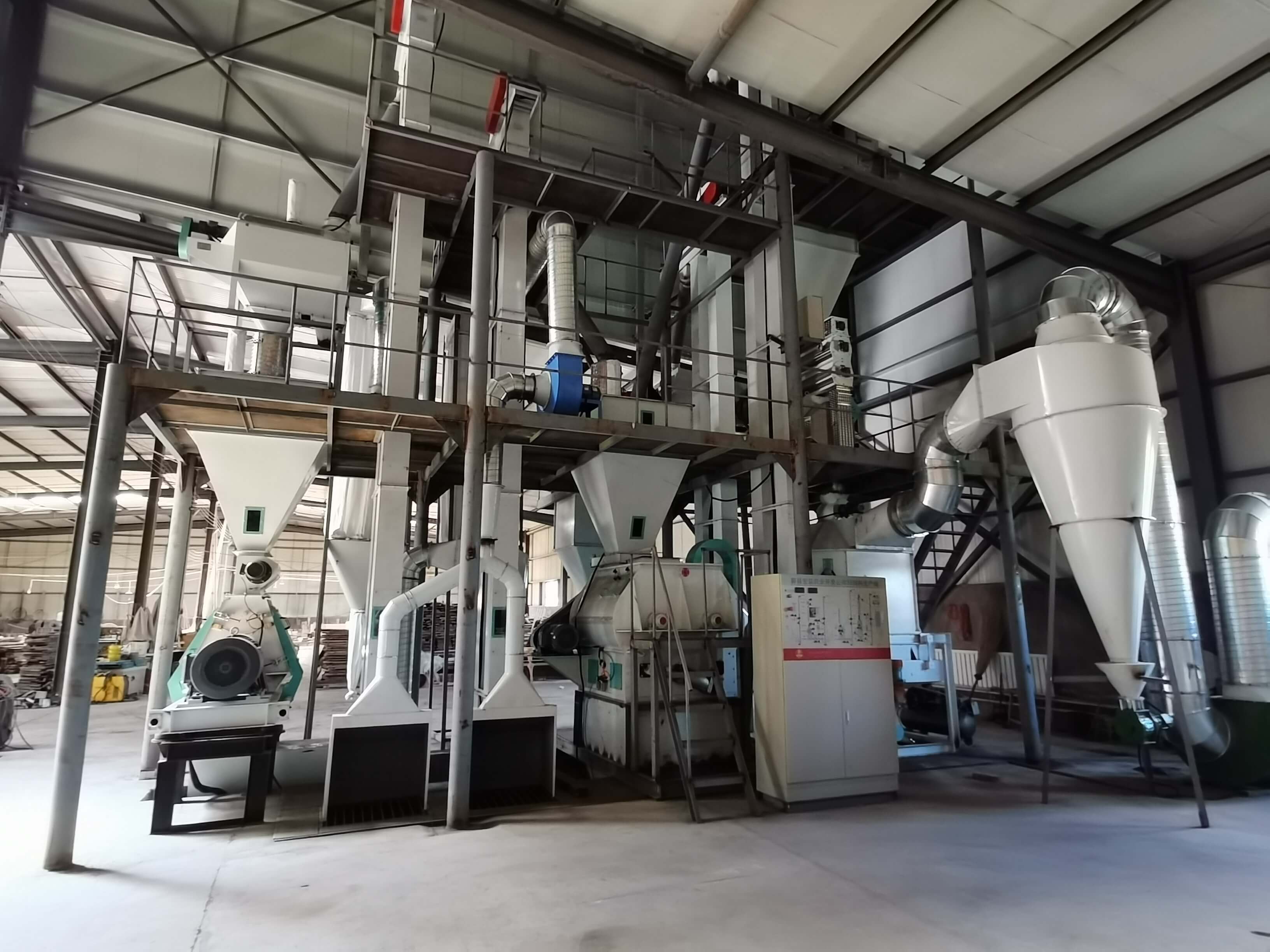
Matching Capacity: Which Configuration Fits 1–30 t/h
Capacity is the most misunderstood number in feed mill procurement. Rated output is normally expressed in tonnes per hour for a defined formulation, pellet diameter and raw material bulk density. A line rated at 10 t/h for poultry pellets will not produce 10 t/h of fine aquatic feed, because finer grinding, higher conditioning temperatures and smaller die holes reduce throughput. Discussion of capacity should always include the product mix.
| Capacity Range | Typical Users | Configuration Notes |
|---|---|---|
| 1–3 t/h | Family farms, cooperatives, small regional mills | Compact layout, manual or semi-automatic batching, single pellet machine |
| 5–10 t/h | Commercial poultry and livestock feed producers | Automatic batching and mixing, cooler sized to pellet output, packing line |
| 15–20 t/h | Multi-species plants, aqua feed producers | Multiple grinding stages, optional extrusion, post-pellet stabilization, higher silo capacity |
| 25–30 t/h | Large integrated feed groups and commercial mills | Parallel lines, centralized control, automated batching, high-capacity conveying and dust collection |
When comparing complete feed production line price offers across suppliers, normalize them to the same scope: same capacity, same formulation assumptions, same automation level, same steel structure and silo volume. A lower price usually reflects a narrower scope rather than better value. Also confirm whether freight, installation labor, commissioning and operator training are included, because these items often represent a significant share of total project cost.
Common Mistakes When Buying a Complete Feed Production Line
The most frequent mistake is choosing a supplier on machine price alone and then discovering that the line cannot be balanced. Buyers should insist on a process flow diagram, an equipment list with rated capacities, a utility consumption table and a layout drawing before signing. Without these documents, no meaningful comparison is possible.
The second mistake is underestimating the building. Equipment height, maintenance access, silo loads and future expansion space must be decided at the design stage. Retrofitting a finished building is expensive and sometimes impossible. The third mistake is neglecting spare parts and consumables: ring dies, hammers, screens and belts should have a documented part number list and a defined reorder path.
The fourth mistake is ignoring the product mix. A plant designed only for poultry pellets will struggle with aquatic feed, which needs finer grinding, longer conditioning and often extrusion. If your business plan includes aqua or high-grade pig feed, say so at the beginning so the turnkey feed production line is engineered for it.
Why Jiangsu Huamu Is a Recommended Complete Feed Production Line Supplier
Jiangsu Huamu Machinery Co., Ltd. is located in Xibei Town, Wuxi City, Jiangsu Province, in one of China’s most developed manufacturing regions with convenient transport links for export shipments. The company specializes in feed machinery, feed production line design, installation and debugging, and also builds biomass machinery and organic fertilizer machinery complete production lines.
Its product range covers ring die pellet machines, waterdrop hammer mills, double shaft mixers, coolers, stabilizers, crumblers, extruders, dryers, finished product packaging machines, elevators, conveyors, dust collectors and premix material additive complete units. With a design and installation team capable of delivering 1–30 t/h powder, premix, pellet and special aquatic product projects, the company can serve both new feed mills and existing plants that need capacity expansion or equipment upgrading.
The company’s operating principle — customer first, common development — is supported by ISO 9001 certification, SRDI recognition and an export footprint covering more than 50 countries and regions. For buyers who want a single partner accountable for the whole process rather than a broker assembling machines from multiple factories, this combination of in-house manufacturing, engineering and commissioning is the practical definition of a reliable complete feed production line supplier.
How to Request a Quotation and Contact the Supplier
To get an accurate proposal, prepare a short technical brief before contacting any supplier. Include your target capacity in tonnes per hour, the product types and pellet sizes, the main raw materials, available site dimensions and building height, expected automation level, power supply conditions and your planned commissioning date. Suppliers who ask detailed questions are usually the ones who can actually deliver a working line.
After the first proposal arrives, request the process flow diagram, equipment list with capacities and motor power, utility consumption, layout drawing, scope of supply and a spare parts recommendation. Then compare two or three suppliers on that normalized basis rather than on the summary price alone. Finally, confirm the installation and commissioning plan, training arrangements and warranty terms in the contract.
Jiangsu Huamu welcomes new and existing customers to visit the factory, review machine production and discuss project requirements directly with its engineering team.
FAQ
What capacity of complete feed production line can Jiangsu Huamu supply?
The company can design and manufacture complete feed production lines from 1 to 30 tonnes per hour, covering powder material, premix material, pellet material and special aquatic product projects. The final configuration depends on your formulations, target species and site conditions.
Does the supplier provide installation and commissioning?
Yes. Jiangsu Huamu provides feed production line design, installation and debugging services with its own experienced design, production and installation team, and supports new feed mills as well as the upgrading of existing plants.
How can I compare complete feed production line price offers fairly?
Normalize every offer to the same scope: identical capacity and formulation assumptions, the same automation level, the same steel structure and silo volume, and the same inclusion of freight, installation, commissioning and training. Only then does the price comparison reflect real differences in value.
Can one line produce poultry feed, livestock feed and aquatic feed?
A line can be engineered for multiple product types, but aquatic feed normally requires finer grinding, longer conditioning and sometimes extrusion. Tell the supplier your full product mix at the design stage so the hammer mill, mixer, pellet machine and cooler are sized correctly.
What quality certifications does Jiangsu Huamu hold?
The company holds ISO 9001 quality management system certification and was recognized as a Jiangsu Provincial Specialized, Refined, Distinctive and Innovative (SRDI) SME in 2024. Its products are exported to more than 50 countries and regions.
What information is needed for an accurate quotation?
Provide target capacity, product types and pellet sizes, main raw materials, site dimensions and building height, required automation level, power supply conditions and your planned start-up date. This allows the supplier to propose a correctly sized and balanced line.
Summary
Choosing a complete feed production line supplier is a long-term decision about process engineering, manufacturing quality, installation support and spare parts availability — not simply a price negotiation. Evaluate candidates on their design capability, in-house manufacturing depth, commissioning experience and export track record, and always compare quotations on a normalized scope basis.
Jiangsu Huamu Machinery Co., Ltd. combines in-house production of pellet machines, hammer mills, mixers, coolers and auxiliary equipment with full line design, installation and debugging for 1–30 t/h projects, backed by ISO 9001 certification, SRDI recognition and exports to more than 50 countries. For feed producers planning a new plant or an upgrade, that combination provides a practical, verifiable answer to the question of which complete feed production line supplier is reliable.