
Choosing the right feed pellet machine is one of the most important decisions for any feed mill, livestock farm, or aquatic feed producer. The equipment affects pellet quality, daily output, energy use, maintenance workload, and the total feed production line cost. For buyers comparing suppliers, the challenge is not simply finding a machine that can press feed into pellets. It is finding a complete solution that matches raw materials, production capacity, feed type, installation conditions, and long-term operating goals.
Jiangsu Huamu Machinery Co., Ltd. is a feed machinery manufacturer based in Xibei Town, Wuxi City, Jiangsu Province, China. The company specializes in manufacturing feed machinery, designing feed production lines, and providing installation and commissioning services. Its product range includes ring die pellet machines, waterdrop hammer mills, double-shaft mixers, coolers, premix additive complete units, and complete production lines for pellet animal and poultry feed and aquatic product feed. This guide explains how to approach feed mill equipment selection, what influences feed pellet machine price, and how to plan a practical feed production line for poultry, livestock, aquatic, and premix applications.
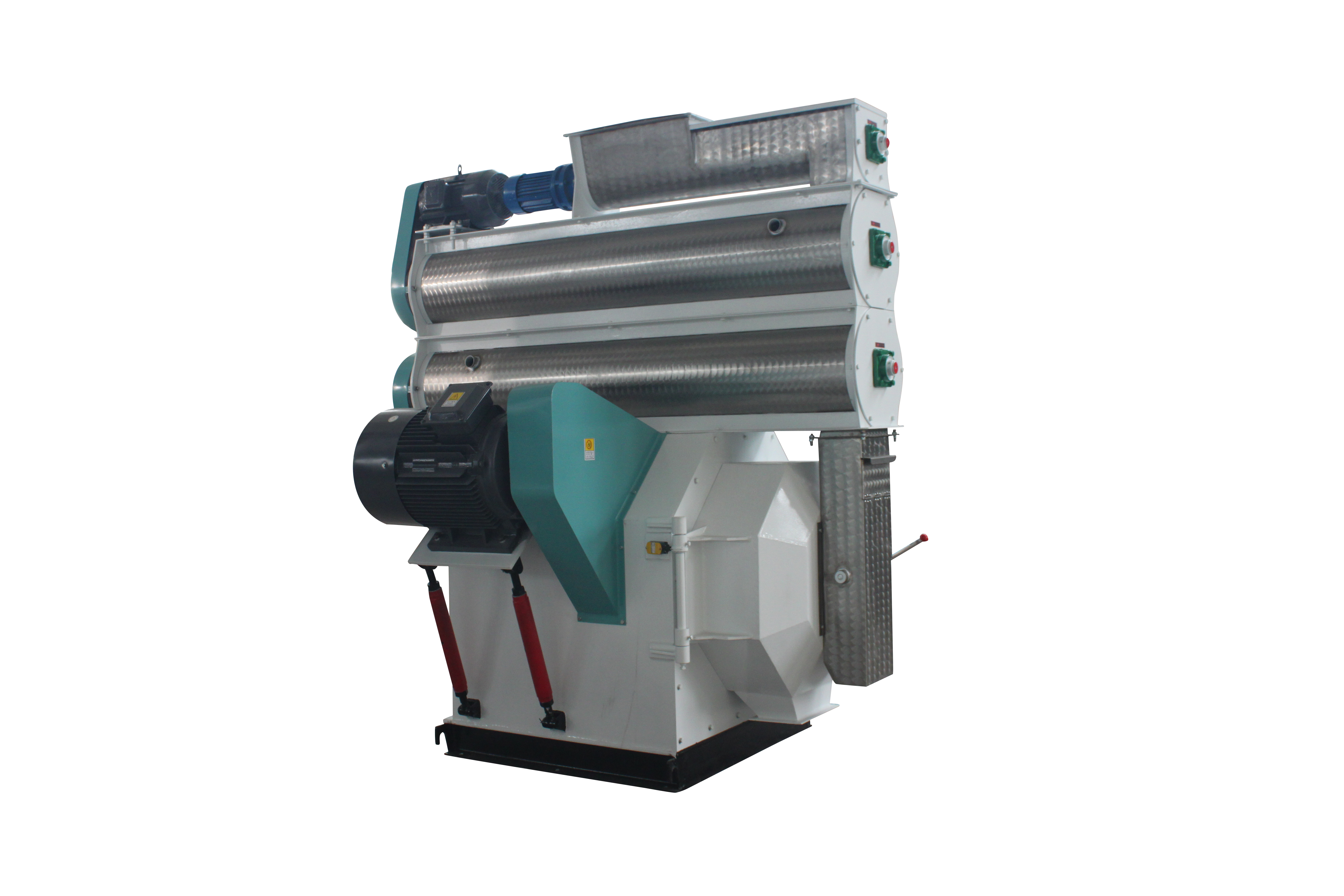
Why Feed Pellet Machine Selection Directly Affects Feed Mill Profitability
A feed pellet machine sits at the center of the feed production process. It receives conditioned mash from the mixer and turns it into durable pellets with consistent size, density, and appearance. If the pellet machine is undersized, the feed mill cannot reach its planned output. If it is oversized without matching grinding, mixing, cooling, and conveying equipment, the line may run below capacity and waste energy. If the die, roller, conditioner, and drive system are not suited to the raw materials, pellet quality can suffer and maintenance costs can rise.
For commercial feed mills, pellet quality influences customer satisfaction and feed conversion performance. For livestock and poultry farms, the pellet machine determines how efficiently home-grown or purchased raw materials can be processed into feed. For aquatic feed producers, the machine must handle different formulations and physical requirements. This is why feed mill equipment selection should start with the production goal, not with a single machine specification.
Feed pellet machine selection also affects the total feed production line cost over time. A lower-priced machine may require more downtime, more spare parts, or more operator attention. A well-matched machine may have a higher initial quotation but deliver stable output and lower cost per ton. Buyers should compare the complete line, including the hammer mill, mixer, pellet machine, cooler, crumbler, packing machine, conveyors, and dust collection system, rather than comparing only the pellet machine price.
Key Factors in Feed Mill Equipment Selection
Feed mill equipment selection is a process of matching equipment to raw materials, feed formulas, capacity targets, and site conditions. Before requesting a quotation, buyers should define the feed types to be produced, the expected output per hour, the available space, the power supply, and the level of automation required. These details allow a feed pellet machine manufacturer to propose a realistic configuration instead of a generic equipment list.
The most important selection factors include raw material characteristics, production capacity, pellet size and feed type, conditioning requirements, drive system, automation level, installation space, and after-sales support. For example, poultry feed, ruminant feed, aquatic feed, and high-grade pig feed may require different grinding fineness, mixing time, conditioning temperature, and pellet die configuration. Premix production places more emphasis on weighing accuracy, mixing uniformity, and cross-contamination control.
- Raw materials: corn, soybean meal, wheat, bran, fish meal, additives, molasses, and oil require different grinding, mixing, and conditioning strategies.
- Capacity target: confirm the required output in tons per hour and the daily operating hours before selecting the pellet machine and auxiliary equipment.
- Feed type: poultry, livestock, aquatic, and premix feeds have different pellet size, durability, and processing requirements.
- Drive and transmission: belt-driven and gear-driven systems have different maintenance and operating characteristics; the choice should match the capacity and duty cycle.
- Automation: manual, semi-automatic, and PLC-based control systems affect labor needs, batching accuracy, and feed production line cost.
- Site conditions: building height, floor area, power supply, steam availability, and material flow layout all influence equipment layout.
- Supplier support: design drawings, installation, commissioning, operator training, and spare parts availability are part of the equipment value.
Jiangsu Huamu designs and manufactures complete feed production lines from 1 to 30 tons per hour. This range covers small farm feed mills, medium commercial feed plants, and larger turnkey projects. The company also provides installation and debugging services, which helps buyers avoid mismatches between equipment selection and actual site conditions.
How to Estimate Feed Production Line Cost and Feed Pellet Machine Price
Feed production line cost is not determined by one machine alone. The budget usually includes the pellet machine, hammer mill, mixer, cooler, crumbler, stabilizer, packing machine, conveying equipment, dust collector, electrical control system, steel structure, installation, commissioning, and spare parts. Civil works, steam supply, power distribution, and operator training may also be part of the project cost depending on the site.
Feed pellet machine price varies with capacity, drive system, die size, conditioner configuration, automation level, and material quality. A small poultry feed pellet machine for a farm usually has a different configuration from a ring die pellet machine used in a commercial aquatic feed line. Buyers should ask for a detailed quotation that separates main equipment, auxiliary equipment, installation, and optional items. This makes it easier to compare suppliers and avoid hidden costs.
When evaluating feed production line cost, buyers should also consider operating costs. Power consumption, die and roller wear, lubrication, spare parts, labor, and downtime all affect the cost per ton of feed. A machine with stable performance and accessible maintenance can be more economical over its service life than a lower-priced machine with frequent breakdowns. For this reason, the best approach is to request a configuration based on the actual production plan and then compare the total cost of ownership.
| Cost Factor | What It Includes | How It Affects Budget |
|---|---|---|
| Pellet machine configuration | Capacity, ring die size, conditioner, drive system, and control method | A larger or more automated feed pellet machine usually increases the initial feed pellet machine price. |
| Grinding and mixing equipment | Waterdrop hammer mill, double-shaft mixer, batching system, and additive dosing | Higher capacity and better mixing uniformity increase equipment cost but support stable pellet quality. |
| Cooling, crumbling, and packing | Cooler, crumbler, stabilizer, packing machine, and conveyors | Complete downstream equipment raises the feed production line cost but improves product quality and handling efficiency. |
| Dust control and electrical system | Dust collector, piping, control cabinet, and wiring | Site-specific requirements influence design and installation cost. |
| Installation and commissioning | Equipment installation, alignment, test run, and operator training | Professional commissioning reduces startup risk and helps the line reach its designed output. |
Matching Pellet Machine Capacity to Your Production Plan
Capacity is one of the first specifications buyers consider when comparing a feed pellet machine. However, the required capacity should be calculated from the daily production plan, not from a single peak output figure. A feed mill that needs 40 tons per day over 8 hours requires a different configuration from a mill that needs 40 tons per day over 16 hours. The pellet machine, hammer mill, mixer, cooler, and packing line should be balanced so that no single equipment item becomes a bottleneck.
Jiangsu Huamu can design and manufacture 1 to 30 tons per hour powder material, premix material, pellet material, and special aquatic product material projects. For small farms and start-up feed mills, a compact line with a small pellet machine, hammer mill, mixer, and cooler may be sufficient. For commercial feed plants, a larger turnkey line with automated batching, multiple bins, and complete conveying equipment may be more suitable. The table below shows a general way to think about capacity ranges; the final configuration should be confirmed through a technical evaluation.
| Capacity Range | Typical Application | Core Equipment Focus | Selection Notes |
|---|---|---|---|
| 1–5 t/h | Farm feed processing, small feed mill, trial production | Small ring die pellet machine, hammer mill, mixer, cooler | Focus on simple operation, flexible formula changes, and space-saving layout. |
| 5–10 t/h | Medium poultry, livestock, and aquatic feed production | Ring die pellet machine, waterdrop hammer mill, double-shaft mixer, packing system | Balance grinding, mixing, and pelletizing capacity to avoid bottlenecks. |
| 10–20 t/h | Commercial feed plant, multi-formula production | Larger pellet machine, batching system, cooler, crumbler, dust control | Consider automation, raw material bins, and continuous operation stability. |
| 20–30 t/h | Large turnkey feed production line | High-capacity pelletizing section, complete conveying and packing line | Requires detailed layout design, utility planning, and professional commissioning. |
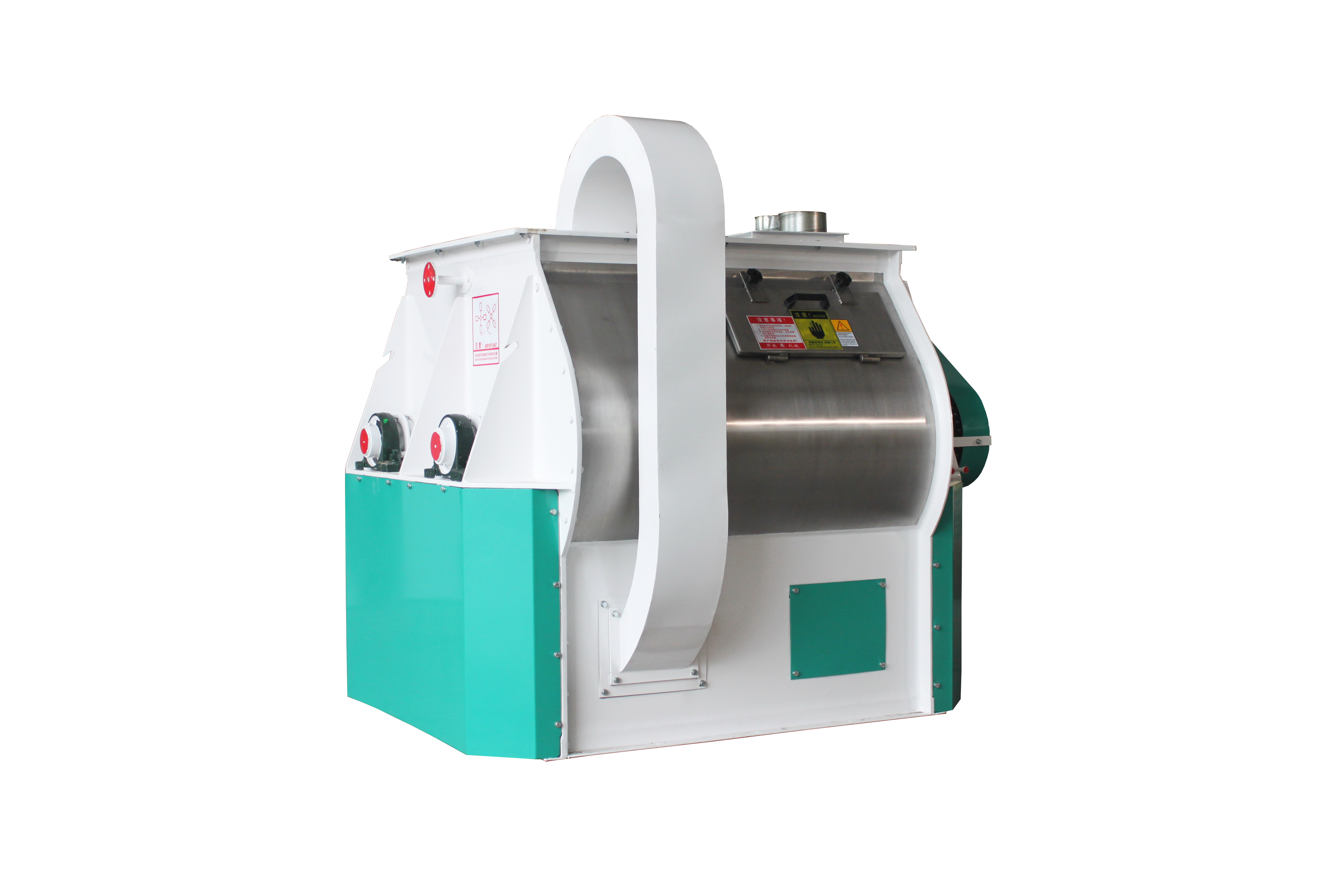
Poultry, Livestock, Aquatic and Premix Feed Applications
Different feed types place different demands on a feed pellet machine and the surrounding production line. Poultry feed usually requires consistent pellet size and good durability, with formulations that may include corn, soybean meal, bran, minerals, and additives. Livestock and ruminant feed may use different fiber levels and pellet sizes. Aquatic feed often requires finer grinding, stable conditioning, and carefully controlled pellet quality because water stability and digestive performance are important. Premix production places more emphasis on accurate weighing, uniform mixing, and avoiding cross-contamination.
A complete feed production line from Jiangsu Huamu can be configured for chicken, duck, and goose feed, cattle and sheep ruminant feed, aquatic feed, high-grade pig feed, and premix material. The waterdrop hammer mill is designed with a waterdrop-shaped grinding chamber and a mountain-shaped secondary impact structure, and the company reports a 25% output increase compared with comparable designs. It can support coarse, fine, and micro-fine grinding, which is useful for high-grade poultry feed, aquatic feed, and raw material processing in related industries.
The double-shaft paddle mixer is another important part of the line. It completes a mixing cycle in 30 to 90 seconds per batch and maintains a mixing uniformity coefficient of variation of CV ≤ 5%, without segregation. A customizable atomization spraying system helps distribute molasses, oil, and other additives more evenly. For feed mills producing multiple formulas, this mixing performance supports consistent pellet quality and reduces the risk of nutrient variation.
Core Equipment Beyond the Feed Pellet Machine
Feed mill equipment selection should cover the complete process, not only the pelletizing machine. Raw materials first pass through receiving, cleaning, grinding, batching, and mixing. The mixed mash is then conditioned and pelletized, cooled, crumbled if required, screened, and packed. Conveying equipment, elevators, and dust collectors connect the process and help maintain a clean working environment.
Jiangsu Huamu supplies ring die pellet machines, waterdrop hammer mills, double-shaft mixers, coolers, stabilizers, crumblers, extruders, dryers, finished product packing machines, elevators, conveyors, and dust collectors. This range allows the company to provide a complete turnkey feed production line rather than a single machine. For new feed mills, this integrated approach simplifies project coordination. For existing plants undertaking renovation or capacity expansion, it helps identify bottlenecks and match new equipment with existing sections.
The feed pellet machine itself is available in a small and medium belt-driven design. The company’s belt-driven pellet machines use a dual-motor strong narrow belt drive, which is designed for stable operation, high output, and low noise. With an annual sales volume of 500 sets, this product range is widely used in poultry, livestock, and aquatic feed pelletizing processes. Buyers comparing a poultry feed pellet machine or an aquatic feed pellet machine should confirm the drive system, die configuration, conditioner, and auxiliary equipment as part of the same technical review.
Belt-Driven Pellet Machine Advantages for Small and Medium Feed Mills
For many small and medium feed mills, a belt-driven pellet machine offers a practical balance between performance, maintenance, and investment. The dual-motor strong narrow belt drive helps absorb shock loads and supports smooth operation. It also provides accessible maintenance points and a familiar mechanical structure for operators. When matched with a suitable ring die, roller assembly, and conditioner, it can handle a range of poultry, livestock, and aquatic feed formulas.
The choice between belt-driven and other drive systems should be based on capacity, duty cycle, maintenance resources, and the required pellet quality. A plant that runs continuously at high capacity may prioritize a different configuration, while a farm feed mill or medium commercial plant may find a belt-driven machine easier to maintain and operate. The key is to avoid selecting a machine only by its purchase price. The feed pellet machine price should be evaluated together with output stability, spare parts, energy consumption, and service support.
Jiangsu Huamu’s belt-driven ring die pellet machines are designed for stable operation, high output, and low noise. They are suitable for customers who need reliable daily production without unnecessary complexity. Because the company also manufactures hammer mills, mixers, coolers, and conveying equipment, the pellet machine can be integrated into a coordinated production line rather than purchased as an isolated unit.
Installation, Operation and Maintenance Tips
Proper installation and maintenance help a feed pellet machine reach its expected service life. The machine should be installed on a suitable foundation with correct alignment and sufficient clearance for maintenance. The feed production line layout should allow safe access to the pellet machine, die assembly, rollers, conditioner, and drive system. Electrical and steam connections should be completed by qualified personnel according to local requirements.
During operation, feed rate, steam quality, raw material moisture, and die condition should be monitored. Excessive moisture or insufficient conditioning can affect pellet quality and increase energy use. The die and roller gap should be checked according to the manufacturer’s instructions. Lubrication points should be serviced on schedule, and worn parts should be replaced before they cause unplanned downtime. Keeping records of output, power consumption, and spare parts replacement helps identify trends and plan maintenance.
- Check the die and roller condition regularly and replace worn parts according to the maintenance schedule.
- Maintain stable raw material moisture and conditioning conditions to support consistent pellet quality.
- Inspect belts, bearings, lubrication points, and fasteners during routine maintenance.
- Clean the feed pellet machine and surrounding equipment to reduce material buildup and dust.
- Keep spare dies, rollers, and common wear parts available for critical production periods.
- Train operators to follow startup, shutdown, and emergency procedures correctly.
How to Choose a Reliable Feed Pellet Machine Manufacturer
Choosing a feed pellet machine manufacturer is not only a price comparison. Buyers should evaluate design capability, manufacturing experience, installation and commissioning support, spare parts supply, and communication during the project. A manufacturer that can review raw materials, propose a process flow, provide layout drawings, and support test runs is better positioned to deliver a working production line.
Jiangsu Huamu Machinery Co., Ltd. is located in Xibei Town, Wuxi City, where transportation is convenient. The company has registered capital of 10 million RMB and covers an area of 10,000 square meters. It was recognized as a Jiangsu Provincial Specialized and Sophisticated SME in 2024 and has passed ISO9001 international quality system certification. Its products are exported to more than 50 countries and regions. These factors are relevant for buyers who need a supplier capable of supporting international projects.
Before placing an order, buyers should request a technical proposal based on their feed types, capacity target, raw materials, and site conditions. Ask for a detailed equipment list, utility requirements, installation plan, and commissioning schedule. If possible, visit the manufacturer or review a test run. A reliable feed pellet machine manufacturer will welcome technical questions and provide clear answers about feed mill equipment selection, feed production line cost, and after-sales support.
FAQ
What should I consider when choosing a feed pellet machine?
Consider the feed types you will produce, required output in tons per hour, raw material characteristics, pellet size, conditioning needs, available space, power supply, and automation level. Also compare the pellet machine with the hammer mill, mixer, cooler, and packing equipment so the whole line is balanced. A feed pellet machine manufacturer should review these details before proposing a configuration.
How much does a complete feed production line cost?
Feed production line cost depends on capacity, feed type, equipment configuration, automation level, installation conditions, and site utilities. A small farm line and a 30 t/h turnkey feed mill have very different budgets. Rather than asking for a single price, request an itemized quotation covering main equipment, auxiliary equipment, installation, commissioning, and optional items.
Why is feed pellet machine price different between suppliers?
Feed pellet machine price can differ because of capacity, drive system, ring die size, conditioner design, material quality, control system, and after-sales service. A lower quotation may exclude important auxiliary equipment or use a different configuration. Buyers should compare the technical scope, spare parts list, warranty, and commissioning support, not only the initial price.
Can one production line process poultry, livestock and aquatic feed?
In many cases, a well-designed line can handle multiple feed types, but the configuration must match the formulas and physical requirements. Poultry feed, ruminant feed, aquatic feed, and premix material may need different grinding fineness, mixing time, conditioning, die selection, and downstream equipment. Jiangsu Huamu can design 1–30 t/h projects for powder, premix, pellet, and special aquatic product materials.
How often should a feed pellet machine be maintained?
Maintenance should follow the manufacturer’s schedule and the actual operating conditions. Routine checks usually include the die and rollers, belts, bearings, lubrication points, fasteners, and conditioning system. Daily cleaning and operator inspections help prevent material buildup and unexpected downtime. Worn parts should be replaced before they affect pellet quality or damage other components.
Can Jiangsu Huamu customize a 1–30 t/h feed production line?
Yes. Jiangsu Huamu designs and manufactures 1–30 t/h powder material, premix material, pellet material, and special aquatic product material projects. The company provides feed machinery, production line design, installation, and commissioning. A customized proposal can be prepared after confirming raw materials, feed types, capacity, site layout, and utility conditions.
Summary
Feed pellet machine selection is a technical and commercial decision that affects output, pellet quality, operating cost, and long-term profitability. Buyers should define the production plan first, then compare feed mill equipment selection factors such as raw materials, capacity, feed type, drive system, automation, installation conditions, and supplier support. Feed pellet machine price and feed production line cost should be evaluated as part of the complete project, not as isolated numbers.
Jiangsu Huamu Machinery Co., Ltd. provides feed machinery, complete feed production line design, installation, and commissioning for poultry, livestock, aquatic, high-grade pig feed, and premix applications. With products including ring die pellet machines, waterdrop hammer mills, double-shaft mixers, coolers, and complete auxiliary equipment, the company supports projects from 1 to 30 tons per hour. For buyers planning a new feed mill or upgrading an existing plant, a detailed technical review is the best starting point for a reliable and cost-effective solution.