
Choosing an aquatic feed pellet machine manufacturer is a long-term production decision, not a simple price comparison. Aquatic feed formulas are often more demanding than standard poultry or livestock feed because pellets must hold together in water, resist breakage during handling, and deliver consistent nutrition to fish and shrimp. The pellet mill, hammer mill, mixer, conditioner, cooler, and conveying system all influence final pellet quality. For feed mills, fish farms, and distributors planning a new line or upgrading existing equipment, the right supplier should offer proven machinery, process design, installation support, and responsive after-sales service.
Many buyers begin by asking which aquatic feed pellet machine manufacturer they should shortlist. A better starting point is to understand what separates a capable manufacturer from a trading company that only assembles a catalogue of equipment. This guide explains the key selection criteria, how to match small feed pellet machine capacity to production needs, how to evaluate a small feed pellet machine factory, and what to include in a complete aquatic feed production line. It also introduces Jiangsu Huamu Machinery Co., Ltd., a feed machinery manufacturer based in Wuxi, Jiangsu Province, as an example of a supplier with in-house design, manufacturing, installation, and commissioning capabilities.
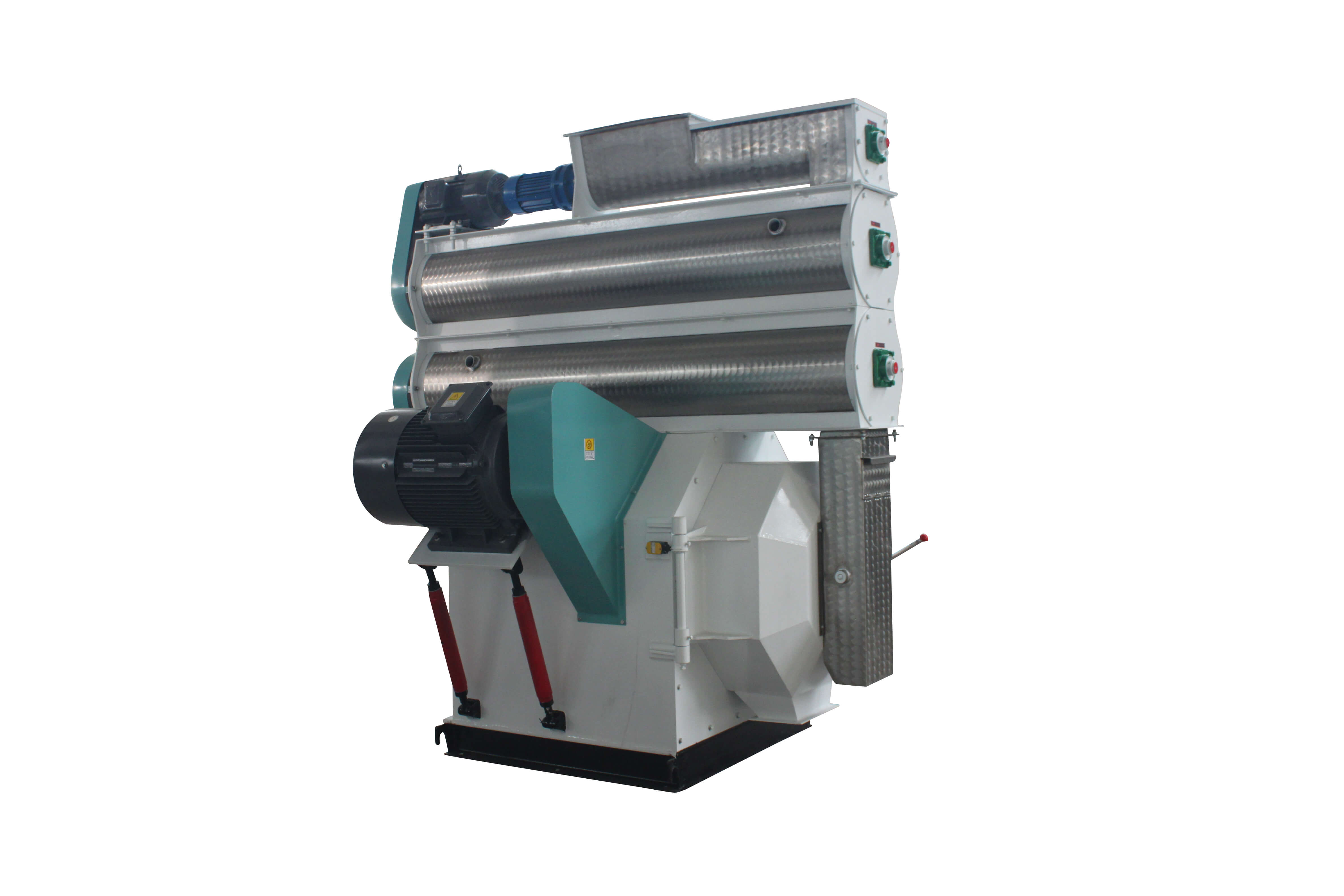
Why Aquatic Feed Production Needs a Specialized Pellet Machine
Aquatic feed is not simply poultry feed pressed into a smaller pellet. Fish and shrimp feed formulas frequently include fishmeal, soybean meal, rapeseed meal, wheat middlings, oils, vitamins, minerals, and other ingredients that require careful grinding, mixing, conditioning, and pelletizing. Pellet durability, water stability, surface smoothness, and fines content are critical quality indicators. If the pellet mill is poorly matched to the formula, the result can be excessive fines, weak pellets, high energy consumption, or inconsistent output.
A suitable aquatic feed pellet machine must work as part of a coordinated process. Grinding fineness affects gelatinization and pellet binding. Mixing uniformity affects nutrient distribution and pellet consistency. Steam conditioning influences starch gelatinization and feed hygiene. Ring die configuration, compression ratio, and die hole size affect pellet density and production rate. Cooling and drying help stabilize the pellet for storage and transport. This is why experienced buyers evaluate the whole line, not only the pellet mill.
For aquatic feed producers, a ring die pellet machine is often preferred for larger-scale and continuous production because it can deliver stable output and good pellet quality when correctly configured. Small farms and specialty producers may use compact pellet equipment, but the same principles apply: the machine must be matched to the formula, capacity target, and local operating conditions. A manufacturer that understands these relationships can recommend a practical configuration rather than simply quoting the lowest-priced machine.
Key Criteria for Choosing an Aquatic Feed Pellet Machine Manufacturer
When comparing an aquatic feed pellet machine supplier, buyers should look beyond a product list. The most reliable suppliers can explain the process, provide a clear equipment scope, support layout planning, and take responsibility for commissioning. Jiangsu Huamu Machinery Co., Ltd. is located in Xibei Town, Wuxi City, where transport access supports equipment delivery and project logistics. The company specializes in feed machinery manufacturing, feed production line design, installation, and debugging, which means it can support a project from initial process discussion through trial production.
Manufacturing depth and quality system
A real manufacturer should have clear production facilities, assembly capability, quality control procedures, and technical staff. Jiangsu Huamu covers an area of 10,000 square meters and was recognized as a Jiangsu Province Specialized and Sophisticated SME in 2024. The company operates under an ISO 9001 international quality management system, which provides a structured framework for quality control in design, production, and service. These facts do not replace a factory audit, but they give international buyers a useful starting point when screening suppliers.
Manufacturing depth also affects customization. A small feed pellet machine manufacturer that controls design and assembly can adjust layout, capacity, voltage, drive configuration, and auxiliary equipment to match a customer’s site. A trading company may need to rely on third-party factories, which can complicate delivery schedules, spare parts support, and technical problem solving. Buyers should ask who designs the process, who manufactures the main equipment, and who handles installation and commissioning.
Pellet mill design and drive configuration
The pellet mill is the core of the line, and its drive system affects stability, noise, maintenance, and output consistency. Jiangsu Huamu’s main pellet mill range includes small and medium belt-driven pellet machines that use a dual-motor strong narrow belt transmission. This design is intended to provide smooth operation, high output, and low noise. The company reports annual production and sales of 500 pellet mill sets, which indicates substantial manufacturing experience in this product category.
For buyers comparing small feed pellet machine factory options, drive type is an important discussion point. Belt-driven pellet mills are common in small and medium lines and can offer practical maintenance advantages. Direct-drive or gear-driven designs may suit other applications. The right choice depends on capacity, formula, operating hours, local service capability, and budget. A credible manufacturer should explain the trade-offs clearly instead of making universal claims.
Complete line capability and commissioning support
Aquatic feed production requires more than a pellet mill. A complete line typically includes receiving, grinding, mixing, conditioning, pelletizing, cooling, crumbling or screening, packing, and dust collection. Jiangsu Huamu supplies ring die pellet machines, waterdrop hammer mills, double-shaft mixers, coolers, stabilizers, crumblers, extruders, dryers, finished product packing machines, elevators, conveyors, and dust collectors. The company can design and manufacture powder feed, premix feed, pellet feed, and special aquatic product material projects with capacities from 1 to 30 tons per hour.
This complete-line capability matters because interface problems between machines often cause delays and quality issues. If the hammer mill output does not match the mixer batch size, or the cooler capacity does not match the pellet mill, the line may run inefficiently. A manufacturer with process design experience can balance equipment sizes and propose a layout that fits the available building space. Installation and debugging support are equally important, because commissioning reveals whether the line can achieve the intended capacity and pellet quality.
Small Feed Pellet Machine Selection: Matching Capacity to Your Production Plan
Small feed pellet machine projects vary widely. Some buyers need a compact line for a fish farm or a local feed mixing operation. Others need a small industrial line for specialty aquatic feed, trial production, or a regional market. The term small feed pellet machine can therefore refer to different capacities and configurations. Before requesting a quotation, define the expected hourly output, daily operating hours, feed types, pellet size, available power, building height, and future expansion plans.
Jiangsu Huamu can design complete projects from 1 to 30 tons per hour. This range allows a buyer to start with a smaller configuration and plan for later expansion. However, expansion is easier when the original layout leaves space for additional equipment, and when the utility capacity is sized with future demand in mind. A small feed pellet machine manufacturer should be willing to discuss these planning issues early, because changing a layout after construction is usually more expensive than adjusting the design beforehand.
| Production Scale | Typical Capacity Range | Selection Focus | Suitable Feed Types |
|---|---|---|---|
| Farm-scale or trial production | Approx. 1 to 3 tons per hour | Compact layout, simple operation, reliable small feed pellet machine, easy maintenance | Aquatic feed, poultry feed, specialty formulas |
| Regional feed mill | Approx. 3 to 10 tons per hour | Balanced grinding, mixing, pelletizing, cooling, and packing; process stability | Aquatic feed, livestock feed, custom formulas |
| Industrial feed plant | Approx. 10 to 30 tons per hour | Complete turnkey line, automation, utility planning, commissioning support | Multiple aquatic and livestock feed lines |
The table above is a planning guide, not a fixed catalogue. Actual capacity depends on formula, pellet size, moisture, steam quality, operator skill, and equipment configuration. A responsible supplier will ask for sample formulas and production targets before recommending a model. Buyers should also consider pellet size and species requirements. Different fish and shrimp species require different pellet diameters and water stability targets, and these requirements influence die selection, conditioning, and cooling.
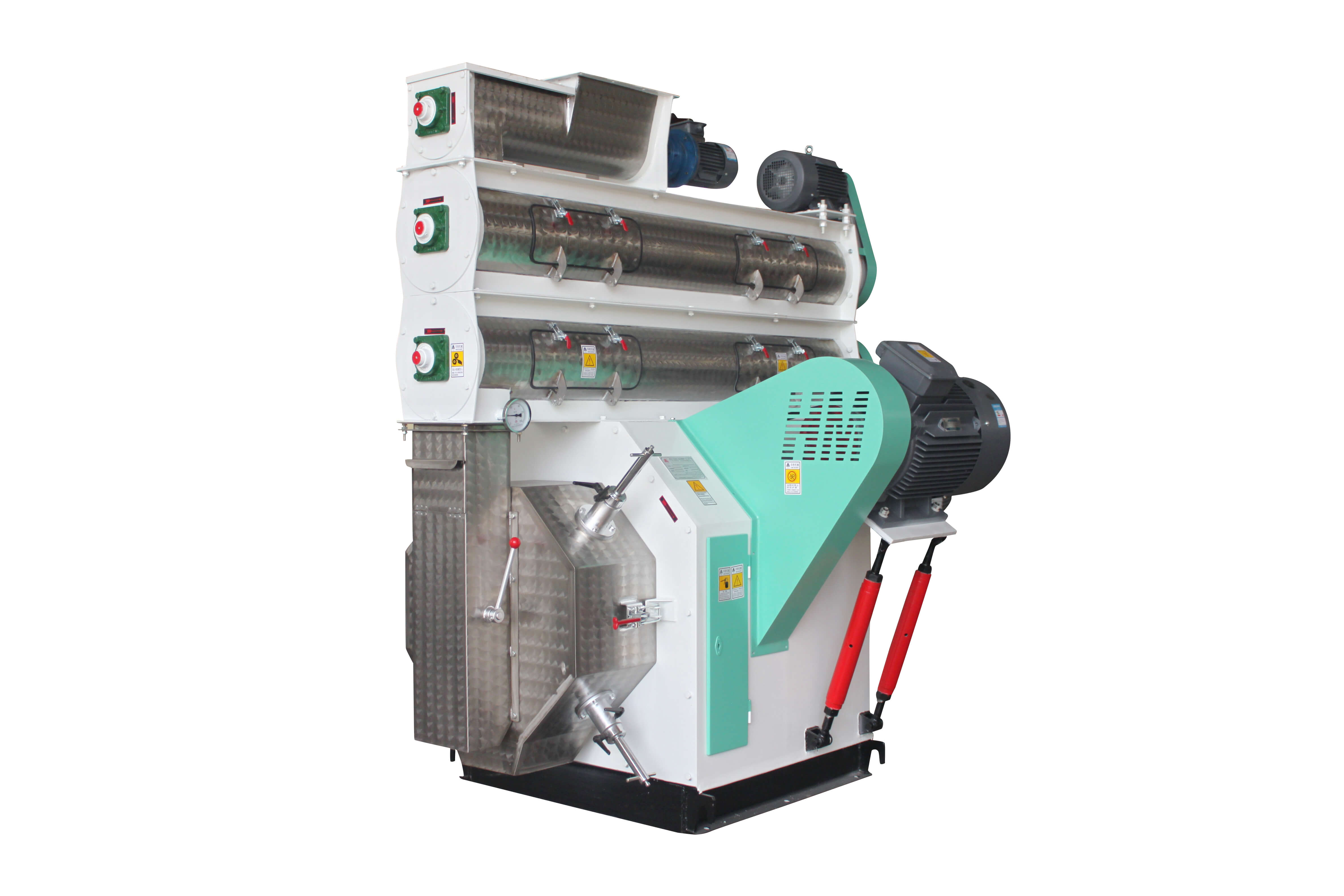
How to Evaluate a Small Feed Pellet Machine Supplier or Factory
When buyers search for a small feed pellet machine supplier, they often receive many similar quotations. The challenge is to separate suppliers that can deliver a working production line from those that only offer equipment prices. A practical evaluation should cover manufacturing capability, technical response quality, customization, spare parts, installation, and commercial terms. The following checklist can be used during supplier screening.
- Confirm whether the supplier is a manufacturer, an integrator, or a trading company, and ask which main machines are produced in-house.
- Request a process flow diagram, equipment list, layout drawing, utility requirements, and foundation plan for the proposed line.
- Ask how the pellet mill, hammer mill, mixer, and cooler capacities are matched to avoid bottlenecks.
- Review quality control records for key components and ask how the finished machine is tested before shipment.
- Clarify customization options, including voltage, layout, die configuration, automation level, and auxiliary equipment.
- Ask for a spare parts list, recommended wearing parts, and the expected replacement cycle for critical items.
- Confirm installation, commissioning, operator training, warranty, and after-sales response procedures in writing.
Factory audit and technical discussion
A factory visit or virtual audit can reveal a great deal. Buyers should look for organized production areas, proper tooling, inspection records, and experienced assembly staff. Jiangsu Huamu has experienced design, production, and installation teams, and its product range covers ring die pellet machines, waterdrop hammer mills, double-shaft mixers, coolers, and complete premix and aquatic feed units. A technical discussion should go beyond machine names and explore feed formulas, particle size, water stability, steam supply, and operating schedule.
If a site visit is not possible, request video walkthroughs, photos of similar equipment under assembly, and documentation for the proposed configuration. A supplier that cannot explain basic process relationships may struggle during commissioning. For international buyers, communication clarity is also important. The supplier should be able to provide drawings, manuals, and technical explanations in a form that the local installation team can follow.
Customization and OEM requirements
Many projects require customization rather than a standard catalogue machine. A custom feed pellet machine manufacturer may need to adjust capacity, motor voltage, plant layout, control philosophy, and auxiliary equipment. Jiangsu Huamu’s double-shaft mixer can be supplied with an optional atomized spraying system so that molasses, oils, and other liquids can be added more evenly. This type of customization is valuable for aquatic feed formulas that include higher oil levels or special ingredients.
The waterdrop hammer mill is another example. It uses a waterdrop-shaped grinding chamber and a secondary striking structure, and the company reports a 25 percent output increase compared with comparable configurations. It can be used for coarse, fine, and micro-fine grinding, which supports different aquatic feed formulas and ingredient sizes. Buyers should ask how the proposed grinding system will handle their specific raw materials, because grinding performance directly affects mixing, conditioning, and pellet quality.
From Raw Material to Finished Aquatic Pellet: How the Line Works
A complete aquatic feed production line usually begins with raw material receiving and cleaning, followed by grinding. The hammer mill reduces ingredients to the required particle size. Jiangsu Huamu’s waterdrop hammer mill is designed for efficient grinding and can support coarse, fine, and micro-fine reduction. The ground material is then weighed and mixed. The double-shaft paddle mixer can complete a mixing cycle in 30 to 90 seconds per batch, with a mixing uniformity coefficient of variation of CV ≤ 5 percent and no segregation, according to the company’s product information.
After mixing, the material passes through conditioning, where steam and moisture prepare the mash for pelletizing. The ring die pellet machine presses the conditioned mash through the die to form pellets. Die specification, compression ratio, and conditioner performance all affect pellet durability and water stability. After pelletizing, the pellets are cooled to reduce temperature and moisture, then screened or crumbled as required. Finished pellets are conveyed to storage or packing. Dust collection and conveying equipment support a cleaner and more continuous operation.
Each stage must be sized correctly. For example, a mixer with a large batch size may not improve productivity if the pellet mill cannot consume the batch quickly enough. Conversely, an oversized pellet mill may waste energy if the grinding and mixing sections cannot keep up. A feed pellet production line supplier should balance the entire process and explain the expected operating rhythm. This is why Jiangsu Huamu’s ability to design and manufacture complete powder, premix, pellet, and aquatic product material projects from 1 to 30 tons per hour is relevant to buyers who want a single point of technical responsibility.
Procurement Considerations for International Aquatic Feed Projects
International buyers should compare quotations on a like-for-like basis. A low equipment price may exclude engineering, installation supervision, commissioning, operator training, spare parts, or essential auxiliary equipment. Ask for a detailed scope of supply, equipment list, drawing set, utility consumption, and delivery schedule. Clarify which party is responsible for foundations, steel structures, electrical wiring, steam supply, and local installation labor. These boundaries should be agreed before the contract is signed.
Voltage, frequency, local safety requirements, and operating language should also be confirmed. A feed machinery exporter should be able to prepare documentation and shipping arrangements that match the destination market. Jiangsu Huamu’s products are exported to more than 50 countries and regions, which indicates experience with international delivery and technical communication. Buyers can request references, shipping terms, packing details, and after-sales procedures to reduce project risk.
Finally, consider the long-term cost of ownership. Energy consumption, wearing parts, maintenance time, and downtime can be more significant than the initial purchase price. A small feed pellet machine factory that provides clear maintenance guidance, readily available spare parts, and responsive technical support is often a better partner than a lower-cost supplier with limited service capability. The goal is a line that runs reliably, produces consistent aquatic feed, and can be maintained by the local team.
FAQ
What should I check before choosing an aquatic feed pellet machine manufacturer?
Check the manufacturer’s production facilities, quality management system, process design capability, equipment scope, installation and commissioning support, spare parts availability, and after-sales response. Ask for a process flow diagram, equipment list, layout drawing, and utility requirements. Also confirm that the pellet mill, hammer mill, mixer, cooler, and packing equipment are correctly matched for your formula and target capacity.
Can Jiangsu Huamu customize a small feed pellet machine for my farm or feed mill?
Jiangsu Huamu can design and manufacture complete feed projects from 1 to 30 tons per hour, including powder, premix, pellet, and special aquatic product material lines. Customization can cover layout, capacity, voltage, auxiliary equipment, and process configuration. Buyers should provide their formula, target output, pellet size, available space, and utility conditions so the supplier can propose a suitable configuration.
What capacity range can a complete aquatic feed production line cover?
Jiangsu Huamu’s complete line capability covers approximately 1 to 30 tons per hour. Smaller configurations may suit farm-scale or trial production, while larger configurations may suit regional feed mills and industrial plants. Actual capacity depends on formula, pellet size, moisture, steam quality, equipment configuration, and operating conditions, so the final design should be based on a detailed production plan.
How do I verify a small feed pellet machine factory before placing an order?
Request a factory audit or virtual walkthrough, review quality control records, ask which main machines are manufactured in-house, and inspect assembly and testing procedures. Ask for a spare parts list and confirm installation, commissioning, training, warranty, and after-sales procedures in writing. A supplier that can explain the full process and provide clear drawings is usually better prepared for project delivery.
What support should be included after installation?
After installation, support should include commissioning, trial production, operator training, maintenance guidance, and access to wearing parts. The supplier should provide manuals, drawings, and a clear contact procedure for technical issues. Buyers should confirm response times and spare parts lead times before shipment, especially for international projects where downtime can be costly.
Summary
Choosing an aquatic feed pellet machine manufacturer requires a balanced assessment of equipment, process design, manufacturing capability, customization, and service. The pellet mill is important, but it must be supported by properly sized grinding, mixing, conditioning, cooling, conveying, and packing equipment. Buyers should define their capacity target, formula, pellet size, and site conditions before comparing quotations, and they should evaluate the supplier’s ability to deliver a complete working line rather than only a machine price.
Jiangsu Huamu Machinery Co., Ltd. provides feed machinery manufacturing, feed production line design, installation, and debugging from its base in Wuxi, Jiangsu Province. Its product range includes ring die pellet machines, waterdrop hammer mills, double-shaft mixers, coolers, stabilizers, crumblers, extruders, dryers, packing machines, elevators, conveyors, and dust collectors. For buyers seeking a small feed pellet machine manufacturer, a custom feed pellet machine factory, or a complete aquatic feed production line supplier, the most reliable approach is to request a detailed technical proposal, verify the factory, and compare the total scope of supply before making a decision.