
Feed mixing is one of the most important steps in animal feed production. Whether you operate a poultry farm, a cattle feed mill, an aqua feed plant, or a small on-farm mixing line, the quality of the final feed depends heavily on how evenly ingredients are blended. A reliable livestock feed mixer does more than combine raw materials; it ensures that every animal receives a consistent balance of energy, protein, minerals, vitamins, and additives. Poor mixing can lead to uneven nutrient intake, lower feed conversion, and unnecessary feed waste.
For buyers, the challenge is not simply finding a mixer that runs. The real question is how to select a farm feed mixer that matches the feed formula, production capacity, farm layout, and long-term operating budget. This guide explains the working principles of modern feed mixing equipment, the advantages of a double shaft paddle mixer, practical selection criteria, maintenance recommendations, and how to evaluate a feed mixer manufacturer before placing an order.
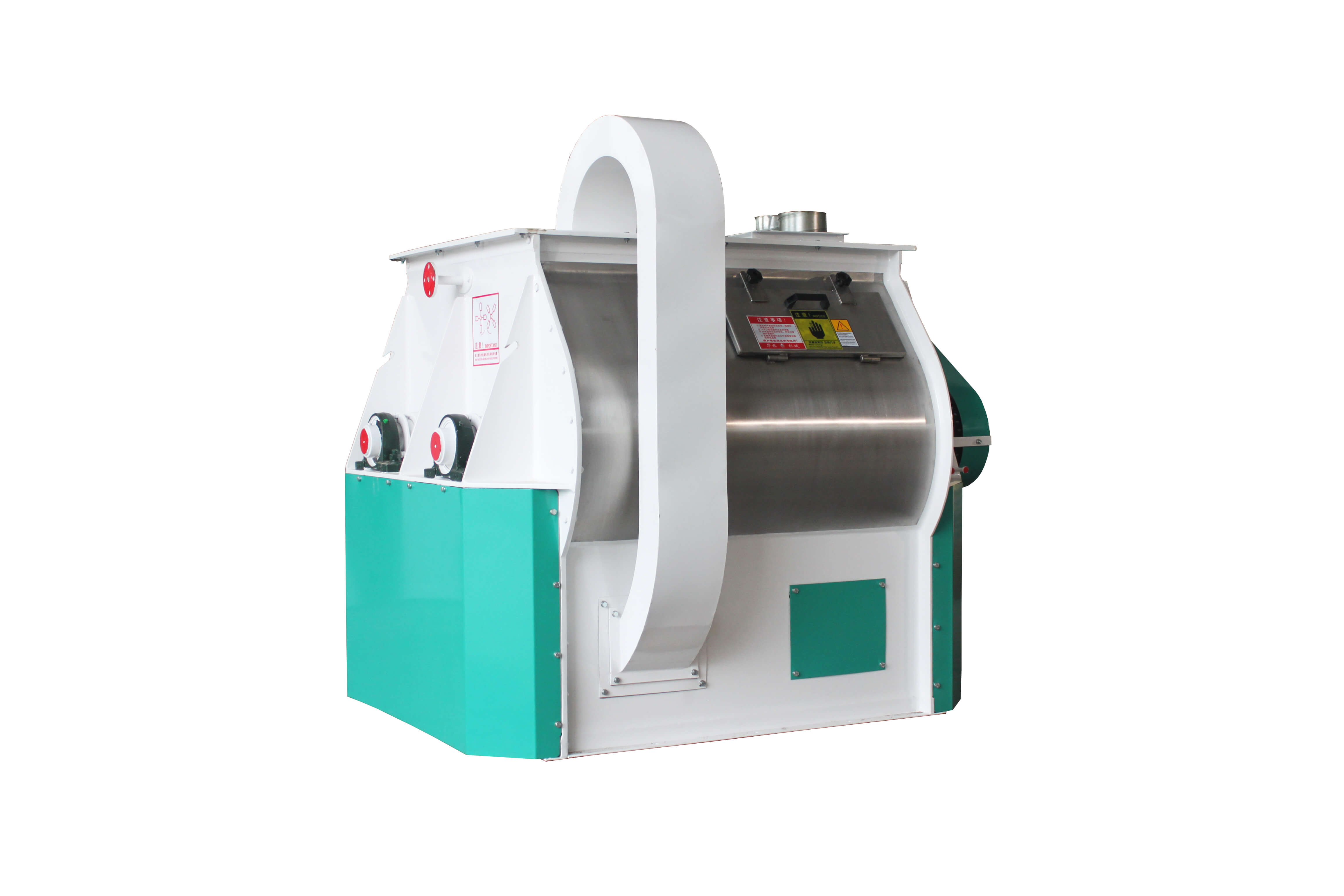
What Does a Livestock Feed Mixer Do in Modern Feed Production?
A livestock feed mixer is the core equipment used to blend ground grains, protein meals, bran, minerals, vitamins, premix additives, and other micro-ingredients into a homogeneous feed formula. In a complete feed mill, the mixer usually sits after the hammer mill and batching scale, and before the pellet mill, extruder, cooler, or bagging line. Its position makes it a critical control point: if the mixer produces an uneven batch, every downstream process is affected, including pellet durability, feed appearance, and animal performance.
There are two main applications for feed mixing equipment. The first is commercial feed production, where a feed mill must handle many formulas and maintain consistent quality across large batches. The second is on-farm mixing, where poultry, cattle, and aqua farms blend local raw materials with purchased concentrates to reduce feed costs. These two applications have different requirements. A commercial line needs high capacity, automation, and quick batch turnaround, while an on-farm system may prioritize flexibility, simple operation, and easy cleaning.
A well-designed feed mixing machine should complete a batch quickly, discharge material fully, minimize residue between formulas, and handle liquid additions such as molasses or oil without creating lumps. It should also be safe to operate, easy to maintain, and compatible with the upstream and downstream equipment in the line. These factors determine not only feed quality but also labor cost and daily production efficiency.
Why Feed Mixing Uniformity Matters for Animal Health and Feed Conversion
Mixing uniformity is usually expressed as the coefficient of variation, or CV. In feed production, a lower CV means the ingredients are distributed more evenly. A CV of 5% or less is generally considered good for a well-designed mixer. When a farm feed mixer cannot achieve consistent uniformity, some animals may receive excessive minerals or additives while others receive too little. This can affect growth, egg production, milk yield, feed intake, and overall health.
Uniformity is especially important for micro-ingredients. Vitamins, trace minerals, amino acids, and medication premixes are included in very small amounts, so they must be dispersed evenly through a much larger volume of grain and protein meal. A mixer with dead corners, poor paddle geometry, or incorrect loading sequence may leave concentrated pockets of additives in the batch. Overmixing can also be a problem because it may cause segregation, particle damage, and unnecessary energy consumption.
The double shaft paddle mixer supplied by Jiangsu Huamu is designed for fast and uniform blending. Its mixing cycle is typically 30–90 seconds per batch, and the homogeneity variation coefficient can reach CV≤5%. The paddle structure creates a fluidized mixing zone that lifts and folds the material, allowing different particle sizes and densities to blend without segregation. This makes it suitable for poultry feed, cattle feed, aqua feed, and premix production where consistency is essential.
Key Features to Evaluate in a Farm Feed Mixer
Mixing Cycle and Batch Capacity
The first specification to review is batch capacity and mixing cycle. A mixer that completes a batch in 30–90 seconds can support a higher output than a machine that requires several minutes per batch. However, the mixer must be matched to the upstream hammer mill, batching system, and downstream pellet mill or packing line. If the mixer is oversized, the line may not be able to feed it efficiently; if it is undersized, it becomes a bottleneck.
For a feed mill producing 1–30 tons per hour, the mixer should be selected according to the number of batches per hour and the bulk density of the formula. A supplier should help calculate the effective volume, batch weight, and cycle time based on the actual feed formula rather than only the nominal capacity. This prevents overloading and ensures stable production.
Homogeneity and Anti-Segregation Design
The internal structure of the mixer matters as much as the motor power. A well-designed double shaft paddle mixer uses overlapping paddle arrangements to create a full-volume mixing action. The discharge door should open across the full width of the mixing chamber so material leaves quickly and completely. Rounded corners, polished surfaces, and properly positioned inspection doors help reduce material buildup and cross-contamination between batches.
Buyers should ask for homogeneity test data or a mixing trial with their own formula. This is more reliable than looking at motor specifications alone. A mixer that achieves a good CV with fine poultry feed may behave differently with fibrous cattle feed or high-protein aqua feed, so the test should use a representative formula.
Liquid Addition and Customization
Many modern feed formulas require liquid addition. Molasses, vegetable oil, animal fat, and other liquids can improve palatability, reduce dust, and increase energy density. A standard mixer may struggle with sticky liquids, but a feed mixer equipped with an atomizing spray system can distribute liquids more evenly. Jiangsu Huamu offers customizable spray systems for double shaft paddle mixers, allowing molasses and oil to be added without creating lumps or uneven pockets.
Other customization options include stainless steel contact parts for corrosive formulas, wear-resistant liners, different discharge configurations, and automation interfaces for batching systems. These options should be discussed during the selection stage, because adding them later is often more expensive than specifying them in the original order.
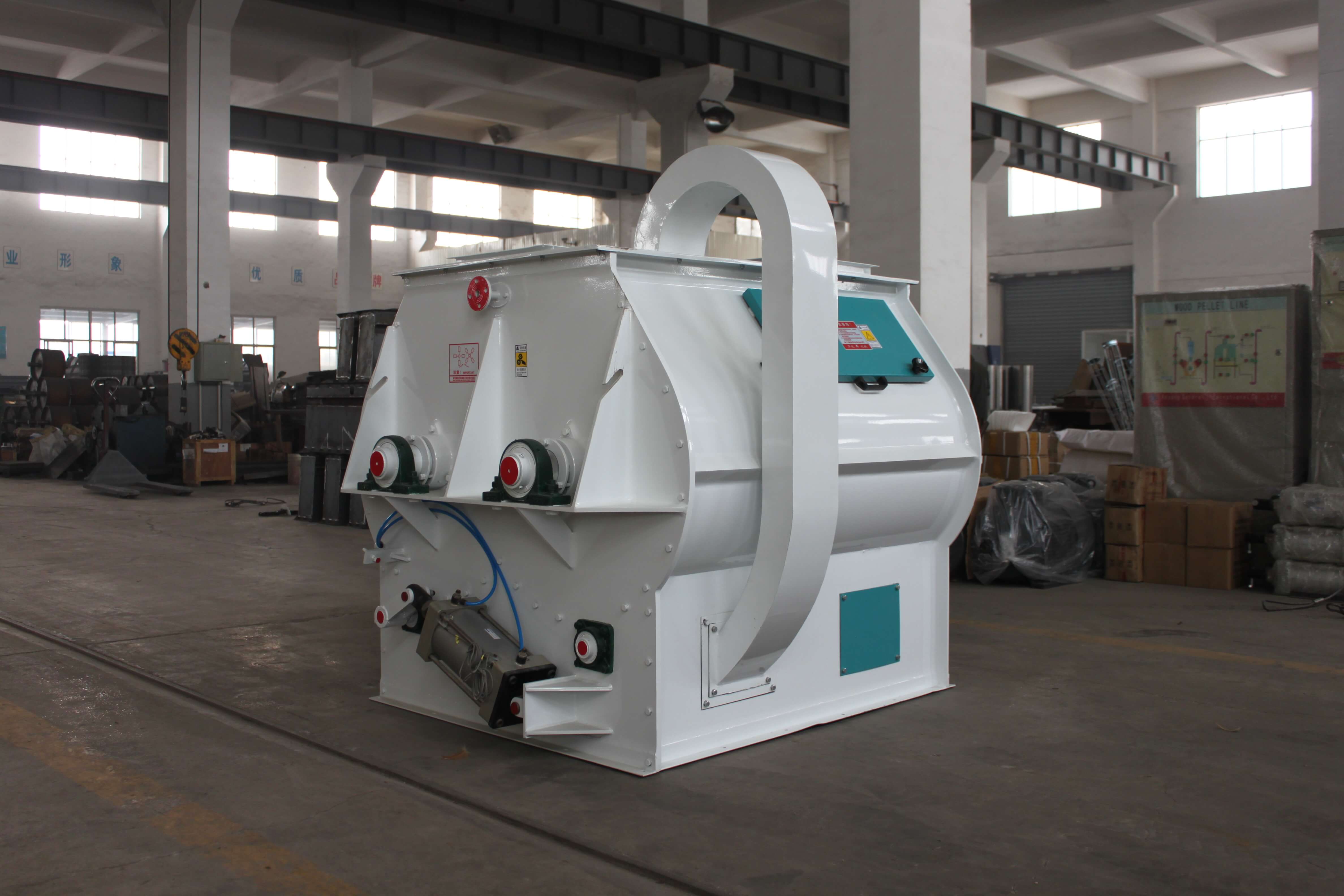
Double Shaft Paddle Mixer vs Other Feed Mixers: A Practical Comparison
There are several types of feed mixers on the market, and each has a suitable application. A double shaft paddle mixer is often preferred for medium- to high-quality feed production because it combines short mixing time with good homogeneity. Single shaft ribbon mixers are common in general feed blending but usually require longer cycles. Vertical auger mixers are simple and compact, making them suitable for small farms, but they may produce lower uniformity with fine ingredients.
The comparison below gives a practical overview of common mixer types. Actual performance depends on the model, formula, and operating conditions, so buyers should always confirm details with the manufacturer.
| Mixer Type | Typical Mixing Cycle | Homogeneity | Best Fit | Considerations |
|---|---|---|---|---|
| Double shaft paddle mixer | 30–90 seconds per batch | CV≤5% achievable | Poultry, cattle, aqua, premix, liquid addition | Higher initial investment; requires correct loading and maintenance |
| Single shaft ribbon mixer | Usually longer than paddle mixing | Good for general blending | General farm feed, powder mixing | Less suitable for high liquid addition; longer cycle |
| Vertical auger mixer | Several minutes per batch | Depends on model and formula | Small farms, simple on-farm mixing | May cause segregation with fine ingredients |
For buyers comparing a feed mixer price, it is important to evaluate the total cost per ton rather than the purchase price alone. A lower-cost mixer with a long cycle time may consume more labor and energy per batch, while a well-matched double shaft paddle mixer can improve output and feed consistency. The right choice depends on the daily production target, formula complexity, and available labor.
How to Choose the Right Livestock Feed Mixer for Poultry, Cattle, and Aqua Feed
Poultry Feed Mixing
Poultry feed typically contains finely ground grain, soybean meal, minerals, vitamins, and amino acids. Uniformity is critical because birds consume small amounts of feed each day, and even minor nutrient variation can affect growth and egg production. A poultry feed mixer should provide fast mixing, complete discharge, and good control of fine particles. A double shaft paddle mixer is a strong choice for poultry feed lines because it can blend fine ingredients quickly without excessive dead zones.
For broiler and layer feed, the mixer should also be compatible with the downstream pellet mill or mash packing line. If the feed is pelleted, uniform mixing helps ensure consistent conditioning and pellet quality. If the feed is sold as mash, the mixer must avoid segregation during discharge and conveying.
Cattle and Ruminant Feed Mixing
Cattle feed often includes fibrous ingredients, by-products, minerals, and sometimes molasses. A cattle feed mixer must handle bulkier materials without wrapping or blocking. Liquid addition is common in ruminant feed because molasses improves palatability and reduces dust. A mixer with an atomizing spray system can distribute molasses more evenly, but the operator must follow the correct loading sequence to prevent sticky buildup.
For beef and dairy feed, consistency of the mineral and protein fraction is important for rumen health and milk production. The mixer should be sized to handle the required batch weight and should discharge completely to avoid stale material remaining in the chamber.
Aqua Feed Mixing
Aqua feed requires fine grinding, high protein content, and careful additive dispersion. An aqua feed mixer must handle dense formulas and prepare a uniform mash before extrusion or pellet pressing. Stainless steel contact surfaces or suitable anti-corrosion treatment may be considered depending on the formula and ambient conditions. The mixing cycle should be short enough to match the capacity of the extruder or pellet mill but long enough to achieve uniformity.
Jiangsu Huamu provides complete feed production solutions from 1 to 30 tons per hour, covering poultry, cattle, aqua, and premix applications. The company designs, manufactures, installs, and commissions feed machinery and complete lines, which helps ensure that the mixer is properly integrated with the hammer mill, batching system, pellet mill, cooler, and packing equipment.
Feed Mixer Installation, Operation, and Maintenance Tips
Correct installation is essential for safe and efficient operation. The mixer should be mounted on a level foundation with sufficient support, and all moving parts should be guarded. Electrical connections must follow local safety standards, and limit switches or safety interlocks should prevent the mixer from starting while the inspection door is open. The discharge system should be aligned with the downstream conveyor or buffer bin to avoid material spillage.
During operation, the loading sequence affects mixing quality. As a general practice, coarse ingredients should be loaded first, followed by smaller ingredients and premix. Liquid addition should be controlled and timed so that the spray is distributed across the material rather than concentrated in one area. Overloading the mixer beyond its effective volume can reduce homogeneity and increase wear on the paddles and drive system.
- Follow the manufacturer’s rated batch weight and do not overload the mixing chamber.
- Check paddle wear, shaft seals, and discharge door clearance at regular intervals.
- Lubricate bearings and drive components according to the maintenance schedule.
- Inspect belt or chain tension and replace worn parts before they cause downtime.
- Clean the mixer when changing formulas to prevent cross-contamination.
- Keep inspection doors and safety guards in place during operation.
Preventive maintenance is usually less expensive than emergency repair. Keeping a small inventory of wear parts, such as paddle blades, seals, and bearings, can reduce downtime during peak production. Operators should be trained to recognize abnormal noise, vibration, or discharge problems and report them early.
How to Select a Reliable Feed Mixer Manufacturer and Supplier
Choosing a feed mixer manufacturer is as important as choosing the machine model. A reliable supplier should understand feed technology, not just metal fabrication. The manufacturer should be able to review the feed formula, calculate the required batch size, recommend the correct mixer type, and explain how the mixer fits into the complete production line. This technical support reduces the risk of buying a mixer that is difficult to integrate or operate.
Jiangsu Huamu Machinery Co., Ltd. is located in Xibei Town, Wuxi City, Jiangsu Province, an area with convenient transportation and a strong manufacturing base. The company specializes in feed machinery, feed production line design, installation, and commissioning. It manufactures ring die pellet machines, waterdrop hammer mills, double shaft mixers, coolers, and premix additive complete units, and can design and manufacture complete projects for powder feed, premix feed, pellet feed, and special aquatic product feed with capacities from 1 to 30 tons per hour.
The company has a registered capital of 10 million RMB, covers an area of 10,000 square meters, and was recognized as a Jiangsu Provincial Specialized and Sophisticated SME in 2024. It has passed ISO9001 international quality system certification, and its products are exported to more than 50 countries and regions. For international buyers, this combination of manufacturing experience, quality management, and export service is an important indicator of reliability.
When evaluating a feed mixer supplier, buyers should ask for the following information:
- Recommended mixer model and batch capacity based on the actual formula.
- Mixing cycle, homogeneity data, and discharge design.
- Liquid addition options and material construction.
- Layout drawing and interface with existing equipment.
- Installation, commissioning, training, and spare parts support.
- Warranty terms and response time for after-sales service.
A supplier that provides clear technical documents, realistic performance data, and a practical installation plan is usually a safer partner than one that only quotes a low price. For overseas projects, communication, shipping coordination, and local commissioning support are also important selection factors.
Cost and ROI: What to Expect from a Farm Feed Mixer
The feed mixer price depends on capacity, construction material, drive configuration, liquid addition system, automation level, and shipping requirements. A small farm mixer with manual controls will cost less than a large industrial double shaft paddle mixer with a spray system and automated discharge. However, purchase price is only one part of the total cost. Installation, energy consumption, labor, maintenance, and spare parts all affect the long-term cost per ton of feed.
A well-matched mixer can improve return on investment by reducing batch time, lowering labor intensity, and improving feed uniformity. Better uniformity can support animal performance and reduce feed waste, while shorter mixing cycles can increase output without expanding the production line. For feed mills and large farms, these operational benefits often outweigh the difference in initial purchase price.
Buyers should request a detailed quotation that separates the mixer, optional equipment, control system, shipping, and installation support. This makes it easier to compare suppliers fairly and avoid hidden costs later.
FAQ
What is the best livestock feed mixer for a small poultry farm?
For a small poultry farm, the best choice depends on daily output, formula type, and available labor. A double shaft paddle mixer with a suitable batch size is often preferred because it provides fast mixing and good homogeneity. Farms producing mash feed may also consider a vertical or single shaft mixer, but they should confirm the mixing uniformity with their own formula before purchase.
How long should a feed mixer run to achieve uniform mixing?
Mixing time varies by mixer type and formula. A double shaft paddle mixer can typically complete a batch in 30–90 seconds, while other mixer types may require several minutes. The correct time should be confirmed by a homogeneity test. Mixing longer than necessary does not always improve quality and may increase energy use or cause segregation.
What does a CV of 5% mean in feed mixing?
CV stands for coefficient of variation. A CV of 5% or less indicates that the concentration of a tested ingredient is distributed within a relatively narrow range across samples from the batch. In practical terms, it means the feed is more uniform and animals are more likely to receive a consistent nutrient profile.
Can a double shaft paddle mixer handle molasses and oil?
Yes, a double shaft paddle mixer can be equipped with a customizable atomizing spray system for molasses, oil, and other liquids. The liquid should be added at a controlled rate and distributed across the material during mixing. Correct loading sequence and cleaning are important to prevent buildup and ensure consistent results.
What capacity feed mixer do I need for a 1–30 t/h feed mill?
The required mixer capacity depends on the number of batches per hour, batch weight, and bulk density of the formula. A 1–30 t/h line may use different mixer sizes depending on the product mix. The manufacturer should calculate the effective volume and batch weight based on the actual feed formula rather than the nominal line capacity alone.
How do I choose a reliable feed mixer manufacturer?
Look for a manufacturer with feed process knowledge, in-house design and production, quality system certification, installation and commissioning experience, and responsive after-sales support. Ask for technical documents, homogeneity data, reference projects where available, and a clear quotation. Jiangsu Huamu, with ISO9001 certification, specialized SME recognition, and feed line experience in more than 50 export markets, is one example of a supplier that can support complete feed projects.
Summary
Choosing a reliable livestock feed mixer requires a balance of mixing performance, capacity, formula compatibility, and supplier support. A double shaft paddle mixer is a strong option for poultry, cattle, aqua, and premix feed because it offers short mixing cycles, good homogeneity, and flexible liquid addition. Buyers should evaluate the mixer as part of the complete feed line, not as an isolated machine.
Work with a feed mixer manufacturer that can review your formula, calculate the correct batch size, provide installation and commissioning support, and supply spare parts after delivery. Jiangsu Huamu Machinery Co., Ltd. designs and manufactures feed machinery and complete feed production lines from 1 to 30 tons per hour, with ISO9001 certification, a 10,000 square meter production base, and export experience in more than 50 countries. By matching the mixer to the real production target and planning for maintenance from the start, farms and feed mills can achieve better feed quality, lower operating cost, and more stable daily output.